Stanbic Bank
Stanbic Bank
28.7 C
Kampala
Stanbic Bank
Stanbic Bank
Home Blog Page 698

An Insight into Politics of Uganda from 1977 to December 2021

A lot of misinformation been uttered about how life was in the time of Ex- President Idi Amin Dada, Ex- President Milton Obote and H.E Yoweri Kaguta Museveni. It is of essence to tell truth about the political regimes that Uganda is had so far, without taking side. The aim is let the generation that never was existing during the time of presidents were in power.

My age does not stretch to the era of when Uganda was under the colonial rule, His Highness Mutesa I and Ex- President Obote I. I was a juvenile but I have a recollection of what I saw and heard from my parents’ conversation between themselves.

I start with Ex- President Idi Amin Dada regime. During Amin’s time, there existed the State Research Bureau, a secret police. People were picked up from their homes or work place or bars, put in the car boot, driven away and that was the end of seeing them. They were taken to Nakasero Torture Chambers, brutalised, tortured to death or killed. Ordinary citizens who had not involved themselves in politics were also kidnapped, abducted, and killed. The regime went for people’s wives or daughters to make them their sexual pleasure partners, which costed men of those wives or daughters to being killed, for the wives or daughters to be taken.

Anyone thought to be thought to be an intellectual of any sort, educated was killed. Doctors and lecturers freed into exile.  Anyone who seemed accumulated wealth driving a car that was extraordinary not seen anywhere in Uganda, that person would be followed, kidnapped, abducted, killed and the vehicle taken. My father had ordered a silver lilac colour Mercedes Benz from German, it was the only of the type Mercedes in Uganda when it arrived. He was picked up from his home, put in the boot and driven away. Fortunately as the men were leaving the home premises, Adam arrived, he used to pass by in the lunch hours and evening hours. He was after to attempt dating one of my elder sister who had come from London. Adam stopped the men and checked their car’s boot, Adam saw that my father was the one who they had kidnapped. Adam ordered for the immediate release of my father and instructed them never to return to my father’s home. That is how my father’s life got saved.

During Ex- President Amin’s regime, I was schooling at Mugwanya Preparatory School Kabojja, on return to school, news would spread around the dormitory of pupils whose fathers had been killed by the State Research Bureau.

During Ex- President Amin’s regime, my father had two senior serving officers in the State Research Bureau, namely Adam and Ismael Sebi. My father was at golf club, when two persons that he knew were picked up and taken by the State Research Bureau men, my father begged Adam for the release of two social mates, Adam replied, I can release (name withheld), but the other one I cannot, his head has to be decapitated, because my boss Ex-President Idi Amin Dada ordered me that he has to see the the head.

I move next onto the regime of Ex- President Milton Obote II, I was schooling at St Savio Junior School Kisubi, having completed Mugwanya Preparatory School Kabojja. During that time, pupils started off their education from Mugwanya Preparatory School Kabojja, the school had only primary classes from 1-4. Thereafter, pupils who passed primary 4 exams set by the school proceeded to at St Savio Junior School Kisubi, to complete primary 5-7. While at St at St Savio Junior School Kisubi, I witnessed an altercation that happened between the Headmaster at the time who was brother Emanuel Kisitu with Oyito Ojok. The altercation was because the headmaster refused Oyito Ojok to bring edibles for his son Opok. Parents were allowed to visit their children but no edibles were allowed to be brought by the parent for their child studying in that school. I also witnessed fights which were scheduled in the night in the dormitory. Those fights were amongst the children of the men who were serving in the government. Captain Guwedeko’s son fighting Karama. Karama was a friend to Opok. The latter and the former mentioned names would come to school with army bayonets and army clothing attire.

During Ex- President Obote’s regime there were army road blocks in almost every corner. At the road block those soldiers would take from people belongings such as money, shoes and watches. This happened for example at the road block which was around Kabusu, an area located between  Rubaga Division and Nalukolongo. At road blocks they would beat people.  Dusk hours those soldiers would board onto a patrol pickup vehicle and invade homes. Robbed homes and raped women found in the homes. They used to say yuko wapi msichana mzuri, meaning where the pretty young woman is. You had nowhere to report those soldiers. In fact if you reported them you would be detained. We were at night vacating homes, hide in the nearby shrubs, stayed there the whole night. Hiding from those men. That was the trend almost every night. Commodities such as salt, sugar, washing soap bars were scarce. Government ordered for their rationing. Say every once in a month, we would line up to buy say only one washing soap bar, half a kilogram of sugar and half a kilogram of salt.

During EX-President Milton Obote’s time, a lorry was discretely parked at some spot, pedestrians were stopped and ordered to board that lorry and driven away to detention secret place. Once taken there, those people were brutally tortured to extract information from them. Amongst those detained people, some died of the brutality they sustained from the soldiers.

During EX-President Milton Obote’s time, a youth wing arm of government was created, this youth wing upon having a personal vendetta with someone would utter fabrication accusations against that person and that person gets picked up by the soldiers. Many of the rounded up and taken were brutalised, eyes taken out and later killed.

I move on to the regime of H.E Yoweri Museveni’s men captured power, the country experienced peace and security. Soldiers and policemen were no more a threat to the people. They were prohibited to enter bars, night clubs when dressed in an army or police uniform and not allowed to take a gun with them inside the bar and night clubs. In H.E Yoweri Kaguta Museveni’s time, a civilian can report a soldier or policeman and action is implemented for their arrest. It is in the H.E Yoweri Kaguta Museveni’s regime that ordinary citizens have been dissolved into being part of the regime to serve. Unlike in Ex- President Amin’s time when the army officials were the judges, parliament was disbanded.

Regards, the built roads, added electricity generating dams, abundancy of commodities, I am not to mention such developments to H.E Yoweri Kaguta Museveni’s regime, because Ex-President Idi Amin was facing sanctions from the Western world. Ex- President Amin and Ex- President Obote II regimes were facing another throw from power attacks. Therefore, I spare Ex- President Amin and Ex- President Obote II from being criticised why their regimes did not build roads, did not build more electricity generating dams and etcetera. Otherwise it would spark a debate if I do comment about such developments. I am hesitant to applaud the regime the regime of H.E Yoweri Kaguta Museveni for what is been brought to Uganda by the wave of globalisation. You travel in every known as poor country, you will find internet, mobile phones, and etcetera. So, it would be lies by those who claim that the regime of H.E Yoweri Kaguta Museveni is the one that brought such commodities into Uganda. During Obote II and Amin’s regime, a country like Uganda had to get on its knees a beg an investor to invest in Uganda, but that changed, it is now the investors on their knees begging to be allowed to invest in the third world developing countries, because of the competition amongst them in the European Union for example. This was not the case in Obote II and Amin’s time. Today loans are easy to get by countries, which was not the case in the 1977-1986 time.

Conversely, I will not mention that Uganda had successful industries, coffee growers’ association cooperatives Associations in the time of Ex-President Idi Amin Dada, and that Uganda had well facilitated hospitals and schools in the time of Ex-President Milton Obote II. Both those persons had just taken over from who had been the colonial master, Britain. The later had left the economy set and continued to support Uganda to stay on its feet. Until the relationship broke down when Amin expelled the Asians. So many people are over-sighted that there was an economy development plan found drafted by the colonial master Britain in place by the Obote and Amin when they usurped power.

As time has passed by, the police and army is become brutal to the civilians. Army soldiers forcefully enter bars and night clubs with their pistols. They arrest people whom they get into conflict with at the bars or night clubs. They do the arrest by pining fabricated accusations against that person. For example making claims that he has a gun or involved in subversive activities.

In the later time of H.E Yoweri Kaguta Museveni’s regime there has been extra judicial killings, rounding up people, driving them away to secret torture places. But the difference between other regimes from H.E Yoweri Kaguta Museveni is that, the gone for are those who have engaged themselves into politics to oppose the regime. But with Ex-President Amin and Ex-President Obote II regimes, persons who had no involvement into politics were rounded up, driven away and killed. You are less likely to be picked up if you stay away from politics. African politics is described by the phrase that, Politics is a dirty game.

Persons greed for wealth, are susceptibility to bribery, these are the person who have joined NRM. Have received cars, money and body guards from the orders of H.E Yoweri Kaguta Museveni.

Every regime has people that it makes poor and people that it makes wealthier. Amin financially supported Muslims. Obote supported persons from the northern Uganda whereby the occupied most of senior office job roles. H.E Yoweri Kaguta Museveni did cause loss to those who had acquired abandoned properties such shops to be lost when the Asians were allowed to return. His Excellency has made the life of people like Moses Sali aka Bebe Cool to transformed by giving money to him.

I have not given an account on Ex- President Professor Yusuf Kironde Lule and Ex- President Godfrey Binaisa, because they were not given time to rule Uganda. Ex- President Professor Yusuf Kironde Lule was only in the seat from 13th April 1979-20th June 1979. While Ex- President Godfrey Binaisa was only in the seat from 20th June 1979 – 12 May 1980. But in the actual sense it was Paul Muwanga who had the political power remote control. As for Ex- President Tito Lutwa Okello, he is inseparable from the regime of Obote II.

I have chosen to write as a living legend, for those born from 1986 onwards to not be lied to, by claims that, the coming of the NRA (NRM) into power, caused more worse, than the regimes of Ex-President Amin and Ex-President Obote II. It is on record that the Minister of finance at that time told Ex-President Idi Amin that the government coffers were empty. Wondering those who say that an illiterate man Idi Amin managed Uganda’s economy better.

About Amin, removing Uganda’s civil service and the economy from the the hands of Asians, it was an inherited plan left by the colonial master, Britain. 

He or she who wants to know the truth, should listen to Gabriel Opio (Former Minister in Amin’s regime), Ben Bella Illakut (veteran journalist during Amin’s regime), Henry Kyemba (Former Minister of health in Amin’s regime and Obote II), Corti Paul Lakuma (Research Fellow, Economic Policy Research Centre – Makerere University), Milton Makmot (Former Deputy Minister Minister of finance in Obote II regime), and Peter Nsereko Muwanga. You cannot get true facts from Lt. Col. Francis Itabuka and Chris Rwakasisi.

At this juncture I point out that, stereotype and prejudice should be limited to those who served in those regimes, ordinary citizens of Nubian, Kakwa, Langi and Acholi tribes should not be said that are heartless people as well. I have so many friends from the mentioned tribes.

If H.E Yoweri Kaguta Museveni, had used an iron hand towards those who have caused financial loss to the government, found to have been corrupt, misused, siphoned, embezzled, or used public funds for other ulterior purpose and not protected the culprits from ending up behind prison bars for a lengthy time, Ugandans would not be mentioning of it is time for him to retire. That money would have narrowed the widened unemployment by setting up industries in rural areas where people have migrated from to town and city places, in search for money earning opportunity. For those who studied management are aware that, a leader delegates tasks, authority and power, but accountability cannot be delegated, the leader remains responsible or accountable.

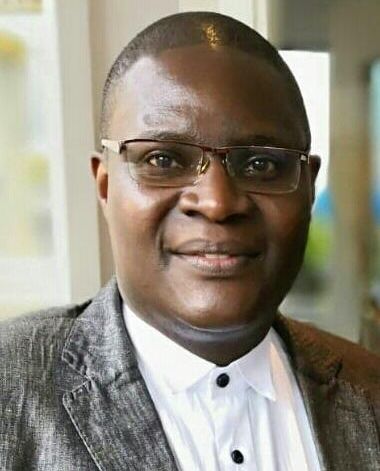
Written by Peter Caxton Kasozi Batende, caxton26@yahoo.co.uk

Address: 151 Don Phelan Close, London SE5 7DB, Tel +447550142644

Stories Continues after ad

Baby Cricket Cranes open U-19 World Cup campaign against Ireland

Baby Cricket cranes

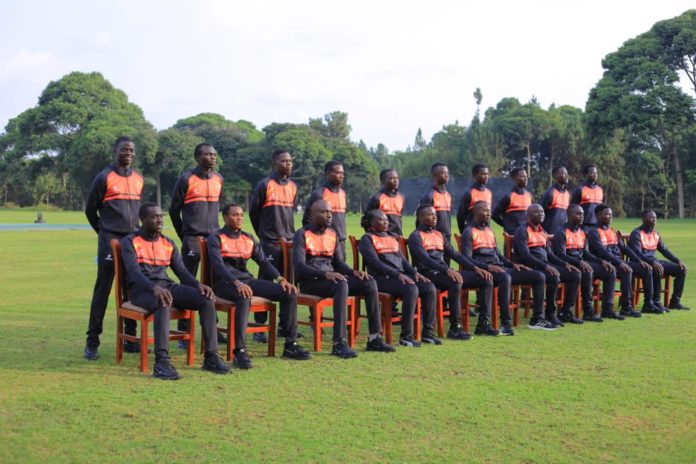
After a 15-year hiatus, Uganda heads back to the big time as one of the 16 nations that will take part in the 2022 International Cricket Council (ICC) U-19 World Cup in the West Indies.

It will be a third appearance after back-to-back editions in 2004 (Bangladesh) and 2006 (Sri Lanka) and the Baby Cricket Cranes were pooled in Group B alongside powerhouse India, Ireland, and African giants South Africa.

The Baby Cricket Cranes will take on Ireland tomorrow Saturday January 15th for their opening World Cup game.

On January 17th, they will face South Africa in the second game and conclude with India on the January 22nd in the preliminary round.

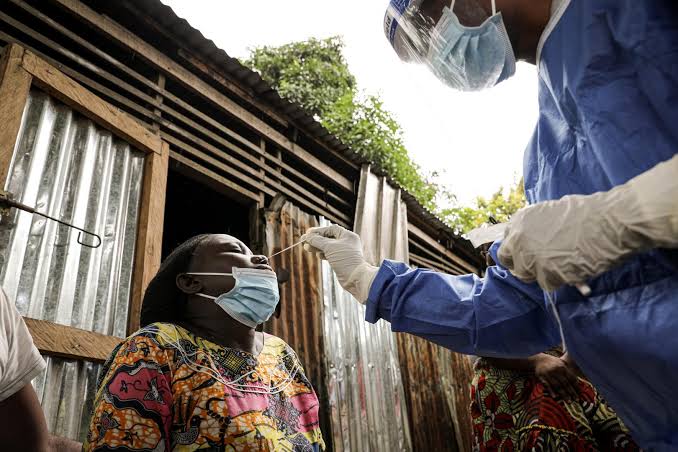
Two players that were part of the successful qualification campaign in the Rwandan capital Kigali; vice-captain Ismail Munir and pace bowler Akram Nsubuga failed repetitive Covid-19 PCR Tests conducted in Uganda and thus missed out on the final selection.

Whereas the two will be missed, the dynamic pair of exciting all-rounder Yunus Sowobi and top-order batsman Fahad Mutagana were drafted in as replacements and will now live the World Cup dream.

Uganda qualified for this year’s edition after winning the ICC U-19 World Cup Africa Region Qualifiers in October last year in Rwanda after outclassing log-leaders Tanzania on the last day by 8 wickets. Early Uganda had rallied to stay alive in the tournament with wins over Rwanda and Nigeria after falling to pre-event favorites Namibia on the first day of the continental meet.

UGANDA’S WORLD CUP SQUAD:

1. Pascal Murungi (Captain), 2. Isaac Ategeka (Vice-Captain), 3. Yunus Sowobi, 4. Christopher Kidega, 5. Pius Oloka, 6. Joseph Baguma, 7. Matthew Musinguzi, 8. Ronald Omara, 9. Cyrus Kakuru, 10. Brian Asaba, 11. Fahad Mutagana, 12. Ronald Opio, 13. Ronald Lutaaya, 14. Edwin Nuwagaba, 15. Juma Miyagi.

World Cup Preliminary Round

January 15th, 2022: Uganda vs. Ireland, Everest Ground – Guyana

January 17th, 2022: Uganda vs. South Africa, Queens Park Oval – Trinidad Tobago

January 22th, 2022: Uganda vs. India, Brian Lara Cricket Ground – Trinidad Tobago

Stories Continues after ad

Omicron-fuelled #Covid-19 surge in Africa plateaus

After a six-week surge, Africa’s fourth pandemic wave driven primarily by the Omicron variant is flattening, marking the shortest-lived surge to date in the continent where cumulative cases have now exceeded 10 million.

As of 11 January, there have been 10.2 million COVID-19 cases in Africa. Weekly cases plateaued in the seven days to 9 January from the week before. Southern Africa, which saw a huge increase in infections during the pandemic wave, recorded a 14% decline in infections over the past week. South Africa, where Omicron was first reported, saw a 9% fall in weekly infections. East and Central Africa regions also experienced a drop. However, North and West Africa are witnessing a rise in cases, with North Africa reporting a 121% increase this past week compared with the previous one.

Across the continent, though, deaths rose by 64% in the seven days ending on 9 January compared with the week before mainly due to infections among people at high-risk. Nonetheless, deaths in the fourth wave are lower than in the previous waves. Hospitalizations have remained low. In South Africa, for instance, around 9% of its over 5600 intensive care unit beds are currently occupied by COVID-19 patients.

In countries experiencing a surge in cases, the fast-spreading Omicron variant has become the dominant type. While it took around four weeks for the Delta variant to surpass the previously dominant Beta, Omicron outpaced Delta within two weeks in the worst-hit African countries.

 “Early indications suggest that Africa’s fourth wave has been steep and brief but no less destabilizing. The crucial pandemic countermeasure badly needed in Africa still stands, and that is rapidly and significantly increasing COVID-19 vaccinations. The next wave might not be so forgiving,” said Dr Matshidiso Moeti, World Health Organization (WHO) Regional Director for Africa.

Testing, which is crucial to COVID-19 detection and surveillance including genomic, rose modestly by 1.6% over the past week with over 90 million mostly polymerase chain reaction (PCR) tests carried out across the continent. Twenty-three countries recorded a high positivity rate of over 10% over the past week.

Across Africa, WHO is supporting countries to bolster genomic sequencing through trainings in key areas such as bioinformatics and specimen handling. The Organization is also helping procure and deliver critical laboratory equipment and supplies to countries.

So far 30 African countries and at least 142 globally have detected the Omicron variant. The Delta variant has been reported in 42 countries in Africa. In West Africa where COVID-19 cases are on the rise, the number of Omicron sequences undertaken by countries including Cabo Verde, Ghana, Nigeria and Senegal is growing. In Cabo Verde and Nigeria, Omicron is currently the dominant variant.

While the continent appears to be weathering the latest pandemic wave, vaccinations remain low. Just around 10% of Africa’s population has been fully vaccinated. Vaccine supplies to the continent have improved recently, and WHO is stepping up its support to countries to effectively deliver the doses to the wider population.

“This year should mark a turning point in Africa’s COVID-19 vaccination drive. With vast swaths of the population still unvaccinated, our chances of limiting the emergence and impact of deadly variants are frighteningly slim,” said Dr Moeti. “We have the know-how and the tools and with a concerted push we can certainly tip the balance against the pandemic.”

Stories Continues after ad

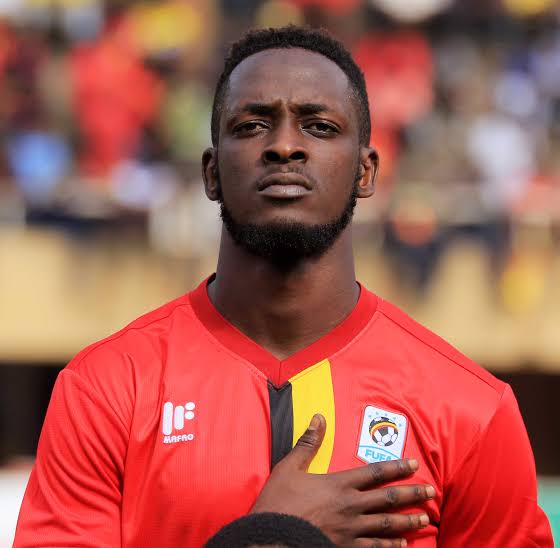
Murushid Juuko: Defender retires from Uganda Cranes

Express Football Club defender Murushid Juuko has retired from International football, the player confirmed on 13th January.

In his letter addressed to FUFA, Juuko said that “I believe I have served the country enough and it’s time for me to call it a day with Uganda Cranes.”

“This has not been a simple decision for me to make but together with my family and management we think this is the right step for me to take,” he wrote.

“I feel I have served the country enough and it is time for me to call it a day with the Uganda Cranes.”

Juuko made his Uganda Cranes debut on 11 July 2014 against Seychelles and has been capped 39 times with the national team where he has scored one goal, having played at two Africa Cup of Nations tournaments.

“I wish the Uganda Cranes the best of luck in their future endeavours and I will now concentrate on my club football with Express,” Juuko added.

Juuko was part of the Uganda Cranes squad that ended the 39-year old wait for Uganda to qualify for the Africa Cup of Nations.

He has also featured for the Uganda U-20 and U-23 junior sides before graduating to the senior team. He won the 2015 CECAFA Cup with Uganda Cranes in Ethiopia.

Stories Continues after ad

AFCON hit by goal scarcity

Afcon 2021

Goals have been a scarce commodity in this year’s Africa Cup of Nations (AFCON) in Cameroon, the 33rd edition of the continent’s biggest football tournament.

A total of 12 goals have been scored in the opening round – match day one – 12 games. This is more than twice less than the same number of goals scored during the same stage of the previous tournament.

Three of the goals came in a 2-1 win for the host Cameroon, whose goals came from the penalty spots against Burkina Faso.

Those were two of the four goals that have come from penalties.

There have been two goalless draws. Those stalemates came from Guinea Bissau and Sudan in Group D as well as champions, Algeria, and Sierra Leone in Group E. The rest have ended in 1-0 victories.

There were 27 goals were scored in the opening matches in the AFCON 2019 in Egypt. That averaged 2.25 goals per match, a stark contrast to an average 1 goal per match in the opening group matches in Cameroon.

This is the second time the tournament is played on a 24-team format, up from 16.

A total of 102 goals were scored in the previous tournament will be reached and it looks unlikely to be reached in the current edition.

However, there was drama in the game of Tunisia against Mali when the Zambian referee Janny Sikazwe blew the final whistle prematurely at the 85 minute mark and at the 89 minute.

The Tunisians were chasing an equaliser after falling behind to a 48th minute penalty by Ibrahima Kone. Players of both teams went off into the dressing room, only for them to be ordered to return 25 minutes later before Tunisia refused.

It was reported that they refused to play the final few minutes in protest and will instead lodge a complaint.

Stories Continues after ad

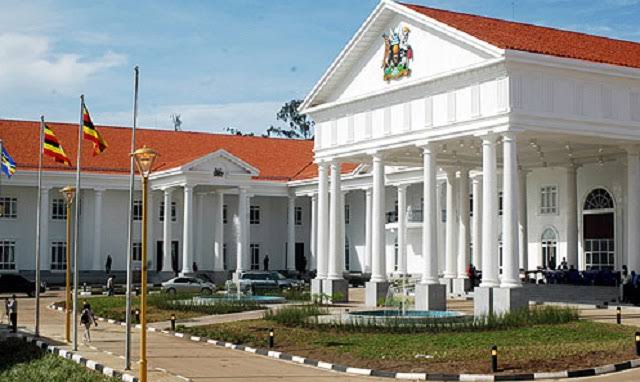
State House seeks Shs12bn for renovations

Parliament has received a request of Shs12 billion from the government to renovate the State House in Entebbe and 23 up country state lodges.

According to the State Minister for Economic Monitoring in the Office of the President,  Peter Ogwang, the Entebbe State House was constructed in 2007 and has not been renovated since then. 

“Ever since the Entebbe State House was constructed15 years ago, no major renovation has been done and some of us who go there can confirm that,” Ogwang said.

Appearing before the Committee on Presidential Affairs Ogwang added that the state lodges around the country are in need of repairs.  He said this while presenting the Budget Framework Paper for financial year 2022/2023.

The committee advised State House to increase the budget for the Presidential Initiative on Model Villages saying the shs2 billion allocated to the programme is insufficient and has had no impact.

“If you go to villages, you will not see any model village. The Shs2 billion is spent on operations and management,” said Jesca Ababiku, the Chairperson of the committee on Presidential Affairs.

Ababiku said it was critical for State House to note that failure of presidential initiatives has a bearing on the image of the President, a reason they should push for adequate funds to have the model villages desired by the President.

MPS were also concerned that there were several government agencies engaged in monitoring of government programmes and wondered if it was not a duplication of duties and a waste of resources.

Ogwang who heads the State House monitoring unit said he was working in coordination with the State House Anti-corruption unit, the Inspector General of Government and Uganda Police.

He explained that this was a new and effective way of fighting corruption as it eliminates chances of perpetrators compromising individual agencies.

“There are some people who feel untouchable that when you send one agency, it fails to perform; we now have a team with technical people from the relevant anti-corruption organs,” said Ogwang.

Stories Continues after ad

Prudential announces Africa cup of Nation’s 2021 sponsorship

Prudential Africa has signed a sponsorship agreement with the Confederation of African Football (CAF) to become the official insurance partner of the 33rd edition of Africa Cup of Nations (AFCON) 2021.

At a press conference to announce the sponsorship, Eric Mboma, Chief Representative Officer, Prudential Northern Africa Region said the sponsorship underscores Prudential’s commitment to the African continent.

“As we grow our business in Africa, we also want to support the passion and talent of its people. Africans share a common love for football and we are honored to be part of a tournament that unites the continent and brings together the brightest talents of African football.”

Commenting on the partnership, Confederation of African Football (CAF) General Secretary Mr. Véron Mosengo-Omba said, “We are excited and pleased to have Prudential as a partner. We share a common purpose in our commitment to developing local talent as well as driving prosperity for the people of Africa.”

Mr. Mboma added, “Through sports, Prudential wants to encourage people to stay active and lead more healthy lifestyles. As a life insurer, we believe that health and wellness are important for people to live fulfilling lives.”

AFCON 2021 has already started and will continue till 6 February 2022 with Cameroon as the host nation.

Stories Continues after ad

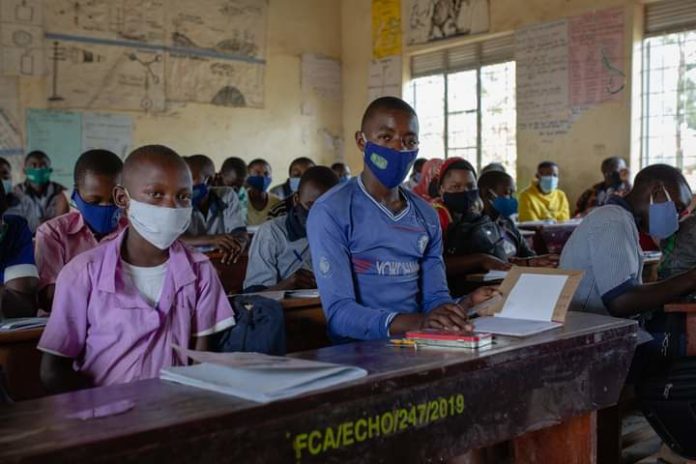
As schools in Uganda reopen, classrooms under pressure in refugee schools

After two years of closures, longer than anywhere else in the world, Ugandan schools reopened this week and refugees eagerly returned to classrooms across the country. Home to 1.5 million refugees, Uganda has the largest refugee population in Africa, and over half of them are aged under eighteen according to the United Nations. Classrooms that were crowded before the pandemic are now struggling to accommodate more students who have entered the system while schools were closed.

”While out of school, many students worked to support their families, so they have not progressed. At the same time, others have started school, this means that classrooms that were at capacity before the pandemic will now be crowded,” says Wycliffe Nsheka, Country Director of Finn Church Aid (FCA) in Uganda.

”We have built new schools to accommodate the increased number of students, but I don’t think it will be enough to relieve the pressure on teachers. Before the pandemic, we had 160,000 refugees enrolled in the schools we managed in partnership with UNHCR. Our teachers sometimes had classrooms with up to one hundred students and many fear that the class sizes will be unmanagable once the term gets underway,” says Nsheka.

”Teaching refugees is never easy. They struggle with trauma and poverty inside and outside the classroom. We fear that now that schools are open, even more students will come – we all have a lot of catching up to do,” says Vallence Tukacungurwa the Head Teacher at Bukere Secondary School which was built by FCA with funding from the U.S. Department of State during the pandemic and opened for the first time on 10 January.

While schools were closed, FCA provided home learning packages, textbooks, exercise books and pens to students so that they could continue their studies at home and lessons were conducted via radio so that they could still participate. Yet, as economic opportunities declined due to the pandemic, many students were forced to work to support their families, particularly in refugee settlements.

Isaac Munyuza (18) lives in the Kyaka refugee settlement and, although he dreams of becoming a doctor, for the last year he has worked digging holes for a dollar a day. Munyuza has enrolled at Bukere High School and, when he visited to enrol, he said, “I am excited to go back to school. I like my new school.”

Nsheka hopes that FCA can help students like Munyuza fulfill their dreams but is concerned about the pressure on teachers in the classroom. ”It’s one thing to build new classrooms, but we also need more teachers so that we can reduce class sizes. After missing out on school for so long, we need to do everything we can to help these students catch up on their studies so that they don’t miss out on other opportunities,” says Nsheka.

Stories Continues after ad

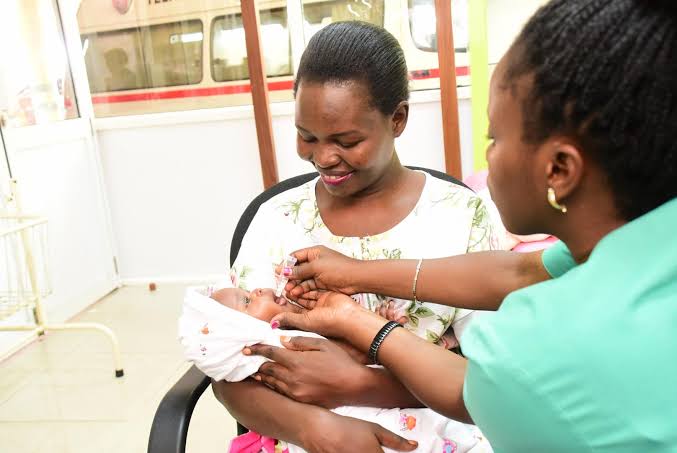
Health Ministry set to carry out countrywide door-to-door Polio immunisation

The Ministry of Health has said it is set to immunise over 8 million children below the age of five against Polio.

The exercise will be conducted door-to-door countrywide from January 14th to 16th. About 8.8 million children under five will be vaccinated with novel oral polio vaccines (nOPV2).

“The National House-to-House Polio Immunization Campaign will be launched today in Wakiso District. I appeal to all parents and caretakers to ensure that all children under 5 years receive their Polio Vaccine during this exercise,” Health minister Dr. Jane Ruth Aceng said.

Local council leaders, village health teams, and health officials will move house to house administering the vaccine.

Last August, Uganda announced that there was a polio outbreak in the country after samples on fecal matter collected in the capital Kampala tested positive. The ministry of health warned at the time that it was the rare wild polio virus type 2, whose vaccine was withdrawn from the country’s routine immunization exercises in 2016.

The virus type, according to the ministry, is the most virulent of the three types, 1, 2, and 3. The resurgence was attributed to the reduced routine immunization in the country due to the COVID-19 pandemic.

Uganda was certified polio-free in October 2006 by the World Health Organization (WHO) after having reported no indigenous polio cases for 10 years.

The ministry urged efforts to ensure that all children are vaccinated against polio saying vaccinated children will be marked and their households numbered.

According to the World Health Organisation, polio is a highly infectious disease caused by a virus that mainly affects children under five years old.

Stories Continues after ad

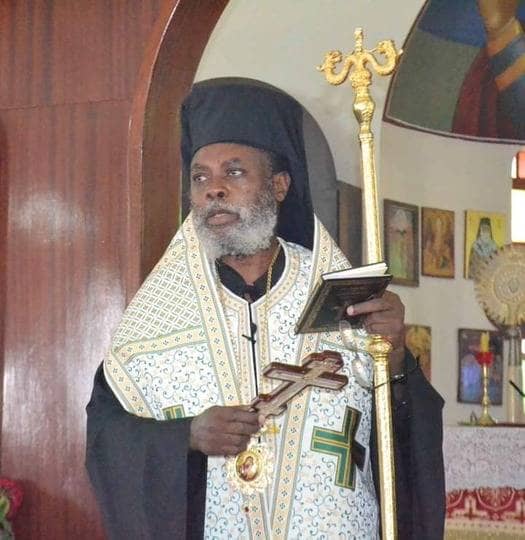
Metropolitan Ieronymos Muzeeyi named new Archbishop of Orthodox Church

Metropolitan Ieronymos Muzeeyi

Metropolitan Ieronymos Muzeeyi has been appointed the new Archbishop of the Holy Metropolis of Uganda.

He replaces late Archbishop Metropolitan Jonah Lwanga who breathed his last on September 5, 2021 in Greece’s capital Athens where he had gone for a visit. The church confirmed that Lwanga succumbed to prostate cancer.

His appointment was confirmed by St. Nicholas Orthodox Church Namungoona. “Metropolitan Ieronymos (Muzeeyi) of Mwanza has been appointed as the new Archbishop of the Holy Metropolis of Kampala and All Uganda,” the church said.

Ieronymos was born on March 18, 1963 in Bulopa, Busoga, Uganda. He studied Theology at the University of Athens between 1986 and 1991. He continued with his post-graduate studies in Canon Law also at the University of Athens from 1992 to 1996.

He was ordained deacon and priest during 1996. During 1996 and 1997, he served as Vicar General in the Archdiocese of Kampala followed by serving in the same position at the Diocese of Bukoba in Tanzania during 1997 through 1999. He was consecrated Bishop of Bukoba on November 23, 1999, and then was elevated to Metropolitan of the Archdiocese of Mwanza on November 23, 2007.

Stories Continues after ad