Stanbic Bank
Stanbic Bank
23.9 C
Kampala
Stanbic Bank
Stanbic Bank
Home Blog Page 699

UNBS tightens grip on the quality of steel products

UNBS surveillance team

The Uganda National Bureau of Standards (UNBS) has commenced enforcement activities against substandard steel products in different parts of the country, in line with its mandate of ensuring fair trade and protecting the public and environment against dangerous and sub-standard products.

The resumed enforcement exercise follows expiry of the January 31st, 2022 ultimatum issued by UNBS to all manufacturers of steel products to recall all substandard products on the market.

During a steel sector meeting on standards held on 19th January 2022 convened by UNBS, attended by Steel sector manufacturers and hard ware dealers, the following resolutions were made; all steel products manufacturers liaise with their downstream supply chains to recall all substandard products by 31st January 2022.

Any substandard steel products found on the market starting 1st February 2022 shall be seized by UNBS. Manufacturers of the substandard products will be prosecuted in courts of law and substandard materials shall be destroyed at the cost of the manufacturer.

Despite the ultimatum issued, UNBS has so far seized approximately 15,500kgs of substandard ribbed steel bars and hollow sections worth over Shs640 million in the Kampala Metropolitan area.

The UNBS operations that kicked off in Kampala last week are to continue to different regions in the country.

UNBS developed quality standards for steel products available on the UNBS website via https://webstore.unbs.go.ug for public knowledge of good quality construction materials.

UNBS urges all manufacturers of steel products to ensure that their products meet the quality standards and are certified by UNBS, and all middlemen, hardware dealers and importers to ensure that they deal in only certified steel products and consumers to verify the quality of materials before purchasing them.

Stories Continues after ad

There is a significant increase in Modern Contraceptives usage among Women over the past year – Study

A group of Researchers presenting study finings. Photo by Davidson Ndyabahika

The study by the Performance Monitoring for Action Uganda project -PMA has revealed that in the year 2021, the use of modern methods of Family Planning was embraced more by the women of childbearing age compared to 2020.

According to the study, a substantial increase in the use of modern contraception from 30 percent to 34 percent in 2021 was observed among all women. Among women who were not currently using contraception, only one in five intends to use contraception in the next 12 months. It also reveals that women continue to report high levels of unintended pregnancies.

The study which was conducted nationally in women aged between 15 to 49, from September to November 2021, shows that the proportion of public facilities offering IUDs and implants, and maintaining a stock of these commodities have been steadily increasing overtimes.

However, on counseling and outreach, the study findings show a low percentage of women reported receiving a comprehensive contraceptive counseling. Only 2 in 5 contraceptive users report receiving comprehensive information on family planning methods use, adding that the availability of comprehensive contraceptive counseling continues to be low among women who are current users of modern contraceptive methods

“Adolescent girls between 15 to 19 years were less likely than women aged 20 and over to receive family planning information from primary care or community health providers.” The study reveals.

The study further revealed stock-outs of family planning services at service delivery points have limited uptake of these family planning services.

“The stockouts have been reported highly among the long-acting reversible contraceptive methods-LARCs like implants and intrauterine devices-IUDs” it noted.

Speaking at the dissemination meeting in Kampala on Tuesday, Dr. Fredrick Makumbi, and the study team leader, revealed that in public facilities, IUD was at 66 percent, and nearly 8 percent were out of stock by the study time. He further adds that for the past three years, 21 percent of implants were out of stock, and 9 percent by survey time.

He further reveals how 71 percent of injectables were stocked in the facilities by the time this survey was done, but about 18 percent were out of stock.

According to the study, oral contraceptive pills, in half of the facilities were out of stock at the time of this study or for the last three months.

Dr. Richard Mugahi, the assistant Commissioner for Reproductive and infant Health at Health Ministry noted that distribution is one of the biggest mechanisms that will solve the challenge of stock-outs since every district is having two pickups.

The commissioner is also concerned with the reproductive health supplies, adding that as Health ministry, they are going to provide them to private health facilities if they are registered and recognized by the district teams.

Findings revealed that the proportion of women using family planning is standing at 40 percent, whereby married women who use any methods were currently 50.2 percent, and 43 percent being married women who embraced only modern methods of family planning.

From the Department of Community Health and Behavioral Sciences, Dr. Simon Peter Kibira, who is part of the team that carried out this survey noted that the challenge is in the quality of services which are given out while trying to address the family planning matters.

Dr. Betty Kyaddondo, the Director of Family Health at the National Population Council, in her remarks said that there is a great need to work with community health workers and Village Health Teams if there is a need to improve on family planning service delivery.

Family Planning and Health Service Access Barriers as a result of Covid-19

The study shows that women who wanted to access a health facility reported more success in accessing health facilities in 2021 compared to 2020. It reported how women experienced difficulties in accessing health services for family planning declined from 46 percent in 2020 to 24 percent in 2021.

“Among women who reported difficulties in accessing health facilities, and improved access to transport and reduced fear of getting infected to COVID-19 at health facilities was found in 2021, compared to 2020”.

Nearly all health facilities (97%) remained open during the recent COVID-19 restrictions period, and women who wanted to access a health facility reported more success in accessing health facilities in 2021 compared to 2020.

Performance Monitoring for Action Uganda project –PMA is implemented by Makerere University School of Public Health-MakSPH, in collaboration with the Uganda Bureau of Statistics and the Ministry of Health. Overall direction and support of PMA are provided by the Bill & Melinda Gates Institute for Population and Reproductive Health at the Johns Hopkins Bloomberg School of Public Health and Jhpiengo.

Stories Continues after ad

No more mandatory #Covid-19 testing at Entebbe Airport – Gen Katumba

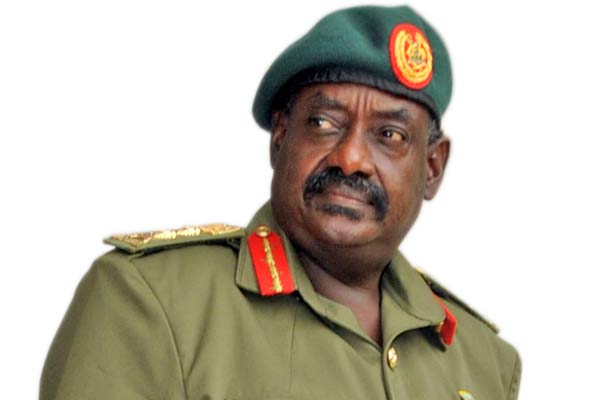
Works and Transport Minister, Gen. Katumba Wamala.

The Minister of Works and Transport, Gen. Katumba Wamala has revealed that after almost two years requiring all incoming travelers to be tested for Covid-19, the policy will be ended after the decision was adopted by East Africa Nations.

Katumba said this while he appeared before parliament’s committee of Commissions Statutory Authorities and State Enterprises (COSASE) that is probing the contract of the expansion of Entebbe International Airport.

“Government has decided that there will be no more testing at the airport, it will be selective. If the traveler doesn’t have 72 hour results and has symptoms, then they will be picked to be tested but testing every passenger that is coming in is not going to happen,” Katumba said.

The minister however urged that passengers going out of the country, their destination countries may require to fulfill that condition before boarding at the Entebbe International Airport.

Katamba’s remarks were in response to the question posed by Joel Ssenyonyi Nakawa West legislator who doubles as the National Unity Platform spokesperson who tasked the minister to explain why medical workers carrying out the Covid-19 tests on passengers have taken long without being paid.

“I am told that some of the workers haven’t been paid in three months, but that is problematic and dangerous even for the airport because they are managing people that are coming in, we need to have this issue resolved. For starters they complain that they are paid little but even the little isn’t paid in time, three months in arrears that is wrong,” Ssenyonyi said.

Katumba went further to defend the decision to expand the airport saying Uganda is in a very competitive world in terms of trade and travel because both internationally and locally, but the facilities at the airport weren’t supporting this growth.

“Right now most of our fresh foods are exported through Nairobi. Our products are taken across the border, repackaged and rebranded made in kunya because our facility was not meeting international standards. The size of our airport wasn’t also sufficient enough to be taking on some of the aircraft,” Katumba revealed.

Stories Continues after ad
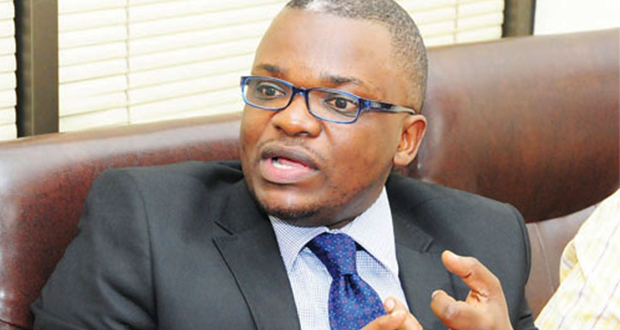
‘I will not appeal to Supreme Court’ – Gen Sejusa

Gen David Sejusa

Gen. David Sejusa has said he will not go to the Supreme Court after the Court of Appeal overturned High Court’s decision declaring him a retired Uganda People’s Defense Forces (UPDF) officer.

The decision to retire him had been made in 2016 by High Court Judge Margaret Oumo Oguli in relation to a suit filed by Gen Sejusa (formerly Tinyefunza) against the UPDF Commissions and Promotions board for refusing to retire him from the military following his application.

The Attorney General then ran to the Court of Appeal to challenge the ruling.

On February 14, 2022, a panel of three Court of Appeal Justices comprised of Christopher Izama Madrama, Irene Mulyagonja and Monica Mugenyi quashed Oguli’s orders. According to the Justices, the High Court expanded its administrative jurisdiction to engage itself in matters concerning the retirement of officers which is a preserve of the UPDF Commission’s, Promotions Board as per the UPDF Act.

“I WILL NOT APPEAL TO SUPREME COURT!” Sejusa tweeted.

“In 1996-7 Case, I Won in Constitutional Court; Govt Appealed to Supreme Court, It Won. In 2016 Case, I Won in High Court. Govt Appealed to Court of Appeal, is Judgement. Thank U All Who Have Stood by Me (us) In These Battles!” he added.

Sejusa had demanded Shs1 billion in compensation and damages for normal loss, as well as punitive damages for consistent torture and arrest. But the army through Senior State Attorney Max Kalemera argued that Sejusa was still an active serving officer, a status that remains unchanged until one gets a discharge certificate.

In his suit, filed in November 2015, Sejusa indicated that he had earlier applied for retirement through the board and received no response within the mandatory 90-days.

The judge of the High Court declared that Gen Sejusa is no longer subject to military law and ordered government to pay him Shs750 million as damages for violating his rights when he was arrested, detained, prosecuted and denied bail by the General Court Martial.

Following the Court of Appeal decision, Sejusa is now not entitled to the Shs750 million that had been awarded to him High Court and this means he can be assigned and deployed as an active officer of the army.

Stories Continues after ad
Standoff at Malaba border affected Uganda’s coffee exports for January 2022

Mature coffee tree

The Uganda Coffee Development Authority (UCDA) has said the standoff at Malaba border points with Kenya that led to the fuel crisis also affected Uganda’s coffee exports in January.

Uganda exported a total of 402,212 60-kilo bags of coffee valued at $61.98 million (about Shs215b in January 2022, the January report by UCDA shows.

Of the 402,212 60-kilo bags, 315,265 bags were of Robusta valued at $40.07 million and 86,947 bags of Arabica valued at $ 21.91 million.

This was a decrease of 10% in quantity and an increase of 56% in value compared to the same month last year.

UCDA attributes the decrease in Robusta exports to the border blockade and correction where two consecutive good harvests were associated with lower yields this year also characterized by a drought in some regions.

“This led to a shorter main harvest season in Central and Eastern regions as well as a short fly crop in Greater Masaka and South-Western regions. Shortage of containers and congestion at the Malaba border also affected exports,” part of the report reads.

Farm-gate prices for Robusta Kiboko averaged UGX 3,100 per kilo; FAQ UGX 7,000 per kilo, Arabica parchment UGX 12,000 per kilo and Drugar UGX 10,500 per kilo.

Coffee exports for 12 months (February 2021-January 2022) totalled 6.72 million bags worth $741.03 million compared to 5.47 million bags worth $ 511.66 million the previous year (February 2020- January 2021).

This represents an increase of 23% and 45% in both quantity and value respectively.

Seventy Nine percent of the total volume was exported by 10 exporters, out of 40 companies which performed during the month compared to 72% in December 2021 reflecting increasing concentration. Mt. Elgon A, AB and C/PB fetched the highest price at US $ 6 per kilo. The share of sustainable Arabica exports to total Arabica exports was 20%.

When comparing quantity of coffee exported by type in the same month of last Coffee Year (January 2021), although Robusta decreased by 20.76% in quantity, it increased by 22.62% in value, while Arabica exports increased by 80.84% and 215.67% in quantity and value respectively.

UCDA says that the Increase in Arabica coffee exports is due to an on-year cycle characteristic of Arabica coffee production. Shortage of shipping containers in Vietnam and weather related concerns in Brazil fueled an increase in global prices, the report adds.

Italy maintained the highest market share with 30.03% compared with 37.11% last month. It was followed by Sudan 17.02% (5.99%), Germany 10.15% (17.38%) Belgium 6.34% (3.59%) and Spain 5.61% (4.62%).

Coffee exports to Africa amounted to 97,554 bags, a market share of 24% compared to 88,546 bags (16%) the previous month. African countries included Algeria, Sudan, Morocco, Egypt, South Africa, South Sudan and Kenya. Europe remained the main destination for Uganda’s coffees with a 58% imports share lower than 70% in December 2021.

Stories Continues after ad

Heavy penalties in proposed Cyber Law

Social media apps

Kampala Central Member of Parliament, Hon Muhammad Nsereko has been granted leave by Parliament to introduce a law on cyber-harassment which prescribes hefty fines, lengthy jail terms, a ban from holding public office and loss of office for convicted offenders.

Clause 2 of the Bill seeks to punish individuals who “without authorisation, accesses, intercepts another person’s data or information, voice or records another person” with a fine of Shs15 million or up to 10 years in jail or both imprisonment and fine.

Sending and sharing data about children without the authorisation of their parents or guardians on a computer and by extension social media, will become an offense punishable by seven years jail term, Shs15 million in fines or both, should clause 3 of the Bill be enacted into law.

Sending unsolicited messages to computer users will be criminalised under clause 4 of the Bill, an offence that Nsereko proposes should be punished by a seven year jail term, a fine of Shs15 million or both imprisonment and fine.

“A person shall not send to or share with another person unsolicited information through a computer,” reads clause 5(1). Sub clause 2 prescribes the penalty.

Sharing of “misleading or malicious information about or relating to any person through a computer” is to be criminalised under clause 5 of the Bill, with a Shs15 million fine or a seven year jail term or both such imprisonment and fine.

The Bill also seeks to bar individuals who have been convicted of the offences relating to this Bill from holding public offices or losing it for those already in office.

“A person who is convicted under this Act shall not be eligible to hold a public office for a period of 10 years. Where a person convicted under this Act is a leader or public officer, he or she shall, in addition to the prescribed punishment, be dismissed from or vacate office,” reads clause 6 of the Bill.

Nsereko said the Bill is necessitated by increasing cyber-harassment and abuses that he said go unpunished.

“Without strengthening the existing legislation with stringent measures to address the gaps, the technological abuse with its grave impact on health, human relations and society at large, will continue to escalate the violation of the right to privacy,” he said.

Nsereko said for likes and views on social media sites, unscrupulous individuals blackmail innocents, sometimes for money, a vice he said must be nipped in the bud.

Stories Continues after ad

City Lawyer Male Mabirizi sentenced to 18 months imprisonment in Kitalya Prison

Lawyer Male Mabirizi

The High Court in Kampala has sentenced lawyer Male Mabirizi to 18 months imprisonment over contempt of court.

Mabirizi was recently ordered to pay a fine of Shs300 million over contempt of court but the state has since accused him of continued attacks against judicial officers.

State Attorney Patricia Mutesi told the High Court that Mabirizi has continued making contemptuous posts on his social media platforms in which he attacks Justice Musa Ssekaana and the Judiciary.

The State Attorney said that it was only prudent that Mabirizi was found guilty of contempt of court and the best punishment would be sending him to prison.

Mutesi noted that in one of his social media posts, Mabirizi described the Shs300 million fine as being null and void, a statement she said was an attack on courts of law and the Judiciary.

In response, Mabirizi’s lawyer Noel Nuwe asked court to allow his client to come and explain himself over the said posts, adding that he was not aware of any court order stopping him from attacking judicial officers.

However, Justice Musa Ssekaana said Mabirizi has never presented himself nor filed any affidavits to defend himself over the accusations despite being summoned over the same.

“Mabirizi never presented himself to court after being summoned and neither did he file affidavits to deny the allegations against him. Court has been left with no option but to order for his arrest on sight and be taken to prison for 18 months,” Ssekaana ruled.

The judge said he had been forced to make a brief ruling in order to ensure Mabirizi stopped his attacks on judicial officers. Justice Ssekaana ordered for Mabirizi’s immediate arrest so that he serves 18-month imprisonment.

However, following the orders, Mabirizi said he had earlier ran to the Court of Appeal to hear his application to stay the execution of all orders by Justice Musa Ssekaana including one of  having him being detained for 18 months.

“The order is illegal because no man can be a judge in his own cause. All in all, Ssekaana breached every fair hearing principle and I hence reject his unconstitutional ruling. I am hopeful that the Court of Appeal will stay the implementation of all these illegalities come Monday. I will at no time be bowed down by illegal orders,” Mabirizi said.

Stories Continues after ad

Ambrose Tashobya appointed NCS Chairman

Ambrose Tashobya

Ambrose Tashobya has been appointed the new chairman for National Council of Sports (NCS) for the period 2022-2024, the Minister of State for Education and Sports Hon. Denis Hamson Obua confirmed.

Tashobya replaces Dr. Donald Rukare whose two-year tenure expired.

“In exercise of the powers vested upon me by Section 3 (ii) of the National Council of Sports Act (1964), I am pleased to appoint the chairman and Members of the National Council of Sports for the term of 2 years with immediate effect,” Obua said.

Tashobya is a former Vice president at the Uganda Olympic Committee (UOC) and former president of the Federation of Basketball Association (FUBA).

2012 Olympics gold medalist Stephen Kiprotich is among the new faces on the board.

The board will over-see operations of all the 54 sports associations and federations in the country.

Chairman: Ambrose Tashoya

Members: Stephen Kiprotich, Cecilia Anyakoit, Zubair Galiwango, Andrew Owiny Otengo, Juliet Oyulu, George William Galiwango, Gloria Evelyn Piloya, Agatha Arembe Namirembe, Susan Anek Nowell Ongom and Derrick Namisi.

Stories Continues after ad

Why I still maintain that bank notes signed by the deceased Central Bank Governor are no longer legal tender

Mr. Muwema

The response to my opinion questioning the validity of Bank notes signed  by the late Governor, Professor Tumusiime Mutebile  which was made by Dr. James Akampumuza on the 11th February, 2022, demonstrated a limited appreciation of the intricacies around  the legal nature of paper money.

What my colleague and others of his persuasion need to know is that the acceptance of money as signed legal tender was the subject of a lot of litigation  in the United States of America, under what came to be known as the legal tender cases which included Knox Vs Lee 79.US 457(1870). Those cases caused a lot of controversy back then because private banks among others, used to issue their own bank notes until the Federal Reserve Act 1913 was enacted to create the Federal reserve system to by which issuance of paper currency was regulated under one central authority. Since then, it became a requirement that bank notes operating as legal tender should bear the signature of living persons. I will not delve deeper into the legal history of money as legal tender as I must keep the discussion intimate to the local context of the Ugandan bank notes.

Although my colleague has done better than many people who have a preponderance to hurriedly comment without any prior encounter with any knowledge on the subject, he failed to draw a distinction between the process of issuing money as legal tender and the company law principles of perpetual succession. This failure of distinction has driven his opinion outside the acceptable realms of jurisprudence on the money subject.

Any legal practitioner with a sufficient grasp of company law should certainly know that under the principle of perpetual succession there is a presumption of continuity of the business of the company. As such, contracts signed by an officer of a company continue to bind the company even after the demise of the official. I explained this in my earlier opinion when I stated that the late Governor’s signature on any BOU contract would continue to convey proprietary rights by and against the Bank. I added however that the same signature on the bank notes would not convey proprietary rights to the bank or users, when the maker passes on. I will explain again that money is a sovereign legal instrument to which the rules applicable to other fungible goods exchanged in the market cannot be applied by the stretch of any academic argument.

At the risk of repetition, I must emphasize that the principle of perpetual succession does not apply to bank notes which must be duly signed and authenticated at the material time they are tendered. If this principle were applicable, then we would still have bank notes signed by former Governors like Leo Kibirango (1981-1986), Suleman Kiggundu (1986-1990) and Charles Kikonyogo (1990-2000). There would be no rationale for issuing new Bank notes signed by a new Governor, if it was possible to retain previously signed bank notes.

We cannot ignore the common best practice of withdrawing bank notes signed by former Governors from circulation by the central bank. This practice which is worldwide, gives effect to the law. For those in doubt, this practice must be viewed as a fundamental extrinsic aid in arriving at the correct statutory interpretation of the BOU Act in relation to issuance of money as legal tender.

The reason why BOU has always replaced bank notes signed by a governor or bank secretary who is no longer in office is because the term- legal tender, is used in a present continuous tense. There is no room for a past Governor or Bank Secretary to sign a bank note which qualifies to be legal tender today when they are not physically present in office.

S.3 of the BOU Act which mandates the Governor to sign and authenticate bank notes, also provides for the deputy Governor to sign in his absence. It should be understood that a reference to the holder of an office under S.3 Interpretation Act Cap 15 is construed to mean the person for the time being lawfully holding, acting or performing the functions of that office. In that sense, therefore, a bank note can only be treated as legal tender if it is signed by the Governor lawfully holding, acting or performing the functions of that office. As we all know, the late Tumusiime Mutebile like any other former Governors is no longer the Governor of the central bank and therefore he cannot otherwise issue any legal tender today or at all.

It is surprising that my colleague did not even attempt to explain why the law would provide for another person to sign for the Governor in his absence if indeed his signature is supposed to stand in perpetuity. Moreover, as I stated earlier (and to which no rebuttal was given), the late Governor’s signature on the bank notes is an electronic signature which is liable to be revoked under S.69 Electronic Signatures Act 2011.So on what basis can anyone claim that his electronic signature can be held in perpetuity. This claim of perpetuity, rather than my opinion, is the real absurdity.

I wish to end by stating that our continued use of the bank notes signed by the late Governor does not make them legal tender. We are all using these illegal bank notes under a state of compulsion because we don’t have any other mode of exchange available. Whereas all Ugandans who continue to use these illegal Bank notes under such compulsion are excused from any form of liability, it is incumbent upon us as a country to cause the redemption of our currency by calling for appointment of a new Governor to sign on new Bank notes without delay. Our national currency is the life blood of our economy, we cannot afford to saddle it with avoidable legal uncertainties for this long.

Fred Muwema

Managing Partner

Muwema & Co. Advocates

Director Legal & Corporate Affairs

Anti-Counterfeit Network Africa

15th February, 2022

Stories Continues after ad

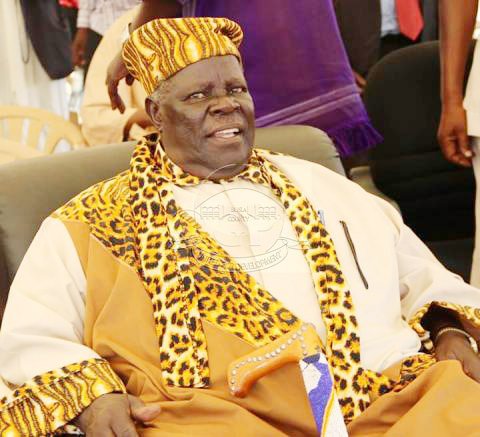
Museveni mourns Emorimor, says he passed with flying colours

President Yoweri Museveni has eulogized the fallen Teso cultural leader Papa Augustine Osuban Lemukol.  

Speaking at the official send off at Kololo Independence grounds, Museveni said, the late Emorimor passed with flying colours and he has no issues against him.

“The Emorimor came up with many well-intentioned development projects. I am here to say goodbye to him and acknowledge his proper use of leadership, which others can emulate,” he said.

The President expressed his dismay over inadequate funding of cultural institutions in the country.

 Museveni said the government will soon come up with a policy where a cultural leader can be given a car every five years. “This should be an entitlement, not a donation from government,” Museveni added.

“I express my condolences to the family of Papa Augustine Osuban Lemukol, all Ugandans and Africans and wish him eternal rest,” he mourned.

Emorimor Osuban Lemukol died on 5 February 2022 at Mulago National Referral Hospital.

He was born in 1934 and was enthroned in April 2000.  He served as Commissioner in the Ministry of Agriculture and Animal Husbandry until his retirement in 1979.

He also served on several boards including Kinyara Sugar Works, Uganda Tea Growers Corporation, Produce Marketing Board and Uganda Medical Stores from 1989 to 1998.

Stories Continues after ad