Stanbic Bank
Stanbic Bank
23.9 C
Kampala
Stanbic Bank
Stanbic Bank
Home Blog Page 700

LoP protests motion seeking for removal of MP Zaake from Parliamentary Commission

MP Zaake

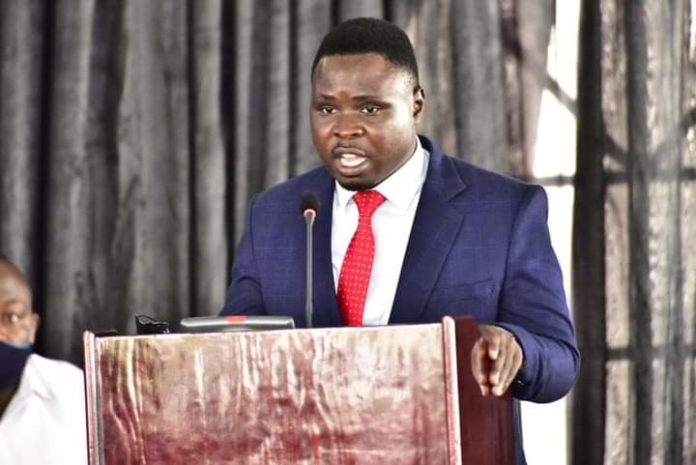
The Leader of Opposition in Parliament (LoP) who doubles as Nyendo-Mukungwe legislator Mathias Mpuuga has petitioned the Clerk of parliament protesting the motion seeking for removal of Mityana Municipality MP Francis Zaake from the Parliamentary Commission.

The motion seeking for eviction of Zaake from the commission is being moved by the Gulu West Member of Parliament Ojara Martin Mapenduzi. The mission is seconded by Amolatar Woman MP Atim Agnes Apea the National Resistance Movement (NRM), Soroti West MP (Independent) Jonathan Ebwalu and Busia MP Geoffrey Macho (Independent). The group accuses Zaake of incompetence and misconduct.

“We have written to the Clerk of Parliament over the ambiguous motion being fronted by some Members with the intention of removing Zaake from the Parliamentary Commission. The motion contravenes Rule 107 clauses 2 to 7 which demand a written notice,” Mpuuga said.

Mpuuga said that being served to the office of the Speaker articulating the grounds of the motion and the evidence thereof, the Parliamentary Rules of Procedure requires that the grounds and evidence be displayed at the Members’ notice board, and a list placed at the Sergeant at Arms office.

“For atleast third of MPs with voting rights have to sign. It remains unclear how the a third of MPs was notified  and persuaded to sign the petition which was never displayed for 14 days as required by the Rules of Procedure. The motion abuses the requirements of Rule 110(5),” Mpuuga said.

LoP said the motion  compromises transparency and compliance to Rules 110(2) & 107(5) and the rule of Natural Justice which demands fair hearing.

It all started with Members of Acholi Parliamentary forum boycotting a motion seeking to censure Security Minister Jim Muhwezi. The Opposition MPs ressoved to boycott parliamentary settings claiming that minister of security has abdicated his responsibility and that has resulted into forced disappearances, arbitrary arrests and detentions, continued torture. We find him unfit to continue occupying that sensitive office.

Political analysts however said that the motion for removal of Zaaka from the commission is aimed at mounting pressure on the opposition to drop the motion to censure the security minister.

Stories Continues after ad

Museveni to grace Archbishop Janani Luwum Day celebrations

Late Archbishop Janani Luwum

Minister of State for Ethics and Integrity Akello Rose Lilly has revealed that the country is set to commemorate Archbishop Janani Luwum Day.

The day will be marked tomorrow under the theme; “Hope beyond Affliction”, Lamentation 3:21-26. The theme encourages people to believe God for sustainable transformation in all aspects of life.

Janani Luwum was the 2nd Archbishop of the Church of Uganda, Rwanda, Burundi and Boga-Zaire from 1974 to 1977. This day will mark 45 years since Janani Luwum was brutally murdered under the then Military Government of General Idi Amin Dada.

According to the minister, the commemoration Service will be celebrated at Kololo Independence Grounds and will led by Arch-Bishop, The Most Rev. Dr. Stephen Kazimba Mugalu and the commemoration service will be graced by  President Yoweri Kaguta Museveni

In honour of St. Janani Luwum home and burial grounds, a commemoration service will be held on the same day at Wii Gweng, Mucwini, Kitgum District.

Who is Archbishop Janani Luwum?

Archbishop Janani Luwum was born in 1924 in Mucwini among the Acholi people. He went through all stages of education at the time until he took on his first calling as a teacher at Boroboro College, Boroboro Parish in Lira District. On 6th January 1948, in dramatic conversion, Janani Luwum accepted Jesus Christ as his Lord and Savior and it is then that he switched to Church Ministry.

Janani Luwum served in almost all key positions in the church ranging from Principal of Buwalasi Theological College, Provincial Secretary at Namirembe, Bishop of Northern Uganda and in June 1974 following unanimous election; he was installed as Archbishop of the ecclesiastical Province, then covering Uganda, Rwanda, Burundi and Boga-Zaire (Eastern DR Congo).

Archbishop Janani Luwum served during the times of turmoil in Uganda; specifically, under the reign of Gen. Idi Amin Dada. This however did not hinder him from standing out for the values that we, up to date, strive to uphold in this country.

He was known for defending the truth at all times irrespective of the repercussions. His ability to speak the truth against the brutality towards Ugandans exhibited during Amin’s regime was a sign of unwavering courage. He strived to see youth, women and men involved in gainful employment; thus promoting hard work for self-reliance. He was passionate about development in all areas where he served, with emphasis on poverty reduction and rural development.

In recognition of the values St. Janani Luwum President Museveni in 2015 declared 16th February as a national day. The day is aimed at reflecting on the life of St. Janani Luwum and strive to bring positive change in our lives and the lives of those around us.

Stories Continues after ad

Government set to name and shame Emyooga fund defaulters

The state Minister for micro-finance Haruna Kasoro Kyeyune has ordered the District commercial officers in Ankole sub region to ensure that they name and shame all Emyooga program defaulters before arresting them.

Minister Kasolo issued the directive on Monday February 14th in Ntungamo district while concluding his tour to monitor the progress of Emyooga program in the counties of Rushenyi and Ntungamo Municipality while meeting political, civic and Emyooga leaders.

“I give an ultimatum of one week to the District commercial officers in Ankole sub region to visit all Emyooga SACCOs, document all defaulters and report back to me with the list of names, contacts and places of residence such that they can be put on all public places notice boards, places of worships, websites, radios, televisions and billboards,” he said.

Minister Kasolo revealed that naming and shaming will act as a warning to recover the funds from Sacco members.

The minister said that all steps are intended to strengthen the Emyooga program such that the funds can keep rotating with its members to realize social-economic transformation of all Ugandans.

However, he hailed Ntungamo district for performing well in the Emyooga program compared to the district where Ntungamo stands at 78% recovery.

The minister further cautioned the general public against overspending on non-capital ventures stressing that it is the reason why most Ugandans will remain poor.

The Ntungamo district chairman Samuel Mucunguzi Rwakigoba asked the minister to hire an independent audit firm saying that there has been a conflict of interest between district commercial officers and the implementing bank which is Micro Finance Support Centre who should audit the other.

The deputy RDC Ntungamo Byarugaba Isaiah Kanyamahaane acknowledged the great achievement made after the introduction of Emyooga program saying that whoever is despising the program is an idiot.

Kanyamahaane hailed the manager Microfinance Support Centre satellite office Ntungamo Asiimwe Grace for the work done in implementing the program in the district.

The Ntungamo District NRM vice chairperson Asiimwe Evans Rutahweire commended the NRM party chairman who is also the president for being wise to introduce the program that has transformed the society.

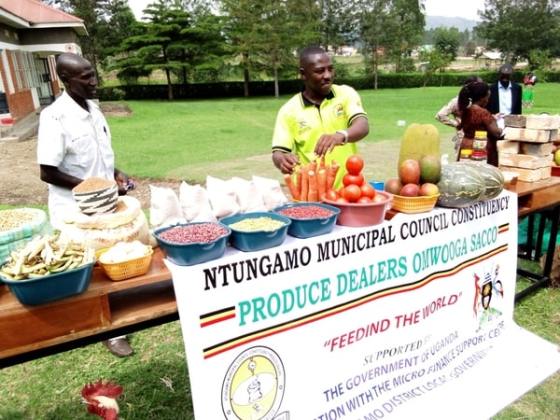
Ntungamo district has 85 Emyooga SACCOs except Journalist Omwooga Sacco where UGX 2.650Bn were disbursed and each constituency received UGX 530M.

The amount recovered Shs1, 842,566,350. He noted that among best performing SACCOs are Ntungamo Municipality produce dealers led by Natamba Edward, Ntungamo Municipality Vendors and Women Entrepreneurs Omwooga.

Stories Continues after ad

Police nabs its officer for criminalizing adultery

Handcuffs

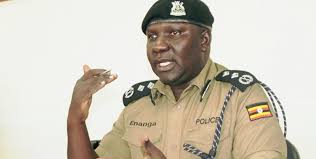
The police have arrested Inspector of police (IP) Julius Ogwang for criminalizing adultery. His arrest has been confirmed by Fred Enanga, the police Spokesperson.

Last week, the country witnessed an incident where a shameful incident of adultery, a civil matter, was criminalized. The incident was responded to by inspector of police, Julius Ogwang of Kira Road Police Station.

“The two victims were arrested and interrogated on camera, in a manner that violated their privacy. Adultery is no longer a criminal offence in our country. Therefore, criminalising it, is an act of unprofessionalism and abuse of authority, which the force cannot tolerate,” Enanga said.

He cautioned married persons whether in estranged, complex or sensitive relationships, to respect the sanctity of marriage and use lawful means, instead of smearing one’s reputation. 

“Adultery, can be used as a ground for civil processes like divorce, separation, custody of children and sharing of property. Other areas where the public, in conspiracy with selected officers, criminalise civil matters are private debts, where thousands are threatened with arrest,” he said.

“We strongly condemn the criminalisation of civil matters in the police. The officer who registered the case, IP Ogwang Julius, is arrested and charged with discreditable conduct, which upon conviction, can lead to a dismissal from the force. Our action therefore should act as a warning to other undisciplined officers, who look to gain from the proceeds of their selfish interests, at the expense of the UPF mandate. The role of the police in civil conflicts, complaints and disagreements is to protect life and property,” he said

Enanga said there are other circumstances, where a victimised married person, can report their matters to police. These include complaints of elopement, where one elopes with a married person and stays with them, trafficking in persons, where a person uses their power or positions of superiority and takes advantage of the victim’s vulnerability or disability, and under domestic violence, where the victim is tortured physically or emotionally, by the sexual behaviour of a married partner.

Stories Continues after ad

Makerere University VC Prof Nawangwe pardons 16 students

Prof Nawangwe

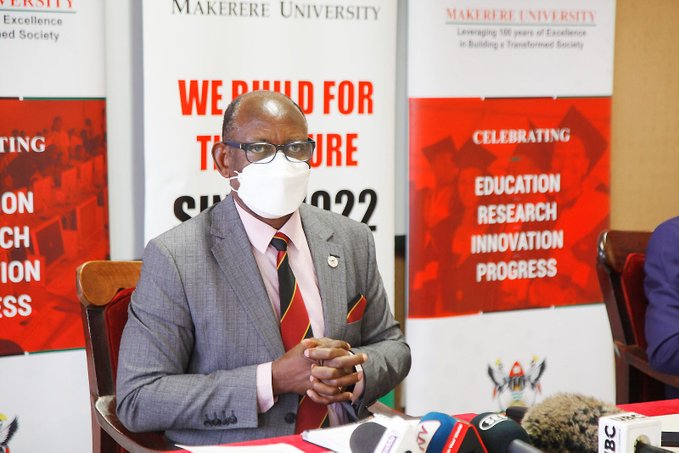
Makerere University Vice Chancellor, Professor Barnabas Nawangwe has revoked the suspension of 16 students who participated in a strike over online lectures.

Several students last Monday went on strike to oppose the university’s decision regarding the decision to proceed with the blended mode of teaching and learning, despite the full reopening of the country’s economy.

The University Management then received reports of bullying of freshers by some continuing students. This bullying was in the form of forced jogging, physical assault and use of offensive or profane language. The same individuals also destroyed university property in an attempt to get the freshers out of their rooms.

Through a letter addressed to each of the students, Nawangwe wrote: “In lieu of the written and oral explanations and apology from yourself. I hereby revoke your suspension and reinstate you as a student of Makerere University. I urge you and warn you to desist from any further actions that disturb peace at the university and bring the university in disrepute.”

Nawangwe encouraged the students to strongly desist all attempts to disrupt the University activities.

“As you may know, engaging in disruptive behavior and organizing unsanctioned demonstration both have a profound effect on the image of the University and the entire higher education sector. Such actions also disturb the peace of other stakeholders and disrupt important activities,” the letter reads.

The University reversed its decision to hold online lectures for the better part of semester one which started on January 29, 2022 and will now fully reopen for all students on March 5, 2022.

Stories Continues after ad

Uganda’s economy beats forecast, grows by 6.5% in 2021

Traders-go-about-their-businesses-in-Kampala

Uganda’s economy grew by between 6.5 and 7.0 per cent in 2021, beating projections due to effects of Covid-19 restrictions, Bank of Uganda (BoU) has said.

According to the BoU Monetary Policy statement for January, high-frequency indicators of economic activity for October 2021 to January 2022 show that the economy has rebounded from the Covid-19 induced lockdowns.

“The economy is estimated to have bounced back in 2021, growing in the range of 6.5-7.0 per cent, although it came after a 1.5 per cent contraction in 2020 as the pandemic forced parts of the economy to shut,” the report reads.

“Indeed, the high-frequency indicators of economic activity for October 2021 to January 2022 suggest that the economy was on a strong Rebound. Domestic demand is making a strong comeback as COVID-19 related restrictions are eased, adding to the gains from robust external demand,” it adds.

The report adds that considering this recovery and signs that the effect of the Omicron outbreak on economic activity has been relatively small, the outlook for economic growth is more positive than earlier projected.

But BoU warns that in 2022, there could be a loss of growth momentum as globa1 factors turn adverse, but real GDP is projected to grow by around 6 per cent as   domestic   demand   recovery   broadens.  

“However,   lower   global growth,   continued   supply   chain disruptions and tighter global monetary and financing conditions could constrain external demand. In addition, the recovery might remain fragile and uneven across sectors. Over the medium term, government investment in infrastructure is expected to enhance productive capacity and coupled with increased social spending and a recovery in tourism, should bring annual growth above 7 per cent,” the report says.

On the domestic front, uncertainty about the evolution of the pandemic continues to cast a shadow on the economic recovery.

“New COVID-19 variants and a resurgence of lockdown measures would weigh on the outlook. Another important source of uncertainty for the outlook is the public investment and how this will be financed under the fiscal consolidation path, which is necessary to keep debt sustainable and avoid the risk of debt distress. The slow execution of public investment projects and further delays in oil investments could dampen the growth outlook,” the report states.

Stories Continues after ad

Security Agencies uncover and dismantle new terror cells in Lukaya, Butambala

CP Enanga

The Directorate of Crime Intelligence in coordination with Counter-terrorism, conducted raids on two hide outs of suspected terrorists, in Lukaya-Kalungu and Bulo village in Butambala district, where they arrested 7 suspects (names still withheld).

Upon interrogation, they clearly indicated how they were being inspired, to carry out attacks on security personnel and VIP installations, within the country, by Imam Sulaiman Nsubuga, of the Lweza ADF Cell, who is still at large.

According to the police spokesperson, Fred Enanga, they are aware of the planned attacks on security personnel and continue to review our security posture, in the face of these targeted threats.

“Much as our counter terror task teams have greatly weakened the ADF, criminal elements and other hostile groups in the country, the sponsors of terrorism, are trying hard to reconstitute and re-establish operational terror cells and related capabilities. Their operational cells are mobile, autonomous, and flexible in the range of their targets or objectives,” Enanga said.

“Although we have now entered day 80, since the deadly suicide attacks occurred at CPS and Parliamentary Avenue, we have credible information indicating that, these hostile groups are determined to carry out attacks to reveal their existence. Their tactics include use of suicide bombers, attacks on VIP’s and security personnel, ride along shoot and kill, on bodabodas, use of AK 47 SMG random attacks and bomber attacks.”

“Our task teams are aware of these threats, of smaller but operational terror cells.  We are putting more attention on eliminating them and preventing them from being created.  The arrests and disruptive operations we have made are proof of the reality, that there are individuals in Uganda, who have become radicalised to violence and are willing to act upon it.  We are doing everything in our means to disrupt their mobility and proliferation.”

Enanga thanked the local communities who furnished them with relevant information about these hostile cells that had started recruiting individuals for terrorism purposes.  “The threats are real and call for increased vigilance and caution, as people go about our daily activities,” he emphasized.

Stories Continues after ad

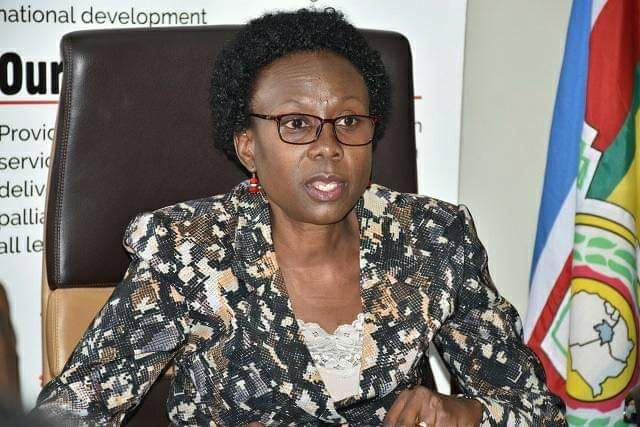
Health Minister Aceng urges the People of Karamoja to get vaccinated against #Covid-19

Uganda's Health Minister, Dr. Jane Ruth Aceng.

The Ministry of Health, with support from the Irish Government, the World Health Organization (WHO) and UNICEF, recently launched an accelerated COVID-19 vaccination campaign at the Boma Grounds in Moroto, to drive up the COVID-19 vaccine uptake. The campaign is targeting 9 districts in the Karamoja region to increase vaccine uptake from the current 16% to more than 90%.

The target districts include Abim, Amudat, Kaabong, Karenga and Kotido. The other districts are Moroto, Nabilatuk, Nakapiripirit and Napak and they will benefit from over 500,000 vaccine doses which will be administered to all eligible persons. The vaccines were acquired through the

During the campaign launch, the Minister of Health, Honorable Dr Jane Ruth Aceng said, “While Uganda is currently experiencing a decrease in the new COVID-19 cases, vaccination which was very instrumental in bringing the cases down should be promoted and taken up by all who are eligible.”

She mentioned that vaccination coupled with other public health measures including and not limited to social distancing, the appropriate wearing of masks is the only effective way Uganda will fight the pandemic.

“Although we are currently out of danger, as shown by the current positivity rate standing at 2%, the mortality rate continues to go up especially for the elderly who are unvaccinated. Let us vaccinate, and those who are above 50 years of age get your booster shots,” she said.

She further appreciated all partners including Irish AID, WHO and UNICEF for the continued support in the COVID-19 response.

The Permanent Secretary of the Ministry of Health, Dr Diana Atwine re-echoed the Minister’s message calling on the people of Karamoja and Uganda at large to use the vaccines provided by the Ministry and partners. “If we vaccinate, we are safer, however, the lack of vaccination will lead to a stretch in the health system. Let us follow the guidance from the Ministry of Health and WHO,” she said.

The WHO Representative in Uganda Dr Yonas Tegegn Woldemariam speaking on behalf of WHO and UNICEF pointed out, “as seen from current statistics, Uganda has not yet reached its target but with the Accelerated Mass Vaccination Campaigns, I am opportunistic that each district will achieve a coverage of 70% by April 2022.”

He further said that through the generous support from partners like the Irish Government, WHO was able to extend both financial and technical support to this accelerated mass vaccination campaign in the Karamoja region. It’s expected that the campaign will reduce the risk of severe disease, hospitalization, and death from COVID 19 in the region.

“We also need to prioritize vaccination in schools and as such once we achieve optimal coverage of the over 18 years, we can move to vaccinate the under 18 years as the next phase,” he mentioned.

“Vaccines save lives! But we must continue to observe standard operating procedures, including wearing masks, cleaning hands, good indoor ventilation, keeping physical distance and avoiding crowds,” Dr Yonas concluded.

Whereas the Karamoja region has received adequate quantities of vaccines since the launch of the nationwide vaccine rollout on March 10, 2021, its uptake has remained very low giving a 16% coverage based on the first dose of those above eighteen years (target 598,727), as of 1st February 2022. A total of 106,873 first doses and 23,741 had been administered.

The necessity to reduce the economic impact of the outbreak motivated the Ministry of Health to change course for the narrow prioritization around only high-risk groups to all the vulnerable in a fast-tracked accelerated mass campaign strategy.

WHO’s mandate is to support the Ministry of Health and partners develop capacity and health systems. Vaccinating 598,727 will not only allow increased access to the vaccine by a good proportion of the vulnerable population, which is nomadic pastoralists for the most part but will also eliminate any possibility for wastage of the scarce commodities that are received with a very short shelf life.

The WHO support with funding from the Irish Government includes mobilization and training of additional health workers, intensive social mobilization including mapping and pre-registration of the elderly, conduct vaccination campaigns by region over a period of seven days for the two rounds.

The estimated cost for the two rounds in the Karamoja sub-region is $313,935. In addition, WHO will facilitate real-time data management, strengthen safety surveillance and monitoring and evaluation through coverage surveys.

Stories Continues after ad

Conferencing for Election Petition Appeals set to kick off

Conferencing for Election Petition Appeals set to kick off

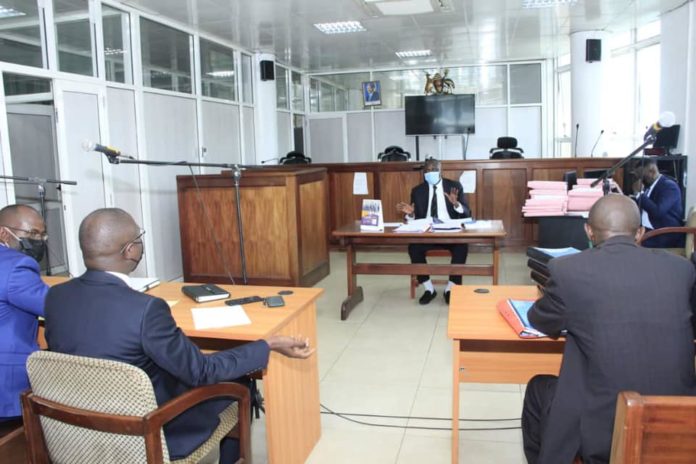
The process of hearing 81 Election Petition Appeals arising out of decisions from the High Court has kicked off.

The Court of Appeal Registrar, HW Susan Kanyange, said she is leading a team of the Court’s four Registrars who include HW Dr Alex Mushabe Karocho, HW Lillian Bucyana and HW Henry Twinomuhwezi to ensure that conferencing for the appeals are handled in a timely manner.

Conferencing is where lawyers of both parties agree on issues to be determined by court before the case file is forwarded to a panel of three justices for hearing.

HW Kanyange said the plan is to ensure that this process is concluded within 21 days before actual hearings take off. She noted that on top of the Election Petition Appeals cause-listed by the Court, there are also 29 Applications in which the Justices will handle.

Among the petitions to be handled on day one of the conferencing is an appeal filed by Julius Galisonga, challenging the decision of the High Court to dismiss his election petition against the incumbent MP Abdul Katuntu for allegedly orchestrating electoral irregularities, which affected the outcome of the Bugweri county parliamentary poll results.

The Conferencing schedule includes that of Bagala Joyce Ntwantwa against her opponent, Minister of Lands, Housing and Urban Development, Nabakooba Judith Nalule & another for failure of the lower court to strike out the petition which was supported by an affidavit that had been commissioned by an advocate whose practicing certificate had not renewed for the year 2021.

HW Kanyange said the Election Petition appeals were being prioritized since they take precedence in court business.

Stories Continues after ad

Kabuleta calls for change of gov’t to curb land grabbing and cattle rustling in Acholi sub-region

Joseph Kabuleta Kizza

The National Economic Empowerment Dialogue (NEED) leader Joseph Kabuleta Kizza has warned the people of Acholi Sub-region to be extra cautious against the Balaalo herdsmen who want to steal their oil.

Over a decade ago, oil was discovered in Nwoya district in the Acholi by a French oil and gas company- Total SA.The discovery came in the aftermath of seismic studies around the Murchison falls area by its Ugandan operations, Total Exploration and Production (Total E&P) in September 2012 and up to date, the East African country is yet to start its exploration.

Other districts in the Sub-region include Agago, Amuru, Gulu, Kitgum, Lamwo, Pader and Omoro.

Mr Kabuleta said during a meeting with the local leaders and residents of Acholi Sub-region on Monday.

He said the Balaalo are only interested in settling in places where oil has been discovered.

“When they discovered oil in Bunyoro, within a short period of time, the Balaalo were already in the Sub-Region. They usually have guns. Now even here in your area (Acholi) when oil was discovered, they did the same thing. Many of them have settled here with their guns. They graze their cattle with guns in their possession,” said the former presidential candidate, who is currently on nationwide sensitization campaign premised on protecting Uganda’s national deposits that could be used by citizens to elleviate themselves from poverty.

“The same case is in Sebei; Balaalo and oil. We wonder whether the cows of these Balaalo feed on oil. Where do they get the guns? And the most annoying part is when they go to a place, they grab the community land and they claim it as belonging to them. By the end of the day, they render you people landless,” he added.

Mr Kabuleta also rallied the Acholi locals to advocate for change of government if they want to fully enjoy the natural resources in their area.

“Those who steal or rustle cattle have an aim of ensuring that you  don’t settle on your land because if you don’t have cattle to be kept on it then it will be very easy for you to sell the asset to them since most times it will be idle and useless on your side. So in order to fight cattle rustling and land grabbing, we must change the government because as long as this current establishment is still in power, nothing is going to change.”

The politician further pinned the government for deliberately denying the local people in Acholi their full rights of owning land by refusing to give them land titles.By doing this, Kabuleta said the government makes it easy for Balaalo to grab land that belongs to the indigenous people.

He however, advised the locals not to lower the guard, saying they should stand up and fight for what rightly belongs to them.

“Nowdays its very hard to get a land title. Government is doing it deliberately not to give you titles that show ownership but I call upon you to be cautious against those people who want/ are stealing your wealth. Fight for your cattle, land and other resources. Show those people that they can’t take them because there are some serious repercussions if they do so.

“Now if you’re born in this land, all the wealth that God invested in it, you’re supposed to have a stake and nobody is going to give you the stake by sitting back and hoping. It’s going to be given to you by standing up and making a strong claim on it and making sure that people who come to steal those resources are not given an inch of what is not theirs,” Mr Kabuleta asserted.

The former journalist also noted that in case business people are taking the land for investment, the indigenous people should be given a share capital and become shareholders in whatever establishment is put in place so that they benefit from their natural wealth.

“You have many mineral resources in your land like oil, agricultural potential is in place and there’s a vast piece of land with a small population because of war, unfortunately. But that means there’s a lot of potential. But the big question is who is going to benefit from these resources? Is it going to be the same people who were fomenting the war or is it going to be the indigenous people in this area? Please don’t be inactive, fight for your resources,”he urged.

In the same meeting, the residents decried army officers’ role in stealing their cattle

“We have army officers in Kabong and  Kotido who are using these rustlers to get cattle from Acholi. I talk frankly about this because we have a farmer who is an officer with more than a thousand cattle in Kabong. It is so painful, we cannot do anything. We have now resorted to tractors for ploughing but now what are we going to use for marriage? It is what we always use as dowry,” Opio Albino Ronald from Agago District tearfully disclosed.

Kabuleta’s revelation comes at a time when the Balaalo herdsmen’s presence in Acholi is raising questions among a section of Ugandans.

The number of Balaalo now spread across the Sub-region has reportedly increased since 2017 amid growing concerns over land rights and conflict.

On October 24, 2017, President Yoweri Museveni directed the army and the Agriculture ministry to evict the Balaalo pastoralists from Acholi and northern Uganda at large.

Four years later, the number of pastoralists and the population of their animals across the sub-region has more than tripled.

In 2021, the President rechoed his directive by giving the Balaalo two months to vacate northern Uganda or face forceful eviction and prosecution.

In a letter dated November 2 to the Prime Minister, Robinah Nabbanja, Museveni described the herdsmen as illegal migrants whose animals remain a persistent problem to the farming communities in the north, specifically in the Acholi sub-region.

Stories Continues after ad