Stanbic Bank
Stanbic Bank
26.8 C
Kampala
Stanbic Bank
Stanbic Bank
Home Blog Page 701

Court of Appeal overturns decision to retire Gen Sejusa from the army

Sejusa

The Court of Appeal has overturned a decision by the High Court that retired the former Coordinator of Intelligence Agencies David Sejusa from the Uganda Peoples Defense Forces (UPDF).

The decision to retire him had been made in 2016 by High Court Judge Margaret Oumo Oguli in relation to a suit filed by Gen Sejusa (formerly Tinyefunza) against the UPDF Commissions and Promotions board for refusing to retire him from the military following his application.

In his suit, filed in November 2015, Sejusa indicated that he had earlier applied for retirement through the board and received no response within the mandatory 90-days.

He asked the court to order the UPDF Commission and the Attorney General (AG), to hand him a discharge certificate as a sign that he has retired from the army.

Sejusa had demanded Shs1 billion in compensation and damages for normal loss, as well as punitive damages for consistent torture and arrest. But the army through Senior State Attorney Max Kalemera argued that Sejusa was still an active serving officer, a status that remains unchanged until one gets a discharge certificate.

The judge of the High Court declared that Gen Sejusa is no longer subject to military law and ordered government to pay him Shs750 million as damages for violating his rights when he was arrested, detained, prosecuted and denied bail by the General Court Martial.

The Attorney General ran to the Court of Appeal to challenge the ruling.

A panel of three Court of Appeal Justices comprised of Christopher Izama Madrama, Irene Mulyagonja and Monica Mugenyi quashed Oguli’s orders on February 14, 2022.

According to the Justices, the High Court expanded its administrative jurisdiction to engage itself in matters concerning the retirement of officers which is a preserve of the UPDF Commission’s, Promotions Board as per the UPDF Act.

To the Justices, Sejusa ought to have waited for feedback from the board before petitioning the High Court seeking to be discharged because there were pending correspondences between his lawyers and the President.

“lt is debatable whether the failure by the Board to communicate a decision within 90 days should be taken as a refusal of the resignation or as consent. What is important is that the Board is required to communicate in writing. The requirement to communicate is mandatory. This is taken from the wording of section 66 (2) of the UPDF Act,” the court ruled.

According to Judges, there was no decision from the Board that Sejusa was challenging in the High Court and therefore there was nothing to subject to judicial review. Instead, he says there was a delay in communication which was a violation of section 66 of the UPDF Act.

Stories Continues after ad

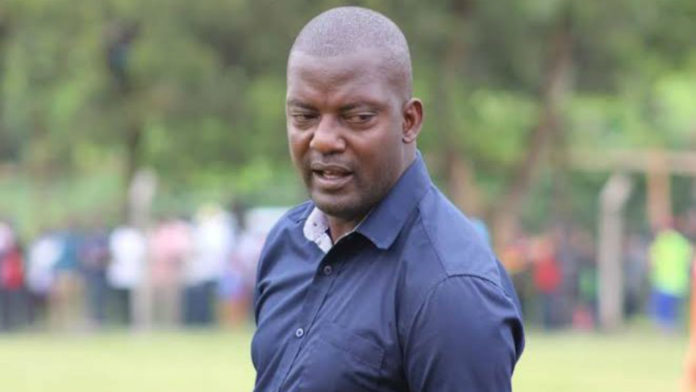
Wasswa Bbosa sacked by Express

Wasswa Bbosa

Uganda Premier League reigning champions Express FC have parted ways with head coach Wasswa Bbosa.

The club announced in a statement released on Monday. Bbosa re-joined Express during the second round of the 2019/20 season and helped them survive relegation. He then went on to win the league title the following season.

“Express FC would like to confirm that Wasswa Bbosa is leaving his role as head coach with immediate effect,” the statement reads in part.

“The club would like to thank Wasswa Bbosa for his dedication and memories, most notable of those include winning the StarTimes Uganda Premier League (2020/2021) for the first time in 12 years and the CECAFA Kagame Cup, the first ever in the club’s history.”

His assistant James Odoch will take over on interim until the end of the season.

“Assistant coach James Odoch will take over in interim capacity until the end of the current season and will be assisted by goalkeeper coach Daniel Kiwanuka,” the statement reads.

Bbosa leaves the Red Eagles in 5th position on the 16-table log with 29 points from 17 games, 10 points below the leaders Vipers SC.

Stories Continues after ad

What Valentine’s Day means and why it is celebrated

Valentine’s Day, also called Saint Valentine’s Day or the Feast of Saint Valentine, is celebrated annually on February 14. It originated as a Christian feast day honoring one or two early Christian martyrs named Saint Valentine.

The day has become a significant cultural, religious, and commercial celebration of romance and love in Uganda and the world. The day is celebrated mainly in two colors, that is to say red and black.

There are numerous stories associated with various Valentines connected to February 14, including the imprisonment of Saint Valentine of Rome for ministering to Christians persecuted under the Roman Empire in the third century.

According to an early tradition, Saint Valentine restored sight to the blind daughter of his jailer. Numerous later additions to the legend have better related it to the theme of love: an 18th-century embellishment to the legend claims he wrote the jailer’s daughter a letter signed ‘Your Valentine’ as a farewell before his execution; another tradition posits that Saint Valentine performed weddings for Christian soldiers who were forbidden to marry.

There is a tradition that the Feast of Saint Valentine was established by Pope Gelasius I in AD 496 to be celebrated on February 14 in honour of Saint Valentine of Rome, who died on that date in AD 269.

The day became associated with romantic love in the 14th and 15th centuries when notions of courtly love flourished, apparently by association with the ‘lovebirds’ of early spring.

The day has grown into an occasion in which couples expressed their love for each other by presenting flowers, offering confectionery, sending greeting cards and gifts.

Valentine’s Day symbols include: heart-shaped outline, doves and sundry. Since the 19th century, handwritten valentines have given way to mass-produced greeting cards. In Italy, Saint Valentine’s Keys are given to lovers ‘as a romantic symbol and an invitation to unlock the giver’s heart’, as well as to children to ward off epilepsy.

Saint Valentine’s Day is not a public holiday in any country, although it is an official feast day in the Anglican Communion.

Stories Continues after ad

UMEME loses Shs26bn to vandalism in 12 months

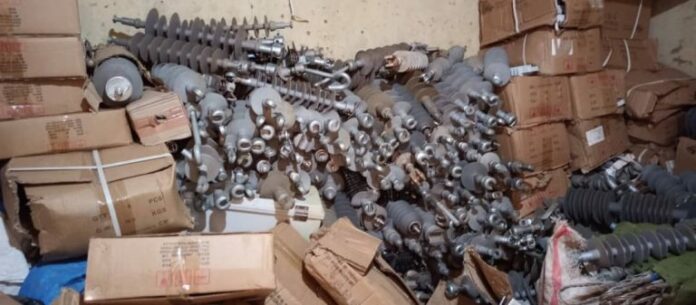
Suspected stolen Umeme items

Mbarara: Vandalism of electricity infrastructure in Western Uganda has hit alarming levels with vandals stealing over 133 km of cable in just 12 months and causing unprecedented disruption of electricity supply. The theft, according to experts in the region now stands at 72% followed by East and Northern Uganda.

Briefing security experts in Mbarara on the emerging worrying trend in the sector, Umeme’s Managing Director Selestino Babungi said in 2021, the sector lost over Shs 26 billion in stolen copper wires, vandalised transformers and poles amongst others.

“I am requesting for your support, the security apparatus, which you have actually always provided. I know you have the entire infrastructure, all the way from the LC1 to the national level, you have all the intelligence,” Babungi said.

Mr Babungi said while Umeme is committed to furthering the Government’s agenda to increase the proportion of households accessing electricity, resources that would have been spent on expanding the grid are being diverted to replace assets the vandals steal.

He added, “Such vices, where we continue replacing assets, wasting resources, unfortunately affects the pricing of electricity through increasing the cost of our operations. The same vices do not enable people to use electricity and the more people use electricity the lower the cost.”

Umeme’s Head of Regional Operations in Western Uganda, Isaac Katewanga, said the West accounts for 72% of the cases vandalising electricity conductors.

“In 2021, 133 kilometres, equivalent to the distance between Mbarara and Kabale, of conductors were stolen. There has also been an astronomical growth in the theft of aerial bound conductors. They have found a market; from just 950 meters in 2020 to over 18 kilometres being stolen in 2021,” said Katewanga.

There was a need for concerted effort from all the stakeholders to curb the vice.

The Mbarara Resident District Commissioner Godfrey Mbetegyerize pledged their support towards Umeme and said the security personnel would be at hand to offer support to end the vandalism vice once and for all.

“This continued act not only damages government infrastructure but also leads to wastage of resources used to replace the installations. The taxpayer’s money can be used for other development issues and increasing access to electricity,” he said.

These vandals compromise the reliability, continuity and stability of power supply that sometimes compromises National Security.

The public needs to be aware that interference with the electricity supply network causes power blackouts, threatens the security of our homes, increases the cost of doing business and electricity tariffs, and disrupts vital health and education services as well as our lifestyles. Other effects include increased project development costs, extended project delivery timelines and overall, affects the economy and national development.

The assets targeted normally include; Pylons, wires/conductors, transmission infrastructure parts made of steel, aluminum wires, copper wires, transformers and transformer oils, poles, underground cables and related accessories.

Stories Continues after ad

Govt’s aim is to make Ugandans more productive after lockdown – PS Ggoobi

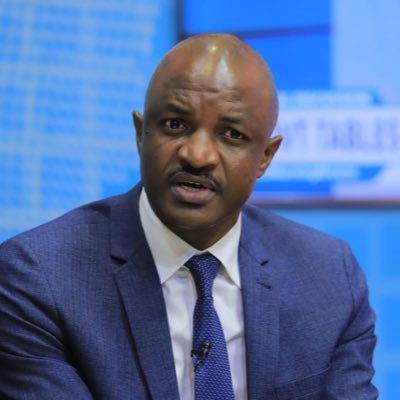
Ramathan Ggoobi, the Permanent Secretary, Ministry of Finance

The government of Uganda has said its focus now is now financially empowering citizens to have purchasing power after fully reopening the economy.

The Permanent Secretary at the Ministry of Finance, Planning and Economic Development, Mr Ramathan Ggoobi, said that during the lockdown, productivity went very low, with government only spending on service delivery and not production. 

The PS also stressed that from a pre-pandemic level of 6.4 per cent in FY 2018/19, economic growth slowed to 3.0 per cent in FY2019/20.

“We faced a burden of insufficient demand arising from the low purchasing power in the economy due to loss of livelihoods,” Mr Ggoobi said during a talkshow on NBS TV on Monday, 14 February 2022

“We are glad that His Excellency the President has now fully reopened the economy and we are optimistic that livelihoods will be secured. The economy is expected to recover leading to the Socio-Economic transformation of our country,” he added.

Mr Ggoobi said the government has put in place strategies to enable the economy recover, leading to the socio-economic transformation of the country.

Mr Ggoobi, who is also the Secretary to the Treasury, says interventions such as Parish development model, Emyooga, Uganda Development Bank funding and small businesses recovery fund are all aimed at ensuring Ugandans access cheap credit and be productive.

“We have set up the Shs200 Billion Small Business Recovery Fund and the Parish Development Model, through its seven pillars including the Financial Inclusion pillar,” he said.

He added that his ministry has a key stake in the implementation of the 17 sustainable development goals, which include reducing poverty, hunger as well as improving indicators for health, education, water, industry and infrastructure among others.

“All interventions of Government of Uganda are now aligned to the NDP III with major goal of increasing household incomes and improved quality of life of Ugandans. Working with all sectors (MDAs) under programme approach to achieve our objectives,” he said.

Stories Continues after ad

How closure of Commercial Banks sealed Kasekende’s chances of succeeding Mutebile

Former BoU Deputy Governor, Dr. Louis Kasekende.

Dr Louis Kasekende, the former Bank of Uganda (BoU) deputy governor, has no chance of bouncing back to that institution as Governor, following the death of Prof. Emmanuel Tumusiime-Mutebile.

Not long ago Kasekende was considered an automatic heir to late Mutebile as Governor.

Having read our exclusive article on the potential replacements for Mutebile, some bankers, economists, policy analysts and politicians called this news website to say Kasekende was an odd man out on the list of the potential individuals that President Museveni could appoint to replace Mutebile at BoU.

Those who see Kasekende as unpalatable to replace Mutebile say the former BoU Deputy Governor and others like former Executive Director Supervision Justine Bagyenda were responsible for the indiscriminate closure of commercial banks in the country from…. to 2016 when Crane Bank Limited (CBL) was summarily closed allegedly for undercapitalization, causing public outcry.

The closure of CBL and other defunct banks like National Bank of Commerce, Teefe Bank, Global Trust Bank Uganda, Cooperative Bank, Greenland Bank Trillions of shillings since some banks have sought court redress, according to those we talked to.

“Kasekende and Bagyenda failed to follow simple processes and guidelines of closing banks. Therefore, Museveni who reads so much will not make a mistake to appoint Kasekende as BoU Governor,” said a retired banker who says Museveni should not rush to appoint but cast his net wide to get the best candidate for the juicy position that became vacant in late January as Mutebile died in Nairobi, Kenya where he had gone for treatment.

The closure of banks became extra sour for Kasekende as he tried in vain to block a forensic audit of the closure of banks by the Auditor General as ordered by Speaker of 10th Parliament, Rebecca Kadaga. ‘Kasekende knew the audit would expose their thuggery and carelessness in closing banks like CBL and National Bank of Commerce that had met capital requirements before it was closed,’ said another banker who had shares in one of the banks closed.

Further, some of Kasekende’s wealth, watchers say stemmed from the closure of banks like CBL where Shs478 billions of taxpayer’s money allegedly spent on CBL in receivership by BOU for liquidity and other purposes has never been fully accounted for. Worse still Kasekende okayed sale of CBL to DFCU at only Shs200 billion. Kasekende’s illicit wealth is hidden in real estate under names of family members. ‘Museveni will be reluctant to appoint Kasekende BOU Governor given such scandals,’ an economist based at Makerere University said, adding that, “Museveni is tired of corrupt officials.”

More so, Kasekende and Bagyenda did not adhere to Museveni’s warning not to rush into closing CBL. He has never forgiven the two who some analysts say were more interested in personal financial gain whereby it gave the two chances to benefit from public coffers money for the so- called liquidity support of CBL in receivership.

Another policy analyst told this news website that Museveni is aware that if he appointed Kasekende BoU boss, it would cause public uproar especially from bankers and MPs especially that the COSASE report of 2020 regarding closure of banks has never had key recommendations implemented by the government. Kasekende’s appointment would mean Museveni is not interested in cleaning BoU.

A related report focusing on working relationships between top bosses in BoU pinned Kasekende for forming a clique opposed to his former boss Mutebile. This led to misunderstandings that led to poor service delivery as some documents on bank closure were hidden from Mutebile. ‘At one time Kasekende thought he would replace Mutebile yet Mutebile was still Museveni’s favorite, ‘ said a senior staffer at BoU.

An investigation into closure of banks showed that Kasekende and others as careless spenders of public money as BOU paid MMAKS almost a billion shillings in legal advice in sale of CBL, yet it had internal lawyers, even though they failed to notice physical assets owned by CBL, notwithstanding that they sold CBL on phone.

Kasekende’s scandals in the sale of banks gives other   individuals like Pro. Juma Balunywa, Augustus Nuwagaba, Keith Muhajanizi. NSSF’s Richard Byarugaba and others remain on the list of potential Ugandans to replace the late Mutebile.

Stories Continues after ad

Fort Portal Court-Martial sentences soldier to 40 years in prison

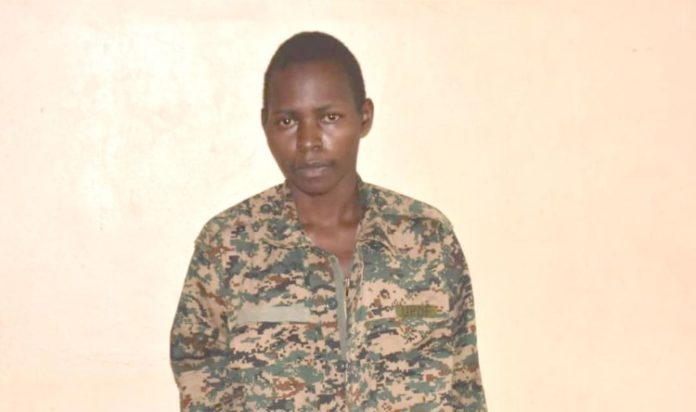
The Uganda People’s Defence Forces (UPDF) Court Martial sitting at Mountain Division Headquarters in Fort Portal has sentenced Lance Corporal Piangu Hussein Mwanika to 40 years in prison for murder.

The prosecution led by Lt. Moses Ekwamu told the military court that on July 24, 2021, at around 09.00 pm, while on guard duty at Kanyamwirima barracks in Bundibugyo, Mwanika gunned down and killed Pte Christine Akido.

According to the court records, L/Cpl Piangu was intoxicated while at the Observation Post-OP, having smoked marijuana. When Akido came to meet him, he subsequently shot her four bullets in the chest, killing her instantly.

In his ruling, Col. Robert Okiror, the Chairperson of the Mountain Division Court Martial, said that the court had considered the submissions of both the prosecution and defence teams and found that the accused acted under the influence of drugs, in contrast to the professional standards.

He said the court found the accused to have killed the deceased with malice aforethought. He, therefore, convicted the accused, saying that by the time he returned to society after serving 40 years, he would be a reformed person.

Stories Continues after ad

MTN Foundation joins Uganda Red Cross to support Kisoro mudslides and floods affected families

Through their CSR arm, the MTN Foundation has handed a dummy cheque worth SHS 51,200,000 to the Uganda Red Cross and Office of the Prime Minister (OPM) in a boardroom event that took place at MTN Headquarters, along Old Port-bell road, Kampala.

The MTN General Manager for Corporate affairs Enid Edroma handed the dummy Cheque to Robert Kwesiga, Uganda Red Cross Secretary-General, and Charles Komakech – who represented the Ag. Commissioner – Office of the Prime Minister.

While receiving the Cheque, Kwesiga applauded MTN Foundation for always coming through very fast to support the people of Uganda whenever a disaster occurs, and more so, through the Uganda Red Cross.

“We have always had a relationship with MTN in supporting disaster-affected communities in Uganda. Seeing MTN coming through to support the Kisoro community is a very great gesture considering the challenging times of COVID-19. Thank you for trusting the Red Cross and the OPM team to reach the affected people.”

Kwesiga also said that according to Red Cross standard operating procedures, the response to disasters should be within the first 12 hours after the disaster occurs. And that is what the Red Cross did in Kisoro.

“We delivered relief within 12 hours, although we supported 300/800 families. We selected the most vulnerable. With this additional support, we can reach more than 500 and this will enable affected families to develop coping mechanisms.” Kwesiga added.

Enid Edroma, the MTN General Manager of Corporate Affairs thanked the Red Cross for always being first responders whenever disasters occur and appreciated the good working relationship exhibited with the Foundation over the years.

 “We are happy to also make a contribution of 51, 200, 00/= towards the Kisoro disaster response. We trust that the Red Cross will do a great job. We have always supported the Government too in a number of emergencies, including the Bunambutye resettlements for people affected by landslides in Bududa, who were moved to Bunambutye, the people who were relocated to Kiryandongo, among others.” Edroma noted

Charles Komaketch who represented the office of the Prime Minister, department of disaster response appreciated MTN and Red Cross for the good working relationship that yields support to affected families. “MTN supports the people of Uganda when disasters occur. We want to thank you for the support, and thank the Red Cross for the role they play in the disaster response operations in the Country.”

Uganda Red Cross will deliver more relief to cover about 500 people who did not benefit from the initial support delivered on 26th, 27th, and 28th January 2022. Within 12 hours after the floods and mudslides incident that hit Kisoro district late last month, Uganda Red Cross delivered 300 Nonfood relief Item Kits to the most affected families in Kisoro. 9 lives were claimed in this incident and the Red Cross provided dead body bags, offered psychosocial support and continues to work with the district disaster management committee for Kisoro to strengthen district contingency plans and response capacities.

Stories Continues after ad

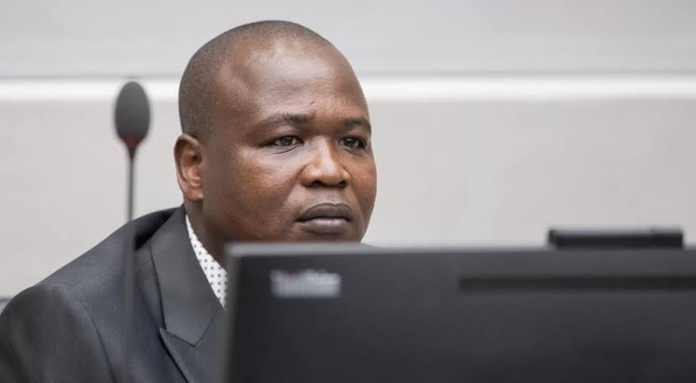
Hearing of Dominic Ongwen’s appeal kicks off at ICC

Dominic Ongwen

The hearing of Dominic Ongwen’s appeal has kicked off at the Appeals Chamber of the International Criminal Court (ICC).

The hearing, which started today and ending on 18 February 2022, is aimed at addressing the Defence’s grounds of appeal relating to Mr Ongwen’s conviction and sentence.

Prosecutor, Ongwen and his lawyers are appearing before a panel of judges led by Judge Luz del Carmen Ibáñez Carranza (presiding), Judge Piotr Hofmański, Judge Solomy Bossa, Judge Reine Alapini-Gansou and Judge Gocha Lordkipanidze, and a number of amici curiae who were invited to provide observations on the appeals and participate in the hearing.

Ongwen’s lawyers raised 90 grounds of appeal consisting of alleged legal, factual and procedural errors relating to the conviction, and 11 grounds of appeal, alleging legal, factual and procedural errors relating to the sentence. The appeal brought against the conviction is the largest ever considered by the Chamber, raising complex and novel issues.

On 4 February 2021, Trial Chamber IX found Dominic Ongwen guilty of a total of 61 crimes comprising crimes against humanity and war crimes, committed in Northern Uganda between 1 July 2002 and 31 December 2005.

On 6 May 2021, Trial Chamber IX sentenced Dominic Ongwen to 25 years of imprisonment. A phase dedicated to the reparations to victims is ongoing. On 21 July and 26 August 2021, the Defence filed its appeal briefs against the conviction and sentence, respectively.

Stories Continues after ad

Roast and Rhyme returns with unique post-lockdown edition

The original Mpola Enjoyments, circa March 2020

Lovers of cold beer, live music and sizzling grilled meat have another reason to rejoice since the lifting of curfew with the much-anticipated return of the Roast and Rhyme festival.

This is going to be the first Roast & Rhyme edition held at its home at Jahazi Pier Munyonyo since March 2020 – almost two years ago.

This edition, dubbed the Reggae Ragga NyamNyam, will take place on the 27th of February at Jahazi Pier Munyonyo.

The organisers – Swangz Avenue and Bell Lager – say this edition will welcome the public back “outside” with the signature picnic-themed afternoon on the shores of Lake Victoria featuring bigger and better amenities, comfortable seating and certified chefs and vendors who will be on-ground to serve savoury barbecue menus and exciting ‘Bell na Nyama’ combos at affordable prices.

According to Matilda Babuleka, the Bell Brand Manager, this edition will deliver Mpola Enjoyments, which are about having a good time in a chill, laid-back environment surrounded by friends and loved ones, enjoying games like Matatu and Ludo, while being soothed by the live sounds of reggae and ragga music performed by Ugandan artists.

The organisers have also hinted at a possible barbecue showdown between attendees who trust their grilling skills, which will be judged by a yet-to-be-revealed celebrity chef, and the winners will take home exclusive Mpola Enjoyments kits.

Gates will be open as early as 11:00am and tickets are available for 70k (5-11th Feb) early bird, 80k (12th-18th Feb) early bird max and 100k (19th-27th Feb) standard.

Tickets are available at Drew & Jacs Forest Mall, Positive Emotions Garden City, Soothing Spa Acacia Mall, Nail Villa Senana Building, Funz Videos (Kabalagala, Kisementi, Kyanja) and Swangz Avenue The Square Building, 2nd-floor 3rd street Industrial area.

Stories Continues after ad