Stanbic Bank
Stanbic Bank
18.5 C
Kampala
Stanbic Bank
Stanbic Bank
Home Blog Page 743

Afiego NGO boss, 6 employees arrested

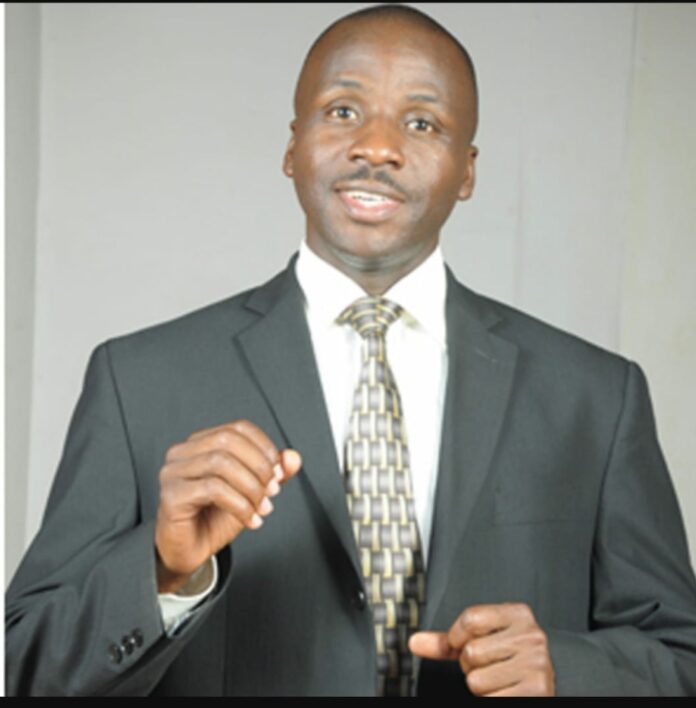
Mr. Kamugisha
Police is detenting Afiego NGO Managing Director Dickens Kamugisha and six employees.
According to sources,police first arrested employees and questioned them about their source of funding and how the NGO money is spent.
“They arrested them at office, took them to Kira division police for question but released them on police bond. However, when Mr. Kamugisha tried to inquire on why his employees where picked, he too was arrested” his lawyer Allan Bariyo said.
The staff are being held at Kiira Police Station. Afiego has been under immense pressure due to defending oil-affected communities’ rights as well as fighting to protect Bugoma forest. Police claims they are operating without a licence something they reject.
Under the constitution it is the Director of Public Prosecution to direct investigations, to sanction charges or close files incase there isn’t sufficient evidence to sustain a charge. Resident State Attorney is a representative of DPP in Kira ,the respective station and court.
“Under the Constitution,one can’t be convicted of an offence not defined under the law.The said Ngo Act doesn’t criminalize working with an NGO that hasn’t renewed her permit.That is without prejudice to the fact that Afiego ltd isn’t regulated by the NGO Bureau.The arresting party has no sustainable case in court,it is the reason the police is doing their best to delay the production of the said suspects in court” Counsel Bariyo said.

In August, the National Bureau of Non Government Organisations (NGO Bureau) suspended the activities 54 NGOs for failure to file annual returns and audited books of accounts.

According to the Executive Director of the Bureau, Stephen Okello then, he said they had established that 23 NGOs are operating with expired permits contrary to section 31(1) and 32(1) of the NGO Act 2016.

Stories Continues after ad

Bebe Cool releases new song, applauds Bell Lager for supporting local artists

Legendary Ugandan artist Moses Ssali aka Bebe Cool has released his new song titled ‘Gyenvudde’.

In the song, the singer encouraged the public, and especially artists, to celebrate and appreciate where they have come from and move forward with confidence knowing they can overcome any challenge.

The ‘Nkuliyo’ hit maker also appreciated Bell Lager for its consistent support for local artists, especially during the COVID-19 pandemic, and also highlighted the brand’s role in his journey as an artist.

He made the remarks during a surprise performance on the NTV Mix Show, which is sponsored by Bell Lager. The brand also recently unveiled a refreshed look under the theme ‘Fresh Vybez’.

The Friday night show has become a staple of Ugandan entertainment, giving local artists a platform through which to showcase their talents and connect with their fans since the pandemic-induced lockdown that has seen concerts, bars and night clubs shut down for almost 2 years.

Bebe appreciated all artists that have demonstrated resilience during the pandemic and released new music like Azawi, Ykee Benda, Crystal Panda, his son – Allan, Mudra and many more.

Stories Continues after ad

Book detailing Rwanda’s authorization actions anger Kagame

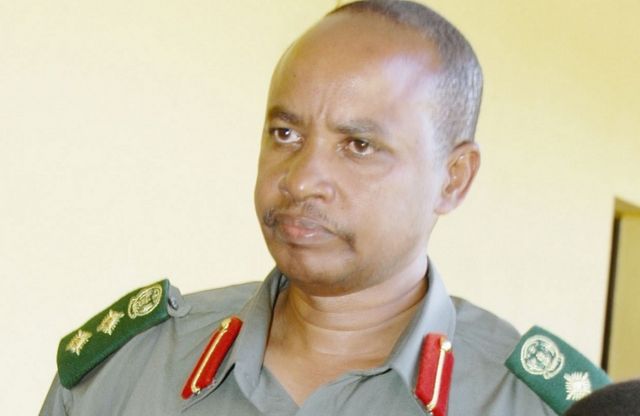
Col. Patrick Karegeya who was found dead in a South African hotel.

Rwandan dissidents have died under mysterious circumstances inside and outside the country with alarming frequency in recent years.

On September 14, Revocat Karemangingo, an ex-Army officer, was gunned down while driving in Mozambique. Since 2016, Karemangingo had told authorities he had been targeted for assassination.

Earlier in September, a popular Rwandan rapper known as Jay Polly died while in custody after Rwandan authorities said he consumed a lethal concoction of methanol, sugar and water.

In February, opposition politician Seif Bamporiki was pulled from his vehicle and shot to death in South Africa in what police said was a robbery, but many Rwandan exiles say was a targeted killing.

In her new book, “Do Not Disturb: The Story of a Political Murder and an African Regime Gone Bad,” journalist Michela Wrong examines the ways in which dissent is silenced inside and outside of Rwanda. She also looks at the roots of the quest for power and asks why evidence of ruthlessly silencing opposition has not tarnished the reputation of the country.

“Despite the evidence of intimidation and harassment, people being beaten up, followed, threatened, the image of Rwanda abroad remains extraordinarily whiter than white,” she told VOA. “And it doesn’t seem to matter how much of this information comes out, both Western politicians and all these philanthropic foundations that engage with Rwanda, the Gates Foundation, Bill Clinton’s foundation, the Blair Foundation, Paul Farmer, Howard Buffett, it doesn’t seem to impact their relationship with Rwanda.”

The title of Wrong’s book “Do Not Disturb” refers to the universally recognized sign travelers hang on hotel room doors. In this case, she said the sign was a grizzly clue left by assassins in 2014 after they strangled Patrick Karegeya, a former Rwandan intelligence chief who was living in South Africa. Karegeya had become a critic of Kagame and was stripped of his rank and imprisoned before fleeing to South Africa to live in exile

Wrong, who knew Karegeya, paints a picture of a gregarious political dissident who trusted people he should have feared.

“He trusted people, which is a very strange thing to say because you’d think if you were the head spy really for a long time in Rwanda, you would be very careful, very cautious, but when he decided he liked somebody he just trusted them,” Wrong said. “And in fact, that’s the characteristic that got him killed because he was lured to his death by somebody he thought was a friend.”

Wrong details how a Rwandan businessman, Apollo Kiririsi Gafaranga, befriended Karegeya and asked that he book a room for him at the upscale Michelangelo Hotel in Johannesburg. On New Year’s Eve, according to South African authorities, Gafaranga lured Karegeya to the hotel room for drinks, but instead he was killed by Rwandan assassins who had booked a room across the hall.

South Africa has issued arrest warrants for two Rwandans including Gafaranga, but the suspects fled South Africa immediately after killing Karegeya and Rwanda has refused to hand them over, authorities said.

Wrong said this political killing is an entry point to understand the regime of Rwandan President Paul Kagame.

Kagame was a schoolmate of Karegeya in Uganda, and they served together in the bush war led by Yoweri Museveni to overthrow President Milton Obote and later became president himself.

Upon taking the helm of Rwanda in 2000, following several years as a powerful vice president, Kagame was praised by many in the West as the savior of the country and was a darling of donors. However, Wrong outlines a pattern of quashing dissent and the disappearances of political dissidents that show a different side of the longtime president.

She interviews numerous people who served alongside Kagame in Uganda and later in the Rwandan Patriotic Front and found that he earned the nickname “Pilato” for the way he would turn in fellow soldiers who had broken rules, often resulting in their being executed.

“Kagame is not somebody who wants to be liked,” Wrong said. “And I think it’s very obvious that he has a different style of rule from [Yoweri Museveni’s]. Even if you’re not somebody who is deeply critical of his career you can see that he wants to be feared. He wants to be respected. He does not want to be popular. He’s constantly telling people in interviews that he really doesn’t care what the world thinks of him and he doesn’t really care what his voters think of him. He just wants their respect and their obedience.”

Kagame responds

In a television interview, Kagame denounced the book saying it was a biased product of Wrong’s personal connection with Karegeya and was sponsored by enemies of the country.

“By the time it came out, we had known it was being written for about a year or two, and we know those who sponsored her to do it both from outside and those in the neighboring countries, some from far away north others from here,” he said. “And again, it was part of that ‘Rwanda should not be allowed to be what it wants to be, the people of Rwanda should be cut to their size.’ And so, one way of doing it, attack those you want to attack. Attack the leaders or even individuals.”

But the book has come at a moment of heightened scrutiny of Kagame’s government. In September, Paul Rusesabagina, who was depicted as a hero in the film Hotel Rwanda, was convicted on charges of supporting a terrorist group and sentenced to 25 years in prison. The conviction drew condemnation from human rights groups who believe he was effectively kidnapped and brought to the country and did not receive a fair trial

It also drew a rebuke from U.S. State Department spokesman Ned Price who said the U.S. was “concerned” by the objections from Rusesabagina that he did not have “confidential, unimpeded access to his lawyers and relevant case documents and his initial lack of access to counsel.”

Wrong says she believes the arrest was a way of sending a message to dissidents all over the world that they are not beyond the reach of Kagame.

“I think that was definitely an element of: ‘I’m going to show anyone who is thinking of standing up to me, I can get anyone wherever they are.’ And now that’s a very powerful message,” she said.

But it remains to be seen what price Kagame will pay for the crackdown on dissidents. The Rusesabagina arrest has garnered global attention in a way that other arrests and alleged assassinations have not.

“Was it worth it, because behind Rusesabagina, you know you’ve got all the people that hadn’t been looking at Rwanda, hadn’t been examining what Kagame is doing and how the regime has changed are suddenly interested,” Wrong said. “So, you think, the reputational risk that Kagame is running as a result of this trial, was it really worth it? Because small things can damage reputations in totally disproportionate ways.”

 

Stories Continues after ad

Over 80 million reached as Africa trailblazes novel polio vaccine

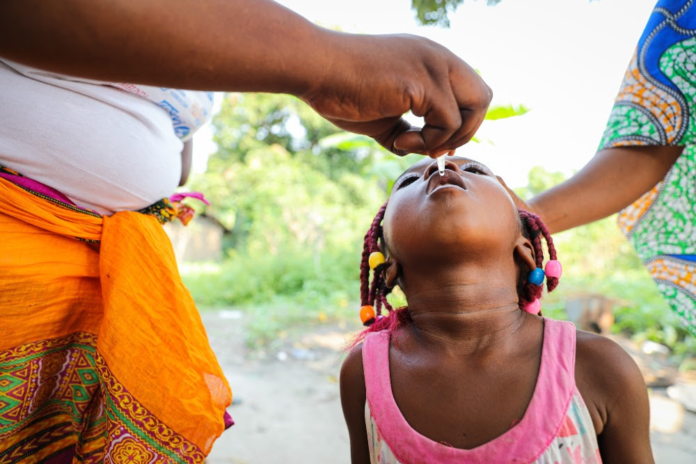
More than 80 million children have been vaccinated with the novel oral polio vaccine type two (nOPV2) in six countries in Africa, the world’s first region to roll out of the vaccine just months after the World Health Organization (WHO) gave it Emergency Use Listing status in November 2020.

Nigeria became the first country in the world to use nOPV2 to tackle an outbreak in March 2021, vaccinating 7 million children in six states. By September, Benin, Congo, Liberia, Niger and Sierra Leone had also rolled out the vaccine. Africa was certified free of wild polio in August 2020, but outbreaks of circulating vaccine-derived polio type 2 are still being reported.

 “The nOPV2 brings significant advantages in tackling polio outbreaks and Nigeria has worked closely with the global polio partners to roll out the vaccine. With swift outbreak response and effective tools and measures, our path to ending all forms of polio once and for all is clearer,” said Dr Tunji Funsho, chair of Rotary’s National PolioPlus Committee, Nigeria.

The nOPV2 is a modified form of the monovalent oral polio vaccine designed to be more genetically stable and less likely to, in under-immunized populations, revert to a form that can cause permanent paralysis in children from vaccine-derived poliovirus. Given the urgent public health need to address vaccine-derived polio globally, nOPV2 became the first vaccine to receive authorization for use under Emergency Use Listing (EUL). WHO has urged countries to rapidly implement the process for national approval for importation and deployment of the vaccine once it was approved for use.

 “Africa’s trailblazing rollout of the novel polio vaccine shows a true determination to end polio for good. The progress made by the six countries and the upcoming rollout in five additional countries targeting 30 million children by the end of 2021 promise effective and lasting protection from the threat of lifelong paralysis,” said Dr Pascal Mkanda, Polio Eradication Programme Coordinator at WHO Regional Office for Africa.

Meeting pre-deployment requirements

Over the last three years the African region has seen a growing number of circulating vaccine-derived type 2 poliovirus outbreaks, from an initial three countries (Angola, Democratic Republic of the Congo and Kenya) in 2019 to more than 20 in 2021. While there has been steady progress towards eradication of all forms of polio in the region, the growing number of outbreaks is concerning and requires a swift and robust immunization response. The nOPV2 plays an effective role in stopping these outbreaks.

To deploy nOPV2 under EUL, countries must meet a set of strict requirements. The WHO Strategic Advisory Group of Experts recommended that the vaccine be rolled out under an initial phase which ran from March to October 2021. Fourteen African countries fulfilled the rollout criteria which included obtaining regulatory approvals, surveillance enhancement activities, preparation of cold chain and logistics, targeted communication plans to address rumours and misinformation, and training of staff and frontline workers. On average it took about six to eight weeks for countries to fulfil these requirements, with Nigeria being the fastest to be fully verified for use in under four weeks.

Vaccine rollout safety

WHO in Africa has worked with countries to improve vaccine safety monitoring systems. Countries eligible for outbreak response and needing support were prioritized, with the Rapid Response Team from the WHO Regional Office for Africa assisting. The team has provided guidelines and vaccine safety monitoring systems to Angola, Congo and Liberia. National Causality Assessment Committee for Adverse Events Following Immunization has also been re-established in countries not only for nOPV2 vaccine safety, but also for assessing COVID-19 vaccines related adverse events. Country safety teams and partner organizations have been instrumental in collection and review of safety data.

Based on an independent review of the preliminary safety and genetic stability data collected and analysed by African Member States, the WHO Strategic Advisory Group of Experts in October 2021 recommended broader use of nOPV2. The move to the wider use phase will enable faster deployment of nOPV2 in the field.

The key changes during the transition to wider rollout include reducing the requirements and restrictions. For instance, in broader deployment the vaccine can be used in integrated campaigns, meaning it can be delivered with other vaccines or nonvaccine interventions such as vitamin A administration. The requirements countries need to meet to use the vaccine have now been reduced to 16 from 25. This is particularly important given that rapid outbreak response is crucial to successfully stopping the circulation of the virus.

During this wider-use phase, Ethiopia, Mauritania, Nigeria, The Gambia, Senegal and Uganda will roll out campaigns targeting a total of approximately 30 million children, increasing the number of African children with effective polio protection.

Stories Continues after ad

MRC launches campaign to curb school dropouts among girls

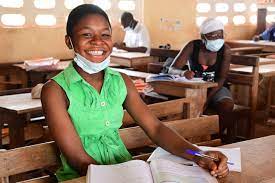
Medical Research Council (MRC) in Uganda launched an initiative to minimize the number of school dropouts among the female gender in Kalungu and Wakiso districts.

The campaign was launched by MRC delegates at the Royal Embassy in Lukaya town council, Kalungu district, where they organised a seminar, which was attended by heads of education and different school head teachers in Kalungu district.

Dubbed as ‘Simameni’, the program is expected to benefit about 1500 girls from Kalungu and Wakiso districts. These girls will be given items to use while at school and they include; reusable sanitary pads, washing soaps, books, towels and many others.

MRC will provide basic necessities and other scholastic materials to a girl child such that untimely and abrupt ending of studies among this gender is defused.

Heads of education in Kalungu district welcomed this development and disclosed that many girls drop out of school due to the lack of basic necessities.

Speaking to the congregation, Mr. Mulindwa Quraisi, the head master of King David High School, Kalungu district, pointed out that such an arrangement will reduce discrimination of girls during their menstruation periods, and also enable them to stay in school.

“This arrangement is going to help a girl child in a two way fold. One; when a girl is in her menstruation period, she is stigmatized, and then doesn’t study very well. Two; their brains are psychologically affected; they feel timid which is called Stigma. So this will help a girl child not to feel inferior when she is in company of others and also knowing that experiencing periods is normal, and also knowing that proper hygiene is paramount as a girl child,” said Mr. Quraisi.

Another headteacher, who failed to identify his name, said “In most cases, girls have failed to study and later on drop out of school due to difficult situations they encounter…”

Kalungu Resident District Commissioner Pastor Caleb Tukaikiriza aplaude delegates of MRC for intervening to rescue a girl child from leaving school in these two districts.

“When a girl is in school and experiences menstrual periods, they should know that it’s normal and natural. Most importantly, I am asking them to help a girl child to obtain necessities to use when she is in periods, to maintain her hygiene,” he said.

He warned school going girls to stay away from boys who deceive them with petty items and ruin their future. “I am calling upon all men and to spare a girl child, such that she grows, completes her studies up to the time when she is old enough to get married and all will go well,” Caleb said.

Cases of school dropouts among the female gender have escalated most especially after the influx of Covid-19 pandemic in Uganda, in March 2019. For instance; Ms. Joan Aja, a gender and resource mobilisation officer of Uganda National Teacher Union (UNATU), wrote an article on December 4th, 2020, which indicated a sharp increase in girl child school drop outs.

In her article, she put it clearly that the influx in Covid-19 in Uganda and subsequent closure of schools exposed many girls to risks of child marriage, sexual abuse and early pregnancy leading.

Stories Continues after ad

Express coach Wasswa Bbosa fined, suspended for 3 games

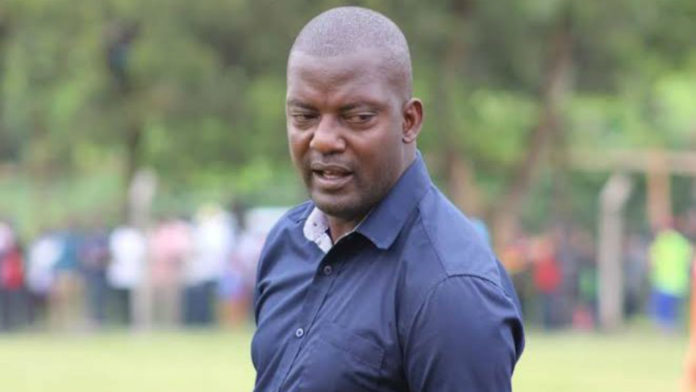
Wasswa Bbosa

The Federation of Uganda Football Association (FUFA) has suspended Express FC Head Coach Wasswa Bbosa for three competition matches and fined him Shs 2 million for his unsporting comments.

“Wasswa Bbosa, the Head Coach of Express FC has been suspended for three competition matches and fined UGX2M,” reads part of the FUFA statement.

He made the unsporting comments in the StarTimes Uganda Premier League match between Express and Arua Hill SC played at the Betway Muteesa II Stadium, Wankulukuku.

“The fine of Sh2M must be paid within 15 days from receipt of the decision released today. He is required to produce proof of payment of the same to the Ethics and Disciplinary Committee by 5th November 2021,” FUFA said.

It is alleged that Bbosa accused his CEO Isaac Mwesigwa of bribing match officials for Express to lose 2-0 to Arua Hill SC.

Bbosa will miss the games against UPDF FC on October 23, BUL on October 26 and Vipers on October 30. He will return on November 2 against Police (Lugogo) on November 2.

This is the second time Bbosa has been punished this year at Express. He was fined Shs2m for comments made after the game against Vipers in February.

Stories Continues after ad

Uganda launches social Media platform, MyLYK

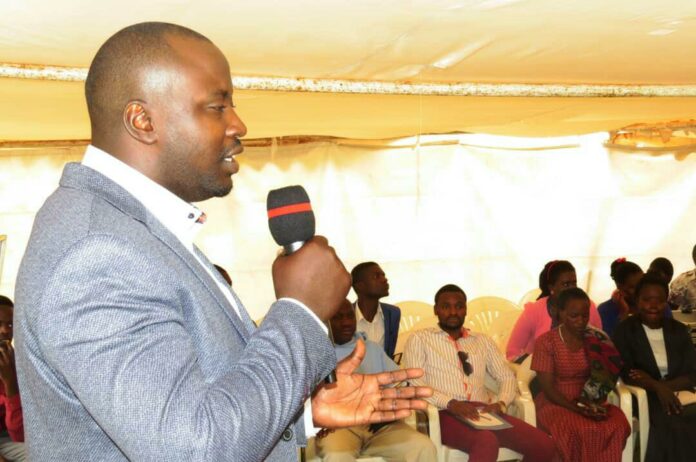
Andrew Baryayanga.

Ugandan innovators have launched a social networking platform dubbed My globaL communitY link (MyLYK). The platform is designed to connect people and communities, past, present and future.

The platform was unveiled by a team of innovators led by former Kabale Municipality MP, Andrew Baryayanga, Brian Achaye, the app developer and Justus Mugisha.

Speaking earlier today, Andrew Baryayanga said like other social media platforms, the application can be accessed through the Google PlayStore on Android, Apple AppStore and through its official website at www.mylyk.net.

“The users are able to share and invite their friends and family to connect on the platform. The platform MyLYK is filled with fun-packed features such as posting, communities, pages, marketplace, jobs, blogs, etc. the Users can post different kinds of fun media including texts, images, videos, links, stickers and hashtags.” he said, adding that “To get started, one simply needs to create an account by entering their username, email account and password to join the platform.”

Justus Mugisha said the platform will help individuals to connect and create meaningful friendships, relations, beneficial associations and legacies of people in their communities as well as preserving languages, history and heritage as a resource for posterity.

“It bring the digital era closer to the grass root people and communities, especially for Uganda and Africa where the digital penetration is still at the lowest levels, promote unity by connecting people and communities globally through travel, tourism, planned community events and activities, create job opportunities for the youth directly and through third party service providers. Also, by providing a platform for job listings and awareness, such that users are able to easily access various job listings in the different sectors of the economy” he said

It will provide opportunities to  individuals, communities and businesses to buy, sell and promote their products or goods and services, raise the Ugandan Flag globally since MyLYK app is a Ugandan initiative and going global with at least 70% Ugandan representation. Country licenses will be held by deserving Ugandans where possible and promote tourism through enhancing culture and their tourist attractions globally.

Stories Continues after ad

Minister Bahati urges consumers to go for quality construction materials

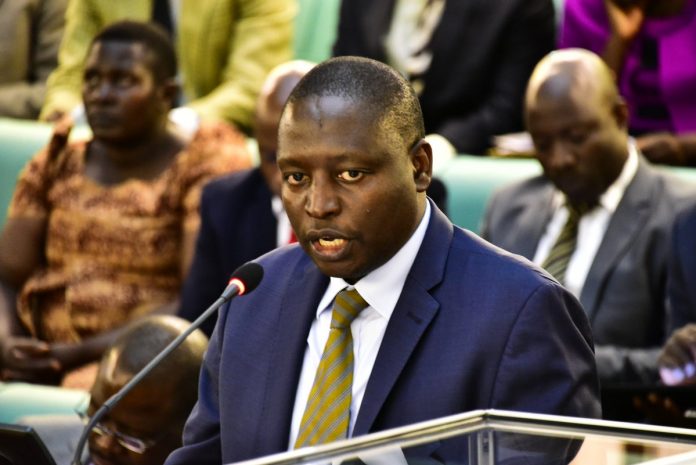
Minister David Bahati

The Minister of State in charge of Trade and Industry David Bahati has urged consumers to look out for quality and standard products.

Bahati who is also the Member of Parliament for Ndorwa West in Kabale district said this while speaking as the guest of honour at the official launch of a campaign named, “True Strength Comes from Within” which is spearheaded by Roofings Group who officially launched its long-awaited revolutionary Roofings TMX 500 C reinforcement metal rebars.

Minister Bahati underscored the need for customers to be on the lookout for quality products which Roofings Group has constantly provided on the market.

The Minister also hailed Roofings Group, a steel manufacturing giant for being a leader on innovation and quality as he unveiled the latest addition to the group’s product catalogue.

Roofings Group, is renown market leader in the steel and plastics construction materials industry, and once again has stamped its authority on the steel industry by officially launching its ROOFINGS TMX 500 C rebar, locally known as “omutayimbwa”, which comes with CUT and BEND services, the first of its kind in the Ugandan market.

“Roofings is known for its authority on innovative and high-quality products on the market and it therefore comes as no surprise that the company is at it again. TMX steel is a high-quality version of TMT steel bar with excellent characteristics, such as weldability, durability, thermal stability, ductility and tensile strength,” Bahati said.

As Roofings Group marks 27 years of uninterrupted excellent service, the steel giant has launched the new rebar and the “True Strength from Within” campaign where it engaged in a four hour long event with its stakeholders, partners and media.

Speaking at the event early this week, the Group Chief Executive Officer (CEO) Sheikh Arif explained the strength of the rebar that comes from within the core physical and chemical composition of the actual rebar making it more superior than ordinary bars currently on the market.

The Roofings Group Executive Director, Ms Nashila Lalani explained the relevance of the the campaign slogan, “True Strength Comes from Within” as something that relates with the rebar, the Roofings team and the rest of stakeholders and partners and she also noted that the launch sets the ball rolling for the rest of the campaign activities.

The event was also used to announce the new Roofings Group CEO, Sheik Arif who was officially unveiled to the public by the group’s Chairman and Founder, Dr. Sikander Lalani.

Dr Lalani thanked the new CEO for his distinguished service for over 26 years and also congratulated him on the new role.

Also present at the function was the Uganda National Bureau of Standards (UNBS) Deputy Director Ms Patricia Bageine, who hailed the company for its quality and standard products that have set a benchmark in the construction industry.

Ms Bageine stressed the need for customers to look out for quality products with quality marks to avoid being disappointed.

The event was attended by stakeholders within the recognized construction industry,  drawn from within around the country and beyond.

Stories Continues after ad

Court throws Joyce Bagala out of Parliament

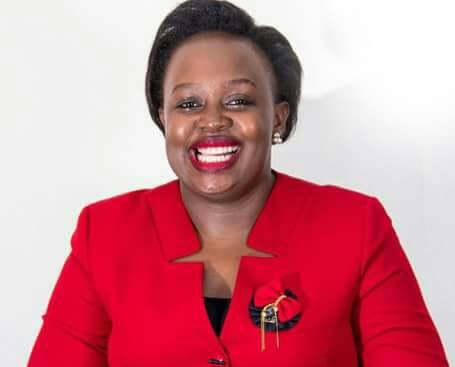
Joyce Bagala

The High Court in Mityana has nullified the election of Joyce Bagala as Mityana Woman MP and ordered for fresh elections.

In March, the National Resistance Movement (NRM) candidate Judith Nabakooba dragged Bagala and the Electoral Commission to Court accusing her of intimidating her agents, invalidating valid votes cast for her, obstructing voters and giving voters pre-ticked ballot papers.

Nabakooba averred that presiding officers connived with Bagala and her agents and allowed ineligible persons to vote and multiple voting. In January Mityana district returning officer announced Joyce Bagala as the duly elected Woman MP after polling 64633 votes. Nabakooba garnered 48322 votes

In his ruling justice Baguma Emmanuel said there was enough evidence proving that Bagala through her agents bribed and intimidated voters.

“The election of Joyce Bagala as Mityana District woman MP is therefore set aside,” he ruled and ordered the Electoral Commission to organise a by-election.

Speaking after the court ruling, Ms Joyce Bagala said: “I will not allow my victory to be robbed in broad daylight”. She vowed to appeal against the court’s decision.

Stories Continues after ad

EC kick-starts updating National Voters’ register ahead of LCV by-elections

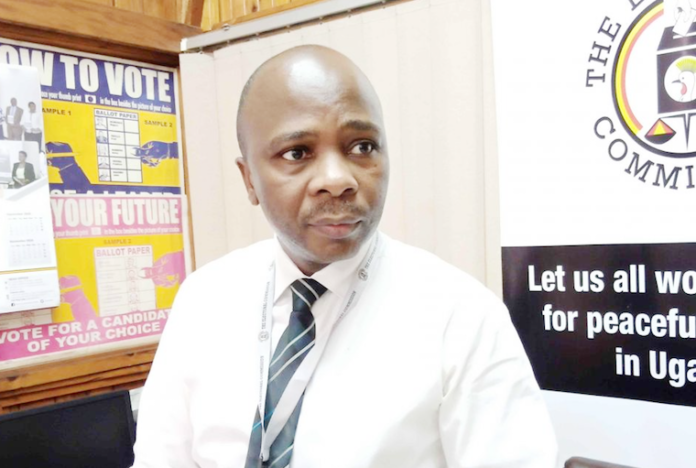
Mr. Paul Bukenya - EC Spokesperson

The Electoral Commission (EC) has kick started the updating of National Voters register ahead of local government by-elections.

According to Paul Bukenya, the Ag. Spokesperson of EC the updating of Voters register kicked off this morning in all areas where vacancies exist. The exercise will go on till 26th October 2021.

“The update exercise will be conducted at update stations within each parish/ward in the respective electoral areas, starting at 8:00am till 6:00pm, on each of the appointed dates, including weekends,” he said.

Bukenya said the purpose of the update exercise is to enable all new eligible applicants to register as voters, Conduct transfer of voters who wish to transfer to new voting locations and enable voters to confirm that their photographs match their particulars.

The elections include; Kayunga District LCV by-election and Special Interests Groups (SIGs).

The Special Interests Groups elections will be held on 16th December 2021 while the Kayunga District LC V by-election will be held on the 17th December 2021.

Stories Continues after ad