Stanbic Bank
Stanbic Bank
21.6 C
Kampala
Stanbic Bank
Stanbic Bank
Home Blog Page 768

DRC starts Ebola vaccination

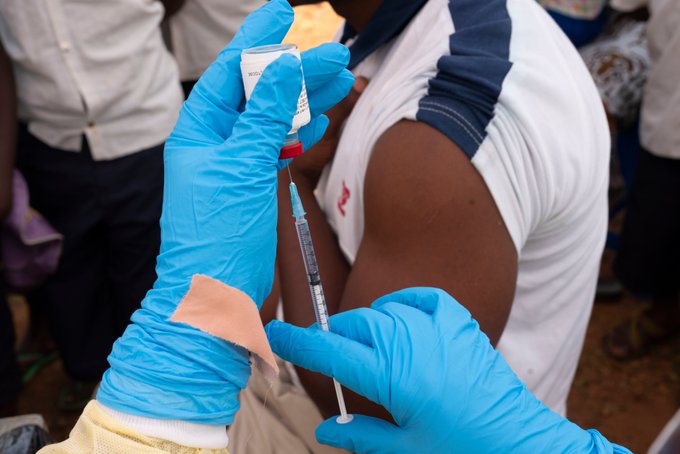
Health worker prepares to vaccinate a man

Ebola vaccination began today in the Democratic Republic of the Congo’s North Kivu Province where a case was confirmed on 8 October. People at high risk, including contacts of the confirmed case and first responders will receive the doses as the health authorities move to curb the spread of the virus.

The confirmed case was a two-year old boy who died on 6 October in a local health facility. He lived in the same community where three members of the same family died in September after experiencing Ebola-like symptoms.

About 1000 doses of the rVSV-ZEBOV Ebola vaccine and other medical supplies were delivered from the capital Kinshasa to Goma city in North Kivu and around 200 doses were sent onward to Beni city, which is near the Butsili health area where the confirmed case was detected. Vaccinators are using the “ring vaccination” approach, where contacts and contacts of contacts are vaccinated. The Democratic Republic of the Congo has more than 12 000 vaccine doses in Kinshasa that can be deployed if necessary.

“Ebola is a virulent, lethal virus that can spread aggressively and fast. But vaccines can create a firewall of protection around cases, stopping the chain of transmission, averting a potentially large outbreak and saving many lives,” said Dr Matshidiso Moeti, World Health Organization (WHO) Regional Director for Africa. “The Democratic Republic of the Congo is spearheading the efforts to halt this latest Ebola resurgence, banking on expertise built in responding to previous outbreaks.”

In addition to organizing vaccination activities, emergency response teams are working around the clock to trace contacts, decontaminate infected spaces and step up surveillance and testing. Already, more than 170 contacts have been identified and teams are monitoring their health. To support the national authorities in the response efforts, WHO has released US$ 200 000 through its Contingency Fund for Emergencies. WHO is also in the process of shipping five tons worth of response supplies, including therapeutics, personal protective equipment and laboratory materials.

Among the first members of the 15-person WHO surge team deployed to Beni is an expert in the prevention of sexual exploitation and abuse. The expert will brief WHO employees and partners on how to prevent any inappropriate and abusive behaviour. The expert will also work with local non-governmental organizations to sensitize communities on sexual abuse and how to report it.

Beni was one of the epicenters of the 2018–2020 Ebola outbreaks in eastern Democratic Republic of the Congo and is about 50 km from Butembo city which experienced a new Ebola outbreak earlier this year. Sporadic cases can occur following a major outbreak, but further genomic sequencing is needed to determine if this latest case is linked to the previous outbreaks. The Democratic Republic of the Congo’s National Institute of Biomedical Research’s main laboratory in Kinshasa is currently testing samples of the confirmed case to identify the strain and results are expected this week.

Stories Continues after ad

Police to deploy 160 to Somalia

ASP Figalo Maxime

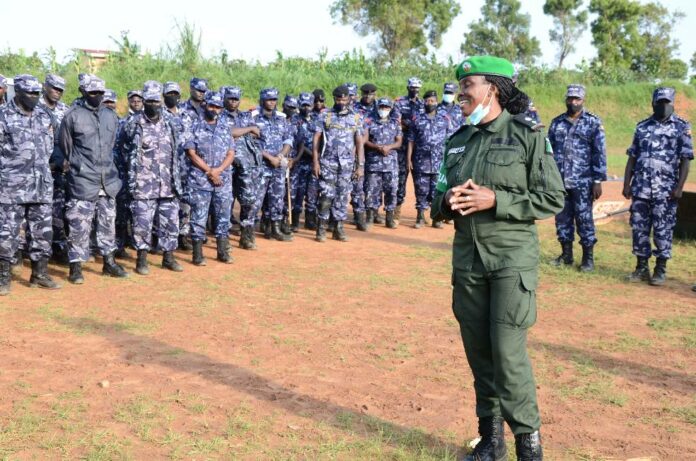
Uganda Police Force is set to deploy 160 officers to Somalia this December.

The team is part of the Formed Police Unit (FPU) who, today, completed a 6 months intensive Pre-deployment training course in Peacekeeping Operations of African Union Mission in Somalia (AMISOM).

The Officers, during the training at Kigo, were assessed by a team of five Formed Police Assessment officers Led by ASP Figalo Maxime from AMISOM Headquarters.

In Somalia, the officers will provide Public Order management, Protection of African Union personnel and facilities within means and capabilities, and Support police operations that require a formed response.

The Government of Uganda deployed the first Formed Police Unit (FPU) in Somalia under AMISOM in July 2012 after the UPDF had deployed there earlier on in 2007.

Units have rotated on annual basis and the deployment of this Unit will make the tenth rotation of Uganda FPU in Somalia under African Union (AU).

Stories Continues after ad

Prof. Barnabas Nawangwe to seek another term as Makerere Vice Chancellor

MUK Vice Chancellor Prof. Barnabas Nawangwe.

Prof Barnabas Nawangwe is set to seek another term as Makerere University Vice Chancellor. Nawangwe is serving his fifth and final year as the institution’s CEO after being appointed in 2017.

Section 31(4) of the Universities and Other Tertiary Institutions Act stipulates that the Vice Chancellor shall be appointed on terms and conditions determined by the University Council for five years and shall be eligible for re-appointment for one more term.

Whereas procedures allow him to seek another term, age is not on his side since he is 65 years old. His allies are inquiring whether the age limit can be circumvented. The plan is reportedly to have a friendly search committee which can tilt things a bit in his favour. And this has happened before. During the 2012 search process that saw Prof John Dumba Ssentamu become VC and Prof Venansius Baryamureeba kicked out, the age limit was put between 40-60 years for applicants.

However, during the 2017 VC search process that brought in Prof Nawangwe, they changed it from to between 40-65 years. Nawangwe allies feel this time it can be changed from 65 to at least 68 or so.

Nawangwe allies are consulting on whether his tenure can automatically be renewed or extended without going through a search process. This option, though it may block other potential candidates, is also reportedly being examined. Those pushing for it reason that the VC’s stellar performance should be rewarded.

They are also reasoning that Covid-19 pandemic has eaten into his time which needs to be compensated with an automatic renewal of his contract. These and many other options are being examined by Nawangwe allies to see him serve a second term.

The staff is also unhappy with Prof. Nawangwe led administration which has set a record of running an institution of Makerere caliber without a substantive Deputy vice chancellor in charge of Finance and Administration (DVC (F&A)) for four years which they see as incompetence.

Under Nawangwe’s tenure, most of the top University management jobs have been occupied in acting capacity. The best practice is that top management gets to know of the impending vacancy, plan and have it advertised on good time so that the day the incumbent leaves there is a competitively recruited successor to immediately take charge.

Many Nawangwe critics have been wondering why this isn’t being done by his administration yet Makerere is supposed to be a model of excellence for the rest of the country to emulate on many of these matters. The institution has spent four years without a substantive DVC (F&A). Here is what happened. The DVC (F&A) search process started in 2018 but the process was flouted as evidenced in the court ruling of June 2019 on the instigation of one of the candidates Prof Anthony Mugisha.

On the 14th of June 2019, court quashed the appointment of Prof. William Bazeyo as DVC F&A. Court also ordered the repeat of the search process. This was after the court finding that the process had been flawed. Instead of repeating the search process and filling up the position, Makerere University decided to re-appoint Prof. William Bazeyo in acting capacity.

After waiting for over six months Prof Mugisha on the 17th of December 2019 lodged an application in the High Court for contempt of court (MISC APPN No. 848, 2019).

To comply with the court order, at a special meeting on the 19th of February 2020, Council directed Senate to repeat the search process. And in June after waiting for over four months, an advert was run in the media for a whole month (June-July).

In response to the advert, four candidates applied, that is Prof Mugisha, Prof. William Bazeyo, Dr. Allan Katwalo Mulengani and Dr. Eddie Ekakooro.

After sieving through applicants papers, only three were shortlisted and were invited for face to face interviews and later invited to public presentations. The shortlisted applicants were Prof Mugisha, Prof. William Bazeyo and Dr. Allan Katwalo Mulengani.

On the 7th of August 2020, an invitation was sent out for special Senate slated for Friday the 14th of August 2020 to consider the search report. However on the 11th of August 2020 a day after public presentations, a circular was sent out to Senators cancelling the Senate Meeting that was earlier called to consider the search report. During that period, everyone was waiting for a report to be presented to Senate with three applicants who had successfully gone through the search process, that is, Prof. William Bazeyo, Prof. Anthony Mugisha and Assoc. Prof. Allan Katwalo Mulengani. Senate should have selected one name through voting as it has always been the practice, recommend the name to Chancellor for appointment with approval of Council.

After two months of waiting, on the 8th of October 2020 Prof Bazeyo resigned from acting in the position of DVC (F&A) and withdrew from the search process citing personal and family reasons. Instead of presenting the report to Senate for voting on the two remaining applicants, Senate was informed that it could not discuss the search report since the term of the search committee had expired. And also that court had ordered that five names had to be submitted to Senate which was not true.

After shunting Senate, management presented a report in Council which sat on the 27th of October 2020. The management report had a section on the search for DVC (F &A) and the resignation of Prof. Bazeyo. The search of the DVC is a business of Senate and not management. In the report of Management to Council, no reason was given as to why Special Senate was postponed indefinitely.

Instead of completing the search process, and appoint a substantive Deputy Vice-Chancellor (Finance and Administration), on the 11th of November, Dr. Josephine Nabukenya was appointed in acting capacity and she has been acting up to today.

On the 6th of November 2020, the Ag. University Secretary sent out a letter to the Academic Registrar instructing him to repeat the search process including re-advertising the position for the Deputy Vice-Chancellor (Finance and Administration

Court on 22nd of January, 2021 stopped the repeat of the search process for the DVC (F&A) for the third time, and the Judge counseled the Makerere University lawyers to advise their bosses to do what is right by completing the earlier search process which was halted without any sound reason.

Stories Continues after ad

Sub-Saharan Africa exits recession in 2021 but recovery still vulnerable

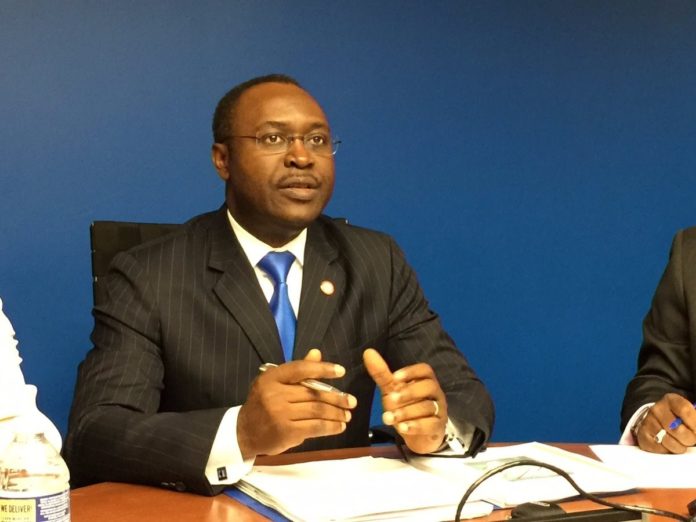
Mr.-Albert-Zeufack-World-Bank’s-Chief-Economist-for-Africa

Sub-Saharan Africa is set to emerge from the 2020 recession sparked by the COVID-19 pandemic with growth expected to expand by 3.3 percent in 2021.

This is one percent higher than the April 2021 forecast according to the latest edition of Africa’s Pulse. This rebound is currently fueled by elevated commodity prices, a relaxation of stringent pandemic measures, and recovery in global trade, but remains vulnerable given the low rates of vaccination on the continent, protracted economic damage, and a slow pace of recovery.

According to analysis in the Pulse, the World Bank’s twice-yearly economic update for the region, growth for 2022 and 2023 will also remain just below 4 percent, continuing to lag the recovery in advanced economies and emerging markets, and reflecting subdued investment in SSA.

“Fair and broad access to effective and safe COVID 19 vaccines is key to saving lives and strengthening Africa’s economic recovery. Faster vaccine deployment would accelerate the region’s growth to 5.1 percent in 2022 and 5.4 percent in 2023 as more containment measures are lifted, boosting consumption and investment,” said Albert Zeufack, Chief Economist for Africa at the World Bank.

The analysis shows that current speeds of economic recovery in the region are varied, with the three largest economies, Angola, Nigeria, and South Africa, expected to grow by 0.4 percent, 2.4 percent, 4.6 percent respectively. Excluding South Africa and Nigeria, the rest of SSA is rebounding faster at a growth rate of 3.6 percent in 2021, with non-resource-rich countries like Côte d’Ivoire and Kenya expected to recover strongly at 6.2 and 5.0 percent, respectively.

A positive trend, according to the report authors, is that African countries have seized the opportunity of the crisis to foster structural and macroeconomic reforms. Several countries have embarked on difficult but necessary structural reforms, such as the unification of exchange rates in Sudan, fuel subsidy reform in Nigeria, and the opening of the telecommunications sector to the private sector in Ethiopia.

Additionally, thanks to prudent monetary and fiscal policies, the region’s fiscal deficit, at 5.4 percent of GDP in 2021, is expected to narrow to 4.5 percent of GDP in 2022 and 3 percent of GDP in 2023. However fiscal discipline, combined with limited fiscal space, has prevented African countries from injecting the level of resources required to launch a vigorous policy response to COVID-19.

Apart from mounting fiscal pressures and rising debt levels as they implement measures for a sustainable and inclusive economic recovery, Sub-Saharan African countries are also faced with worsening impacts of climate change. The Pulse authors advise that just as the countries have used the crisis to introduce reform measures, they should also harness this opportunity to make sustainable, resilient transitions toward low-carbon economies that can provide long-term benefits in the form of reduced environmental hazards as well as new economic development openings.

The reports highlights Africa’s unique context of low baseline development, pre-existing climate vulnerabilities, limited energy access, and high reliance on climate-sensitive sectors as posing challenges but also providing opportunities to transform the economy and create jobs.

Private firms and governments in Africa are providing training for jobs in solar energy   Investments in climate-smart infrastructure can help cities create jobs. Decarbonization is an opportunity to foster manufacturing activity in the region, including the production of components of the Internet of Things, value-addition to minerals that will power the green economy, and insertion into regional value chains.

Stories Continues after ad
Makerere University summons six students over online exam malpractices

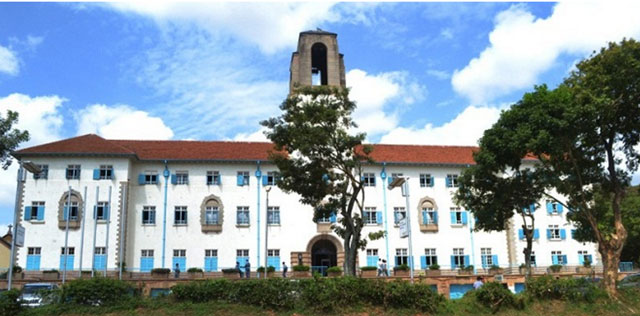
Makerere Main Building

Makerere University College of Natural Sciences (CONaS) and School of Education and External Studies have summoned students for engaging in exam malpractice.

Recently, Makerere University conducted online examinations for all its students following the closure of schools in June this Year. The closure peddled at curbing the spread of Covid-19 Pandemic.

According to the University Academic Registrar, Mr. Alfred Namoah Masikye informed the alleged students will appear before the committee without fail.

“The following students are required to appear before the examinations, malpractice irregularities and appeals committee on Wednesday 20th October 2021 at 2:30 pm in chemistry board room without fail,’’ reads in part of the statement released by Mr Masikye.

The committee will make its decision on the students’ fate after thorough engagement. The student will either re-do the exams or be dismissed by the Senate which is the highest decision-making body at the University.

The suspected students include; Kakuru Jonas Mugume (BSEDP), Magunda Micheal (BSEDp), Musige Fred (BSEDP), Okiror Solomon (BSEDP), Jungiera Alfred (BSEDP) and Bemanya Anthony (BSFA).

Stories Continues after ad

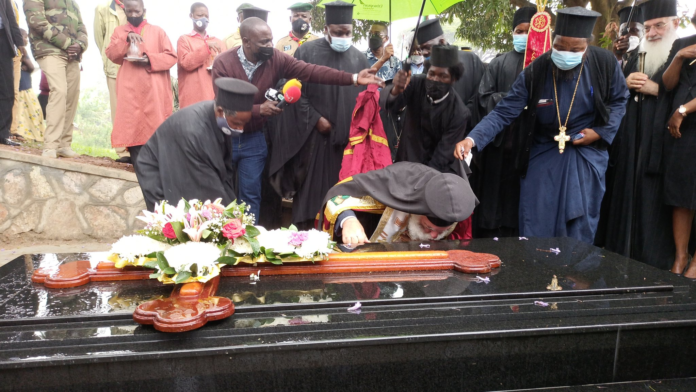
Orthodox Pope Theodoros II hails the late Archbishop Metropolitan Jonah Lwanga for being a fighter

Orthodox Pope Theodoros II hails the late Archbishop Metropolitan Jonah Lwanga for being a fighter

Orthodox  Pope and Patriarch of Alexandria and All Africa Theodoros II has hailed the late Archbishop  Metropolitan Jonah Lwanga for being a fighter. The Archbishop was laid to rest on September 20, 2021 at St. Nicholas Cathedral Namungoona.

The Archbishop breathed his last on September 5, 2021 in Greece’s capital Athens where he had gone for a visit. The church confirmed that Lwanga succumbed to prostate cancer.

Theodoros II prayed for the soul of Metropolitan Jonah and laid a wreath on his grave and expressed his condolence for the repose of Bishop Jonas. He will also preside over a 40 days Memorial Service at St. Nicholas Cathedral Namungoona on Sunday 17th.

“The joy is that I am here in Uganda and pay respects to this church leader who during my life I named him a fighter because even in his old age, he remained committed,” Pope Theodoros said, adding that, “Lwanga’s powerful face and work will be remembered.”

During his stay, His Beatitude will conduct pastoral visits to his Spiritual Children in different Orthodox Mission centers of the Metropolis of Kampala where he is also expected to preside over the consecration of the temple at St. Paraskavi Orthodox Monastery in Busaana on 14th October 2021.

His Beatitude will also visit the Holy Diocese of Gulu (North) and Eastern Uganda which he blessed and established in November 2018 during the Holy Synod and also, he will bless all Ugandans and the Nation of Uganda at large. The Pope is also expected to meet with officials of the government of Uganda, Diplomatic missions in Uganda among others.

Stories Continues after ad

Disregard social media on Museveni meeting Makerere University girl-ISO

Deputy DG-ISO Lt. Col. Katabazi and other top spy operatives meeting Ms Ashana (middle).


Internal Security Organisation has dispelled Social Media rumour as false reports regarding the youthful Makerere University student meeting President Museveni.

The stories on social media quoted some sources from State House indicating that the president would meet this youthful lady over her article.

“We have however established that stories have a different agenda and is working to serve the interests of particular individuals to water down the good gesture and patriotic move by the DDGISO to harmonize the working relationship with the disgruntled youth”. ISO said in a statement.

The spy agency said that just like they published earlier, the youth have developed a strategy of publishing false contents to attract the attention of their target after understanding that government is open to dialogue. it further said that it is also a technique now to write inciting contents against the state with hope that they will be summoned by relevant and concerned government officials in order to use that as a bait to advance their personal requests from government.

“In our bid to clarify the report by Ashana, the Deputy Director General ISO Lt. Col Emmy Katabazi in a telephone conversation this evening, he vehemently stated that, while they had discussions with Ashana yesterday, both parties resolved to always work together to address issues of national concern whenever need arises. Ms Annah  Ashana in a report posted on her Facebook page , did not mention anywhere that she was interested in meeting the president, over an article she wrote and neither did the Deputy Director General ISO promise anything in that regard” .

Ashana acknowledged that she was treated with utmost integrity, by the Intelligence Boss and resolutions were made but did not include meeting the president at any point in time .

“Information from the two parties does not indicate that there was need to meet the president and henceforth disregard any information indicating that the president has picked interest or wishes to meet this youthful lady”

Ms Ashaba recently penned down an erotic poem decrying the continued closure of schools, among other political issues. In her poem.


Stories Continues after ad

Carrefour pledges quality products to Ugandans

Carrefour Uganda store

Carrefour has pledged a high standard of quality and the best value to Ugandan consumers as it undertakes store modifications of all Shoprite Checkers stores in Uganda in preparation for the reopening under the Carrefour brand.

Earlier this month, Majid Al Futtaim, concluded an agreement with Shoprite Checkers Uganda Limited to transfer Shoprite’s six Uganda store leases to Majid Al Futtaim by the end of the year. The six stores are located in Acacia Mall, Village Mall, Victoria Mall, Lugogo Mall, Clock Tower, and Arena Mall.

Franck Moreau, Country Manager of Carrefour in East Africa at Majid Al Futttaim Retail said, “As we embark on the transition process of the Shoprite brand to Carrefour, our focus is to offer the best shopping experience for our customers through our product range, unbeatable value and high-quality offering.

“Ugandan customers should look forward to our signature sections such as the popular bakery section, delicatessen, butchery, fishery, fruits & vegetables and pastry products that offer quality fresh products in a hygienic environment. Our customers will also have a chance to engage in our weekly product promotions that create unbeatable value in the market. Customers’ are guaranteed high-quality products and exceptional services through our customer policies.

“With this expansion process, customers will now be able to access our stores at their nearest location. For greater convenience, the customers can also order products online via Glovo and Jumia Food,” he added.

Stories Continues after ad

UNBS moves to conduct mobile laboratory testing for consumer products

UNBS ED Mr. David Livingstone Ebiru.

The Uganda National Bureau of Standards (UNBS) is set to start mobile laboratory testing for selected products authorized by the government of Uganda in the fight against COVID-19, in a bid to support Micro, Small and Medium Enterprises (MSMEs’) recovery and resilience.

The products eligible for mobile laboratory testing include maize grain, maize flour, sanitisers, face masks and Personal Protective Equipment (PPEs), among others.

The development follows a boost of the UNBS Laboratory testing equipment by the Private Sector Foundation Uganda (PSFU) under the PSFU/MasterCard Covid-19 Recovery and Resilience Programme Project.

The equipment received includes an automatic colony counter for microbiological analysis; aflatoxin reader/kits and portable moisture meters for grain field-testing; a universal testing machine (UTM) of 10KN and a washing machine for personal protective equipment (PPE) testing (including masks).

During the handover ceremony of the equipment to UNBS by PSFU, the UNBS Executive Director, Mr. David Livingstone Ebiru said the equipment received has boosted UNBS Laboratory testing capacity by enabling mobile testing of samples in the field, in addition to the fixed laboratory testing done at the UNBS headquarters in Bweyogerere.

“We can now undertake mobile tests most especially for Aflatoxins within the maize value chain at the warehouses and millers’ premises. This will help us to increase the outreach to maize dealers across the country as opposed to them bringing the samples to the fixed laboratory equipment at standards house,” said Mr. David Livingstone Ebiru.

Mr. Ebiru added that the mobile testing capacity reduces turnaround time and increases the speed with which the Certificate of Analysis is completed to support businesses in getting the quality mark.

The Ag. Executive Director of the Private Sector Foundation Uganda, Mr. Francis Kisirinya said that the equipment given to UNBS does not only test COVID-19 related goods, but tests a wider scope of products which will help local manufacturers provide quality products.

“The good thing about this equipment is that it doesn’t test only COVID-19 related items. For example equipment that tests masks can test textiles and other  fabrics, so it will help our local manufacturers to produce quality textiles and fabrics, which we can sell locally and internationally thus supporting Buy Uganda Build Uganda,” Mr. Kisirinya said.

UNBS is committed to continue implementing the Covid-19 Recovery and Resilience Programme Project in order to support the private sector to fully recover from the effects of the COVID-19 pandemic.

Stories Continues after ad

Somalia rejects Reconfigured AMISOM, Mandate Change Proposal

AMISOM

Somalia has rejected a proposal from the African Union to turn its peacekeeping force in Mogadishu into a hybrid mission. This could set the stage for a battle for attention at the United Nations Security Council.

The AU Peace and Security Council (AUPSC) recently endorsed the African Union Mission in Somalia (Amisom). The endorsement came to help Amisom transition smoothly into a United Nations-financed mission. However, Mogadishu says the move does not meet the country’s strategic vision.

Somalia’s Federal Ministry of Defense released a statement accusing the AU organ of disregarding the country’s views. This also included a joint technical team created to assess the best option for the country.

‘’The FGS (Federal Government of Somalia) expresses grave concern at the AUPSC continued disregard of Somalia’s sovereignty, territorial integrity, and political independence by repeatedly pursuing an agenda that undermines the agenda of the AUPSC and violates the basic rights of a member state,’’ the Ministry said on Tuesday.

Mogadishu had earlier rejected proposals of an independent experts’ report which proposed four measures. These included re-hatting to a hybrid mission, becoming multidimensional but under AU, continuing to serve Amisom, or leave the country in six months.

Mogadishu argues that it doesn’t need a vacuum but wants an agreement that supports its local security agencies to take over responsibilities.

Amisom’s mandate expires on December 31, having initially been extended by the UN Security Council from February this year. The creation of the mission happened way back in 2007 by the AU to help guard a transitional federal government setting up a base.

The UN Security Council will decide the future of the mission within this month.

Stories Continues after ad