Stanbic Bank
Stanbic Bank
20.8 C
Kampala
Stanbic Bank
Stanbic Bank
Home Blog Page 811

KIU Vice Chancellor Dr. Mpezamihigo to receive Honorary Professor Award of The Academic Union Oxford

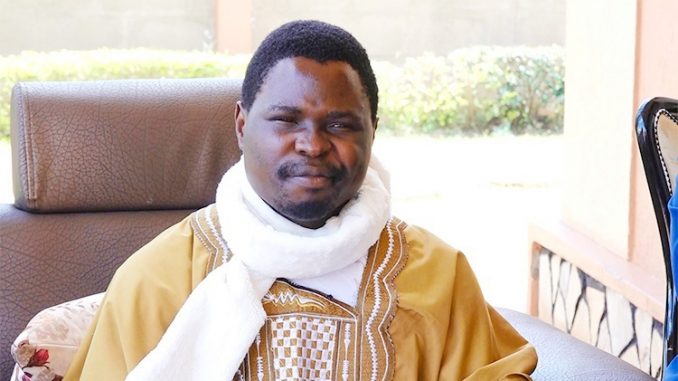
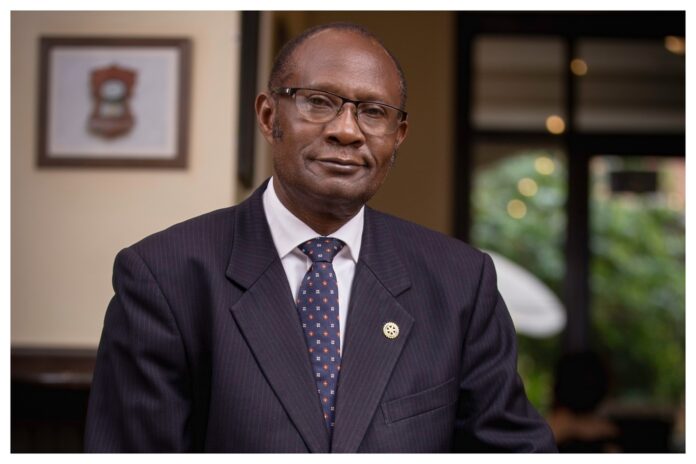
Dr. Mouhamad Mpezamihigo

The Vice Chancellor of Kampala International University (KIU), Dr. Mouhamad Mpezamihigo will receive the Honorary Professor of The Academic Union, Oxford UK, and will be inducted into the Council of Rectors of Europe.

The Academic Union Oxford is an international academic association of over 200 University Chancellors and more than 2000 Scientists and Researchers.

Dr. Mpezamihigo, an agriculturalist, with extensive training in higher education and management, among his many achievements has steered Kampala International University to a number of great milestones, most notable of which is its rise to the leading private University in Uganda two years in a row according to the Webometrics word ranking of Universities.

Under his stewardship, Kampala International University has managed to forge a number of collaborations and partnerships with other international Universities like Leiden University in the Netherlands, Charotar University of Science and Technology (CHARUSAT) in India, Gaziosmanpasa University in Turkey, Maharishi Markandeshwar University in India, Missisipi State University for Agriculture and Applied Sciences in the United States, University of Cagliari in Italy, University Medical Center in Hamburg Germany, The University of Edinburgh in Scotland, University of Otago in New Zealand, University of Nairobi in Kenya, Western Sydney University and the University of Rwanda among others.

Dr. Mpezamihigo is also the Chairman of the Virus Outbreak Data Network (VODAN) – Africa, President of the Implementation Network for Africa and Asia, and the Co-president of Netherlands Universities Foundation for International Cooperation (NUFFIC) International Digitization Projects Implementation in Ethiopia, Sudan, South Sudan and Somalia under KIU as a Dutch Pattern with Tilburg University in the Netherlands.

He serves as the Uganda Country Representative and Executive Council Member to ICESCO (Islamic World Educational, Scientific and Cultural Organization), and received a recognition Award for excellent performance, and dedicated service as a member and chairperson to several committees for 10 years on the governing council Member of the Uganda National Council for Higher Education, the government agency regulating higher education in Uganda.

The KIU Vice Chancellor is also a founding and Board Member of the Board of Trustees Union of Muslim Professionals of Uganda. He has been recognized on various accounts for his committed service, and has received awards other awards such as the Education Leadership Award for Excellence in Education, Leadership and Teaching) under the World Education Congress Global Awards in 2015, Mumbai India.

Dr. Mpezamihigo will be one of the distinguished speakers at the prestigious 2021 Oxford Debate which is themed, “University of the Future”.  The debate will center on the prospects for the development of education in the 21st century with the participation of regional educational leaders from all continents where Dr. Mpezamihigo will lead a discussion on, “Universities have to cooperate rather than compete. Are you ready to start communications and join projects with other colleges worldwide?”

This year, the annual union gathering which is traditionally held at the Council Chamber of Oxford Town Hall, Oxford United Kingdom, will instead be held virtually due to the Covid-19 pandemic and expected to start at 11:00 hours GMT.

The main purpose of the Oxford Debate is to accumulate, preserve and popularize different points of view on the future of education, innovative experience, and to promote cooperation between educational institutions worldwide. The Debate will reach a targeted audience in 54 countries via broadcast on the Academic Union official YouTube and Facebook platforms.

Some of the other topics to be debated include; “Pandemic lessons. On the way to the education of the future” and “Medical education molds the future of medicine.”

The event will be moderated by Dr. Rui Verde, Fellow of the Academic Faculty at the Oxford School of Global and Regional Research at Oxford University.

Stories Continues after ad

Uganda withdrawn from World Rugby 7s Repechage tournament

Uganda 7s team in Monaco

The Uganda men’s 7s team has been withdrawn from the World Rugby Sevens Repechage competition in Monaco from 18-20 June following a number of positive Covid-19 results determined during scheduled arrival testing.

Robust tournament Covid-19 protocols implemented by World Rugby and the Monégasque Rugby Union, which included pre-departure and on arrival PCR testing, revealed the positive results in the Uganda delegation.

“All Uganda players have been in strict isolation since arrival, and the delegation will continue to follow the isolation quarantine process as determined by the Monaco authorities’ public health guidelines. Owing to the nature of these tournament protocols, there has been no close contact with members from other team,” a statement from World Rugby read.

All remaining tournament participants underwent pre-scheduled antigen testing on the morning of Thursday 17 June and there were zero positive results, confirming the strict tournament protocols have been successful in maintaining a safe sanitary tournament environment.

The event is operating inside a sanitary bubble following World Rugby’s COVID-19 guidelines for all participants, which includes the compulsory wearing of masks at all times other than when players are on the pitch, physical distancing and regular hand washing, alongside the rigorous testing regime.

In line with tournament rules, the pool stage matches involving Uganda will be recorded as a bye for their opponents in Pool B – Chile, France, Hong Kong and Jamaica.

“Player welfare is World Rugby’s top priority and the international federation is providing full medical and operational support to ensure the health and wellbeing of the Ugandan delegation during their period of isolation, and will continue to implement the strict COVID-19 countermeasures throughout the tournament,” World Ruby said.

Stories Continues after ad

#Covid-19: Government asks staff who use public transport to stay home

public transport

Government has asked all its staff who use public transport to stay home following the recent surge in the coronavirus infections and deaths in the country.

“According to current information, the pandemic situation in the country worsening, hence, the need for increased vigilance. Further to the earlier guidelines on the management of the pandemic, regarding enforcement of Covid-19,” reads part of the memo dated June 17 to commissioners, Executive Directors, directors and all staff of government.

The guidelines that have been issued are; All staff who use public transport should stay home, senior officers who have been permitted to drive Government vehicles should drive themselves and allow their drivers to stay at home.

In addition, where an officer can work from home, Heads of Departments/Projects are hereby encouraged to allow the officers to work from home and only come to office on case the officer’s physical presence is required.

“You are required to strictly observe the guidance in order to protect staff, family and communities,” the memo notes.

This implementation of these guidelines is effective 18th Junes 2021 till the expiry of the 42 days directed by the H.E the President.

President Yoweri Museveni will tonight at 8pm deliver the much awaited address in which he is expected to announce additional lockdown measures as the country works to stop the recent surge in coronavirus infections and deaths.

Stories Continues after ad

Medics held over theft of drugs

Handcuffs

The Territorial Police at Amuru Central Police Station has in custody two medics for allegedly theft of government drugs.

The arrested are the ones in-charge of Omer health center II, a one Ayella Martin and his accomplice Mr. Okot Benard.

They were nabbed by police after a tip off on the 16th of June.

According to the Aswa Region spokesperson, ASP Ongom David Mudong, they were found in possession of Malaria RDT testing kits, Contraceptives and face masks.

Ongom added that investigations are still ongoing.

Stories Continues after ad

DCJ Richard Buteera presides over the swearing-in of new EOC members

DCJ Richard Buteera presides over the swearing-in ceremony of EOC Commissioners

The Deputy Chief Justice, Richard Buteera, earlier today presided over the swearing-in ceremony of newly appointed members of the Equal Opportunities Commission at the Judiciary headquarters in Kampala.

The members sworn-in include Ms Safia Jjuko Nalule, as the Chairperson of the four-member Commission; Vice Chairperson, Mr Joel Cox Ojuko, and Ms Denise Tusiime and Sr Mary Wasagali as members.

The DCJ called upon the commissioners to serve the public with sobriety, humility and integrity. “Commissioners, as you take on this new assignment, you always need to remember that you are part of the chain and building block to the desired national development,” he said.

Adding, “I implore you always to remember your cardinal duties to the nation, the Constitution and the people of Uganda on whose behalf you have been sworn in to serve,” the DCJ said.

By law, the Commission is mandated to monitor, evaluate and ensure that policies, laws, plans, programs, activities, traditions, cultures, usages and customs of all organs of State, private bodies and cultural communities and other members of our society act in favour of groups that were marginalised based on sex, race, colour, ethnic origin, tribe, creed, religion, social and economic standing, political opinion, disability, gender, age or any other reason created by history, tradition or custom.

Ms Nalule reassured the DCJ that the Commission has already registered several achievements in ensuring that all people, especially the marginalised groups participate and benefit from government programs in all spheres of their social-economic, political, religious and cultural lives.

She noted that as a result of the advocacy work of the commission, “It is now a legal requirement for every government agency to get a Certificate of Gender and Equity Compliance” when submitting their budgets for consideration.

About the mandate and achievements of the Commission, Ms Nalule appealed to the Government to keep the Commission operational. “I urge the government to drop the idea of dissolving the Equal Opportunities Commission because of its mandate,” she said.

The Commission provides a forum for any person who has a complaint relating to discrimination, marginalisation or any act that undermines Equal Opportunities to raise it so that it is investigated and remedial action is taken.

The Registrar High Court, HW Samuel Emokor, congratulated the Commissioners upon their appointment and wished them well in their assignment.

The ceremony was witnessed by Commissioner Bernard Mujuni, who represented the Permanent Secretary, Ministry of Gender, Labour and Social Development, Mr Robert Mugarura, Ag Secretary to the Commission (EOC); HW Dr Alex Mushabe, Ag Deputy Registrar/Private Legal Secretary to DCJ who moderated the ceremony; and the Personal Assistant to the Chief Registrar, HW Allan Gakyaro.

Stories Continues after ad

#Covid-19: Members in ICU can access benefits – NSSF

Richard Byarugaba.

The National Social Security Fund (NSSF) has said members battling Covid-19 in the Intensive Care Unit (ICU) will be given an option to access part of their benefits under the invalidity benefits provision.

Richard Byarugaba, the NSSF Managing Director, told Daily Monitor that the Fund had already helped some members in this regard. However, he did not provide specifics on how many members had approached NSSF in this regard or how much had been paid out.

“It is an invalidity benefit. Basically, it is a benefit which is available to members who are either incapacitated or are not able to work. And since we have seen that Covid-19 can sometimes result in serious medication, the [NSSF doctor] assesses and then authorizes it [pay out],” he is quoted adding that the assessment for the payout is done in less than a week.

Asked if the Fund would not be overwhelmed considering the surge in Covid-19 cases since May, Mr Byarugaba said access would be on a cases-by-case basis with attention given to members in critical condition.

“Especially, now that we know that you have to pay a lot of money when you are in intensive care, we have considered this. But it entirely remains a doctors decision,” he said.

NSSF had earlier sent out a tweet responding to a twitter user Albert Mwebaze who on Wednesday tweeted: “With this sky rocketing costs of treating Covid. Isn’t about time people who are admitted are allowed to access their NSSF savings.”

A reply from NSSF read; “Kindly note that if our member is in ICU and medical documents are submitted, the Fund doctor handles the assessment and advises accordingly in-line with the invalidity benefit. We therefore request that they reach out to enable us serve them better.”

Mr Byarugaba noted that the payout will purely be based on the discretion of the NSSF doctor, who after assessing submitted documents, will authorise the payout.

NSSF has since last year been swarmed by request from both members and the public to create a provision in which members, whose income sources have been affected by Covid-19 access part of their benefits to shore them out of the hard times.

Stories Continues after ad

This Rosebud’s story of resilience during #Covid-19 lockdowns could inspire distressed entrepreneurs

Group chairman, Ruparelia group of companies. Sudhir Ruparelia. One of the sponsors of the Expo

Since Covid-19 poked its ugly nose, it has changed the pace of life for many people across the globe. As for businesses, many that still survive are still in unchartered waters – others especially depending on travel such as airlines, hotels, tour companies, etc, pray we go through this phase faster than it is doing.

Millions of workers have been sent home with little or nothing to go back to – seriously, many business are closing one by one as the pandemic shows no sign of leaving any time soon.

Every business owner or manager is in search of solutions on how to keep in the game – at least survive this storm. There are few answers.

However, there is a silver lining at every dark cloud – and it doesn’t hurt borrowing some fire from a neighbour on a cold day.

We therefore bring you a story of Uganda’s premier flower company which has swum against the current to remain operational despite the tough times in supplying very sensitive products such as flowers to European markets under strict Covid19 regulations.

Roses are a blessing to humanity. Even in tough times, they remind us of love, hope, faith, life.

An interview excerpt with Ugandan billionaire Sudhir Ruparelia, BillionaireTomorrow.com discussed with him how his flower company, Rosebud, continued to operate during the turbulent 2020 and lessons drawn from the experience.

Dr. Ruparelia admits that no one knows everything, but, in such situations, there is a need to remain professional, keep the contracts running for all suppliers, as well as keep the workforce alive.

Below is the story of Rosebud as told by Billionairetomorrow.com’s Chris Bishop, which could inspire others wondering how to go through the Covid19 storm.

Mr Bishop narrates;

Rosebud is the largest flower grower in Uganda – a 60-hectare farm producing 350,000 rose stems-a-day for export to Europe in a business worth about $15 million-a-year. This year, there are plans to expand by another 10 hectares to produce 500,000 rose stems in a business that appears to bring Sudhir as much pleasure as it does dollars. He says, like most of his successful ventures, it came by accident.

“What happened was about 20 years ago two of my friends came to me and they told me they had acquired a farm that had gone into receivership and they wanted me to join hands with them. So, I told them: ‘Look I’m not really a farmer, I am not in the agricultural business; I am in the service industries, you know, and good at what I am doing. They said, OK, we want you not to be known in the running of the farm, we want you to be a sleeping partner.

This was at a time when Uganda was trying to tap into the flower business – a trail blazed fairly successfully by neighbours Kenya. Yet, in Uganda,of the 25 farmers who started up 20 years ago, 21 failed.

Sudhir made sure Rosebud was one of the four survivors by ploughing $15 million into the farm to increase economies of scale, building metal greenhouses – replacing flimsy wood- along with computerized irrigation systems. To this day, the farm costs $675,000-a-month to run, but has the advantage of weather allowing roses to grow all year round.

It was a bed of roses until COVID-19 struck wiping out a huge slice of the Ugandan economy.

“I think COVID brought a lot of fear in everybody and insecurity and it’s like it’s the end of the world,” he says with a rueful smile.

“It is a sense of fear among everyone that put everyone off guard. It bought a lot of insecurity so what happened was in Uganda, with the authorities here, had a complete lockdown which means nothing moving everybody had to stay home. If you wanted to go to supermarkets you had to walk. All the cars and trucks and everything stopped and likewise the airport closed and cargo flights were not allowed in and then I think the government realised that at least cargo planes should come in. For us, what happened was Europe had a similar scenario a soft lockup where people could still move. What’s fortunate for us is the kind of flowers we sell is sold in supermarkets and supermarkets in Europe they are always open.”

So, it was vital that Rosebud kept shipping roses through the storm in a dangerous new world where one COVID-19 case could have shut the business down.

“Millions of jobs ended, most employers would end up paying two- or-three month’s salary, as was the law, because they cannot sustain themselves. All the cars, all the activity that bring taxes to the government stopped.”

Sudhir moved fast and offered 750 workers a bonus, three square meals a day, and a bed for the night on condition they didn’t leave the farm for the weeks of lockdown in Uganda.

“Everybody was scared themselves; the insecurity of jobs, of survival and a lot of people, live on week to week or month to month so I think it was equally important for workers to salvage a place which gives them a living, at the same time, as proprietors, we wanted this thing to work. The farm, as you know: the plants are living things that have to be tended they have to be fed eight to six times a day. But also, the plants themselves if you don’t tend it a lot of foliage grows – what you call the parasite leaves – so we had to trim and all that. So, we needed our people to be with us and I think it was a great moment when everyone came together and made sure it worked.”

It meant there was a small disruption of exports – flights were suspended for two weeks -to the world’s biggest flower market in the Netherlands. Three cargo planes fly 120 tonnes of roses every week to the Aalsmeer Flower Auction, near Amsterdam, where traders sell 20 million flowers a day. It remains a thriving business despite rough economic times.

Most of Uganda’s roses end up in supermarkets in Britain France and Germany. The country grows the small and durable so-called sweetheart rose. It’s in big demand in Europe – a continent where flowers say everything from happy birthday and happy house warming to: ‘I’m sorry’ and ‘Please marry me.’ Sixty-five per cent of the world’s flowers go through the auction near Amsterdam.

“Europe is a very tough game to enter the market and apart from Europe, the people we deal with are Dutch. Dutch are very tough and hard people and if you don’t understand you are dumped the next day. So, whatever you do you must make sure you create a benefit to them and also the consumers. The hardest people in Europe to deal with are Dutch and we have over the years created a name for Uganda as a flower growing country,” says Sudhir.

“The Dutch have perfected the art of settlement. We have sold flowers directly to some people and lost money. The Dutch have a system, you pay a charge, but in 14 days you get your money.”

Yet the efficiency and toughness of the rigorous Dutch threatened to nip this thriving African flower farm in the bud. The threat to the business was no bigger than a pinhead – the egg of a caterpillar. Four of them were found among 12 million roses and the sharp-eyed Dutch inspectors threatened to cut off trade.

“Europe has very stringent sanitary regulations of any insects coming into the country and any other living being that cannot be detected by the eye, but grows during the journey to Europe,” says Sudhir.

“We have to have five different checks to ensure that physically none of these living beings – including caterpillar eggs – were hidden in the flower petals and the leaves. So every flower we export has to be physically checked five times.”

Long lines of workers peering through large magnifying glasses are at the heart of the organization. In the greenhouses, anti-insect lights and molasses trays try to ward off the butterflies and keep them from laying eggs that could be the greatest threat to the business.

A similar catastrophic bolt from the blue proved the catalyst that catapulted Sudhir on a long journey to the other side of the world that was the foundation of his fortune.

Stories Continues after ad

NRM mourns the death of Kayunga district LCV Chairman

Ffefeeka Serubogo Muhammad.

The National Resistance Movement (NRM) has mourned demise of LCV Chairman for Kayunga district, Ffefeeka Serubogo Muhammad.

The former member of National Unity Platform (NUP) was found hanging on a tree. His death happened at a time when he was battling to have people compensated for investments on forest land in Galiraya.

“This death has occurred when the people of Uganda have just been through a general election, where the late Serubogo was unanimously elected. Death has therefore robbed the people of a person whose potential hadn’t been fully exploited,” NRM Secretary General Richard Todwong said.

He said the circumstances surrounding his death are not clear and are a subject of investigation and we may not delve into it now, but we wish to call upon the police to expedite the investigation so that the cause of death can be established.

“In the meantime we wish to call for calm as the agencies of government conduct their investigation,” he said.

Stories Continues after ad

Parliament rejects the appointment of Alice Kaboyo as Minister over corruption

Alice Kaboyo

The Appointments Committee of Parliament has stayed the appointment of the former State House aide Alice Kaboyo, as Minister for Luweero – Rwenzori Triangle.

Appearing before the Appointment Committee chaired by Deputy Speaker Anita Among, Kaboyo failed to have her appointment approved. She is among the 80 ministers Museveni named to lead various ministries in the next government.

Her failure is linked to her conviction in the Anti-Corruption after she pleaded ‘guilty’ on four of nine counts in the Global Alliance for Vaccines and Immunisation (Gavi) case.

According to Observer, Kaboyo, co-accused with three former Health ministers, was sentenced to a fine of Shs 20m or an eight-year prison term. She chose to pay for her freedom.

Five years ago, former Health minister Jim Muhwezi, his deputies Mike Mukula and Dr Alex Kamugisha, and Kaboyo, were charged with mismanaging billions of shillings under the Gavi project.

Unlike the ministers who are facing several charges of alleged theft, causing financial loss, uttering false documents and embezzlement, Kaboyo (bar one count where she had been co-charged with Muhwezi) was facing seven other counts that included abuse of office and writing documents in the name of the former Private Principal Presidential Secretary, Amelia Kyambadde.

According to court records, Kaboyo was advanced the Gavi funds after she had resigned her post. After a 20-minute adjournment, Akankwasa sentenced Kaboyo to Shs 5m on each of the four counts or a prison term of two years on each counts.

Stories Continues after ad

10th Annual Directors and Company Secretary Conference set for June 23

ICSA conference

The Institute of Chartered Secretaries and Administrators (ICSA) Uganda has organized the 10th annual Directors and Company Secretaries conference scheduled for 23rd June virtually in accordance with the recent restrictions announced by the President of Uganda H.E Yoweri Museveni.

In partnership with KPMG, the conference will host several high profile and reputable business leaders, entrepreneurs and mentors from different sectors who will discuss and share their practical experiences. The conference is to be attended by Directors, Secretaries, Leaders and Senior Managers from the private sector and private sector, Local Government, private sector, Non-Government organization and Small and Medium Enterprises (SMEs).

The theme for this year’s event is: “Corporate Governance: The key to business resilience”. According to Jane Okot P’ Bitek Langoya, Chairperson, ICSA Uganda – East Africa Region, this year’s theme is very relevant to anyone who wants their businesses to remain relevant beyond the short term.

“Statistics from the Ministry of Trade, Industry and Cooperatives indicate that 90% of businesses in Uganda are SMEs. This means that SMEs are the engines of economic development, and so when we get disruptive turbulences that severely affect businesses, like the COVID – 19 pandemic did, it is important that the businesses are resilient to such turbulence because they have a direct impact on the economy,” she pointed out.

A recent rapid survey of businesses by the Economic Policy Research Centre (EPRC) in Ministry of Finance, Planning & Economic Development Uganda revealed that three-quarters of the surveyed businesses have laid off employees due to the risks presented by COVID-19 and subsequent containment measures. Indeed, the results also suggested that lockdown measures had reduced business activity by more than half and many businesses did not survive the first wave of COVID pandemic.

Commenting on the current business environment in the country, Ms. Jane said: “Now we are barely out of the first wave of the pandemic but are already facing second wave and it’s more virulent than the first wave. The President of the Republic of Uganda, his Excellency Yoweri Museveni had instituted lock down procedures for 42 day and amongst this are; closure of schools, suspension of travel to Category A countries, suspension of nonfood markets, suspension of inter district public transport, encourage 30% employee presences at workplace and this time round any violations of the lockdown rules will lead to the payment of fines.

These measures will inevitably affect a number of businesses that have not built resilience against such turbulence. The major objective of the conference is to demonstrate to businesses how to build resilience hence the theme: Corporate governance: The Key to Business Resilience,” she reiterated.

When KPMG carried out a global survey of over 500 CEOs in 11 major economies, the CEOs responded that they have now found their footing in stabilizing their operations – one year down the line since the pandemic first stirred abrupt uncertainty and change. They are now thinking about new safety measures for their staff and customers. Things like office space and organization footprint are common boardroom discussions now. While the old traditional risk of cyber security still remains the number one risk, regulatory risk and tax risk tied for second place, while supply chain risk ascended to third place due to the Covid disruptions.

Though few business leaders anticipate a speedy return to normal, they have a strong understanding of the requirements to ‘restore normalcy’ in the way they work. They also have a clear vision of actions required to reassert their competitiveness in a forever-changed marketplace, including building on their accelerated digital and ESG activities over the past year.

This response came from almost every sector be it financial services, retail, manufacturing, infrastructure or Technology. Which means these must be common boardroom conversations for those businesses which will prove resilient into the new normal.

Commenting on the partnership, Asad Lukwago, Partner KPMG, said the company values define what the company stands for and underpins all actions. This goes to explain why KPMG joined the event as a sponsor. “It is because we work together for the better of our society. Whatever our role as KPMG, we make a positive impact in society through the work we do. By staying focused on what really matters, and acting as stewards for the next generation, we inspire confidence and empower change. We care about our businesses in Uganda and our economy at large – so we don’t want the world to leave our local entrepreneurs behind thus synergizing our efforts for good.” He said.

Other sponsors of the event include The Vision Group, Centenary Bank, Protea Hotel Kampala, Stanbic Bank, Hill & Knowlton Strategies Uganda, Shany Brand and Shonubi Musoke & Co advocates.

Stories Continues after ad