Stanbic Bank
Stanbic Bank
18.1 C
Kampala
Stanbic Bank
Stanbic Bank
Home Blog Page 836

Morrison Rwakakamba named Board Chairman for Uganda Investment Authority

Morrison Rwakakamba

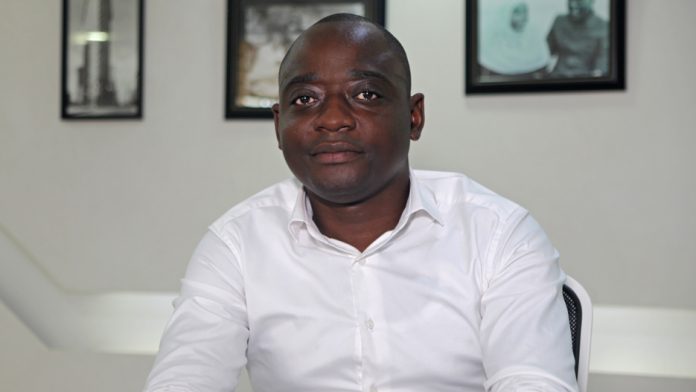
The former Presidential Assistant on Research and Information Morrison Rwakakamba has been appointed Board Chairman for the Uganda Investment Authority (UIA).

The former head of the Government Citizen Interaction Centre is replacing Dr. Emely Kugonza who has headed the board since 2019. Rwakakamba has been a board member of UIA.

Mr. Rwakakamba is Harvard Kennedy School alumnus and currently heads a policy think tank Agency For Transformation.

Morrison received his first degree in Education from Makerere University, Kampala in 2003. He later attended the School of Political Science at Makerere University where he obtained a Masters Degree in International Relations and Diplomatic Studies (IRDS) in 2006.

In 2004, Morrison joined Uganda National Farmers Federation (UNFFE) as a Research Associate and rose through ranks to become a Resident Consultant and Manager for Policy Research and Advocacy in 2007. At UNFFE, Morrison directed research and mobilized farmers’ fraternity to amplify voice and shape favorable agriculture policy.

He also chaired a number of International expert committees moderated by the International Federation of Agricultural Producers in Paris, France. At the beginning of 2010, Morrison took up the position of Chief Executive Officer at Uganda National Chamber of Commerce and Industry (UNCCI), where he led initiatives to reform Uganda’s budget architecture in favor of private sector and citizens.

Morrison is a respected commentator in Uganda’s mainstream media. His study on effectiveness of Uganda’s environmental policies was peer reviewed and published by International Journal- The Mountain Research and Development (MRD) Journal in May 2009.

The story will be updated…

Stories Continues after ad

Ex-LRA Commander Ongwen sentence for tomorrow

Dominic Ongwen

The International Criminal Court will tomorrow make its decision on the sentence of the former Lord’s Resistance Army senior commander Dominic Ongwen who was in February convicted on 61 of the 70 counts of crimes against humanity and war crimes he faced.

According to an ICC statement issued on Tuesday, the court will make its decision on May 6 and the court starts sitting at 11 CEST European time which is midday in Uganda.

Mr Ongwen, who is one the feared commanders of the notorious Lord’s Resistance Army (LRA), is the first member of the LRA to appear before the court.

He was arrested in 2014 in the Central African Republic before he was sent to the Hague based court for trial.

He faced charges related to attacks on four camps for internally displaced people in Uganda in 2004. More than 4,000 victims provided testimony in the ICC case.

He faces life a maximum of life imprisonment

Stories Continues after ad

Stanbic PMI: Business activities consistently improve amidst #Covid-19 pandemic

Stanbic Bank

Uganda’s private sector continues to recover in April with business conditions, employment and purchasing orders consistently improving since February securing greater volumes of new orders amidst normal operating conditions.

The headline Stanbic Purchasing Managers’ Index (PMI) rose to 57.8 in April from 53.2 in March, signaling a third successive monthly improvement in business conditions since the series began with an average of 53.0.

Sponsored by Stanbic Bank and produced by IHS Markit, the PMI monthly survey has been conducted since June 2016. It involves the distribution of questionnaires to over 400 purchasing managers and covers the sectors of agriculture, industry, construction, wholesale & retail and services. The headline PMI figure provides an early indication of operating conditions in Uganda.

Ronald Muyanja, the Head of Trading, Stanbic Bank Uganda said, “Firms posted an increment in new orders and output across each of the five broad sectors thereby extending the current sequence of expansion and growth at the start of the second quarter which is an indication that Uganda’s economy is stabling. A number of respondents indicated that they had secured new customers during the month.”

The PMI is a composite index, calculated as a weighted average of five individual sub-components: New Orders (30 percent); Output (25 percent); Employment (20 percent); Suppliers’ Delivery Times (15 percent) and Stocks of Purchases (10 percent). Readings above 50.0 signal an improvement in business conditions on the previous month, while readings below 50.0 show deterioration.

According to the April report, the purchasing activity expanded, feeding through to a rise in stocks of inputs.  Expectations of further improvements in economic conditions and new order inflows supported the on-going optimism in the 12-month outlook for business activity with 85 percent of respondents predicting a rise in output over the coming year.

Muyanja said, “Employment levels rose for three consecutive months across agriculture, construction, industry, services and wholesale & retail categories. Expansion in new orders and increase in business activities led to an improvement in customer demand with companies taking on additional workers in April. Although, additions to workforces led to an increment in staff costs, with wages and salaries rising following a fall in the previous month.

He added, “The work backlogs decreased during the course of the month. Anecdotal evidence suggested that capacity was generally sufficient to keep on top of workloads in spite of recent gains in new business, with firms taking on extra staff where necessary.”

Higher purchase costs increased, extending the current sequence of inflation to 11 months with prices of raw materials like cement, paper and stationery, growing staff costs, electricity and fuel charges recording an increment.

However, reversing the picture from the previous month, suppliers’ delivery times shortened with some respondents indicating that prompt payments had helped lead to faster deliveries, while others reported that vendors had made efforts to shorten lead times in order to deal with greater order volumes.

Also, firms generally expect outputs to continue to expand over the coming year, alongside further improvements in economic conditions and new orders. Locally, business posted an increase in new orders while exports and new business from abroad fell again as Covid-19 pandemic continues to impact international demands. Around 85% of respondents predicted that output will rise, with optimism widespread across the five monitored sectors.

Stories Continues after ad

The writing is on the wall for the captive lion breeding industry

Blood Lions

Today at a stakeholder’s feedback meeting in Pretoria, Minister Creecy of the Department of Forestry, Fisheries and the Environment (DFFE) took crucial and long-awaited steps towards changing the status quo of the commercial captive lion breeding industry in South Africa.

Minister Barbara Creecy announced that South Africa will no longer breed captive lions, keep lions in captivity, or use captive lions or their derivatives commercially. She has instructed her Department to put processes in place to halt the sale of captive lion derivatives (including the appropriate disposal of existing lion bone stockpiles and lion bone from euthanised lions); the hunting of captive bred lions; tourist interactions with captive lions (including, so-called voluntourism, cub petting, etc).

“The [High-Level] Panel identified that the captive lion breeding industry poses risks to the sustainability of wild lion conservation resulting from the negative impact on ecotourism, which funds lion conservation and conservation more broadly, the negative impact on the authentic wild hunting industry, and the risk that trade in lion parts poses to stimulating poaching and illegal trade”, said Minister Creecy in her announcement today.

The Department will be initiating processes to implement these majority recommendations by the High-Level Panel (HLP), established by the Minister in October 2019, in order to mitigate these risks and shift away from this abhorrent industry.

“Blood Lions has campaigned against this cruel and unethical industry and its spin-off activities for many years, and we are extremely happy by the Minister’s decision to bring an end to the commercial captive lion breeding industry”, says Dr Louise de Waal (Director and Campaign Manager of Blood Lions). “We commend the Minister in her decisive leadership, and we would welcome the chance to play a role in assisting her, the various Departments and entities in the phasing out process to come.”

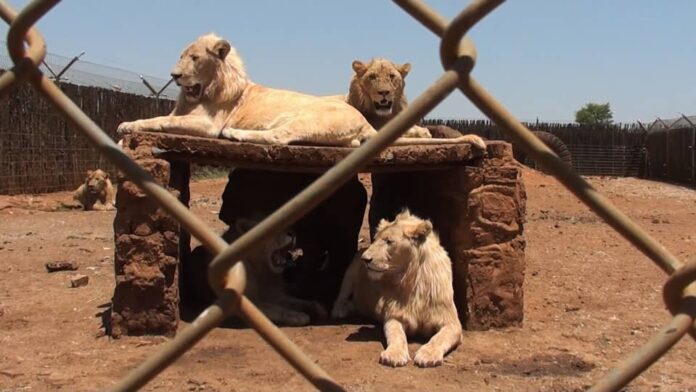
Currently, 8,000-12,000 lions and thousands of other big cats, including tigers and cheetahs, are bred and kept in captivity in more than 350 facilities in mostly the Free State, North West, Limpopo and Eastern Cape provinces. These predators are bred for commercial purposes, including interactive tourism, “canned” hunting, lion bone trade and live exports.

World Animal Protection and Blood Lions together with many other stakeholders in the animal welfare and conservation sectors made a wealth of compelling science-based evidence available to the HLP in written and oral submissions in 2020. Reasons provided to phase out the commercial captive lion breeding industry in South Africa included among others the risk of zoonosis, animal welfare concerns, the unregulated nature of the industry, the fragmented policies pertaining this sector, as well as damage to South Africa’s tourism and conservation reputation and threats to the wild lion population from poaching.

“By working together, we can ensure that lions remain where they belong – in the wild. We stand ready to offer our expertise, working collaboratively with governments, NGOs and the tourism industry to find practical solutions”, says Edith Kabesiime, Campaign Manager for World Animal Protection.

By implementing a ban on the use of captive lions and their derivatives, in conjunction with a breeding ban and an immediate end to all activities involving captive bred lions, DFFE will effectively take the lead towards a greener and more responsible South Africa. These are the first steps in shifting away from commodifying our wildlife, while moving towards a true “ecologically sustainable…use of natural resources”, as described in Section 24 in the Bill of Rights of our Constitution.

“Opposing this brutal industry has been a long journey. Our ultimate objective has always been to end the captive lion breeding industry, and after so many setbacks, we sense an important change in attitude. We applaud the Minister, her department and the HLP. Going forward, we hope to be of assistance to them in closing down the industry”, say Ian Michler and Pippa Hankinson (Directors of Blood Lions).

Given the considerable scale of farming and trade of captive lions in our country, the recommendations that came out of the HLP consultations concur with the views held amongst the global conservation community, welfare organisations, and the general public, who all condemn the industry.

“The only effective way to safeguard both people and animals throughout this industry is to conduct a phased shift away from commercial captive predator breeding operations”, de Waal states. “These steps will not only ensure improved welfare conditions for captive lions and other big cats, health and safety of the public at large, but also the protection of wild lions and the safeguarding of Brand South Africa from reputational damage, as the Minister acknowledged in her statement this morning.”

“Thousands of farmed lions are born into a life of misery in South Africa every year in cruel commercial breeding facilities. This latest move by the Government of South Africa is courageous – taking the first steps in a commitment to long-lasting and meaningful change. This is a win for wildlife”, adds Kabesiime.

Blood Lions and World Animal Protection congratulate the Minister on these bold steps and offer their full support in developing and implementing a responsible phase-out plan in order to ensure that the commercial predator breeding industry is successfully closed down in South Africa, once and for all.

Stories Continues after ad

AFCON Beach Soccer 2021: Uganda Sand Cranes provisional squad named

Uganda Sand Cranes goalkeeper Meddie Kibirige

The Head Coach of the Uganda National Beach Soccer Team-Sand Cranes Salim Jamal Muwonge has named a provisional squad of 16 players to start preparations on Friday 7th May ahead of the 2021 Beach Soccer Africa Cup of Nations Senegal.

The squad will camp at the FUFA Technical Centre, Njeru.

The final squad will have 12 players who will fly out of the country with the rest of the contingent on 18th May 2021 to Senegal.

The tournament will to take place from 23 to 29 May 2021, in the city of Saly.

The 2021 Beach Soccer Africa Cup of Nations will be the fourth edition of the Africa Beach Soccer Cup of Nations (BSAFCON), the premier beach soccer championship in Africa contested by men’s national teams who are members of the Confederation of African football (CAF).

Originally organised by Beach Soccer Worldwide (BSWW) under the title FIFA Beach Soccer World Cup CAF qualifier (informally known as CAF Beach Soccer Championship), in 2015, CAF became organisers and began using the BSAFCON title to which the competition was officially renamed the next year.

Overall, this will be the 10th edition of the event.

The tournament was due to take place in Uganda between 23 and 29 November 2020. However, due to the Covid-19 Pandemic and rising water levels on the shores of Lake Victoria affecting the host beach, Uganda withdrew from hosting. Senegal were subsequently chosen as the new hosts, with the tournament rescheduled to take place from 23 to 29 May 2021,in the city of Saly.

The event also acts as the qualification route for African teams to the 2021 FIFA Beach Soccer World Cup in Russia; the winners and runners-up qualify.

The Squad summoned 

Goalkeepers: Meddie Kibirige (St Lawrence University BSC), Samson Kirya (Buganda Royal BSC), Nasser Lwamunda (Kiringente BSC), Mutebi Ronald (St Lawrence Universty BSC)

Defenders: Paul Lule (Buganda Royal BSC), Davis Kasujja (MUBS BSC), Douglas Muganga (MUBS BSC), Byaruhanga Rica (St Lawrence University BSC), Kikonyogo Jonathan (St Lawrence University BSC), Suleiman Ochero (St. Lawrence University BSC)

Forwards: Ismail Kawawulo (MUBS BSC), Baker Lukooya (St Lawrence University BSC), Emmanuel Wasswa (St Lawrence University BSC), Swalley Ssimbwa (St. Lawrence University BSC), Ambrose Kigozi (Buganda Royal BSC)

Stories Continues after ad

Parliament enacts law against human sacrifice

Speaker Kadaga

A new law criminalizing the act of human sacrifice has been passed by Parliament and will see those involved in the act face death or long prison sentences.

The Bill which was brought to Parliament by Hon. Bernard Atiku of Ayivu County titled, the Prevention and Prohibition of Human Sacrifice Bill 2020 generated undivided support from MPs.

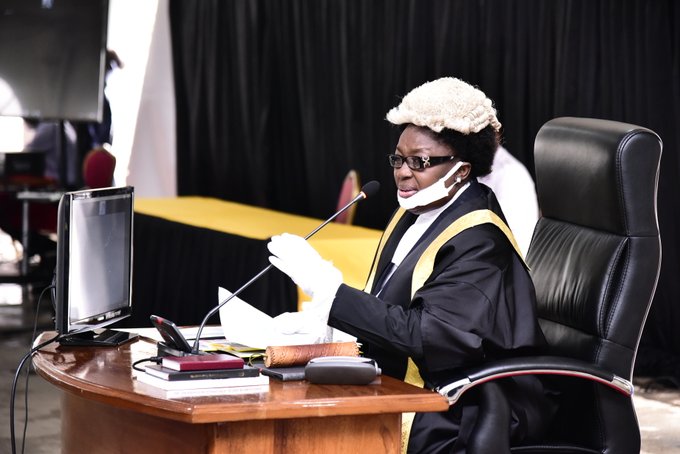
The bill was passed by Parliament on Tuesday, 04 May 2021 at a sitting chaired by the Speaker Rebecca Kadaga.

Atiku said Bill aims to provide for the crime and offence of human sacrifice, fines and penalties for the offence of human sacrifice, a loophole he says the perpetrators have taken advantage of.

“Human sacrifice is a growing concern to law enforcement agencies, parents, child rights activists and the general public. Records from the Uganda Police Force show that human sacrifice cases have been steadily increasing for several years,” he said.

Atiku pointed out that reports of human sacrifice, especially of children have been rampant in Uganda since the 1990s and have continued to escalate.

“Every year, the Uganda Police Force Annual Crime illustrate that the offence of human sacrifice has escalated in Uganda without abatement,” he added.

The Vice Chairperson of the Committee on Legal and Parliamentary Affairs, Hon Paul Akamba said the Committee unreservedly backed the bill noting that currently, there is a grey area in legislation that relates to possession of human body parts considering that there is no specific law in Uganda prohibiting the possession or sale of human body organs.

“Body parts can be removed from a living or dead person, the offence of murder cannot be preferred since in most cases, there is no dead body to sustain a charge”.

He stated that there is need for a specific law on human sacrifice that takes cognizance of the unique nature of the offence and provides specific ingredients of the offence which in turn will give it its correct status.

The Leader of the Opposition, Hon. Betty Aol Ocan stated that the main victims of human sacrifice are children and it sometimes because of primitive cultural beliefs.

“Sometimes these people kills these children to take them to witchdoctors for wealth yet these very witchdoctors have no money,” she said.

Ocan said people should abandon primitive behaviours and seek knowledge from the Bible for intelligence.

The Minister of State for Planning, Hon. David Bahati said it is disheartening to note that human traffickers earn over US$30 billion per year in their trade.

“We must therefore, uphold the principles of this law and even strengthen some of the proposals,” Bahati said.

He held that when it comes to punishment of those who are found guilty of attempting to human traffic, the punishment should be longer than a 10 year sentence. “It is abhorring to hear that someone will make sacrifice of a child’s life to construct a building so that it can generate a lot of wealth for them,” Bahati said.

The Bill among others will see a death penalty being imposed on a person who commits the offence where such a person is a parent, guardian or person having authority or control over the victim of the offence or where the act results in the death of the victim.

”Where a person causes grievous bodily harm to the victim, the person should be liable to imprisonment for life and if the person causes any other injury to the victim, the person should be liable to imprisonment for ten years,” the bill stated in part.

The bill also criminalizes the financing of act of human sacrifice in clause 3. “A person shall not finance another person, whether directly or indirectly, to commit the offence of human sacrifice and a person who contravenes this subsection commits an offence and is liable, on conviction, to suffer death,” the bill adds.

The Speaker of Parliament, Rebecca Kadaga said that Parliament has provided an avenue for justice for all the victims, especially children of human sacrifice.

Stories Continues after ad

Court of Appeal to give ruling on Ham, DTB tomorrow

Businessman Hamis Kiggundu.


Court of Appeal is slated to give its ruling in the landmark case involving city businessman Hamis Kiggundu and Diamond Trust Bank.

Kiggundu, through his companies; Ham Enterprises and Kiggs International, had sued DTB-Uganda, accusing the banks of illegally taking away more than Shs120 billion from his bank account in Uganda without consent while he was serving his loans with the same banks.

Justice Henry Peter Adonyo agreed with Kiggundu and ruled that the credit facilities offered by DTB-Kenya to Kiggundu were illegal since DTB Kenya is not licensed to carry out the financial institution business in Uganda.

Adonyo also ordered the banks to return the properties that Kiggundu had mortgaged, refund of the monies the banks had deducted illegally from his accounts. The judge also awarded costs to Kiggundu and imposed a 6 per cent interest on the monies among other several declarations.

But the banks through their lawyers led by Kiryowa Kiwanuka, petitioned the principal judge asking him to issue staying orders such that they do not implement justice Adonyo’s decision. Kiwanuka argued that if the application is not granted, the banks would suffer substantial loss by being required to pay Shs120 billion and approximately Shs9.6 billion in interest on top of releasing the securities deposited with the bank.

Kiwanuka also noted that the decision would to have far-reaching implications on the entire banking sector in Uganda if the implementation is done before their appeal, which has high chances of success is not yet determined.

In his ruling, Principal Judge Dr. Flavian Zeija noted that the orders need to be stayed because justice Adonyo issued orders in favour of one party in a transaction that he found illegal but made no mention of the sums Kiggundu had borrowed.

Here, Dr Zeija said it important to stay the implementation so that the Court of Appeal can first determine whether the transaction was illegal since it remains an issue of contention in as far as the Contract Act of 2010 is concerned. He said this is because the records show that the banks received independent advice from lawyers before signing the agreements.

Justice Zeija also said the Court of Appeal also needs to first answer the question of agency banking – whether foreign banks that are not trading in Uganda are required to obtain a license from Uganda to execute a contract. The principal judge explained that Bank of Uganda recently released a statement indicating that a license was not required in the transaction under dispute, adding that the Court of Appeal has to first determine whether Bank of Uganda was right or not.

Counsel Fred Muwema, the lawyers for Ham said there wasn’t much to talk about as he did his part in court. “I am waiting for the ruling”.

On his part, Counsel Kiryowa Kiwanuka the attorney for DTB said “The ruling is tomorrow and we leave everything to court to determine”.

Stories Continues after ad
MoTIV launches online marketing platform in East Africa

Silas Byakutaaga, Product Marketing Manager at MoTIV

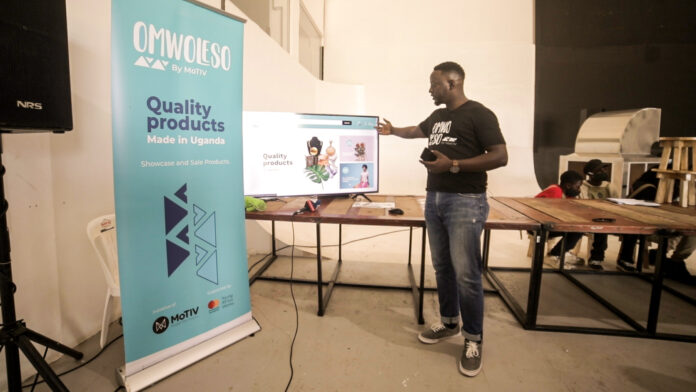
MoTIV, a group of talented makers in East Africa has launched an online marketing platform which connects makers and manufactures to a nationwide market.

Dubbed as Omwoleso.africa, the platform offers vendors exposure to a larger customer base as well as customizes their specific needs. The platform also gives customers the opportunity to buy unique products, engage with and support local makers with ease.

Speaking at the event, Silas Byakutaaga, Product Marketing Manager at MoTIV said, “At MoTIV, we believe in building a thriving creative community for Ugandan entrepreneurs within the informal sector. This is why we came up with initiatives like Omwoleso to provide creatives like tailors, mechanics, furniture makers, videographers, photographers, and content creators access to a larger number of customers to showcase their uniquely made products and sell them; an aspect that will change their lives and livelihood”.

Byakutaaga said, “Omwoleso is divided into three aspects; a physical event which is an entry point for all local entrepreneurs looking for a market to sell their products; the online platform (Omwoleso.africa) which is a website that connects makers to a nationwide market and the MoTIV shop, an online trade outlet that links makers of premium local products to potential retailers and an export market.”

He added, “The community that participates in Omwoleso get the opportunity to support local entrepreneurs in a fun and interactive way. The customers are treated to an enjoyable shopping experience filled with great entertainment from local artists in a vibrant, relaxing environment.”

“We believe that as Omwoleso grows, MoTIV will be able to connect makers to customers throughout the country, with markets running simultaneously in multiple cities throughout Uganda such as; Jinja, Mbarara and Gulu in which 5000 makers will have both online and offline access to the market and create 10,000 jobs by the end of 2021” Byakutaaga said.

Joseph Odole, Country Manager DHL Express Uganda said, “International e-commerce is growing at a remarkable pace, and we want our Ugandan businesses to grab their share of the market – this means adding value to their e-commerce proposition. We’re convinced that cross-border e-commerce has a huge upside that many merchants – B2C and B2B – have not yet tapped. Our partnership with MoTIV through the Omwoleso platform will enable us as the international express provider of choice to provide Ugandan artisans with vital support as they go global.”

Robert Ongodia, the opportunity Bank CEO also noted, “We at opportunity Bank provide training to the youth through our financial literacy programmes to equip them with skills and finance them with capital to run and sustain their business. With these, we believe the creatives will be able to sell their products on larger scales and enable them to gain presence in bigger markets.”

Juice business, Lucas Natural Concentrate has been in operation for two years now. Its founder Robina Namata says the marketplace is creating never seen before opportunities for her budding enterprise. “I am a vendor on omwoleso.africa. This online platform helps create markets for us in Uganda, East Africa and internationally. We sell to different places including shops. The physical shop limits us to people who already know the product but now more people know our product,” Namata says.

MoTIV is a key factor in exhibiting Ugandan entrepreneurial talent and possibly investor interest. Omwoleso continues to increase the opportunities for vendors to network and create linkages with potential customers and Omwoleso.africa connects them digitally to others who cannot be accessed physically.

Stories Continues after ad

Jose Mourinho appointed new head coach of AS Roma

mourinho

Italian club AS Roma has announced José Mourinho to become the club’s new head coach.

Mourinho has agreed a three-year contract with the Giallorossi that will run until 30 June 2024. He will begin his new role ahead of the 2021-22 campaign.

“We are thrilled and delighted to welcome José Mourinho into the AS Roma family,” Club President Dan Friedkin and vice-president Ryan Friedkin said.

“A great champion who has won trophies at every level, José will provide tremendous leadership and experience to our ambitious project.

“The appointment of José is a huge step in building a long-term and consistent winning culture throughout the club.”

Mourinho, 58, is one of the most successful coaches in the history of the sport – having won 25 major trophies in his career to date.

The list of clubs he has previously managed includes FC Porto, Chelsea, Inter Milan, Real Madrid, Manchester United and Tottenham Hotspur.

“Thank you to the Friedkin family for choosing me to lead this great club and to be part of their vision,” Mourinho said.

“After meetings with the ownership and Tiago Pinto, I immediately understood the full extent of their ambitions for AS Roma. It is the same ambition and drive that has always motivated me and together we want to build a winning project over the upcoming years.

“The incredible passion of the Roma fans convinced me to accept the job and I cannot wait to start next season.

“In the meantime, I wish Paulo Fonseca all the best and I hope the media appreciate that I will only speak further in due course. Daje Roma!”

Mourinho is one of only three managers to date to have won the UEFA Champions League with two different clubs, a feat he has also repeated in the UEFA Europa League.

He is a three-time winner of the Premier League (with Chelsea in 2005, 2006 and 2015), while he has also won top-flight titles in Italy, Spain and Portugal.

“When José became available, we immediately jumped at the chance to speak with one of the greatest managers of all time,” said Tiago Pinto, Roma’s General Manager (Football).

“We were blown away by José’s desire to win and his passion for the game: no matter how many trophies he has won, his primary focus is always on the next one. He possesses the knowledge, experience and leadership to compete at all levels.

“We know that in order to build a successful sporting project it takes time, patience and the right people in the right positions. We are supremely confident that José will be the perfect coach for our project, for both our immediate and long-term future.

“Together with the vision and ambition of Dan and Ryan Friedkin, we will build the foundations of a new AS Roma.”

Stories Continues after ad

Makerere students protest over missing marks

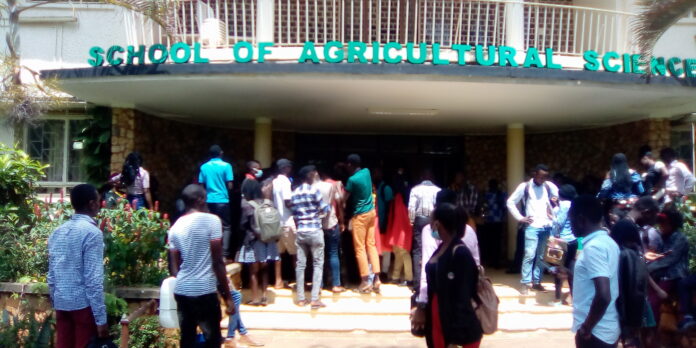
Students at the School of Agricultural Sciences turned wild this afternoon in great demand for their marks of the past semesters.

Makerere University students from the School of Agricultural Sciences on Tuesday protested the delayed release of their examination results for the last academic year which ended in December 2020.

The students stormed the School and demanded that their marks which were pinned on the noticeboard also be uploaded online which is the only way to confirm that a student has sat for exams.

“The administrators don’t want to listen to us and resolve our issues. They claim to be busy and we now had to harshly attack them to have our marks worked on,” a student who didn’t to be named said.

The students say they have for long been requesting for their marks uploaded on the online user guide called Academic Integrated Management System-AIMS but the heads of department could not listen to them.

The student said this has put them at the risk of repeating the exams or missing the graduation dates.

In response, the Dean of Agricultural Sciences Prof. Johnny Mugisha said the University has issues with the AIMS portal because of network poor connection.

“The AIMS has issues with the network and it is on and off but soon we shall settle the issues of marks and students will get their studies,” Prof. Mugisha said.

He said the officials at the School have been busy working to clear the students who are graduating in June.

The students claim that students from other colleges have their results uploaded online.

“Imagine some colleges have settled these issues during the Covid-19 holiday but our lecturers are just here seated comfortably in offices,” the student said.

Stories Continues after ad