Stanbic Bank
Stanbic Bank
18.6 C
Kampala
Stanbic Bank
Stanbic Bank
Home Blog Page 842

2021 Oscars: Daniel Kaluuya takes Academy Award for Best Supporting Actor

Kaluuya

The UK based actor with roots from Uganda Daniel Kaluuya has won the Academy Award for best supporting actor for his performance in ‘Judas and the Black Messiah’ at the 2021 Oscars.

The 32-year-old Brit became the sixth Black actor to achieve the recognition in the acting category.

“What a man. How blessed we are that we lived in a lifetime where he existed. Kaluuya said of Fred Hampton, one of the leaders of the Black Panther Party. Thank you for your light. There’s so much work to do, guys and that’s on everyone in this room,”

Kaluuya beat out fellow nominees Sacha Baron Cohen of ‘The Trial of the Chicago 7,’ Leslie Odom Jr. of ‘One Night in Miami’ and Paul Raci of ‘Sound of Metal’ as well as his own ‘Judas and the Black Messiah’ co-star, Lakeith Stanfield.

‘Judas and the Black Messiah’ told the story of Hampton (Kaluuya), the chairman of the Illinois chapter of the Black Panther Party, and how he was betrayed by FBI informant William O’Neal, who infiltrated the political organization in late-1960s Chicago. The film was directed by Shaka King.

Black actors who have also won best supporting Oscars include Louis Gossett Jr. for ‘An Officer and a Gentleman’ in 1983, Denzel Washington for ‘Glory’ in 1990, Cuba Gooding Jr. for ‘Jerry Maguire’ in 1997 and Morgan Freeman for ‘Million Dollar Baby’ in 2005. Mahershala Ali has won twice, once for ‘Moonlight’ in 2017 and again for ‘Green Book’ in 2019.

Kaluuya was previously nominated in the best actor category for his performance as Chris Washington in ‘Get Out’ in 2018.

Kaluuya was born in London, to Ugandan parents. His mother, Damalie, raised him on a council estate in Kentish Town, along with an older sister. His father lived in Uganda, and rarely visited due to UK visa regulations. Kaluuya attended St Aloysius College, London. He lives in West London.

Kaluuya began his career as a teenager in improvisational theatre. He subsequently portrayed Posh Kenneth the first two seasons of the British television series Skins, in which he co-wrote some of the episodes.

Playing the lead role in Sucker Punch at the Royal Court Theatre in London, Kaluuya was particularly praised for his performance and he won both the Evening Standard Award and Critics’ Circle Theatre Award for Outstanding Newcomer.

He played Michael “Tealeaf” Fry in the BBC dark comedy series Psychoville and Michael “Mac” Armstrong in the BBC Three horror drama series The Fades.He gained further acclaim for his performance as Bingham “Bing” Madsen in the Black Mirror episode ‘Fifteen Million Merits’.

Kaluuya appeared as Agent Colin Tucker in the 2011 film Johnny English Reborn and portrayed Black Death in the 2013 film Kick-Ass 2. In 2015, he had a supporting role in Denis Villeneuve’s film Sicario.

In 2017, Kaluuya starred in Get Out which garnered him critical acclaim and a nomination for the Academy Award for Best Actor. This was followed by roles in Ryan Coogler’s blockbuster film Black Panther (2018), Steve McQueen’s heist film Widows (2018) and Melina Matsoukas’s romantic road crime film Queen & Slim (2019).

Stories Continues after ad

URSB rallies SMEs to expand their markets through commercializing their innovations

Stanbic Incubator Head of Enterprise Development, Tony Otoa, UWEAL CEO Connie Kekihembo, KACITA Chairman Evarist Kayondo & URSB's Allan Kakungulu during the panel discussions in Kampala.

Every 26th April, Uganda Registration Services Bureau (URSB) which is Uganda’s National Intellectual Property (IP) office joins the rest of the world to celebrate the World Intellectual Property Day. This annual event is an opportunity to learn about the role that IP rights play in encouraging innovation and creativity.

The theme of this year’s celebration Intellectual Property & SMEs; Taking your ideas to market highlights the importance of intangible assets to small & medium enterprises (SMEs) and the value of IP in supporting SMEs to grow exploit their potential.

Small & Medium Enterprises account for over 90% of all companies worldwide and 70% of global employment, a reason to celebrate their enormous contribution to national growth and improvement in the socio-economic stature of Uganda.

During this year’s celebrations, URSB lined up two panel discussions, the first included representatives of the business community who shared their how they leveraged their IP Rights to market their businesses; the second discussion will focus on the various corporate rescue methods available to support ailing businesses under insolvency.

Speaking at the IP Day celebrations, the Registrar General Mercy Kainobwisho said URSB’s focus had shifted to not only creation of enterprises, but also the ability of these enterprises to survive and thrive. ‘It is no secret that Uganda is a very entrepreneurial country, so much so that a 2014 report by Global Entrepreneurship Monitor (GEM) ranked Uganda as the most entrepreneurial country in the world.

The same report indicated that less than 50% of those enterprises made it to the end of their second year’ Kainobwisho said. ‘URSB is at the forefront of streamlining of the business registration process and in the continual development of intellectual property system, a system which offers every business the opportunity to stand out’ she added.

The URSB Board Chair, Ambassador Francis Butagira in his remarks said SMEs were the bedrock of Uganda’s economy and thus needed a platform to turn their ideas into business opportunities and generate value.

“As we commemorate this world IP day, we hope this will serve as a platform to further the discussion on how intellectual property can provide first a lifeline, boost growth to our enterprises to survive and thrive during and beyond the pandemic and how through IP, value can be added to our businesses and most key to our consumers,” Butagira asserted.

World IP Day is celebrated all over the globe in the form of panel discussions, Radio and TV sensitization, expos, and educational outreach for students of all ages. URSB’s panel of experts offered practical information on the best ways SMEs can use ideas to grow their markets especially during this COVID-19 pandemic period.

The panelists included Tony Otoa, the Entreprise Development Head at Stanbic Business Incubator, John Walugembe, Executive Director of Small & Medium Enterprises Federation-Uganda, Business woman Dorothy Kimuli, Kampala City Traders Association Chairman (KACITA), Evarist Kayondo and Connie Kekihembo, Chief Executive Officer of the Uganda Women Entrepreneurs Association Ltd (UWEAL).

To further support small businesses with creative ideas on how to turn around their businesses in circumstances of misfortune, URSB has organized a conference to discuss the broad range of insolvency issues, offer practical experience and perspectives from diverse legal systems and traditions as well as explore ethical standards of Insolvency Practitioners.

Insight will also be given on the history, development and foundation of good insolvency and intellectual property laws, concepts in international insolvency law and international initiatives aimed at developing a more harmonized insolvency system. The Prime Minister, Hon. Dr. Ruhakana Rugunda will preside over the official opening of the conference on Tuesday, 27th April starting at 09:00am.

Stories Continues after ad

EU announces Shs140 billion support for refugees and host communities in Uganda

Refugees

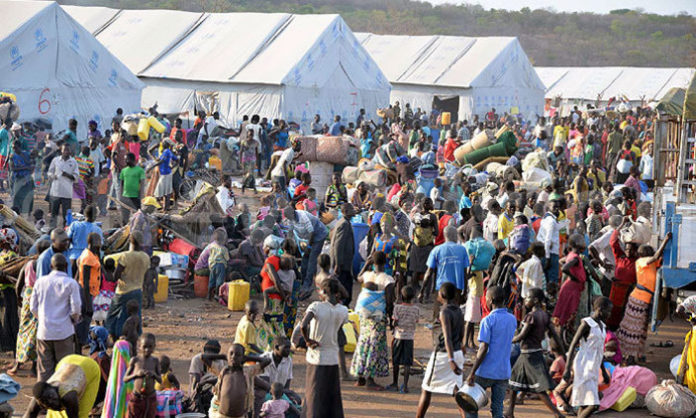
The European Union-EU has announced €32 million (approximately Shs140 Billion) in humanitarian aid to support the most vulnerable refugees and their host communities in Uganda.

In Uganda, almost 4 million Ugandan nationals and 1.4 million refugees are in need of humanitarian support. Economic hardship, further exacerbated by the COVID-19 crisis, is undermining the country’s commitment to a progressive policy towards refugees.

In Uganda, EU humanitarian funding will focus on providing assistance to the most vulnerable refugees and their host communities, as well as strengthen disaster preparedness in addressing multiple crises, including epidemics.

The €32 million Funding is part of €149 million aid for the wider region in 2021. The €149 million funding will support humanitarian projects in Djibouti €500,000 (Shs2.1 billion), Kenya €14 million (Shs60 Billion) , Somalia €42.5 million (Shs184 Billion), Sudan €52 million (Shs225 billion)  and Uganda (€32 million).

In addition, €8 million is allocated to the efforts against the Desert Locust infestation. Of the total funds allocated across the region, around €30 million will be going to projects providing education to children caught up in humanitarian crises.

Commissioner for Crisis Management, Janez Lenarčič, said: “During the past year, the Greater Horn of Africa countries, in addition to being affected by conflict and displacement, have also been facing the so-called triple threat of desert locust infestation, the impact of climate change and the COVID-19 pandemic. With millions in need of urgent assistance in the region, the EU is ensuring that emergency lifesaving support, such as food, nutrition, health and protection, reaches those in need.”

The EU has already announced new humanitarian funding of €53.7 million for Ethiopia and €43.5 million for South Sudan during the recent visit of Commissioner Lenarčič to these countries.

Background

Around 11.5 million people are displaced in the Greater Horn of Africa region, of which more than 4 million are refugees.

In Sudan, there are more than 13.4 million people in need of humanitarian assistance, including 1 million registered asylum-seekers and refugees, while more than 9 million people require food assistance. Since November 2020, the Tigray conflict in neighbouring Ethiopia and the border tension around the agricultural fertile land of Al Fashaga presents an additional risk for the fragile political transition and has already resulted in thousands of refugees fleeing the Tigray region, and other regions of Ethiopia.

In Uganda, almost 4 million Ugandan nationals and 1.4 million refugees are in need of humanitarian support. Economic hardship, further exacerbated by the COVID-19 crisis, is undermining the country’s commitment to a progressive policy towards refugees.

The Desert Locust is considered the most destructive migratory pest in the world. Crop and food losses in affected areas can be enormous, generating direct dramatic negative impacts on agriculture and livelihoods. With over 35 million people in the region already food insecure, the desert locust upsurge remains an unprecedented threat to food security. In their updated appeal for 2021, FAO estimates that still 3.3 million people are at risk of food insecurity due to the Desert Locust in Kenya, Ethiopia, Somalia and Sudan.

Stories Continues after ad

Numbers of people seeking for passports double amidst #Covid-19

Passports

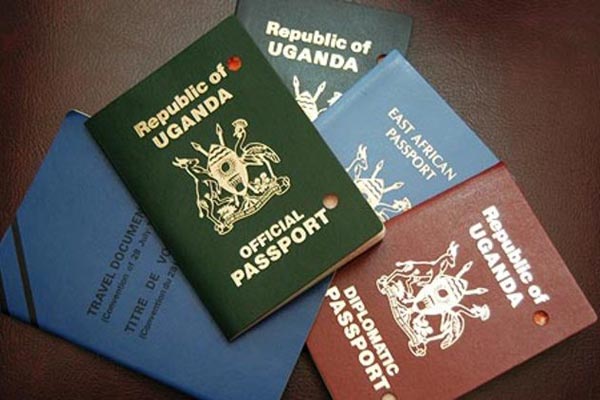
The Ministry of Internal Affairs has decried the increased daily enrollment rates for people seeking passports in Uganda. Currently, Passports are issued in two days for express applicants and not more than four days for normal applicants.

The increased demand is attributed to the need to replace the old Passport with the Electronic Passport as a deadline for validity of the old Passport which was 31st January 2021 and has been extended to 4th April 2022 and Ugandans are opting to take up employment in Arab countries.

According to Dr. Benon Mutambi, the permanent secretary to the Ministry of Internal Affairs, the shooting numbers of people seeking passports has brought too much pressure on the service providers. He said they used to receive 1000 applications daily to their dismay; the numbers have doubled to 2100 Passports daily.

“To match the 2100 applications received daily, and the entire production line leading to Passport issuance has been doubled to enable production and issuance of at least 2000 Passports daily,” he said.

In tandem, the Ministry is set to operationalize Kampala Regional Office which will be a Passport Collection Centre to ease the congestion problem currently being experienced at the Ministry Headquarters. The Ministry Headquarters will be preserved for only those seeking to be enrolled for issuance of Passports.

He said procurement is in progress to increase equipment infrastructure capacity that will match the projected demand rates especially as they near the new deadline for the old Machine Readable Passport that we communicated to the International Civil Aviation Organization.

Passport enrolment services have been decentralized to regional centres to ease service delivery. On the 29th March 2021, Mbarara Regional Immigration Office operationalized the Passport enrolment system and its operations are being ramped up to ease the pressure at the Ministry headquarters. Mbale and Gulu will be operational by the end of May and June 2021 respectively.

The ministry is currently offering e-Immigration services to facilitate the application of various immigration services which include; Visas, Work Permits and Passes, Certificates of Residence, grant of Uganda Citizenship and border management services.

The e-Immigration system is currently deployed at our Regions of Mbarara, Jinja, Mbale, Gulu, Uganda Missions abroad including Washington, London, Ottawa, Paris, Brussels, Copenhagen, Canberra, Ankara, Beijing, Berlin, Mogadishu, Pretoria, Abuja, New Delhi, Guangzhou and Riyadh.

Stories Continues after ad

How top gov’t officials influenced Custodian Board to take over departed Asians properties

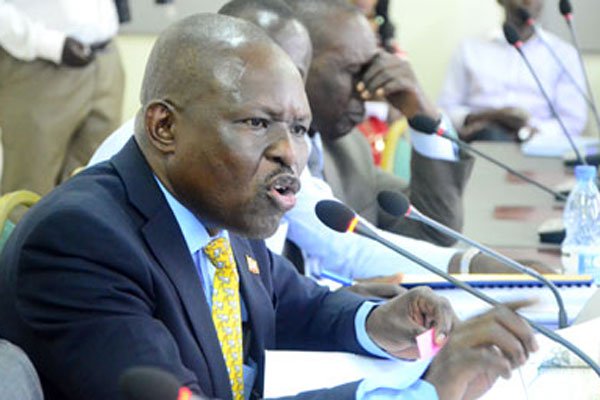
Geogre William Bizibu appearing before the parliament committee before. Photo credit, Daily Monitor.

Underfire Executive Secretary of the Departed Asians Property Custodian Board (DAPCB), Mr George William Bizibu called a press conference and blamed several owners of buildings acquired under the Custodian Board after they were placed under investigation by the Criminal Intelligence Directorate (CID) and the State House Anti-Corruption Unit.

The joint investigation was sanctioned by President Yoweri Museveni after city investor Margaret Ssekidde of Seroma Ltd reported a property matter involving over shillings 1.6 billion to the head of state.

Mr. Charles Twine, the spokesperson of the Criminal Investigations Directorate (CID) without giving the progress of the investigation, said that top Custodian Board bosses including executive secretary Mr Bizibu were being investigated on orders of the President.

In a March 23, 2018 letter to Bizibu, written by the Permanent Secretary in the Finance Ministry, Mr Keith Muhakanizi warns against allocation of properties belonging to departed Asians.

Mr Muhakanizi warns that it is only court that can direct the cancellation of a certificate of title of such property and not the board or its members, some of whom are ministers.

“…where repossession certificate for properties under the DAPCB had been issued, only the relevant courts of law had the authority to cancel such certificates in accordance with the law. It was agreed that the Ministry of Finance, Planning and Economic Development and the board must continue to respect the rule of law. Therefore any orders of court must be complied with,” the letter reads in part.

“By copy of this letter, I am duly informing Hon Ministers who are members of the Departed Asians Property custodian Board (DAPCB) and the Clerk to Parliament who has requested information to assist Members of Parliament carry out their legislative and oversight functions in this matter,” the letter adds.

However, according to the Auditor General, John Muwanga, he says top government officials and renowned businessmen had a hand in the dubious acquisition of some of the properties the Asians left behind in 1972 when they were expelled by Idi Amin.

“The decisions of management in some instances were not based on established procedures. As a consequence, properties may have been wrongfully allocated, repossessed and compensated for,” the report for 2011 reads in part.

“Due to political influence, purchase prices could be reduced below the reserve prices without proper justification. There were also instances of defaulting in payments with no appropriate action taken,” it adds.

A total of Sh239m for 87 properties remains uncollected, the audit established. The the report states that receipt books and bank statements for the period 2000 to 2007 could not be found, and that 28 files of properties sold have gone missing.

In addition, there were no bid registers and bid evaluation reports for 77 properties sold, and there were no valuation reports for 39 others.

“I understand that the Government is in the process of winding up the activities of the Custodian Board,” Muwanga concludes. This, he adds, should only be done after the board has accounted for all the money it was entrusted with.

The Auditor General also discovered serious flaws and irregularities in the management of the funds. In his 30-page report, John Muwanga found that sh1.9b was withdrawn under unclear circumstances from the divestiture account at the Bank of Uganda on February 19, 2001.

“I was not provided adequate supporting documentation for the transaction and neither was authority from the board provided. I was not able to ascertain how the funds were utilized,” Muwanga says, calling the transaction irregular and possibly fraudulent.

Moreover, the Auditor General found that none of the mechanisms required under the 1973 Assets of Departed Asians Act to manage the properties and proceeds had been established.

The finance minister was supposed to keep a register of all properties or businesses declared by departing Asians.

“However, it was observed that no assets register was maintained. As a consequence, I was unable to verify the properties repossessed (4,063), properties sold (1,676) and properties unsold (3,226) as reported by management,” Muwanga states.

According to the Act, a common pool fund was supposed to be established through which all the money on the accounts of expelled Asians should be managed.

“However, there was no evidence that such a fund was established,” the report says. It quotes the accounting officer as saying that all bank accounts were frozen and transferred to the defunct Uganda Commercial Bank from where they suffered a currency reform which left the accounts at no value at all. But the Auditor General adds that he was unable to confirm these assertions.

In addition, the board, which was supposed to meet every month, did not meet once between 1997 and 2008, implying that there was no supervision.

Staffing was another problem. There was no accountant or cashier responsible for the preparation and maintenance of the books of accounts and the records, the report reveals.

“The absence of an accountant or cashier resulted into the legal manager handling finances. She could collect and bank revenue, write payment vouchers and authorise payments. In addition, an office messenger was entrusted with banking large sums of money both in cash and cheques,” the report states.

The Departed Asians Properties Custodian Board was formed after the fall of Idi Amin to manage the properties that had been taken away from Asians who had left the country when he expelled them. Its mandate was to enable those Asians who returned to the country to take back possession of their properties and manage those that were not repossessed by the original owners.

The board originally was supposed to wind up and properties of Asians that had not been reclaimed sold off, in the mid-90s but this is yet to happen and any new proposed date of winding up has led to massive corruption and a scramble for the properties, many of them in prime locations by public officials.

There have been several incidences of the board cancelling certificates of ownership it has handed to Asian families, a matter which can now only be decided by courts of law.

Stories Continues after ad

This is why the private sector tourism players, should attend and participate in the virtual POATE 2021

Amos Wekesa

By Amos Wekesa

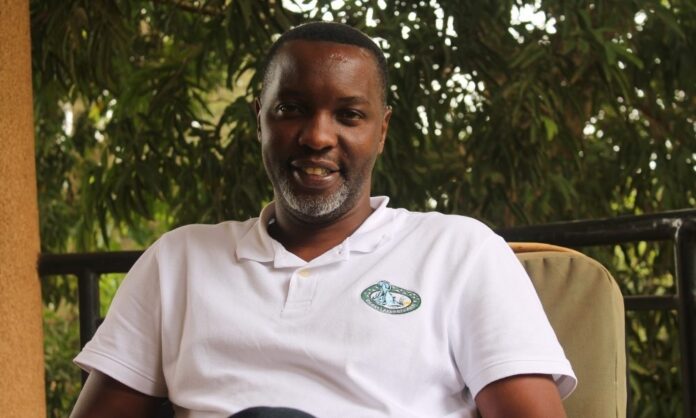
Uganda Tourism Board (UTB), Uganda’s tourism regulatory and marketing agency, will between April 27th and 29th host the 6th Edition of the Pearl of Africa Tourism Expo (POATE) 2021.

Unlike the previous 5 editions of the expo, this one will be held online, by means of a customized application accessible both on smart internet-ready handheld devices and conventional computers. This is for obvious reasons- the biggest part of the world is still under Covid-19 lockdown are semi-lockdown. Even those who are not under lockdown, travel safety protocols are still a prominent consideration.

I applaud UTB for taking this courageous step to maintain consistency in POATE and choosing to adopt the virtual direction- just like many others have done. Even ITB Berlin, probably the most influential tourism expo on the globe has taken this direction, as we await normalcy to return.

We (Uganda Lodges Ltd and Great Lakes Safaris) have already registered and get an opportunity to connect with over 300 hosted buyers and other tourism players from our major tourist source markets, as well as other emerging markets.

Why I will be attending and why other tourism players should attend

Tourism and travel exhibitions and as such, POATE is such a great opportunity for us, as Uganda because, it is a cost-effective way of attracting wholesale tourism buyers. Wholesale buyers are people/companies who sell many tourism destinations to several buyers across the world. They run the show, so to speak. When such wholesale buyers get to know and or put your country on their catalogues big business starts flowing. When they eventually come to visit your country destination and meet potential ground handlers such as local tour operators; when they fall in love with your country, and trust me Uganda has in the past charmed so many wholesale buyers, then you are in things- as Ugandans like to say.  When individual tourism players start getting big business, they expand, they hire more people, buy more things locally, pay more taxes and the country grows.

This is why POATE is and should be such a big thing for everyone- the private sector and Government alike.

The recent Uganda Tourist Expenditure and Motivation Survey (TEMS) 2019 Report by the Ministry of Tourism, Wildlife and Antiquities (MTWA) and Uganda Bureau of Statistics (UBOS) properly demonstrates the importance of wholesale buyers and therefore why meeting them at POATE should be on everyone’s agenda.

According to the study, while tourists who travel under tour packages, spend nearly USD100 higher than non-package tourists—USD 187 versus US$107 per day per person, only a minuscule 8 per cent of all visitors to Uganda travel on packaged tours.  86 per cent of the package tourists are high-spending leisure tourists and are likely to be from our key markets in Europe, North America and Oceania.

The study also reveals that 71 per cent of all package tourists still buy their safaris outside Uganda and rely mostly on travel agents or tour operators (wholesale buyers).

What this study means, in simple terms, is that for Ugandan tour operators seeking to grow their business, POATE which presents an opportunity of meeting the hosted buyers and other wholesale dealers in our key markets presents a greater opportunity for growing the value of our business- and maybe not so much the volume as yet.

We are not going to reinvent the wheel- expos are one great way of selling our potential, probably at the lowest cost per deal closed and markets that succeeded before us like United Kingdom, Germany and South Africa, have largely taken advantage of their expos, namely ITB Berlin, WTM London and Indaba.

I do not doubt that UTB is on the right course of action with our POATE, because it is important to know that no matter, what you do, consistency is key. If you are not consistent, with your expos you will not go anywhere. Resilience, consistency, and persistence are key. So, I would like to applaud UTB for daring to host the 6th edition of the Pearl of Africa Tourism Expo even amidst the ongoing challenges.

As the private sector, it is also important that we participate fully and consistently because, for those countries that have succeeded at tourism and hosting expos like Germany, UK, South Africa etc, it is because their private sector plays a very key role in making sure the expos work. Because at the end of the day, the government creates the opportunity, and it should be us the private sector to showcase what we have to sell.  Once again, allow me to invite you to register for POATE, by following this link: www.poate.co.ug and it is free! See you all on April 27th – 29th.

Stories Continues after ad

Thierry Henry and Alan Shearer inducted into Premier League Hall of Fame

Thierry Henry and Alan Shearer

Premier League record goalscorer Alan Shearer and four-time Premier League Golden Boot winner Thierry Henry have today been announced as the first two players to be named in the official Premier League Hall of Fame.

The Hall of Fame recognises and celebrates the exceptional skill and talent of individuals who have graced the Premier League since its inception in 1992. It is the highest individual honour awarded to players by the League.

Shearer has been inducted as the League’s all-time top scorer, having netted 260 goals across 14 Premier League seasons.

The striker was the first player to reach a century of PL goals, scoring 112 times in only 138 matches for Blackburn Rovers, as well as winning the Premier League title with them in the 1994/95 season.

Following a world-record transfer to boyhood club Newcastle United in 1996, Shearer scored 148 goals in 303 Premier League matches during a 10-season spell for the Magpies. He is a three-time Golden Boot winner and remains the only player to have reached 100 goals in the competition for two different clubs.

Speaking of his induction into the Hall of Fame, Shearer said: “When you look at some of the unbelievable players to have graced the Premier League – week in, week out, year in, year out – I feel very honoured to join the Hall of Fame. I have to thank all of my team-mates, as well as the managers and coaches that I’ve worked with.

“All I ever wanted to be was a professional footballer. It was my dream to do that, my dream to win trophies and my dream to score at St James’ Park, to wear the number nine black-and-white shirt and it was fantastic. I enjoyed every minute of it.”

Henry won the Golden Boot award four times and scored a club-record 175 Premier League goals in 258 matches for Arsenal.

He netted more than 20 Premier League goals in five consecutive seasons between 2001/02 and 2005/06.

Following his move to Arsenal in 1999, Henry won the Premier League title twice and was a key member of the “Invincibles” team who went unbeaten during the 2003/04 title-winning campaign.

Along with his scoring prowess, Henry contributed 74 assists during eight Premier League seasons, including a joint-record 20 in 2002/03.

Henry said: “To be inducted alongside Alan Shearer as the two first inductees into the Premier League Hall of Fame is more than special.

“When I was young, I was just trying to make sure I could get a pair of boots and now we’re talking about the Hall of Fame. During my career I wanted to play hard and make sure I was fighting for the cause, because that’s all the fans want to see.

“If you asked me at the start of my career about entering the Hall of Fame, I wouldn’t have believed you. It’s an amazing honour.”

A shortlist of 23 additional nominees eligible to join the Premier League Hall of Fame in 2021 will be announced with fans invited to cast their vote to help select the remaining six inductees to the 2021 Premier League Hall of Fame.

Stories Continues after ad

Justice Chibita to head Judicial Training Institute Governing Council

Justice Chibita

The Chief Justice, Alfonse Chigamoy Owiny-Dollo, has appointed Supreme Court Justice Mike Chibita the new chairperson of the Governing Council of the Judicial Training Institute.

Justice Chibita replaces fellow Supreme Court Justice Stella Arach Amoko, who was the Council’s first chairperson.

“I have the pleasure to inform you that I have appointed you the Chairperson of the Governing Council of the Judicial Training Institute…,” the appointment instrument signed by the Chief Justice on April 19, 2021, read in part.

The letter states that under Justice Chibita’s leadership, the Governing Council shall perform the following functions:

– Approve the training curriculum and training calendar of the Institute

– Approve the core faculty training team

– Mobilize funds for the Institute

– Initiate, develop and approve policies and plans for the Institute

– Oversee the operations of the Institute

– Establish training needs and sanction further education for Judiciary staff

– Initiate and superintend over policies and programmes geared towards enhancing research and law reporting within the Judiciary

– Approve the quarterly and annual work plans of the Institute

– Develop and guide the implementation of the strategic direction of the Institute

– Appoint sub-committees to assist in the performance of its functions

– Coordinate with the other organs and the Administration of the Judiciary for effective and efficient service delivery.

– Oversee the performance of any other activities that may be lawfully assigned to the Institute.

About JTI

The Judicial Training Institute is established under Section 19 of the Administration of Judiciary Act, 2020, to provide specialized and continuous education to the Judiciary Service. Today, the Institute has expanded the scope to provide training to the Justice, Law and Order institutions and other public institutions within and outside Uganda to strengthen the administration of justice and the rule of law.

Stories Continues after ad

Fighting erupts in Mogadishu as soldiers cause mutiny

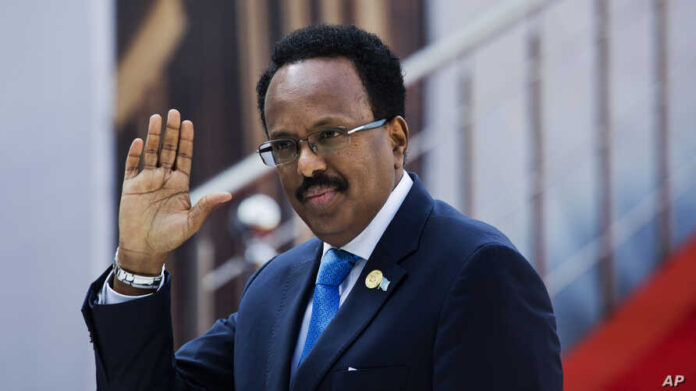
There is heavy fighting going on in the Somali capital Mogadishu after the incumbent president Mohamed Abdullahi Mohamed extended his term of office for two years.

According to sources, the section of the Somali National Army mutinied and took control of San’o junction in Mogadishu.

The mutinous soldiers are against the controversial signing of the decision by Somalia’s lower parliament to extend the president’s term of office by two years.

The Somali opposition lawmakers have spoken out against the action, along with donors and the international community.

The extension comes two months after the president’s four-year term expired with no agreement on how to replace him, while elections set for February were delayed.

The former president Hassan Sheikh Mohamud tweeted on Sunday that his home had been attacked and he blamed President Mohamed who is also commonly known as Farmajo.

“It is very unfortunate that an army under the command of the former president attacked my residence. I have already warned and reiterated the dangers of politicizing security. Farmajo is responsible for the consequences,” he warned.

Meanwhile, U.S. Secretary of State Antony Blinken issued a statement last week saying the United States was “deeply disappointed” by the approval of the legislative bill.

The statement threatened sanctions and visa restrictions. The European Union is also considering sanctions and warned that the Somali government’s actions would divide the country.

The fighting might distabilse Somalia which was gaining stability after African Union troops from Uganda, Kenya, Ethiopia, Burundi and Djibouti were deployed to support the government threatened by the al shabaab insurgents.

Uganda has over 6,000 troops in Somali deployed in Sector One whose headquarters are in Mogadishu, which is now the epicenter of the new fighting.

Stories Continues after ad
South Sudan opposition SSNMC/A condemns “assassination” of chief of staff in Kampala

Late Gen. Abraham Wana addressing the media at a past event.

The leadership of the South Sudan National Movement for Change/Army (SSNMC/A) group has condemned the alleged assassination of its chief of staff, General Abraham Wana Yoane in Kampala, Uganda.


The deceased, the group said in a statement, was “attacked, badly beaten and left dead” on April 20.

“General Abraham succumbed to his injuries that were inflicted by thugs of Juba and died today 22nd April 2012 in Kampala, Uganda,” partly reads the statement issued on April 22.

The opposition movement described the deceased as a “decorated and renowned freedom fighter” who sacrificed his life for the people.

“The assassination of Gen. Abraham bears the hallmarks of Juba regime and its brutal national security are the prime suspects. SSNMC/A strongly condemned this barbaric and coward act by the elements of the Juba regime,” further stressed the statement.

The SSNMC/A leadership extended its heartfelt condolences to the entire movement, immediate family members and friends of the deceased.Efforts by this website to a comment from police were unsuccessful as police publicist Fred Enanga didn’t answer his phones.

the alleged assassination of its chief of staff, General Abraham Wana Yoane in Kampala, Uganda.


Stories Continues after ad