Stanbic Bank
Stanbic Bank
21.2 C
Kampala
Stanbic Bank
Stanbic Bank
Home Blog Page 854

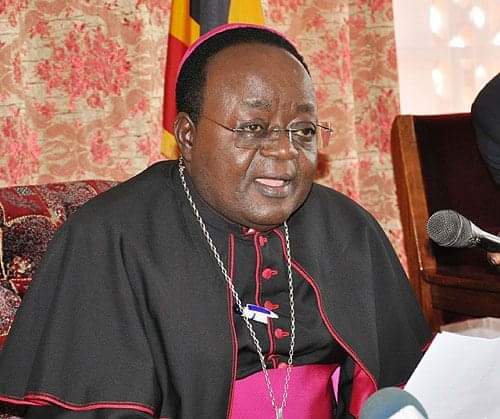
Archbishop Lwanga is irreplaceable – Lugazi Diocese Bishop

Late Dr. Cyprian Kizito Lwanga.

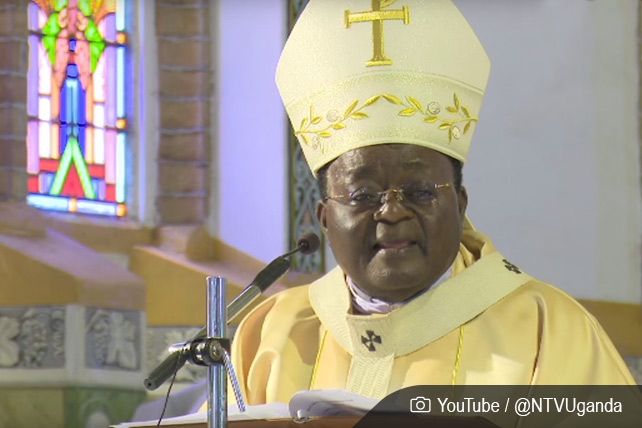
The Bishop of Lugazi Diocese Christopher Kakooza has eulogized the fallen Archbishop of Kampala, late Dr. Cyprian Lwanga as  a man who is replaceable.

In a requiem Mass led by Kakooza, he told mourners who included the former Vice President Specioza Wandira Kazibwe, Minister for Youth and Children Affairs Florence Nakiwala Kiyingi and other religious leaders that the fallen bishop is irreplaceable.

The Dr. Lwanga  was on Saturday found dead in his room. According to a post-mortem report from Mulago national referral hospital, Dr Lwanga succumbed to Ischemic heart disease following coronary heart thrombosis.

“Archbishop Cyprian Kizito Lwanga preached the word of God as it is. He was a voice to the voiceless. He was merciful and helped very many,” Bishop Kakooza said.

He said the archbishop was slow to anger, and he always sorted out his disagreements and walked in peace.

“Archbishop loved development and he created many projects. Namugongo shrine is because of him. The Lord has called Archbishop Cyprian Kizito Lwanga during the Easter season. We asked the Lord to grant him everlasting life,” Bishop Kakooza said.

St. Charles Lwanga Parish Kyabakadde was named after the fallen Archbishop following his immense contribution to the parish.

Eagle Online has also established that President Museveni has given Shs200 million as condolences to the family of the late Archbishop Cyprian Kizito Lwanga.

Cyprian Kizito Lwanga, a Ugandan Roman Catholic prelate served as Archbishop of Kampala from 2006 to his death.

Stories Continues after ad

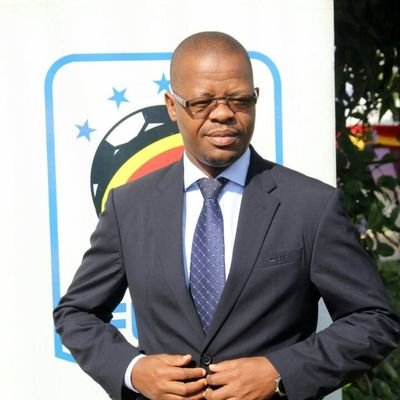
FUFA President Moses Magogo declares intention to run for another term

Moses Magogo

Eng. Moses Magogo has confirmed that he will be running for a third term in office as FUFA president in the forthcoming elections.

Magogo promised to serve the football fraternity better now that he is in parliament. He is the newly elected Member of Parliament for Budiope East constituency.

“I will make it official that I am standing again as FUFA President,” Magogo announced during the media engagement at Jevine Hotel in Kampala.

“Now that I am in parliament, I think I will be able to serve football better because I will be able to table our issues on the floor of parliament,” he said adding, “For a while now, many of you have been asking me what my intentions were, and i have deflected them but I think it is the right time.”

Magogo has been at the association’s president since 2013 when he replaced Lawrence Mulindwa who decided not to stand for a third term. He has been voted as president on two occasions, both unopposed.

The FUFA President and Executive must be elected by 31st August as per the FUFA Statutes. Each term is four years.

For now, there is no candidate besides Magogo who has confirmed his intentions to run for office.

Stories Continues after ad

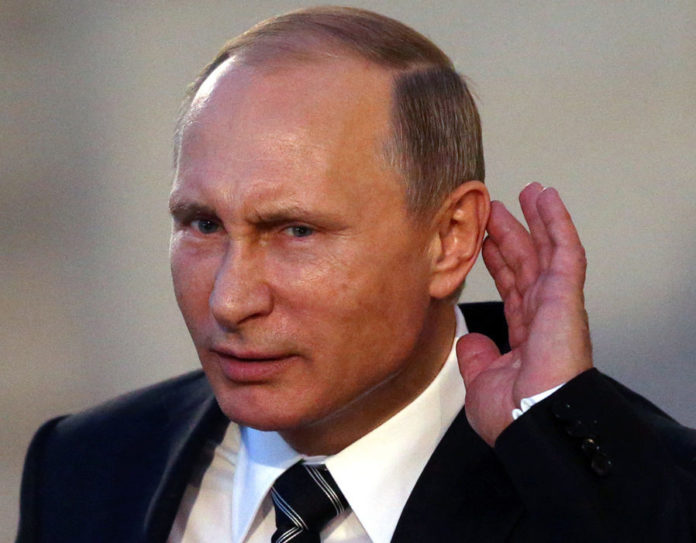
Putin to rule Russia until 2036 as he signs law allowing him to stay

Russian President Vladimir Putin

Russian President Vladimir Putin on Monday gave final approval to legislation allowing him to hold office for two additional six-year terms, giving himself the possibility to stay in power until 2036.

The 68-year-old Russian leader, who has already been in power for more than two decades, signed off on the bill Monday, according to a copy posted on the government’s legal information portal.

Putin proposed the change last year as part of constitutional reforms that Russians overwhelmingly backed in a vote in July. Lawmakers approved the bill last month.

The legislation will reset presidential term limits, allowing Putin to run in elections again after his current and second consecutive term expires in 2024.

Putin was first elected president in 2000 and served two consecutive four-year terms. His ally Dmitry Medvedev took his place in 2008, which critics saw as a way around Russia’s limit on two consecutive terms for presidents.

While in office, Medvedev signed off on legislation extending terms to six years starting with the next president.

Putin then returned to the Kremlin in 2012 and won re-election in 2018.

The term reset was part of constitutional reforms that included populist economic measures and sweeteners for traditionalists such as an effective ban on gay marriage.

Russians voted yes or no to the entire bundle of amendments in a vote last summer that was held over the course of a week, in a move authorities said was aimed at limiting the spread of the coronavirus but critics said left the process open to manipulation.

Golos, an independent election monitor, criticised the format of the vote, saying Russians should have been able to vote for each separate change.

It also said it received hundreds of complaints of violations, including people voting multiple times.

Russians ultimately voted 78 percent in favour of the changes.

‘President for life’

Kremlin opponents have said the constitutional reforms were a pretext to allow Putin to become “president for life”. Putin would be 83 or 84 when he leaves office if he is elected and serves two additional terms to their end in 2036.

The final approval of the legislation comes as authorities ratchet up pressure on the opposition and clamp down on dissent.

Jailed Kremlin critic Alexei Navalny last week launched a hunger strike demanding adequate medical treatment in prison, saying he was experiencing severe back pain and numbness in his legs.

The 44-year-old opposition figure was arrested on his return to Russia in January, after spending months in Germany recovering from a poisoning attack last summer with the Novichok nerve agent that he blames on the Kremlin.

In February, Navalny was sentenced to a two-and-a-half year term in a penal colony for breaching the parole terms of a suspended sentence on old fraud charges.

Ten of Navalny’s allies including key aide Lyubov Sobol and his brother Oleg remain in house arrest on charges of violating epidemiological measures during a Moscow protest demanding he be released.

Navalny’s team on Monday called upon his supporters to register in an online campaign preparing for protests to demand the Kremlin critic’s freedom, saying Putin “will not leave on his own”.

Stories Continues after ad

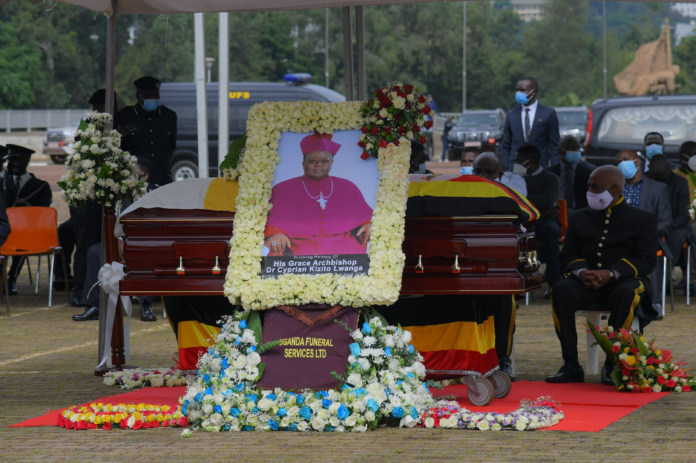
Archbishop Lwanga honoured with 17 gun salutes

RIP: Archbishop Cyprian Kizito Lwanga

The deceased Archbishop of Kampala Diocese, Dr. Cyprian Kizito Lwanga has been given 17 gun salutes at the official funeral organised by the Government held at Kololo airstrip.

The Archbishop was on Saturday found dead in his room. According to a post-mortem report from Mulago national referral hospital, Dr Lwanga succumbed to Ischemic heart disease following coronary heart thrombosis.

And today, mourners throng Kololo Air strip to pay their respect to the deceased man of God.

The Chief Mourner who is also the President of Uganda, Yoweri Kaguta Museveni said; “I was shocked when I heard about the death of Lwanga. The condition that led to his death is well known. The doctors should explain to us how to detect the condition.”

Museveni said he ordered for national mourning because Dr Cyprian Lwanga was an archbishop and a sympathizer who prayed for them during the 1986 bush war.

“I am very happy that these days, church leaders are increasingly spearheading the effort of wealth creation so I salute Dr Cyprian Lwanga for that Wekembe initiative,” he said.

“When Cyprian became the bishop of Kasana Luweero, I was happy because I knew him as a young priest. He is just about eight years younger than me. I knew about his microfinance project called ‘Twekembe’ that he started with his salary,” the president recounted

The body of the fallen Archbishop is expected to arrive at his childhood church, St. Charles Lwanga Parish Kyabakadde for a requiem mass. He will be laid to rest at Rubaga cathedral on Thursday.

Stories Continues after ad

More than 1,800 prisoners escape in Nigeria

Nigeria-Prisons (courtesy photo)

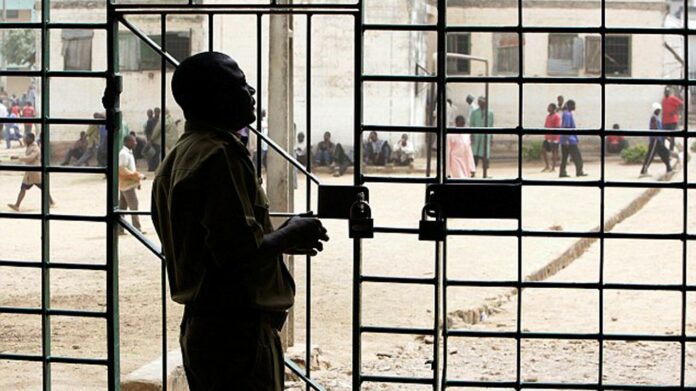
More than 1,800 inmates have escaped from a prison in Nigeria after it was attacked by gunmen, officials say.

The attackers reportedly entered the prison yard in the south-eastern town of Owerri by using explosives to blast the administrative block.

Six prisoners have reportedly returned, while 35 refused to escape.

Police have accused the banned separatist group, the Indigenous People of Biafra, of carrying out the attack. It has reportedly denied involvement.

The Nigerian Correctional Service has confirmed that 1,844 inmates escaped from the jail in Imo state.

Heavily armed men stormed the Owerri Custodial Centre in the early hours of Monday, after arriving in pickup trucks and buses, the service said.

A police spokesperson said the attackers carried rocket-propelled grenades, machine guns, explosives and rifles.

President Muhammadu Buhari called the attack an “act of terrorism” carried out by “anarchists”. He called upon security forces to capture the attackers and the escaped prisoners.

A spokesman for the Indigenous People of Biafra separatist movement told the AFP news agency that accusations it was behind Monday’s attack were “lies”.

Imo state has long been a breeding ground for separatist groups, while relations between the central government and indigenous Igbo population are strained.

Since January several police stations and vehicles across south-eastern Nigeria have been attacked and large amounts of ammunition stolen. No-one has claimed responsibility for the attacks

Stories Continues after ad

Sudan, Egypt air forces hold new combat drills over Nile Waters

Egyptian_mig-29m_medium_fighters_st_photo-0a716

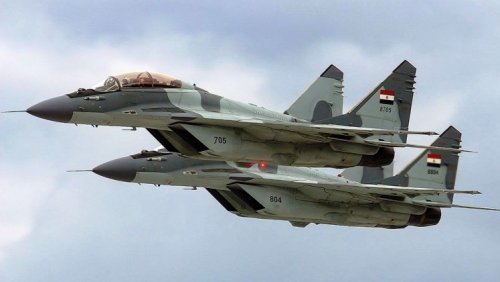
The Sudanese and Egyptian armies are conducting new joint air exercises with the participation of special operations units, four months after similar drills.

On November 15, 2020, the two armies launched joint air exercises, dubbed The Nile Eagles1, in Sudan’s Marawi military airbase, north of Khartoum.

The Nile Eagles 2, which aim to build up capabilities and to carry out joint operations involving special forces, come amid the growing tensions in the region over the filling of the Ethiopian dam and border dispute with Sudan.

In a press statement on Wednesday, the Egyptian Army Spokesman Brig-Gen Tamer al-Ruffai said that the two armies were conducting the second joint air exercise at Meroe airbase in northern Sudan.

According to the al-Ruffai, the participating forces carried out several joint sorties to attack enemy targets and protect vital sites, with the participation of a group of multi-task fighters.

He added that the special forces carried out exercises on storming, concealment and camouflage operations, and to carry out attacks from different positions.

In a press statement on Wednesday, the Egyptian Army Spokesman Brig-Gen Tamer al-Ruffai said that the two armies were conducting the second joint air exercise at Meroe airbase in northern Sudan.

The Military Media of the Sudanese army issued a statement saying that the chief of staff Lt Gen Mohamed Osman al-Hussein paid a visit to the airbase and met with the forces participating in the joint drills.

Preparations for war

Maj-Gen Amin Ismail, a military expert and lecturer at the Sudanese Higher Security Academy said that the ongoing drills should be considered as a part of the expected scenarios due to the stalemated negotiations on filling and operating the Renaissance Dam.

“There is an option to negotiate and reach an agreement, and there is the option of military action against the dam. So, this (second) option requires to be prepared and the exercises are one of these preparations,” he told Sudan Tribune on Wednesday.

Ismail pointed out that the manoeuvres are also a message to Ethiopia that Sudan and Egypt are ready for military action. Also, it is also a message to the international community that “if it does not intervene effectively, the two countries will turn to the option of war,” he stressed.

Sudanese foreign minister told the U.S. Envoy Donald Booth that they stopped the nine-year direct talks because they are no longer trust Ethiopia which Khartoum backed in the past hoping they can broker an acceptable compromise for the three parties.

The unilateral first filing was the turning point between the two countries as Khartoum did not expect that Addis Ababa will deprive them of water for three days and not alert them to protect the two downstream dams.

Stories Continues after ad

World Cup Qualifiers: Uganda Cranes to play against Mali, Kenya and Rwanda

The World Cup Trophy since 1974


The Uganda Cranes will shift focus to the forthcoming Africa 2022 FIFA World Cup Qualifiers that will get underway in June this year.

The Cranes are pooled in Group E alongside Mali and neighbours Kenya and Rwanda.

The quest for a first ever appearance at the global showpiece will begin with a trip to Nairobi to face Kenya between 5th-8th June 2021.

Uganda will then return to action with a home fixture against Mali on match day two. The dates will be between 11th to 14th June.

Match day three and four will be a double header against Rwanda with the first leg coming between 1st to 4th September in Kigali before facing off in Kampala in a space of two-three days.

The penultimate game will see Uganda host Kenya in the first week of October and later end the group phase with a trip to Bamako, Mali between 10th to12th October.

The group winner after six games will go into the final qualifying phase that will have nine other group leaders.

There will be a draw for the final ten teams and the five winners on aggregate will represent Africa at the 2022 FIFA World Cup in Qatar next year.

2022 World Cup Fixture

Group E

Match day 1

5th – 8th June, 2021

Kenya Vs Uganda

Match day 2

11th – 14th June 2021

Uganda Vs Mali

Match day 3

1st – 4th Sept 2021

Rwanda Vs Uganda

Match day 4

5th – 7th Sept 2021

Uganda Vs Rwanda

Match day 5

6th – 9th Oct 2021

Uganda Vs Kenya

Match day 6

10th – 12th Oct 2021

Mali Vs Uganda

Stories Continues after ad

Gov’t moves to introduce new taxes on cars and internet users

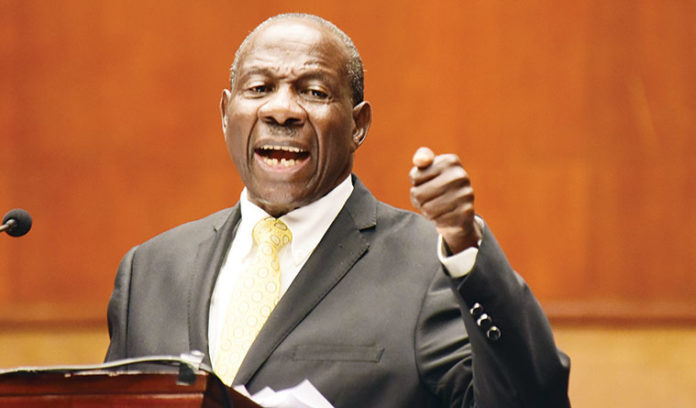
Finance Minister: Matia Kasaija.


Government has, through Finance Minister, Matia Kasaija, tabled proposals for the new tax laws, which will see motor vehicle owner’s part with an annual license fee paid by 31st of January.

The Traffic and Road Safety Act (Amendment) Bill, 2021 seeks to impose, under clause 14.A, a license to permit ownership of “a motor vehicle, trailer or engineering plant.”

To use the vehicles specified above on the road, one must possess a license, not to be confused with a driver’s’ license. Failure to have the license, proposes the new law, could see one jailed for two years, pay a fine of Shs2 million, or suffer both imprisonment and fine.

The minister tabled the proposals, an annual fee, to be determined by the Minister of Works and Transport by Regulations, is also to be met by a vehicle owner.

Failure to pay the annual fee, will lead to a fine of Shs200, 000 accumulating every day from the date the fee was due for payment – 31st of January.

Clause 14B (3) proposes such a fine to be regarded as debt due to the government by the defaulter.

To incentivize the electronic receipting, the finance minister proposes in the Value Added Tax (Amendment ) Bill a refund of 5 percent of taxes to “a person rather than a taxable person and is issued with an electronic receipt or invoice or several electronic receipts or invoices worth ten million shillings within a period of thirty consecutive days.”

Under the Tobacco Control Act (Amendment) Bill, 2021, tobacco leaf exporters are proposed to bear a tax of $0.8 per kilogram exported out of Uganda, a move intended to encourage the establishment of local tobacco processing plants in the country.

For those dealing in the export of processed gold, the Mining (Amendment) Bill, 2021 seeks to levy $200 per kilogram, while those exporting other unprocessed minerals are to part with a tax at the rate of 1 percent of the value of the mineral in issue.

The levy of a paltry one per cent comes as a shocker to watchers of the mining industry, who expected a higher levy to discourage the export of unprocessed minerals and in turn aid local industrialization.

The noise from the fish maw industry has also attracted the attention of the taxman, who The Fish (Amendment) Bill now seeks a Shs7000 levy on every kilogram of fish maw exported out of Uganda.

The lucrative industry has in recent years seen increased activity on the lakes, pushing dealers in the fish maw industry into constant cat and mouse chase with security forces deployed to salvage depleting fish stocks in the country.

Those who export wheat bran, cotton cake, maize bran and any other by-products of the milling industry will, if the External Trade (amendment) Bill comes into force, contend with a US$0.4 per kilogram of such item exported out of Uganda.

In proposals under the Excise Duty (Amendment) Bill, 2021, the taxman targets the alcohol industry a Shs230 per litre or 30 per cent increase in the charge on opaque beer, whichever is higher.

Clause 4 seeks to increase the levy on all locally produced alcoholic beverages at a rate of Shs 230 per litre on or 30 per cent, whichever is higher.

Even nonalcoholic drinks, provided they contain yeast and bacteria, will under clause 4(c) pay a Shs250 per litre tax or 30 per cent more of the existing tax, whichever is higher.

Internet data, except data for provision of medical and educational services will, under clause 4(f) pay an additional 12 per cent of taxes on the fee charged.

The Tax Procedures Code (Amendment) Bill, 2021 seeks to allow for the appeal of the decisions of the High Court, arising from appeals from the Tax Appeals Tribunal, to proceed to the Court of Appeal and the Supreme Court, except that in the case of the Supreme Court, only points of law will form the basis of appeal.


Stories Continues after ad

BREAKING: Archbishop Kizito Lwanga dead

RIP: Archbishop Cyprian Kizito Lwanga

The Archbishop of Kampala, Cyprian Kizito Lwanga is dead

The Secretary General of Uganda episcopal Conference Msgr John Kauta has confirmed the sad news to Eagle Online.

In a statement released by the Archbishop’s office, it says the Archbishop was found dead in his room in the morning.

“With deep sorrow, I hereby inform you that our beloved shehard, the Archbishop of Kampala archdiocese, His Grace Cyprian Kizito Lwanga has been called to the house of the Lord. The Archbishop was found dead in his room this morning. We pray that the Almighty  and Merciful God may grant him eternal rest”.

The statement “We condole with all of you dear people of God especially the clergy, Religious and Lay faithful of Kampala Archdiocese and the late Archbishop’s family . May the Almighty God strengthen us all in this very difficult time” reads the statement signed by Fr. Pius Male Ssentumbwe, the Chancellor

Wait for details 

Stories Continues after ad

Affordable medical care in offing as Health Insurance Bill passes

Medical care in Uganda

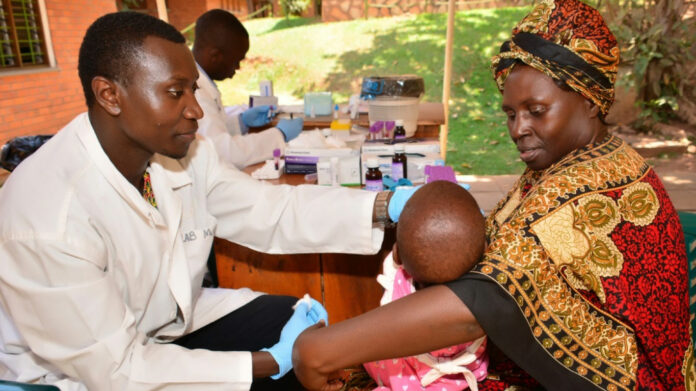
Ugandans are to be cushioned against the high cost of healthcare offered by private health-care providers following the passing of the National Health Insurance Scheme Bill, 2019.

Seen as a giant leap in strengthening the health system, the Bill that caters for only residents or citizens of Uganda, awaits presidential assent to have the effect of law.

MPs passed the Bill on Wednesday, 31 March 2021, in a sitting chaired by Speaker Rebecca Kadaga, despite calls by the Ministry of Health to withdraw the Bill from the House.

According to Hon. Robinah Nabbanja, the State Minister for Primary Healthcare, some key stakeholders in the private sector were not in agreement with provisions of clause 5 of the Bill pertaining to contributions and benefits to the National Health Insurance Scheme.

Clause 5 of the Bill that caters for the functions of the National Health Insurance Scheme has been amended to register members and beneficiaries of the Scheme, design and implement the health benefits package delivery mechanism as well as formulate and issue guidelines on contributions, quality assurance and health service provider arrangements.

“The Ministry [Health] in collaboration with other key stakeholders is undertaking further consultations and analysis of a premium based on the interim actuarial study conducted National Insurance Regulatory Authority in collaboration with the Ministry of Health 2019,” said Nabbanja.

However, Hon. Sarah Opendi who previously served as the Primary Healthcare, told fellow legislators that the Ministry had carried out wide consultations on the Bill before tabling it to Parliament in 2019.

“We know that government does not have adequate resources to put into healthcare so with the small contribution from the citizens, we shall be able to meet all these health expenditures that government is supposed to meet,” Opendi said.

Members of Parliament supported the Bill saying it would go a long way in enabling all Ugandans be able to afford good health services, citing the phasing out health centre IIs which will likely further distance persons in rural areas from health facilities.

“We should do a little more in health than what we are doing right now and this Bill will go a long way in ensuring that. We should not deny our voters from getting onto the national health insurance,” said Hon. Betty Aol Ocan, the Leader of the Opposition in Parliament.

“This is a good financial management system because it fights the corruption in our health system and improves its functionality,” added Hon. Stephen Mukitale (Ind. Buliisa County).

Among the proposed amendments to the National Health Insurance Scheme Bill, 2019 is in clause 2, which will make it mandatory for all health facilities to be accredited before enrollment as service providers to the scheme and ensure guaranteed quality services and accountability.

The clause will also provide for the payment of contributions to the Scheme by contributors like self-employed Ugandans or those employed by the public or private sector, and exclude contributors aged below 18 years.

Clause 8 of the Bill is another key aspect that has been amended to provide for nine directors on the Board of the Scheme, down from the originally proposed 11, with the chairperson appointed by the Minister for Health.

The Board will constitute members from the Ministries of Finance, Health, Gender, Labour and Social Development, as well as representatives from trade unions [NOTU and COFTU], National Social Security Fund, private health service providers, the Federation of Uganda Employers and the Insurance Regulatory Authority.

A new clause has been added in part five of the Bill before clause 21, which stipulates government’s obligations in national health insurance including provision of adequate funding for the Scheme and ensuring that all Ugandans have access to health services, among others.

Clause 21 of the Bill has been amended to make government liable to make contributions on behalf of indigent persons; indigents being persons deemed by the Board to be unable to pay a contribution and are registered as such.

A new clause in the Bill has been inserted after clause 27(4), to provide for the establishment of the National Health Insurance Fund where funds of the Scheme will be kept, including contributions from government and members of the Scheme, income on investment, fees, fines and penalties as well as interest on dues.

Another new clause has been inserted into the Bill after clause 57, to ensure that nothing in the Act, when assented to, shall affect the existence and operations of community based health insurance schemes, save that the Minister for Health may issue guidelines for their proper function.

Stories Continues after ad