Stanbic Bank
Stanbic Bank
21.2 C
Kampala
Stanbic Bank
Stanbic Bank
Home Blog Page 855

Disgruntled PWC staff sues his bosses over torture

barack

Staff at Price Water Coopers-PWC Uganda are reportedly discontented and complaining of things like favoritism, failure to heed the provisions of the firm’s own HR Manual, intrigue and financial exploitation by way of underpayment amidst being overworked by the audit firm.

There is simply too much pressure on each and every employee to deliver so much client work in such a very short time, a thing that could even impact on the quality of the resultant audit or even tax advisory reports. The firm has over 160 employees some of whom are compelled to stay in office up to 2am (basically to work over time without attracting any allowances) because the organization is fatally understaffed.

There are also concerns that, whereas the firm officially collects colossal sums of money from its wealthy clients like USAID, Global Fund, Gavi, the UN Agencies involved in refugee operations, URA and almost all commercial banks in Kampala, the employees who do the actual donkey work are paid peanuts.

It has now taken much courage for a one Barak Tulinaomubeezi, who has opted to challenge the PWC imprudent and draconian management decisions in court, and has become an instant hero for many aggrieved employees quietly grumbling.

Lodged by Isaac Ssemakade’s Center for Legal Aid, a Bombo Road-based law firm renowned for spearheading such litigation on behalf of the vulnerable employees seeking to take on their giant employers, the instant complaint shows that Barak’s woes began in July 2020 and the whole thing later escalated at the beginning of 2021.

Apparently, the relevant managers at the firm considered Barak undesirable and generally developed negative bias towards him after realizing he had a journalism background. They considered him a rumor-monger who potentially might blow up the company’s cover and expose its closet skeletons someday.

According to the formal complaint papers from the Sezibwa Road-based KCCA Labor Office perused by Mulengera News, Barak was frustrated through denial of work assignments which created an impression he was non-performing because at the end of the day, in a setting like PWC, one’s output can only result from executing the roles he or she has been assigned. In the instant case, the psychological and emotional torture clearly aimed at frustrating the 28-year-old Barak into resignation out of PWC was orchestrated by a one Norbert Nuwahereza who is the staffing manager of the PSG department where he falls.

Barak’s case relates to constructive dismissal whereby the very proud and stinking rich PWC partners and top managers don’t believe in outright dismissal of employees. Once they are tired of you, for one reason or another, they will use your relevant manager to mistreat and cause you to emotionally become broken and dismiss yourself through voluntary resignation.

Norbert Nuwahereza would make occasional phone calls just to mock and bully the young man who never understood why the manager was always out to get him. That it was a well calibrated work place campaign aimed at frustrating Barak into resignation and it was orchestrated by Nuwahereza with the acquiescence of other superiors like PWC Human Capital Manager (basically HR) Shivan Karemera, Clive Mayombwe, partner Dowson Kalemba and Uthman Mayanja, the lawyer’s complaint on the KCCA file asserts in part. That this sustained campaign of witch hunt escalated mostly between 8th January and 19th March when Barak got overwhelmed and proclaimed his resignation.

The written complaint filed by Center for Legal Aid, dated Friday 23rd March highlights ways in which the PWC has breached several provisions of the Constitution and the Employment Act regarding the Barak mistreatment. That Barak wasn’t only victimized but was also subjected to very malicious and embarrassing performance appraisal sessions (technically known as PIP) yet his apparent underperformance resulted from his immediate supervisor’s curious refusal to assign him work.

The law firm further contends that their client Barak was also “unjustifiably denied one month’s pay in lieu of notice and four months’ pay as severance allowance on cessation of employment among other terminal benefits.” That even when the firm is theoretically known to be among the best when it comes to enforcing excellent pro-staff values, policies and standards, PWC managers threw everything to the wind in order to fix Barak, the lawyers further assert. That all this makes PWC liable to paying colossal sums of money in compensation to atone the detriment Barak suffered as a result of the wrongful actions of the 5 managers who the lawyers sarcastically refer to as the “five bullies” in their documentation on behalf of their client.

That Barak suffered not only emotional distress but also unwarranted disruption in his career and financial progression. That the very humiliating ordeal the young man endured at the hands of the indifferent PWC managers resulted into loss of dignity and personal self-esteem. That he also endured huge financial anxiety because the servicing of the salary loan he had contracted with one of the city banks was disrupted and made complicated because of the very anomalous circumstances under which the impugned managers made impossible his continued stay in the PWC employment.

The KCCA Labor Officer is being implored to urgently inquire into Barak’s complaint, general grievances and the conduct of the 5 PWC managers and accordingly make the appropriate orders to atone the detriment the young auditor has endured due to fault not of his own. The young man, who sources say is determined to go all the way even if it means sacrificing himself so that future employees lead a more productive life working with PWC, is also demanding billions of shillings in compensation. The almost unprecedented litigation risks badly bruising PWC’s otherwise very good image and globally-acclaimed brand status.

According to KCCA’s Labor Officer Irene Nabumba, Francis Kamulegeya in his capacity as PWC Senior Partner has since been dully written to and notified about Barak’s complaint and an opportunity to deescalate things through the firm diplomatically engaging with their aggrieved employees still exists. Nabumba’s office will only launch full scale investigations into the complaint on getting notification from Barak’s lawyers that path hasn’t yielded.

Nabumba says Kamulegeya and other PWC partners (Uthman Mayanja, Dowson Kalemba, Pamela Natamba & Cedric Mpa Obusingye) have up to Thursday 6th April to resolve the issue internally or else her Labor Court commences full blown inquiry to the total detriment of the PWC brand reputation. By 6th April, Kamulegeya is supposed to have written back notifying KCCA Labor Officer Nantaba of the steps being taken thus far to amicably respond to and address Barak’s grievances.

To earn better, one must get promoted first and there is widespread discontent that promotions processes aren’t adequately transparent as some of the managers (supposed to recommend people for promotion) are accused of favoring their relatives, friends, cronies and sometimes girlfriends. There is a manager who is famous for only assigning curvaceous girls work on all projects that come through him leaving many wondering why average-looking girls are never perceived to be brainy enough by this sexpest manager. The situation is even worsened by the fact that the four partners can’t easily be accessed by the aggrieved lower rank employees who must channel their concerns through the very managers causing this aggrievement.


Stories Continues after ad

Artificial Intelligence and Its 6 New Trends That You Can See in 2021

Artificial Intelligence is a scientific and engineered approach to make a computer, or an intelligent machine think and learn as smartly as competitively as humans do. AI is to apply the technicalities of human thinking, critical reasoning, and logic to intelligent software systems and make them replicas of the human thought process and problem-solving characteristics.

AI and 2020

Before the global pandemic in 2020, the world had just started imbibing the culture of AI – Artificial Intelligence and its branches like Automation and ML – machine learning. But after COVID – 19, AI and its streams have heavily impacted how we conduct business through smart machines and self-teaching algorithms and the constant fight against the outbreak.

AI indisputably is the king of trends that have changed how humans live, play, and work. The updated technologies that will help people in 2021 to rebuild their lives and to rethink business priorities and strategies are widespread and accepted globally.

Components of Artificial Intelligence

AI is intangible, and its primary objective is to improvise on computer applications and functions. These functions are replicas of human expertise of applying problem-solving, learning, reasoning, analyzing, and scrutinizing.

AI consists of

  1. Automated Learning
  2. Planning
  3. Knowledge Reasoning
  4. Problem Solving
  5. Linguistic Intelligence and Natural Language Processing
  6. Robotics
  7. Computer vision and Perception

Objectives of Artificial Intelligence in 2021

There are long-term goals associated with the artificial intelligence sector.

  • The objectives of AI are planning, representation of knowledge and experience, learning, language processing, realization, critical reasoning, and ability to influence and deploy objects.
  • The approach of AI revolves around computational intelligence, statistical methods, and AI traditional coding.
  • Computers use AI in the field of psychology, science, philosophy, mathematics, and linguistics.
  • Sophisticated software tools are used to work on AI research related to artificial neural networks and mathematical optimization, applying methodologies based on economics, probability, and statistical data.

The Enhanced Need for Artificial Intelligence in 2021

  • The primary purpose of developing Artificial Intelligence is to enable machines to think and find solutions like human beings, especially after COVID-19. This is to apply algorithms to complex issues and resolve them in a computer-friendly manner.
  • To enhance human thinking and logic and come with alternate resolutions. Also, to cater to questions like how much does artificial intelligence cost and what is the applicability of AI in Industries and businesses.
  • To create systems that are experts in their arena of explicating intelligent behavior and have the expertise to plan, learn, explain, demonstrate, and advise further, just like humans do.

6 New Trends of Artificial Intelligence That You Can See in 2021 

The primary focus of AI in 2021 will be on improving stakeholder experience besides improving the efficiency or effectiveness of operations.

The AI trends expected in 2021 are:

1. AI talent will remain tight, and it will promote self-directed IT

Talent supply is expected to be a key issue along with the accelerated adoption of AI in 2021. AI solutions will be self-correct and self-heal solutions that will be able to resolve any malfunctions in a proactive way, thus mitigating the downtime of a system.

2. AI structures unstructured data and the focus remains on AI ethics and standards. 

AI will facilitate RPA and NLP to leverage machine vision and natural language and to structure unstructured data such as images or emails. The demand for ethical AI is still a top priority besides technicality.

3. IT pushes AI at a larger scale, and it becomes explainable.

Organizations will start executing their AI and ML models into production and to scale. This will enable more data regulations, and AI trust will be pivotal.

4. AIOps gets big and Augmented processes to enter the picture.

AIOps and Augmented processes are given leverage to improve the decision-making and functionality of key processes. This provides an end-to-end digital experience, empowers cross-team collaboration, and integrates seamlessly into the wider collective intelligence and the whole AI system.

5. Voice- and language-driven intelligence takes off.

AI will enable NLP and ASR – automated speech recognition capabilities, and check agent quality, continued compliance, and customer intent understanding.

6. AI and cloud become interdependent.

Artificial intelligence is adopting cloud solutions through which vast amounts of data will be generated, applied, and supercharged.

Let’s quickly go through various trends that AI can exercise and promote in the coming year.

1. Robotic Process Automation (RPA)  

Many organizations today are turning to RPA as it streamlines business processes and reduces costs. Further, it helps in automating tedious business processes, thus enabling their employees to provide better, faster resolutions.

2. Conversational AI

AI-powered chatbots using NLP – natural language processing and ML – machine learning provides a more human-like interaction, which is known as Conversational AI. This generates personalization, responsiveness, and customer experience’s reach.

3. The role of AI in Healthcare

AI is helping the healthcare sector through Big Data with high accuracy. For example, it can be extensively used to identify COVID patients, develop thermal cameras, create mobile applications to monitor individual temperatures, and many more.

4. Increase in demand for ethical AI

There is an enhancing demand for ethical AI, and it is at the top of the list

5. AI for knowledge breach and Cybersecurity 

AI will be of huge assistance to the security department, supporting it against malicious activities.

6. The combination of the Internet of Things with AI (AIoT)

The confluence of AI and IoT is on the rise, and we will see more products resulting from this amalgamation through host mobile app backend programs like Siri and Alexa.

7. Reinforcement Learning

RL or Reinforced learning is a unique application of deep learning that enhances the effectiveness and efficiency of data.

8. Quantum AI 

Quantum supremacy is applied to measure the Qubits for use in supercomputers, which help in solving problems, data interpretation, and forecasting trends quickly

9. AI-Powered Business Analysis and Forecasting

To deeply understand market needs, hyper-automation is combined with cognitive automation AI solutions that help in processing real-time alerts. Abilities like forecasting and analysis are enabled using content-intelligent technologies and AI-supportive practices.

10. Edge Computing 

Edge computing is a great cost-effective, time-saving, and consumer-satisfaction generating service that provides gadgets with servers and data storage and allows them to put data into them.

11. Rise of a Hybrid workforce

The human workforce is expected to work with digital assistants, and automated bots post the COVID-19 pandemic. This will lead to more collaborative experiences with AI.

Conclusion

AI’s spectrum is broad, and to scale new heights, big and small organizations must find ways to leverage AI-powered solutions and stay up-to-date with emerging trends.

Thus, we say that Artificial Intelligence is all about creating super-intelligent machines that can eventually surpass the brightest of human intelligence. It includes vehicles like drones, art like poetry, mathematic algorithms and theorems like chess, search engines like Google search, online advertisements, image recognition, virtual assistants like Alexa and Siri, and many other applications related to healthcare, video games, finance, business, and automotive and many other fields.

AI is a vast concept and comprises lots more. It’s a never-ending story of upgrades, updated technology, and excellence in intelligence.

Stories Continues after ad

Cutting the red tape in trade procedures; the role of the trade information portal

Uganda Trades portal

It has often been said that “Information is power”. In 2015, when Tashobya, a trader from western Uganda wanted to export his eggs to Comoros, nobody warned him that he might have to visit more than four institutions seeking both information and licenses. Eggs already in a warehouse, he made phone call after phone call, paid one agent after another and still was met with frustration. If only he had had a convenient source he could access to learn what he needed to do.

A few years later, a trade information portal was built and traders like Tashobya and others could have all their questions answered.

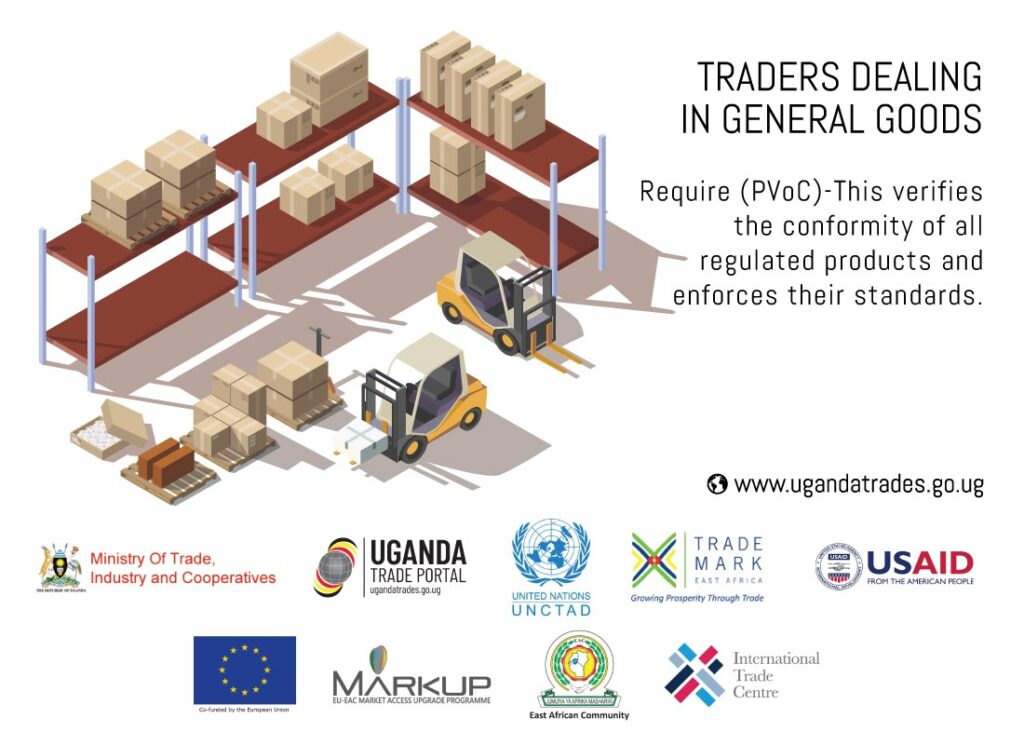
The trade information portal is Uganda’s one stop shop for information on trade related businesses. The portal gives access to step-by-step procedures from user point of view guiding traders on licenses, pre-clearance permits and clearance formalities issued by government agencies.

The development of the portal is premised on the Trade Facilitation Agreement which came into force on 22 February 2017 where two thirds of World Trade Organisation (WTO) members ratified the agreement, Uganda inclusive. The east African member states of Kenya, Rwanda, and Tanzania have developed similar platforms to enhance trade in the region.

Many businessmen in the import sector have had to pay a surcharge to Uganda National Bureau of Standards because they did not know the need to and later on how to obtain a Pre Verification of Conformity certificate (PVoC). The lack of information can be costly.

UGTrade-Portal-News-Artwork-Xpress-times

The platform will play a critical role in informing the traders on how  the movement, release and clearance of goods, including goods in transit is done.  Promotion of transparency in customs regulations and administration, promotion of cooperation among agencies dealing with clearance of goods, promotion of electronic systems in documentation and clearance of goods and Streamlining of fees and knowledge of charges and taxes is what the trade portal aims to achieve.

Developed and implemented by the Ministry of Trade Industry and Cooperatives (MTIC), in partnership with East African Community (EAC), Trade Mark East Africa, USAID, United Nations (UN) and International Trade Centre, the platform is facilitating trade by enabling the traders to access all the information regarding the documentation, procedures, fees, and charges that are  needed before the traders go into the clearing Process.

The Portal enables traders to access and obtain trade related information on a single platform and this will significantly reduce the time and cost of accessing information in the business community.

It will enhance Uganda’s export, first to the regional markets, where over 60% of the country’s exports go and facilitate  the Micro, Small and Medium Enterprises who constitute over 70% of Uganda’s exporters to trade easier. Visit the portal; https://ugandatrades.go.ug/  

Marketing support provided by the MARKUP programme, a regional development initiative for the EAC funded by the EU.

Stories Continues after ad

Emirates Skycargo becomes first air cargo carrier to deliver 50 million doses of #Covid-19 vaccines

Emirates Skycargo

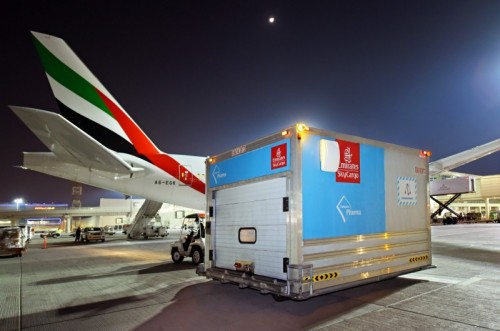
In the run up to World Health Day (7 April), Emirates SkyCargo has become the first airline cargo carrier in the world to have transported more than 50 million doses of COVID-19 vaccines on its flights. The carrier has also transported more than 100 tonnes of syringes across the world to support the delivery of vaccines.

Since the start of international distribution late last year, Emirates SkyCargo has transported over 220 tonnes of COVID-19 vaccines, equivalent to more than 50 million doses, on more than 150 flights from manufacturing locations to 50 destinations on its network through Dubai. Overall, the carrier has transported six different kinds of COVD-19 vaccines.

In March, Emirates airline delivered 864,000 doses of the COVID-19 vaccine in the first batch from the global COVAX initiative created to ensure that low -and middle-income countries have fair access to the vaccine. This was part of the 3.5 million doses of the AstraZeneca vaccine that was allocated to Uganda by the COVAX facility to be delivered between March and June 2021

Watch a video about Emirates SkyCargo’s COVID-19 vaccine distribution milestone.

Nabil Sultan, Emirates Divisional Senior Vice President, Cargo, said: “Emirates SkyCargo is proud to have reached the 50 million COVID-19 vaccine delivery milestones just ahead of World Health Day. As a socially responsible global air cargo carrier, our actions over the last year have always been directed at helping communities across the world, and especially those in developing nations, recover from the devastating impact of the pandemic. We have been leading the global air cargo industry’s efforts and working with our partner organizations in Dubai to rapidly distribute COVID-19 vaccines through Dubai to the rest of the world.”

Emirates SkyCargo has remained agile and dynamic throughout the COVID-19 pandemic, responding quickly to maintain international connectivity for essential goods across the world. The carrier was one of the first in the world to deploy passenger aircraft for cargo only flights in order to transport PPE, medical equipment, pharmaceuticals and food. Over one year, Emirates SkyCargo had operated more than 27,800 flights and transported over 100,000 tonnes of essential commodities.

As early as October 2020, Emirates SkyCargo set up an EU GDP certified dedicated airside hub for distribution of COVID-19 vaccines at its hub in Dubai. With its sophisticated infrastructure and extensive storage capacity, Emirates SkyCargo positioned itself to fly in large quantities of COVID-19 vaccines from manufacturing locations, store the vaccines in Dubai and then regularly replenish vaccine supplies to developing nations with limited cold chain infrastructure through its cargo flights.

In January 2021, Emirates SkyCargo joined hands with leading Dubai-based entities, DP World, International Humanitarian City and Dubai Airports to form the Dubai Vaccine Logistics Alliance to harness the strategic strengths of Dubai as a major global distribution hub for COVID-19 vaccines. In February 2021, Emirates SkyCargo signed an MoU with UNICEF to prioritise transportation of COVID-19 vaccines in support of the COVAX facility which is aimed at equitable global distribution of vaccines.

With its fleet of modern and efficient all wide-body aircraft and a network that currently spans more than 130 destinations across six continents, combined with the strategic geographic location of its state of the art GDP certified Dubai hub, Emirates SkyCargo is a key global player in the secure and rapid global distribution of COVID-19 vaccines.

Stories Continues after ad

Qualified teams to Africa Cup of Nations, Cameroon 2021

Afcon trophy

Twenty-three of the 24 teams for the 2021 Africa Cup of Nations tournament in Cameroon have been confirmed.

The last qualifying team; either Benin or Sierra Leone will be determined in June. The two did not play in Freetown on Tuesday because of the Covid-19 test results that ruled out five Sierra Leone players.

The fixture has been rescheduled for the May 31-June 15 international window, with Sierra Leone trailing Benin by three points in Group L and needing a victory to overtake them and qualify.

Comoros and the Gambia qualified for the first time, increasing to 44 the number of countries who have qualified for the premier African national team competition.

Democratic Republic of Congo and South Africa were the highest profile casualties, the failure of Uganda to secure a third straight appearance was the most spectacular. Zambia also missed out this time.

The tournament was scheduled to take place between 9 January and 6 February 2021 but on 30 June 2020, CAF moved the tournament to January 2022 following the effects of the COVID-19 pandemic.

Qualified teams: Cameroon (hosts), Algeria, Burkina Faso, Cape Verde, Comoros, Ivory Coast, Egypt, Equatorial Guinea, Ethiopia, Gabon, Gambia, Ghana, Guinea, Guinea Bissau, Malawi, Mali, Mauritania, Morocco, Nigeria, Senegal, Sudan, Tunisia, Zimbabwe.

Stories Continues after ad

UBL, Infectious Disease Institute partner to facilitate safe reopening of bars

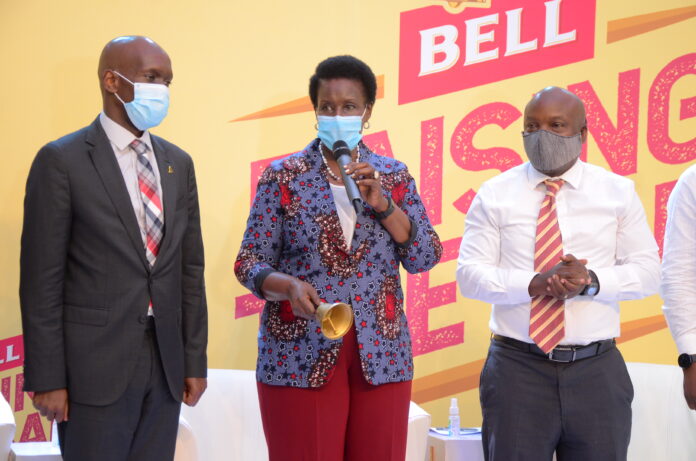
Alvin Mbugua, UBL MD (L) and Tom Kakaire, Head of Strategic Planning & Development at IDI (R) look on as Hon. Amelia Kyambadde rings the bell to launch the Raising The Bar campaign.

Uganda Breweries Limited (UBL) has partnered with the Infectious Disease Institute (IDI) under the Raising the Bar program which will support bars to re-open safely and rebuild customer confidence.

Raising the Bar is adapted from the Diageo $100 Million Raising the Bar Program that seeks to facilitate Diageo affiliates globally to support their local business partners and boost their capacity to reopen their businesses under the respective national guidelines.

In Uganda, this program is being facilitated under the Uganda Breweries flagship Brand of Bell Lager which will inject a $1 Million fund towards the logistical and physical requirements of the program.

This program has been developed in partnership with the Infectious Disease Institute, which among other things, will be the driver to provide awareness training for bars, recreational facilities and similar establishment personnel in the requisite knowledge, social distancing and enhanced hygiene measures that are important in the prevention of COVID-19 transmission in establishments that carry Uganda Breweries Products.

Speaking at the event to demonstrate preparedness of the Brewery to support the Bar Reopening, UBL Managing Director Alvin Mbugua said that as a business, they applaud and support the government’s preparedness and response efforts to COVID-19 this far.

“Raising the Bar initiative is the Brewery’s effort to work in tandem with the government to support efforts to raise the capacity of bars and enable them to adapt new practices to operate safely.” Mbugua said

In March 2020, due to the unprecedented nature of the pandemic, Government of Uganda announced the closure of bars among other businesses to curb the spread of Covid-19 in the country. Even as some restrictions have been slowly lifted, the closure of bars and other recreational businesses remains in effect, a thing which has had adverse impact to economic activity resulting in loss of revenue and devastated livelihoods of many Ugandans.

“Bars are an integral part of Uganda’s socio-economic ecosystem. They provide employment both directly and indirectly, contribute significantly to real estate through rental incomes, contribute to the agricultural sector through sourcing of food supplies and Raw Materials and contribute to trade and several auxiliary services.” he said

COVID-19 has adversely impacted the different players within our value chain including farmers, distributors, wholesalers, retailers, and bartenders. Furthermore, the situation has been aggravated by the continued closure of the key retail outlets (bars) that stock and sell our products. An estimated 1.30million people formerly employed by this sector are now redundant and estimated revenue loss of Shs 2.5 trillion across the value chain is inevitable at the current rate of business operations.

Between March and May 2020, UBL sourced only 1,500 tonnes of barley from farmers out of an initial projection of 3,500 tonnes) and a lot more real and unrealized revenue across our value chain.

“We hope that this initiative shows our leadership as Uganda Breweries to the relevant authorities and demonstrate to Government that we are committed to work together in the fight against this pandemic even as we seek for the re-opening of bars.” Said Alvin

The Minister of Trade, Industry and Cooperatives Amelia Kyambadde said that Government is cognizant of the adverse impact that Bar closing has had on the livelihoods of Ugandans and the impact that it has had on government through missed taxes adding that her ministry was also aware that there might be an increase of intake on illicit alcohol arising from the closure of bars.

“Our number one priority has been the health and safety of Ugandans, and so far, the government is doing a commendable job on that front giving us good optimism that the conversation on bar reopening should start happening featuring the relevant stakeholders,” she said.

Stories Continues after ad

Three security guards arrested over theft of Arua hospital ambulance

ambulances

Police has arrested three security guards of Arua Referral Hospital in connection with the theft of Hospital Ambulance-UG 6821M.

The arrest of the three, whose names have been withheld, follows a case of motor vehicle theft, reported by the Hospital head of security-Avaga Johnston Norman at Arua Central Police Station.

The three suspects were on duty on the incident night on March 27, 2021. They are currently helping the Police with investigations.

“We appeal to the wider public to share any information that could lead to the recovery of the ambulance,” said Angucia Josephine, the police spokesperson of West Nile region.

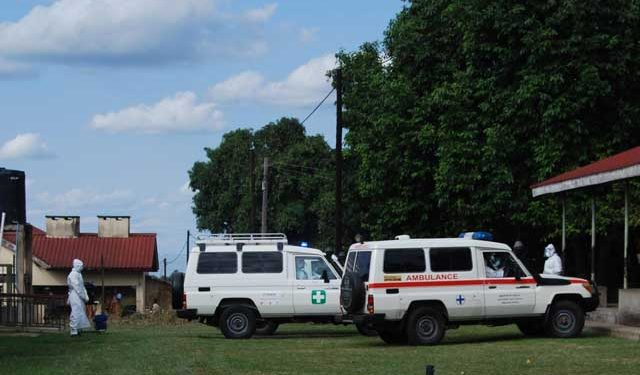
The stolen Ambulance is one of the new ambulances that the Government  recently gave Arua Regional Referral hospital to assist in Covid-19 emergencies.

Stories Continues after ad

Media owners urged to fight for journalists’ rights

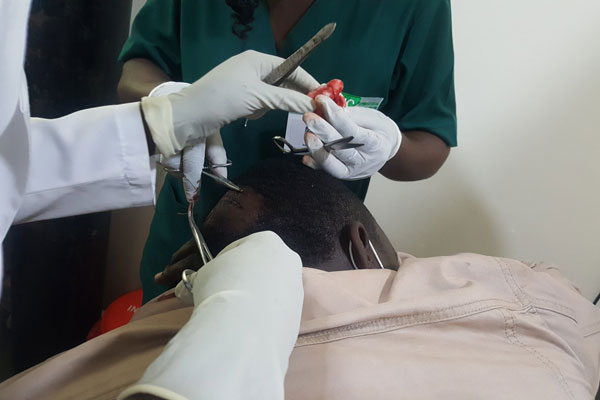
NTV Journalist John Cliff Wamala's head being stitched following an injury he sustained when security officers attacked a group of Journalists covering Bobi Wine petition. PHOTO BY NICHOLAS BAMULANZEKI.

After a violent campaign season in which dozens of journalists were assaulted by security agencies, the Executive Director of Human Rights Network for Journalists-Uganda, Robert Sempala says media owners should be at the forefront of backing journalists when fighting for their rights.

Sempala says media owners have a central loud voice which can be heard by anyone and which reach beyond where journalists cannot. He also argues that media owners should invest in providing protective gears to journalists.

“You do not see the main bosses (media owners) coming to court when journalists sue,” Sempala says. “You only see the colleagues (journalists) come support their colleagues in courts of law, you do not see managers, owners and editors coming to show the solidarity.”

When journalists are arrested or beaten, media owners under the National Association of Broadcasters (NAB), should be issuing statements condemning such arrests.

The only statement on NAB website that mentions safety of journalists was published in October 2020, almost a month before the start of campaign season when the association members met security chiefs.

“NAB raised issues of concern to the security chiefs including the safety of the journalists during their line of duty, interruption of the media while doing their work as the fourth estate,” the statement reads.

But NAB Secretary General Joseph Beyanga defends the association, arguing that they have done much lobbying for journalists. He says NAB should not be judged basing on election season. For instance, he argues that during the pandemic, before the election, they lobbied to ensure that journalists are classified as essential workers and also lobbied for release of journalists arrested for defying curfew time.

After the October 2020 meeting with security chiefs, Beyanga says a sub-committee composed of NAB and security agencies members through which the former continued to raise issues affecting journalists. Unknown are the impacts of these meetings in defense of journalists rights.

In an interview with this reporter, Sempala commended the recently founded Uganda Editors Guild, an umbrella body that brings together editors, senior journalists and journalism for the role it played, in defense of the journalists during election season.

The guild condemned arrest of journalists and sued, in attempt to block Media Council’s move to accredit journalists covering campaigns in the middle of campaign season.

Sempala says they have recorded more than 35 clear cases in which security agencies confronted journalists during campaigns, mainly those who were covering National Unity Platform (NUP) candidate Robert Kyagulanyi aka Bobi Wine.

Other incidents that affected the media, he says include brutality against media team of Bobi Wine such as those who were live broadcasting his rallies. Three Bobi Wine media aides were among his campaign trail members who were arrested on December 30th in Kampala and have been produced in court. They are Richard Kalema, Geofrey Mutalwa and Musa Mulimira. These are among 46 Bobi Wine supporters arrested in Kalangala who have not been given bail.

Incidents involving journalists started with the start of campaign season. For instance, on 3 November 2020, Bobi Wine was nominated, a number of journalists from different media houses following his convoy to the nomination venue were pepper-sprayed by police.

Also on November 3rd, Ronald Kakooza of Vision Group was arrested while covering events at the Forum for Democratic Change headquarters in Najjanankumbi as the party candidate Patrick Amuriat prepared to go for nomination.

“Journalists have operated in a hostile and toxic environment, and endured several cases of wanton mistreatment by police and security agencies,” the Africa Center for Media Excellence (ACME) said its December report on election coverage.

But Dr George Lugalambi, a media researcher says there is nothing else that journalists and media owners could do at the organizational level because the campaign became extremely violent. He says security agencies must protect Ugandans including journalists. “They are the people who were abusing media rights.”

Dr William Tayeebwa of Makerere University Journalism Department says as the campaign season turned more violent, media owners should have provided protective gear for all field personnel as a measure to mitigate the impact of the attacks.

“It is only journalists from big media houses who had protective gear. Those who were brutalized had no gear.”   Given that politics has become like a war zone, Tayeebwa says, the safety of journalists should equally be a top priority for proprietors.

Meanwhile, Derrick Wandera, a reporter with Daily Monitor says that his employers replaced his equipment and mobile phone which were confiscated and damaged by security officers during one of Kyagulanyi’s rallies. But he says that after spending 62 days on the campaign trail, he realized that a lot needs to be done in support of journalists covering hostile situations.

“Employers should make sure that there is job security for reporters especially those working in dangerous environments,” he says. “There should also be medical insurance to even freelance reporters because most of them when they get a challenge that needs medical attention, they are left to suffer and cannot pay their medical bills.”

Moses Waiswa a journalist attached to Busoga One FM was beaten by counter-terrorism police officers while covering Bobi Wine’s campaign trail in Lira.

Waiswa says that despite the injuries he sustained while on duty, his employers did not do much to ensure he gets clear medical treatment. According to Waiswa, his employer gave him a one-off payment of 350,000 Shillings, yet to date; he has spent 3.6 million on treatment. Waiswa said he was directed by doctors to spend 60-days off work for him to be able to recover quickly.

Stories Continues after ad

President Samia reshuffles Tanzania cabinet

Tanzania president Samia Suluhu Hassan has on Wednesday March 31, made a cabinet reshuffle, issuing a warning to her appointees to embrace nothing but work.

The reshuffle which was carefully worked has seen some new faces with the most notable being the nomination of Liberata Mulamula (pictured above)as  Member of Parliament and the foreign minister  replacing Prof Palamagamba Kabudi who now takes over the ministry of Justice and Constitutional Affairs.

In the reshuffle Mwigulu Nchemba who was the minister for Justice and Constitutional Affairs now becomes the minister of Finance a docket that was left empty yesterday after Dr Mpango was appointed Vice President.

One month after he was appointed Chief Secretary, former CCM General Secretary Bashiru Ally has been replaced by Tanzania’s ambassador to Japan Hussein Yahya Kattanga.

Ummy Mwalimu now becomes the Minister in the President’s office Regional Administration and Local Government replacing Jafo Selemani who now serves the Ministry of State in the Vice President’s Office where Ummy was initially serving.

“It has been a short while since you were sworn in so I did not see the need for a complete overhaul of the ministries,” said the President

President Samia also warned ministers who hardly assign deputy ministers any tasks something that in the long run causes frictions with the ministry.As part of her other instructions, she ordered the newly created ministry of investment under the stewardship of Godfrey Mwambe and his deputy Ole Nasha gets functional as soon as possible.


Stories Continues after ad

The tragedy of Bwaise floods, why they have become persistent and what needs to be done

Ms Ansasira


Despite the interventions from different stakeholders towards finding an everlasting solution, floods have remained a big threat to both the lives and livelihoods of people within and around Bwaise and Kyebando. Most of Bwaise residents scramble to cross the road by a meticulously makeshift wooden bridges planted over large stinking pools of water, some just walk in dirty flooded water to access their premises. The ram-shackled housing units and businesses around Bwaise always fall prey where they are swept away or covered up.

Roads and bridges are washed away during a heavy downpour making movement a nightmare for students and other slum dwellers. This has also led to drowning of children and the elderly, displacement of households and easy spread of diseases due to poor sanitation since human waste from pit latrines and other waste is always carried around from waste collection areas by storm water. For stance, according to Uganda Red Cross, in 2011 over 700 residents were left homeless as a result of heavy down power that turned into floods in the areas of Bwaise.

However much KCCA has put guidelines to deal with and contain the situation, the citizens have adamantly refused to take up the measures by continuing to dump waste into drainage channels which blocks drainage system and let water flow on the highways, households and businesses.

Maurice Semukemba, who once worked with KCCA argues that the biggest cause of flooding in the area are the clogged channels and that the residents are to blame. Bwaise, which slightly lies above the drainage channel of the Northern bypass, has always been an area prone to flooding. The main drainages are so narrow and at times are overpowered by the heavy run-off waters. Human activities like dumping waste such as plastics and polythene bags into drainages and constructing buildings within water passages among others blocks water movement which triggers backflow of water. There is encroachment on wetlands which are supposed to be catchment areas. Currently, many factories and houses have been built in wetlands despite the existing law, yet the local authorities at times just look on since some developers wield much influence to the big people in government. Since Bwaise is a slum, there are many informal settlement that have no approved building plans. This has caused unplanned buildings and failure to follow building regulation leading to congested settlements leaving no space for storm water drainage hence flooding.

At the Centre for Energy Governance we are convinced that, in order to curb the problem of flooding and its effects on Bwaise, the following measures need to be taken with immediate effect.

  • Drainage channels need to be widened, deepened and provided with small drainages to help ease the flow.
  • The leaders should mobilize and encourage people living in Bwaise in making sure that, they don’t dump waste in places not gazetted for waste disposal and also sensitize them to take part in cleaning all places that block water flow.
  • The local authorities should frequently collect waste, set up public garbage collection points, so that when it rains, there isn’t waste to block water flow.
  • The local authorities should also establish good stormwater management systems, which should focus on preserving critical green spaces hence protecting the wetlands from encroachment and fostering plans that aim to harvest rainwater.
  • New building laws should be in acted forcing developers to leave some portions of their land unpaved so that water can be absorbed without necessarily flowing.
  • Vertical construction (storeyed buildings) and have more space for proper road network, drainage channels and green areas.
  • Unplanned settlements and informal business should be stopped since they encourage encroachment on wetlands and yet do not earn any income to the government.
  • Fines and penalties should be established to punish people who dump rubbish in the drainage channels.
  • Studies should be made for updating of drainage master plan for Bwaise to improve mobility and reduce flooding.
  • Political leaders, government and Bwaise dwellers should each perform their role to ensure the eradication of floods from Bwaise and make it a better place to live with proper drainage systems, housing and waste management to enhance growth and development.


Ansasira Mascot, ansasiramascot@gmail.com

Research Fellow, Centre for Energy Governance.


Stories Continues after ad