Stanbic Bank
Stanbic Bank
19 C
Kampala
Stanbic Bank
Stanbic Bank
Home Blog Page 864

MPs want BoU Governor and Deputy Governor’s powers split

Dr. Michael Atingi-Ego BoU Deputy Governor and Prof. Emmanuel Tumusiime Mutebile, Governor BoU

Members of Parliament’s Committee on Legal and Parliamentary Affairs and officials from Bank of Uganda (BoU) disagreed on whether the roles of the governor should include being the chairperson board of directors of the central bank.

The MPs have insisted the Governor and Deputy Governor of Bank of Uganda cannot also occupy the offices of Chairman and Deputy Chairman of the central bank’s board.

Despite contrary views from the Central Bank itself, the MPs have stuck to their guns, saying that maintaining the statusquo, would make the governor and deputy governor accountable to only themselves, which is a flaw in corporate governance.

The MPs, who include, Hon. Abdu Katuntu, who chaired the 2018/19 probe into the Central Bank by the Parliament’s Committee on Commissions, Statutory Authorities and State Enterprises (COSASE) said that it is important that in light of previous governance issues at the Central Bank, it was important that the affairs of the Central Bank, be brought under control.

The MPs were responding to a submission by the Deputy Governor, Mr Michael Atingi-ego who submitted that separating the Chief Executive and Board Chairman roles would be tantamount to “diverting the governor from his/her core mandate of delivering price and financial sector stability.”

“We need to maintain the status quo to support the stability in business continuity and to ensure adequate representation of executive management on the board,” Atingi-ego said, adding: “We need somebody who is involved at the management level to be able to present their (management) position to the board.”

The Committee is hearing views from stakeholders, in regard to The Constitution (Amendment) Bill, 2020, tabled by Igara County East, MP, Hon. Mawanda Michael Maranga. The Bill seeks to amend certain parts of Article 161 of the Constitution. Hon Mawanda wants the role of the Governor and his deputy separated from that of BoU Chairman and Deputy Chairman respectively.

Under the proposed changes, although the president shall still appoint the Governor, his Deputy and other board members, with the approval of Parliament; the Board Chair and his deputy shall be selected from other board members, other than the Governor and Deputy Governor.

“Who supervises the governor and the deputy governor in the execution of their duties? None. We don’t have any institution that supervises the governor and the deputy governor, in this country. None,” Hon Katuntu submitted.

Giving an example of Kenya, where the two roles have been separated, an austere Hon. Isala Eragu Veronica Bichetero, the MP for Kaberamaido County asked the Deputy Governor, “What do you take your board for?”

The MPs also rejected a proposal by the Central Bank that the approval of their budgets should be left to the board instead of Parliament.

An exasperated Hon Asuman Basalarirwa, wondered why the same Parliament that approves money to the Bank of Uganda, cannot approve the Budget of the Bank. “Is it because you don’t trust parliament?” he retorted.

Katuntu insisted that it was important that the Central Bank be brought under the control of Parliament, which is the overall watchdog of government business.

“Public money is accounted for to parliament. But how do you account to us, when we don’t even know what were your priorities?” he asked the Central Bank delegation.

Stories Continues after ad

Bob Kasango’s burial: Widow drags her mother-in-law to Court

Bob Kasango

The widow of deceased city lawyer Bob Kasango, Nice Bitarabeho Kasango has dragged her mother-in-law, Rosie Kabise for interfering with the burial arrangements of her husband.

Through her lawyers, Bitarabeho wants court to issue orders restraining Kabise from interfering with the burial of Kasango in Gweri village, Burahya County, Fort Portal city in Kabarole district.

Bitarabeho explains that together with their three children, Samora Kasango, Stephanie Kasango and Ivan Kasango, they all along knew that the deceased wanted and willed to be buried in Fort Portal.

Kasango died on 27 February in Murchison Bay Hospital inside Luzira Prison but burial arrangements were indefinitely postponed to allow his family and in-laws to reach an amicable agreement on where his remains should be laid to rest. The cause of death was reported to be heart failure.

On March 2, during the funeral service at the All saints Namirembe Cathedral, a group of Kasango’s relatives from Tororo District in Eastern Uganda stormed the church and grabbed the casket containing his remains from the A-Plus pallbearers.

Relatives from the side of Kasango’s wife Nice Bitarabeho Kasango and eldest son Samora Paul Kasango tried to insist but they were overpowered by the team from Kasango’s family. Police intervened, pursued the pickup, intercepted it, removed the body and handed it back to his wife’s family.

Kasango was jailed in 2018. He was serving 16 years sentence in jail over Shs15 billion pension funds by the Anti-Corruption Court. He was also involved in another high-profile case involving the Tooro Queen Mother Best Kemigisa at some point.

Kasango was sentenced alongside the former top Ministry of Public Service officials who include the former Permanent Secretary, Jimmy Lwamafa, Principal Accountant and the former Commissioner for the Compensation Department in the same ministry.

While in prison Kasango became a lecturer teaching law at prison, helped inmates to get international degrees from University of London. He continued to help inmates to convene and pray fellowship, get closer to God as he invited prison officials to communion with him and other inmates.

Stories Continues after ad

Global Recycling Day calls on us to work together for a world without waste

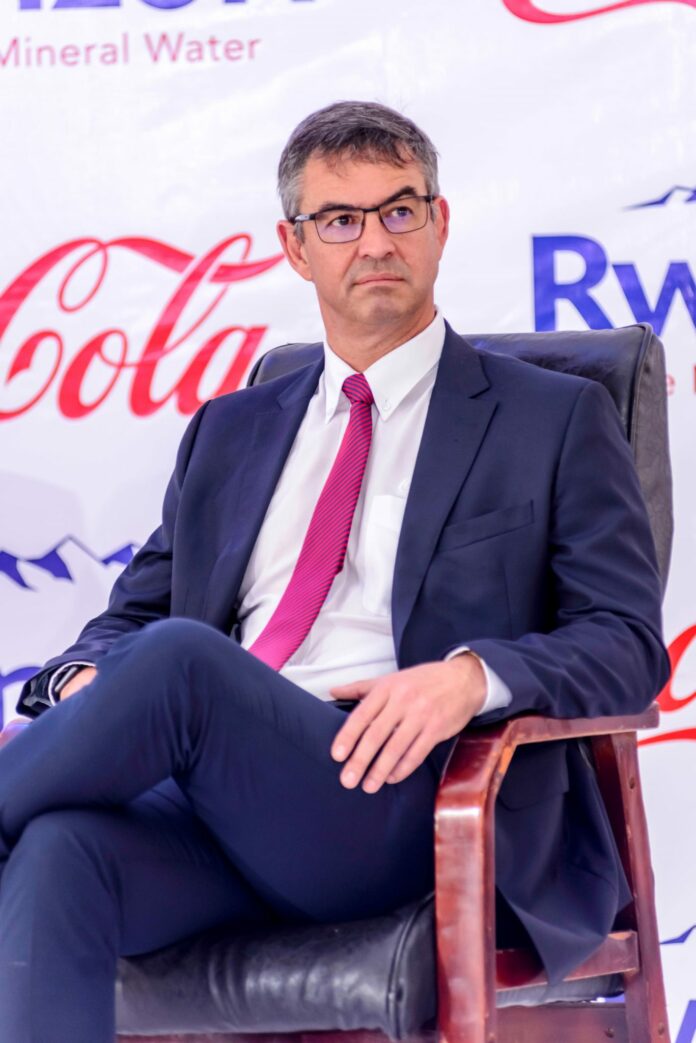
Jacques Vermeulen CEO Coca-Cola Africa

By Jacques Vermeulen

Along with its devastating human and economic costs, the COVID-19 pandemic has put renewed focus on sustainability. The experience of mass human vulnerability to the accidents of nature has reminded us of the need to live in harmony with the natural environment if we are to survive as a species.

As James Quincey, Coca-Cola CEO and Chairman recently put it: “COVID-19 has highlighted the urgent need for collaborative, cross-sector solutions to climate change, plastic waste and other critical environmental and social issues. The crisis has shone a light on the interconnected nature of our world and the lessons we learn must be applied to help us emerge stronger and get to a more sustainable and inclusive economic future.”

The question, against the backdrop of the severe economic damage caused by the pandemic, is how social partners can work better together to build this future.

Global Recycling Day on March 18 gives us the chance to think anew about how to advance the prosperity of Africa by growing our economies inclusively, while reducing the impact of packaging waste on the environment.

A big part of the answer is to build a circular green economy that enables recycling and draws in the public and private sectors, communities and other stakeholders in a collaborative effort. In Uganda, we have entered partnerships with companies such as KCCA, Stanbic Bank, Nice House of Plastics and Tooro Kingdom to conserve the environment and promote proper waste management.  The Coca-Cola Foundation also extended USD30,000 to support plastic waste collectors across the country affected by COVID-19 to provide basic relief items and equip them with tools to work better. We can’t achieve our recycling goal without their support.

For our part, Coca-Cola Beverages Africa (CCBA) has made our ambitious recycling targets a top business priority, alongside key performance metrics for growth and profitability.

In other words, we measure our business success not only according to growth and profits, but also by doing business the right way – following our values and working toward solutions that benefit not only us all but also future generations.   Profitability is important, but not at any cost. We don’t believe there’s another way of doing business the right way.

Our commitment is to invest in our planet and our packaging, to help make the world’s packaging problem a thing of the past.

The Coca-Cola Company and its bottling partners are leading the industry with a bold, ambitious goal: to help collect and recycle a bottle or can for everyone we sell by 2030. We want to support local governments’ waste management objectives by making recycling more accessible and to achieve 100% collection and recycling by 2030.

We also have a fully-fledged recycling plant located at Nakawa whose main purpose is not only to recycle plastic but also an equal system that makes people take away plastic from the environment. This year, we invest USD 61,000 in equipment and plan to inject another USD 70,000 in a new line to increase our recycling volume to match with our 100% recycling goal. We are also extending our recycling commitment by aiming to collect 5,000T (500 million plastic bottles), which is a big improvement on the 857T (71 Million Plastic bottles) we collected in 2020.

In addition, as a system our goals include to make all our consumer packaging 100% recyclable globally by 2025 and use at least 50% recycled material in our packaging by 2030. This is part of our larger strategy to grow with conscience as we become a total beverage company.

In the 14 markets where CCBA operates, we are on track to meet these targets well ahead of schedule.

Holistic solutions to challenges like packaging waste require partnerships, and it is important that we work together to ensure transformation, inclusion and sustainability of the circular economy across the continent.

For their part, governments can contribute by creating an enabling regulatory environment to help stimulate sustainable practices.

Regulators also play a crucial role in facilitating public-private partnerships, setting packaging standards and driving policies that encourage the circular economy to thrive for greater economic inclusion of people.

What we need is for communities, countries, governments and regulators to accelerate the shift towards circular, or closed-loop business models. However, for it to be implemented successfully requires high levels of collaboration.

We believe that the concept of Extended Producer Responsibility (EPR) is the most efficient means to support the circular economy. Paying EPR fees and striving to increasingly use recycled plastic, even if it costs more than virgin plastic, ultimately enables the circular economy.

PETCO is a great example – this model was initiated in South Africa in 2004 as an industry-led initiative for collection and recycling of PET bottles. It has since been established in Kenya and Ethiopia, with Tanzania launching soon and other markets in planning.

We know that for developing economies these costs can be a real challenge as it potentially adds cost at the level of the consumer. However, closed-loop business models are more efficient at retaining value than recycling that results in non-circular products. This is why we support the use of recycled plastic within the Coca-Cola system so that we can create new bottles from recycled bottles.

A more sustainable, more inclusive Africa, free of waste, is possible if we work together in collaboration for the common good of our continent.

*Jacques Vermeulen is CEO of Coca-Cola Beverages Africa

Stories Continues after ad

Chief Justice on the spot for confiscating fellow Judge’s file in Bobi Wine’s case

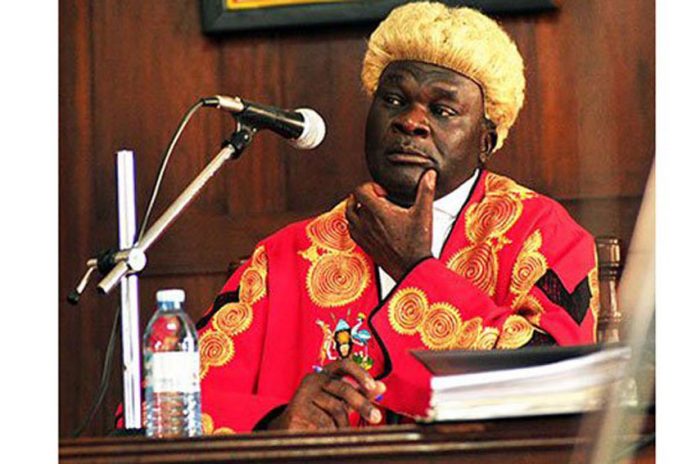
Chief Justice Owiny-Dollo

There was panic at the Supreme Court after the Chief justice Alfonse Owiny-Dollo confiscated files containing the rulings in the presidential election petition filed by former presidential candidate Kyagulanyi Ssentamu Robert aka Bobi Wine.

Earlier today, Supreme Court judge Esther Kisakye accused the chief justice of confiscating a file containing her minority ruling in the Kyagulanyi election petition.

She said; “the file containing her minority ruling in the matter was confiscated on orders of the Chief Justice. I am going to look for my file. It was supposed to be read as we delivered the ruling.” She said

She added “I felt it my constitutional duty to disobey the unlawful orders of the Chief Justice and to fulfil my duties as a member of this quorum,” Justice Esther Kisakye says. She adds that CJ Owiny-Dollo wanted her minority ruling to be read at a later date.

Today the Supreme Court confirmed the Election of President Yoweri Kaguta Museveni after allowing the withdrawal of National Unity Platform’s (NUP) President Robert Kyagulanyi Ssentamu’s Election Petition. They allowed the withdrawal of the matter and ordered no cost for both parties.

Justices Rubby Opio Aweri, Paul Mugamba and Ezekiel Muhanguzi read the Court rulings.

In tandem, the Bobi Wine asked Justice Owiny Dollo, Mike Chibita to back off from hearing the matter because of a clear conflict of interest.

The chief justice has been on the spot for among others hosting the president and asking him to implement a number of things yet he is presiding over a petition in which Bobi wine was challenging Mr. Museveni’s victory in the January elections.

Bobi wine said Chief Justice represented Museveni as his lawyer in the presidential petition filed by Dr. Besigye in 2001 and the former DPP Chibita is Museveni’s former private secretary for seven years. However Dollo declined to recuse himself from the bench.

On Thursday 14th January, 2021, the Electoral Commission conducted presidential elections where Ugandans exercised their constitutional rights of choosing a president who will lead them through a five year term. Uganda has a total 18,103,603 registered voters and 34,684 polling stations however only 10,350,819 people turned up to vote.

The presidential election which comprised 11 candidates was won by President Yoweri Museveni Tibuhaburwa Kaguta who got 6,042,898 (58.38%). His closest opponent Kyagulanyi Robert Sentamu got 3,631,437 votes (35.08%).

On 1st February 2021, Bobi Wine petitioned the Supreme Court challenging President Yoweri Museveni’s victory in the just concluded January general elections saying that the election was not free and fair.

He contended that throughout the campaign period the People of Uganda generally, and more particularly his supporters endured untold suffering, torture, degrading and inhuman treatment on the orders of Gen Museveni. He cited the dark days of 18th and 19th November 2020 which saw over 50 innocent, unarmed citizens murdered in cold blood by the police and military.

Last month the Supreme Court declined to receive over 200 pieces of evidence from his lawyers who were led by Anthony Wameli. The court registrar Harriet Ssali Lukwago said the Supreme Court could not receive the affidavits because they were filed beyond stipulated time as agreed during the pre-hearing session held last month.

“Among the rejected evidence included the affidavits of the NUP secretary general Lewis Lubongoya, videos of pre-ticket ballots, and evidence of various polling stations where the incumbent got 100 percent. At Lwaweba polling station where they claim that Museveni got 100 percent seven of my relatives who votes from that station didn’t vote, two pregnant women were in the labour ward and two were arrested,” Bobi recounted.

In February Supreme Court chaired by the chief Justice Alfonso Owiny-Dollo dismissed the MPs petition where he sought to adduce more grounds to support his 26 claims of election fraud, for which he wants president-elect Yoweri Kaguta Museveni annulled.

In the fresh grounds, Bobi contended that Mr Museveni was not qualified as Candidate and could not lawfully Contest in the Presidential Elections being a person in command of military and police contrary to Presidential Elections amendment Act and the Constitutional Amendment

Stories Continues after ad

Sanitation week: WaterAid hands over sanitation facilities to Nansana Health center III

WaterAid hands over sanitation facilities to Nansana Health center III

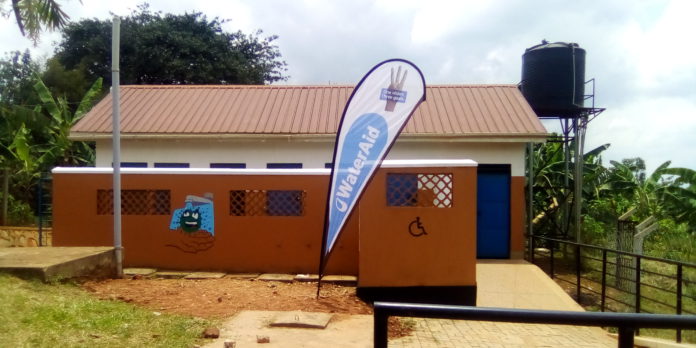
As part of harnessing access to clean and safe water in communities, Water Aid, has handed over sanitation facilities to Nansana Health center III ahead of the international water day celebrations.

The sanitation facilities which included a waterborne toilet, drinking water and water harvesting tank were received by the mayor of Nansana Municipality Mrs Regina Bakitte and the members of WASH Forum in parliament. A 14 stance waterborne toilet has been put up, which caters for persons with disabilities. It is designed with a foot pedal flush.

The facilities are aimed at helping mothers who faced a challenge of water scarcity during and after the delivery of babies, people with disability and other patients who visit the health facility for medical care.

 “The organisation brings together people in health and education and puts taps and toilets at the heart of hospitals and schools. To make an even bigger impact, they work with citizens, particularly women and girls, and build their abilities to hold service providers accountable.”

Speaking at the health facility, the Country director of Wateraid Jane Sembuche Mselle said for 30 years, water aid partnered with Ugandan local community organisations, helping them take ownership of sustainable projects that meet their needs and put them in control of their own futures.

She said the organisation is working with the Ugandan Government towards the achievement of their ambitious goal of reaching everyone with clean water by 2040.

Kumi Municipality MP Silas Aogon who also represented the members of WASH forum said applauded Water Aid for setting up sanitation facilities and relieving some of the burden off government’s should and vowed to spearhead the campaign for revisiting policies to cut down costs of water.

Mayor Bakitte implored her fellow leaders to ensure that resources are availed in the municipality budget to ensure the maintenance of the facility.

“The community needs continuous sensitization on proper usage of the WASH facility to maintain its purpose,” said the In Charge at Nabweru Health Center III Mwanja Hussein.

He said 90-130 deliveries happen at the Health Center each month yet the facility lacked a bathroom for the mothers in postnatal care.

Stories Continues after ad

TRIBUTE: Magufuli defied all odds to raise to the top

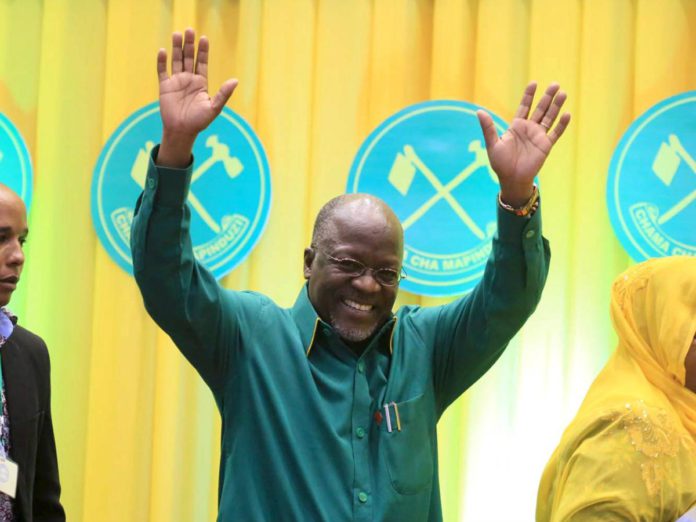
RIP President Magufuli


My tribute to HE Dr JPAM. Dr Magufuli passed away last night after terminal heart failure. It is well known he had hypertrophic cardiomyopathy and had an ICD in situ. Dr Magufuli had collapsed several times before.He was a strong Catholic and really a down to earth man.

Dr Magufuli defied all odds to raise from being a secondary school teacher with only a diploma in education (Mathematics and chemistry) to earn a doctorate in chemistry. He represents a true son of Africa who despite a very tough background works so hard to make it in life. Dr Magufuli would later go on to become an MP at the age of only 35. Despite leading for only five years, Dr Magufuli achieved the following for his country:

1. Started an ambitious and the longest SGR in Africa. This will be the first electric railway system in EAC.

2. Tanzania is building the largest Power dam in Africa at R.Rufiji. This dam will generate 2GW of electricity.

3. He has modernised the infrastructure in Dar es slam. The city is now the fasted growing city in Africa.

4. He negotiated an oil pipeline with Uganda that will earn his country billions in revenue for the next 30 years.

5. Nationalised the mining sector making all mines to be owned by the government.

6. Refurbished education institutions. Dar es Saalam University now has the largest library in East and Central Africa.

7. Eliminated any forms of corruption in Tanzania.

8. Promoted Kiswahili as the official language for all government business in Tz. You can argue a case at the Supreme Court in Kiswahili today.

9. He defied imperialists from forcing his country to support same sex marriages and protected his country’s resources. While this attracted backlash, this is what Tanzanians believe in.

10.Dr Magufuli only visited two countries while in office. Rwanda and Kenya. At all times, he was negotiating multi-billion projects. Not visiting!

11.He initiated the construction of a port at Lake Tanganyika and another near Dar. He also reconstructed the Dar es Salam port making it very competitive. The port will soon become Ugandans preferred access to the sea.

12. Constructed the largest children cancer centre at Muhimbili.

13. Started the construction of LPG mining. This project like all projects in TZ is 100 per cent owned by the government.

He did all these in five years. Magufuli was a true son of Africa. He was a nationalist and loved his country. RIP HE Dr John Amos Pombe Magufuli. To all my Tanzania  friends, poleni sana.

Dathan Byonanebye, A PanAfrinist.

Stories Continues after ad

Equator monument goes green as Irish mark St Patrick’s Day in Uganda

Equator

The Embassy of Ireland in Uganda, in partnership with Uganda Tourism Board (UTB) have illuminated the Equator Monument along Masaka road greenin celebration of Ireland’s national day, St Patrick’s Day, which takes place annually on 17th March.

This marks the seventh year that Uganda has participated in the Global Greening initiative, an event that sees over 300 famous landmarks and iconic sites across the world go green for 17th March. In the past, these have included the Great Wall of China, the Pyramids in Egypt, Table Mountain in South Africa and the Equator Monument in Uganda, The Jinja Nile Bridge among others.

The Equator monument was chosen as a unique symbol of a meeting point of two nations committed to promoting collaboration and tourism. The greening event is a boost to both Uganda and Ireland’s tourism as images of the activity are shared across the world.

Second Secretary Cormac Shine shared “We are very excited to be partnering with UTB once again on the Global Greening and as well to green the Equator for the second time. “The Equator is one of Uganda’s iconic monuments and tourism landmarks and it’s an honor and privilege to shed a light on this as our sign of continued commitment towards supporting tourism in Uganda.”

Lilly Ajarova, UTB Chief Executive Officer welcomed the partnership with the Embassy of Ireland, noting “Uganda’s participation in this Irish greening initiative is part of our long working relationship with the Embassy of Ireland. The greening initiative has supported us to showcase our unique tourism attractions to the whole world. We are delighted that the Equator will once again take center stage in this greening initiative.” She added, “We wish the Irish a great St. Patrick’s Day.”

The eagerness of cities and countries worldwide to take part in the ‘Global Greening’ initiative underlines the strength of the deep connection that people all over the world feel to Ireland. More than 70 million people around the world claim links to the island of Ireland and St Patrick’s Day is a truly unique opportunity to connect these people, and others worldwide, with Irish culture and heritage.

Stories Continues after ad

Housing Finance Bank, Enwealth Financial Services urge people to acquire mortgage through retirement benefits schemes

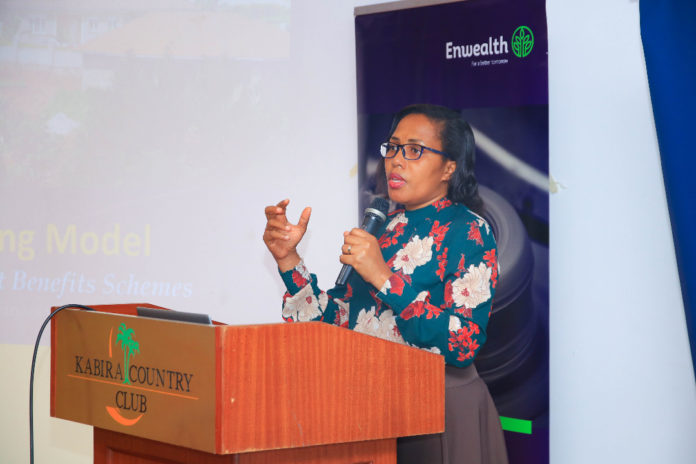
Housing Finance Bank Executive Director Ms. Peace Kabunga

Housing Finance Bank and Enwealth Financial Services have called on people in the formal sector to acquire Mortgage through Retirement Benefits Schemes.

The clarion call was made during two days training which covered a number of topics that included the mortgages housing model, selecting a mortgage provider and many other key topics to assist Ugandans in learning about and taking the necessary steps to own property through mortgage financing.

“Financiers are an important part of the housing value chain.” These were remarks made by Housing Finance Bank Executive Director Ms. Peace Kabunga, during a training on mortgages held at Kabira Country Club in partnership with Enwealth Financial Services.

According to the Uganda Bureau of Statistics, the current housing deficit in Uganda is estimated at 2.1 million units, with the deficit at its highest in Kampala. In order to curtail this deficit, Housing Finance Bank has put in place interventions including 100% financing to enable the purchase or completion of residential property, partnership with low-cost housing developers, flexible loan repayments and Incremental housing which enables construction in phases as well as use of untitled land. The Bank is also actively facilitating housing support services including loans for solar and water connection.

Speaking at the training, Ms. Kabunga quoted the Center for Affordable Housing Finance (CAHF) report that stated that Uganda is largely driven by private sector-led housing development, which is unable to meet the growing demand for affordable housing. There is thus a widening deficit of housing, estimated at 200 000 units a year.

She further noted that 61% of working class live in rented houses and that 90% of households live in a rented apartment for up to 3 years and then shift. Additionally, most Ugandans build in phases for an average of 4 years as it is difficult to get money in a lumpsum. Unfortunately, most retirement packages do not support completion of a house at retirement.

On selecting a mortgage provider, Kabunga advised Ugandans to always do their due diligence to ensure that the selected provider has experience in the mortgage business, the financial strength to suit their needs and can provide an all-inclusive cost for the mortgage.

Over the past few months, Housing Finance Bank has entered into partnerships with the strategic objective of reducing the housing deficit in Uganda. Innovations such as the partnership with Bulooka App allow for Ugandans to open accounts, look for properties to buy and even pre-apply for a mortgage without additional fees.

Stories Continues after ad

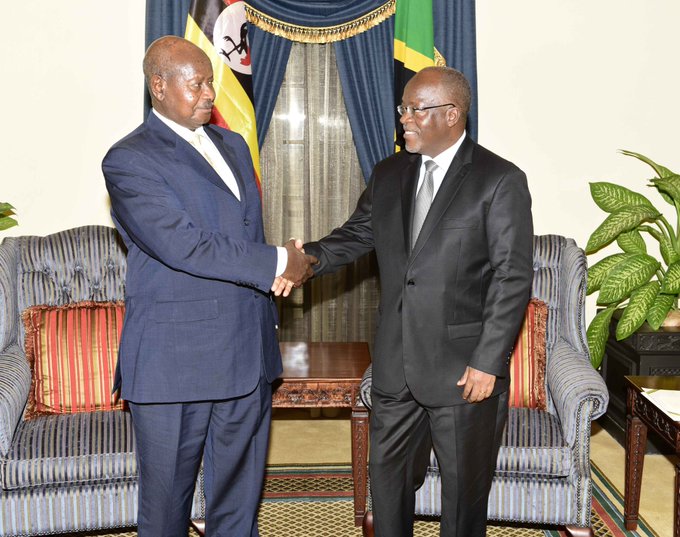
Museveni mourns death of Tanzania’s President John Magufuli

Museveni with Magufuli

President Yoweri Museveni has mourned the death of Tanzanian President John Pombe Magufuli.

Museveni in a tweet extended condolences to the people of Tanzania over the death of the 61-year-old president who succumbed to a heart attack.

He described Magufuli as a pragmatic leader who believed in and worked for the economic empowerment of East Africans.

“I have, with great sadness, learnt of the death of His Excellency John Pombe Magufuli. He was a pragmatic leader who believed in and worked for the economic empowerment of East Africans. We join Tanzania in mourning the passing of a great son of Africa. May his soul rest in peace,” Museveni tweeted.

Magufuli died of a heart attack at Mzena Hospital in Dar es Salaam which he had been treating for the last ten years. Tanzanian Vice President Samia Suluhu confirmed in a televised statement.

According to Tanzania’s constitution, the Vice President will now be sworn in as the new president and will serve the remainder of Magufuli’s five-year team which he began last year.

Stories Continues after ad

Education Ministry clears Victoria University to open for physical learning

The Victoria University main campus in Kampala

The Ministry of Education and Sports has cleared Victoria University to start holding physical classes with compliance to guidelines and measures put in place to fight the Covid-19 pandemic.

In a letter addressed to the Vice Chancellor Victoria University, from Dr. Jane Egau Okou on behalf of the Permanent secretary for Ministry of Education and Sports, the institution has been ordered to ensure adequacy of space for classes and strict implementation of SOPs in all areas by the students.

“It is well noted that the university has adequately addressed itself to the matter of compliance to guidelines and measures put in place to fight Covid-19 pandemic. The University therefore proposes opening for physical learning,” part of the letter reads.

“The purpose of this letter, is to emphasize that there should never be any crowding to endanger staff and students. As per the guidance of the HE President, you should ensure adequacy of space for class and strict implementation of SOPs in all areas around the institution by all students. If you have adequate space and can keep all students effectively timetabled in a staggered manner, you should seek the approval of your Governing Council and implement as guided.”

The University has been holding online teaching classes for all its students and will now move to the physical bit after being cleared.

Victoria University, is one of the best universities in Uganda, and stands out as a centre of academic excellence. It offers a fresh and intellectually stimulating environment that nurtures critical thinkers.

The university was opened in August 2010 and has the capacity, the facilities and determination to revitalize higher education in Uganda and in the region. It is committed to playing a leading role in bringing and developing high quality, student–centered learning opportunities based on standards of excellence that are unique, innovative and difficult to match.

It is centrally located in the heart of Kampala City and on the main public transportation routes coupled with ample parking space.

Stories Continues after ad