Stanbic Bank
Stanbic Bank
18.5 C
Kampala
Stanbic Bank
Stanbic Bank
Home Blog Page 876

Busoga United, Kyetume punished by FUFA for breach of Covid rules

Uganda Premier League logo

The Federation of Uganda Football Associations (FUFA) has punished both Busoga United and Kyetume for breach of the Covid-19 regulations.

Both Busoga United and Kyetume will host their next home games behind closed doors.

Authorities accuse the management of both clubs of allowing spectators into the stadium for their home games; Kyetume against MYDA on March 18, 2021 at Fufa Technical Centre, Njeru while Busoga United also did same at their home game with Kitara without written authorization from FUFA on the same day.

“Most of the fans were seen not wearing face masks,” reads in part circulars from the Competitions Disciplinary Panel.

Article 10 of the FUFA COVID-19 Regulations establishes that, “All matches shall be played without spectators,” and that “fans shall only be allowed with written permission from FUFA.”

Article 11 of the FUFA COVID-19 Regulations also emphasizes wearing of face masks at all times while in the stadium

With the above said to have been breached, the CDP noted that Busoga United and Kyetume had been previously cautioned, and that it was time now for a sterner decision.

The “CDP hereby SANCTIONS KYETUME FC and BUSOGA UNITED for violation of the FUFA COVID-19 regulations with one match under closed stadium for the next home game under the Uganda Premier League.

“Should you fail to heed to the sanction above, the CDP shall be constrained to take stringent disciplinary measures against you.”

That implies that Busoga United’s game against Onduparaka today will have no fans as well as Kyetume’s tie against Police on Saturday April at Njeru.

Stories Continues after ad

UNAIDS Board adopts new global AIDS strategy which paves the way to end AIDS by 2030

UNAIDS

The UNAIDS Programme Coordinating Board (PCB) has adopted by consensus a new Global AIDS Strategy 2021–2026 to get every country and every community on track to end AIDS as a public health threat by 2030. The strategy was adopted by the PCB during a special session, chaired by the Minister of Health of Namibia.

The Global AIDS Strategy 2021–2026, End Inequalities, End AIDS, uses an inequalities lens to close the gaps preventing progress to end AIDS and sets out bold new targets and polices to be reached by 2025 to propel new energy and commitment to ending AIDS. The UNAIDS Secretariat and its 11 Cosponsors worked to develop the new strategy, which received inputs from more than 10 000 stakeholders from 160 countries.

“This year marks 40 years since the first cases of AIDS were reported and 25 years since the establishment of UNAIDS. We are at a critical moment in our historic effort to end AIDS,” said Winnie Byanyima, Executive Director of UNAIDS. “Like HIV before it, COVID-19 has shown that inequality kills. COVID-19 has widened existing inequalities that block progress to ending AIDS. That’s why I’m proud that our new strategy places tackling inequalities at its heart. We must seize this moment to ensure health equality for all in order to beat COVID-19 and end AIDS.”

The strategy puts people at the centre and aims to unite all countries, communities and partners across and beyond the HIV response to take prioritized action to transform health and life outcomes for people living with and affected by HIV. The three strategic priorities are to: (1) maximize equitable and equal access to comprehensive people-centred HIV services; (2) break down legal and societal barriers to achieving HIV outcomes; and (3) fully resource and sustain HIV responses and integrate them into systems for health, social protection and humanitarian settings.

“The World Health Organization is pleased to endorse the global AIDS strategy for the next five years, with its ambitious vision for ending gender inequalities and realizing human rights, including the right to health, calling upon all partners and stakeholders in the HIV response in every country to transform unequal gender norms and end stigma and discrimination,” said Tedros Adhanom Ghebreyesus, Director-General of the World Health Organization and chair of the UNAIDS Committee of Cosponsoring Organizations. “For this strategy to be fully realized, WHO will continue to support all countries to strengthen health systems and especially primary health care, on the road towards universal health coverage.”

If the targets and commitments in the strategy are achieved, the number of people who newly acquire HIV will decrease from 1.7 million in 2019 to less than 370 000 by 2025 and the number of people dying from AIDS-related illnesses will decrease from 690 000 in 2019 to less than 250 000 in 2025. The goal of eliminating new HIV infections among children will see the number of new HIV infections drop from 150 000 in 2019 to less than 22 000 in 2025.

“I applaud the joint efforts in the global AIDS response. At this critical point in efforts to end AIDS as a global health threat by 2030, I call on all countries to support this strategy to get the global AIDS response back on track,” said Kalumbi Shangula, Minister of Health of Namibia and PCB Chair.

HIV prevention for key and priority populations receives unprecedented urgency and focus in the strategy, which calls on countries to utilize the full potential of HIV prevention tools, especially for adolescent girls and young women in sub-Saharan Africa, sex workers, people who inject drugs, gay men and other men who have sex with men, transgender people and people in prison settings.

“The Global Network of People Living with HIV (GNP+) fully supports the Global AIDS Strategy 2021–2026. The strategy’s life-saving framework for ending inequalities is fundamental to ending the AIDS epidemic and achieving the Sustainable Development Goals,” said Alexandra Volgina, Program Manager, GNP+.

The strategy is based on human rights, gender equality and dignity, free from stigma and discrimination for all people living with and affected by HIV, and is the result of extensive analysis of HIV data and an inclusive process of consultation with countries, communities and partners.

Achieving the goals and targets of the new strategy will require annual HIV investments in low- and middle-income countries to rise to a peak of US$ 29 billion by 2025. The total resource needs for lower-income- and lower-middle-income countries is around US$ 13.7 billion. Donor resources are mainly needed for low-income and lower-middle-income countries, while in upper-middle-income countries, which account for 53% of the investments needed, domestic resources are the predominant source of funding.

Stories Continues after ad

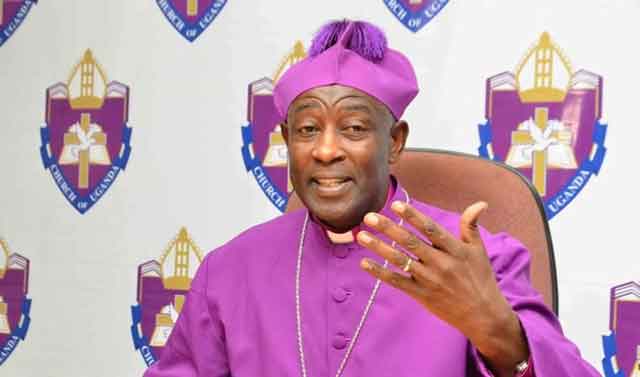
“Jesus is risen to be worshiped” – Archbishop Kaziimba’s Easter message

Archbishop stephen-Kaziimba

Easter 2021 message from The Most Rev. Dr. Stephen Samuel Kaziimba, Archbishop of the Church of Uganda


Praise God from whom all blessings flow!

I greet you all in the name of our crucified and risen Lord Jesus Christ!

Our theme for this Easter comes from Luke 24:52: “Jesus is risen to be worshiped.”

A year ago, the global Covid pandemic tried to lockdown the church. No one was celebrating Good Friday or Easter in church buildings. Covid tried to lockdown Jesus; it tried to bury him in a cave and seal it with a huge stone. But, the stone was rolled away. Death could not lockdown Jesus. And, Covid could not lockdown the Gospel. Jesus is risen and he can be worshiped not only in churches, but everywhere two or three are gathered together in his name.

I am grateful this Easter that some members of our churches are allowed to gather in their church buildings to celebrate Jesus’ resurrection.

I also encourage the government to lift the restrictions on children coming to church. Just as children are returning to school, the church is very ready to receive our children for only one hour per week in an organized way that upholds the SOPs. Our children need to be in church with their families.

I still encourage everyone to worship daily at home, even if you are going to church each Sunday. Family worship is essential in sustaining our faith and in raising children to know and love the Lord.

I am here today to declare to you that the greatest force on earth – death itself – could not hold Jesus down. He was killed and buried on Good Friday. But, on Easter morning, he was raised from the dead. He is alive and will never die again. Jesus is risen to be worshiped.

We extend our sincere sympathies to those who have lost loved ones since last Easter, whether from Covid or some other reason.  We especially extend our condolences to our Tanzanian friends and neighbours who just lost their beloved President and son of Africa. We stand with you in this time and are praying for you. In this season of the Resurrection, we remember the words of the beloved hymn, “Because He lives, we can face tomorrow.”

Many people are still struggling to find how to survive. In spite of that, just remember, “Because He lives, we can face tomorrow.”

We are grateful that some of the youth who mysteriously disappeared have been found and reunited with their families. We are also aware that there are still others who have not yet been found. We stand with you in your grief and confusion. But, take heart. God knows every hair on their head. And, “Because he lives, we can face tomorrow.”

We also appeal to the government to follow-through with your commitment to find those who have been abducted and return them to their families.

There are fathers, uncles, and cousin brothers in our families who have defiled their daughters and sisters and impregnated them. This is one of the most discouraging pieces of news I’ve heard in a long time. To those girls, who are now mothers, as a church, we want you to know that we love you because God loves you, and he loves your baby. Always remember, “Because he lives, you can face tomorrow.”

To the families of those perpetrators, we know you are trying to protect yourselves from the shame. Just know that the source of shame is always sin, not the one who exposes the sin. Shame does not go away by hiding it. The only way shame can go away is by confessing it and allowing God’s forgiveness to go deep into your family. The answer to that shame is Jesus and his resurrection. “Because he lives, you can face tomorrow.”

To those men and brothers who have violated such a taboo as defiling your own daughters or sisters, we urge you to turn to Jesus. Do as the thief on the other cross did – he confessed aloud, “We are being punished justly, for we are getting what our deeds deserve.” He then turned to Jesus on the cross and begged, “Jesus, remember me when you come into your Kingdom.”  There is still hope for you to change your life. Please seek out your local Pastor, confess your sins, and discover that “Because He lives, you can face tomorrow.”

Fathers and uncles and brothers are supposed to protect our daughters and sisters, not abuse them. This is the way of the Bible, but it is also our culture. This collapse of our families is why I have repeatedly called us to consider how to support the Boy Child. Local churches and communities need to take initiatives and not wait for some programme to reach your village.

We got an email recently from a woman in Gomba who was inspired by the Archbishop’s Leadership Summit and my call for the Conversion of the Head and a mindset change. She told us that she has started a local ministry called The Boy Child Walking the Talk Ministry. I love what she has done. I  encourage all local communities to reverse this dangerous trend. We must train the boy child to become respectful husbands and fathers so they will protect women and girls, not abuse them.

I want to briefly address the topic of the Covid vaccine. There are a lot of mixed messages circulating on social media about the safety of the vaccine. I took time to study the matter and consulted with leading physicians in our hospitals, who were very helpful to me.

As you know, I personally decided to be vaccinated and received the first dose of the vaccine on Monday. I was persuaded that the vaccine is safe and the benefits of protecting myself from a serious case of Covid are much better than the small possibility of side effects. I encourage each person, particularly those considered vulnerable, to also study the matter and make an informed decision for yourself.

The Church of Uganda is hosting this year’s Good Friday Way of the Cross. My colleagues, Archbishop Cyprian Lwanga and Metropolitan Lwanga, will join me for this annual joint observance of Jesus’ crucifixion and death. Because of SOPs, this year’s observance will be small. We invite all Christians to watch it live on UBC from 9 a.m. We also encourage all Christians to observe Good Friday in your local churches and with your families.

I don’t know what hopeless thing you are facing in your life, but Easter is the proof that there is always hope. Why is there always hope? “Because he lives, we can face tomorrow.”

Our theme for this year is “Life in its Fullness.” If Jesus has conquered death, then he can also conquer whatever it is that is holding you back from experiencing Life in its Fullness. If you want the same kind of breakthrough that Jesus had when he broke through the grave, then this season is the best time to surrender to Jesus and attach your life to his.

Finally, this year is the 60th anniversary of the Church of Uganda becoming an independent and self-governing Province. Sixty years ago, in 1961, Bishop Leslie Brown was enthroned as the first Archbishop of the independent Church of the Province of Uganda, Rwanda, Burundi, and Boga-Zaire (eastern Congo).

We shall be having several events throughout this year to mark 60 years as an independent, self-governing Province in the Anglican Communion. We invite you to celebrate with us! In spite of all the challenges we have been through, in this Easter season, we joyfully proclaim, “Because He lives, we can face tomorrow.”

We send Easter greetings to the President of Uganda, H.E. Yoweri Kaguta Museveni and his dear wife, Mama Janet, to all outgoing and incoming Members of Parliament and local governments, and to the members of the Judiciary.

I also greet all the Bishops and their wives, the Clergy, Lay Readers, and Christians of the Church of Uganda.

Finally, I send my sincere greetings, along with prayers for a blessed Holy Week and glorious Easter for our Roman Catholic, Orthodox and Pentecostal brethren, and to all those who have put their trust and faith in the crucified and risen Lord Jesus Christ.

This Easter, as families and as a country, may we all know this truth about Jesus – “Because he lives, we can face tomorrow.” Happy Easter!

Stories Continues after ad

Sudhir re-elected as Indian Association gets new leaders

Sudhir re-elected as Indian Association gets new leaders

The Indian Association Uganda has elected new members to its Board of Trustees.

Tycoon Sudhir Ruparelia who was first elected to serve on the board in 2019, has been re-elected in his position as the association elected seven members.

The New Board of Trustees Members elected are; Dr.sudhir Ruparelia, Munnangi Sita, Goutam Dash, Dharmesh Patel v, Ashwin Kumar Patel, Chacko Babu and Koduvayur Parasuraman.

The Indian Association Uganda has for more than 100 years led the Indian community in Uganda.

In 2003, there were an estimated 15,000 people of Asian descent living in Uganda compared to approximately 80,000 before they were expelled by Idi Amin in 1972.

Many returned to Uganda in the 1980s and 1990s and have once again gone on to dominate the country’s economy. Despite making up less than 1% of the population they are estimated to contribute up to greatly to the country’s tax revenues.

In 2017, members of the community asked to be officially recognised as a tribe.

A senior member of the community said the group was lobbying the Ugandan Government to follow the lead of neighbouring Kenya, which declared Indians an official tribe in 2016.

Stories Continues after ad

UCC to terminate broadcasting licenses for 30 radio stations

UCC building bugolobi

The Uganda Communications Commissions (UCC) has threatened to switch off 30 FM radio stations over failure to renew their broadcasting licences.

The Commission revised the licensing framework for the radio broadcasting sectors in Uganda and on the 2nd of June 2020, all existing radio broadcasters were advised to apply for new broadcasting licenses under the new framework by the 31st of July 2020.

In a statement from UCC, it said that the broadcasting licenses for the underlisted radio broadcasters expired on 30th June 2020 and despite several reminders, including the public notice issued on 31st December 2020, they have to date not submitted their applications for licenses in accordance with the Uganda Communications Act 2013.

The affected stations include; Home FM in Kabale, AA City Radio in Arua, Saviour FM in Amuria, Biiso FM in Buliisa, Marantha FM in Jinja, Crane FM in Bushenyi, Q FM in Lira, East Africa Radio in Kampala, Radio North in Lira, Gulu FM, Enduhba FM in Kamuli, Radio Kinkizi, Kitty FM in Kitgum, Kwania FM in Apac, Kyegegwa Community Radio, Kanungu FM, Radio Kitara, Mbabule FM in Sembabule, and Village Club California in Kiryandongo.

Others are; Elgon FM in Mbale, Choice FM in Gulu, Radio Kaaro in Kiruhura, Radio Revival in Mbarara, Radio Veros in Tororo, Sauti FM in Kayunga, Tembo FM in Kitgum, Radio Ssese in Kalangala, Palwak Radio in Pader, Unique FM in Kyenjojo and Challenge FM in Pallisa.

“The above-listed radio stations are accordingly reminded that unless they regularize their operations by clearing all outstanding compliance issues and submit complete applications for their respective radio frequencies by Wednesday the 14th of April 2021, their respective radio spectrum assignments shall automatically lapse and they shall be required to stop broadcasting.”

“The proprietors of the subject radio stations are further reminded that in accordance with sections 26 and 27 of the Uganda Communications Act 2013, any person who provides broadcasting services in Uganda without a license issued by the Commission commits an offence and is liable on conviction to a fine or imprisonment or both,” the statement reads.

UCC was established under section 4 of the Uganda Communications Act, 2013 (the Act) as the regulator in the development of a modern communications sector that includes telecommunications, broadcasting, radio communications, postal communications, data communication and infrastructure.

Stories Continues after ad

UTB to conduct a national grading and classification exercise for all tourism facilities in Uganda

UTB to conduct a national grading and classification exercise for all tourism facilities in Uganda

Uganda Tourism Board is set to conduct a grading and classification exercise for all Tourism Facilities in the Country in line with new East African Community (EAC) standards.

The exercise has kicked off with a two-day refresher course for the 12 EAC-certified hotel assessors at Protea Hotel, Entebbe. The refresher course is to improve their skills ahead of the sensitive exercise that starts in May 2021. Between now and then, UTB will embark on a massive stakeholder sensitization exercise.

Addressing the assessors and media at Protea Hotel, Mrs. Susan Muhwezi, the UTB Board Vice-Chair and Chairperson of Uganda Hotels Owners Association (UHOA), commended UTB for working with the private sector members, such as UHOA in the grading and classification exercise, that she said, was very vital to the recovery of Uganda’s tourism sector.

“Most tourists especially foreigners value the stars of the hotel they are booking and they always look forward to experiencing the standards of the indicated star of a particular hotel,” she said, urging the assessors to be diligent in their work and to follow the set procedures and standards.

Mrs Muhwezi pledged her support during this exercise as both the UTB Board Vice-Chair and the Chairperson of the Uganda Hotels Owners Association.

The East African Community, standards criteria for classification of hotels, restaurants and other tourist facilities were gazetted in 2009 to encourage and maintain quality standards in products and services being delivered to tourists in East Africa.The standards were institutionalized under the Tourism Regulations 2008.

The standards include:

Classification Criteria for Lodges

Classification criteria for Motels

Classification Criteria for Restaurants

Classification Criteria for Guesthouses

Classification Criteria for Tented Camps

Classification Criteria for Town hotels

Classification Criteria for Vacation Hotels

Classification Criteria for Villas, Cottages and serviced apartments

Since the release of the criteria, Uganda has been able to classify 121 accommodation facilities. The exercise was last conducted in 2017.

According to Ms. Lilly Ajarova, the Uganda Tourism Board (UTB) Chief Executive Officer, due to the Covid-19 pandemic and the resultant lockdown measures, the next round of assessment which was scheduled to commence from the end of FY 2019/20 was postponed to FY2020/21.

“The star-rating we give during the grading and classification has a life span of 2 years meaning that all facilities that were graded can no longer identify themselves with the star rating they were awarded with because it expired, and this means that currently Uganda does not have any graded facilities.Due to Covid-19, a number of facilities’ standards have gone down, so this exercise is important for safeguarding the standards in the sector and the competitiveness of Destination Uganda,” she said.

“UTB’S decision to conduct classification envisions transforming the tourism sector into “one of the top long-haul tourist destinations that offer a high-value, diverse and distinct visitor experience,” she added.

Stories Continues after ad

MPs demand for action against BoU officials implicated in the sale of seven defunct banks

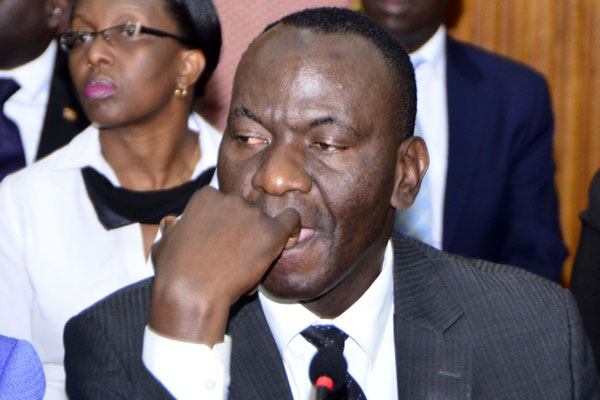
Mr. Sekabira

MPs have continued to demand for the action against Bank of Uganda (BoU) officials who were implicated in the sale and acquisition of seven defunct banks.

In 2018, MPs on parliamentary Committee on Commissions, Statutory Authorities and State Enterprises (COSASE) made the recommendation in their report following a recent probe of BoU on the closure of seven banks such as; Teefe Trust Bank, Greenland Bank, International Credit Bank, Cooperative Bank, National Bank of Commerce, Global Trust Bank Uganda and Crane Bank Limited. The banks were controversially closed between 1993 and October 2016.

The report recommended that the Bank of Uganda (BoU) Governor Emmanuel Tumusiime-Mutebile and his deputy Dr Louis Kasekende be sacked from the Central Bank’s Board of Directors if the institution is to run its operations efficiently in the future.

The MPs in their report say that much as Article 161 (4), provides that the Governor and deputy Governor shall be Chairperson and Vice Chairperson respectively, good governance principles would require that the position of the Chairperson and Vice Chairperson of the board is separated from the position of the Chief Executive Officer (Tumusiime-Mutebile) and his deputy (Kasekende).

“It is the recommendation of this committee (COSASE) therefore, that Article 161 (4) be reviewed to separate the offices of the leadership of the Board and top management of BoU,” the report partly says.

In tandem the office of leader of opposition made several recommendations which included the naming and individually holding bank accountable for the mess exhibited in the sale and acquisition banks.

Among the officials mentioned as not doing their work and they should have done, are the current Ben Sekabira, Director Financial Markets Development Coordination and Edward Katimbo Mugwanya, who was the statutory manager of CBL. Sekabira’s matter was forwarded to the Police CID investigation.

Ms Bagyenda was heavily involved in the controversial closure and sale of Crane Bank Limited (CBL) to its rival Dfcu Bank in January 2017 at Shs 200 billion paid in installments, the central bank, having spent Shs478 billions of taxpayers’ on CBL before it sold it to Dfcu Bank.

Others heavily mentioned for failure to adhere to the FIA procedures are Governor Emmanuel Mutebile and his deputy Dr. Louis Kasekende. Parliament however asked police other agencies to act against the bank officials.

To date, no BoU official has been arrested or prosecuted in courts of law. Munira Ali spokesperson of the Inspectorate of Government (IG) said that Inspectorate of Government (IG) is not investigating any case in relation to the Parliament recommendations on closure of commercial banks.

“We have not carried out any investigations about that. We have not done anything because that would have been Parliament to forward to us but they did not.”

Recently, police’s Directorate of Criminal Investigations (CID) spokesperson Charles Twine confirmed that the officials are under investigations however he didn’t delve into details.

Stories Continues after ad

Construction of Katosi Water Treatment Plant System at 95%

Katosi Water Treatment Plant System

The Government of Uganda through National Water and Sewerage corporation (NWSC) is putting final touches on a new water treatment plant in Katosi, Mukono district.

Works on the 240 million litres per day water production plant are near completion with 95 percent of project works completed. The new plant will serve over 7.5million people in Kampala, Wakiso and Mukono up to 2040.

According to NWSC Director Engineering Services, Eng Alex Gisagara, system tests for the new plant have commenced Testing and commissioning of different Plant electrical control units.

Eng Denis Taremwa, the Project Manager, said that works are on course with the first drop of water expected to reach the new Nsumba water reservoirs by the end of April 2021.

The Deputy Managing Director Technical Services Eng. Johnson Amayo said that the utility is moving away from the traditional treatment of water by sedimentation to the use of dissolved air floatation, in order to deal with the problem of increasing algae on Lake Victoria.

“Upon completion, the Katosi plant will be the first and biggest plant in East and Central Africa using the AquaDAF and AquaZur technologies,” he said.

The state of the art plant shall incorporate water recycling and sludge thickening to minimise plant losses and promote environmental conservation.

Stories Continues after ad

Uganda Cup 2021: Round of 32 draws held

Uganda cup trophy

The 2021 Stanbic Uganda Cup round of 32 draw has been held at FUFA House on Tuesday, 30th March 2021.

The draw was overseen by the FUFA Competitions Director Aisha Nalule who was flanked by the FUFA Deputy CEO-Services Humphrey Mandu Watenga and FUFA Communications Director Ahmed Hussein.

The sponsors were also ably represented by Sonia Karamagi (Director of Marketing and Communications) and Daniel Kayongo (Kansai Plascon Marketing).

The first and second legs of the round of 32 matches will be played between 5th and 12th April 2021.

The tournament is sponsored by Stanbic Bank as the headline sponsor, partnered by Kansai Plascon.

Last season’s Uganda Cup was ended prematurely at the quarter-final stage by the Covid-19 pandemic.

Complete Draws:

Terrazo and Tiles Vs Maroons – Kakyeka Stadium

Onduparaka Vs Luwero United – AbaBet Green Light Stadium, Arua

Vipers Vs Busoga United – St Mary’s Stadium, Kitende

Water Vs Wakiso Giants – Kavumba Recreational Stadium, Wakiso

Kitara Vs Kigezi Home Boyz – Kavumba Recreational Stadium, Wakiso

Blacks Power Vs BUL – Bukedea Town Council

KCCA Vs Nyamityobora – MTN Omondi Stadium

Gaddafi Vs Mbale Heroes – Kyabazinga Stadium, Bugembe – Jinja

Proline Vs MYDA – MTN Omondi Stadium, Lugogo

Kyetume Vs Express – FUFA Technical Center, Njeru

Kataka Vs Tooro United – Mbale Municipal Stadium

Paidha Black Angels Vs Soltilo Bright Stars – Bar Okoro Stadium, Zombo

URA Vs Mbarara City – Arena of Visions Stadium, Ndejje University

Police Vs Calvary – MTN Omondi Stadium, Lugogo

Arua Hill Vs UPDF – Barifa Stadium, Arua

SC Villa Vs Ndejje University – Army Military Stadium, Bombo

Stories Continues after ad

Makerere scraps 18 programmes as the University restructures

Makerere-University

Makerere University has phased out 18 undergraduate programmes following Council approval of restructuring the education institution.

In a letter issued by the Makerere University Vice Chancellor’s Office, the institution has announced that the affected programs are not to be advertised in the next academic year of 2021/2022.

The affected programs are; Bachelor of Library and Information Sciences, Bachelor of Archives and Records Management, Bachelor of Science in Construction Management, Bachelor of Community Psychology, Bachelor of Industrial and Organisational Psychology, Bachelor of Arts in Development Economics, Bachelor of Science in Telecommunication Engineering, Bachelor of Science in Computer Engineering.

Others are; Bachelor of Environmental Science, Bachelor of science in Meteoroly, Bachelor of Development studies, Bachelor of Adult and Community Education, Bachelor of Business Statistics, Bachelor of science in Population studies, Bachelor science in quantitative Economics, Bachelor of science in Wildlife Health and Management, Bachelor of science in Agricultural Land Use and Management and Bachelor of science in Horticulture.

According to the letter, all College Principals are expected to submit curricula for the re-structed programmes for consideration by Senate not later than 15th May 2021.

Stories Continues after ad