Stanbic Bank
Stanbic Bank
19.4 C
Kampala
Stanbic Bank
Stanbic Bank
Home Blog Page 883

Kenyatta launches digital platform for data-driven malaria responses on the continent

President Uhuru Kenyatta of the Republic of Kenya.

Chairman of the African Leaders Malaria Alliance President Uhuru Kenyatta, has revealed that progress has been made in responding to malaria amidst the #Covid-19 pandemic.

Since the launch of the Zero Malaria Starts with Me Campaign in 2018 by African Presidents, 19 countries have launched the initiative. The public-facing campaign calls for communities and leaders to take personal responsibility to end malaria.

“At the onset of the Covid-19 pandemic WHO predicted a doubling of malaria deaths if severe disruptions to insecticide-treated net campaigns and access to antimalarial medicines were experienced. While we are now experiencing the second wave of the pandemic, I am delighted to say that through the strongest in-country leadership, this predicted doubling in malaria deaths was averted,” Kenyatta said.

The Covid-19 pandemic has severely impacted access to essential malaria services. However, African countries averted malaria by ensuring that around 160 million insecticide-treated nets were distributed door to door, indoor residual spraying took place as planned and more children than ever before were reached with preventive antimalarial medicines in areas of highly seasonal transmission whilst following Covid-19 protocols.

“While the targets in the Catalytic Framework to End AIDS, TB and Eliminate Malaria in Africa by 2030 are bold and ambitious, I am encouraged by the significant progress that is being made. We should continue the big push for new funding initiatives with a focus on domestic financing such as End Malaria Funds and End Malaria Councils, increased roles for the private sector, invest in new innovations and tools and above all maintain the political commitment, shared responsibility and global solidarity” said Mrs. Amira El Fadil, the Commissioner for Social Affairs at the African Union Commission.

During the meeting President Kenyatta launched the ALMA Youth Army Strategy that puts young people at the centre of the malaria fight in line with continental commitments including the African Youth Charter and the AU Roadmap on Harnessing the Demographic Dividend Through Investments in Youth. The instruments give priority to youth development and empowerment.

During the press conference, the RBM Partnership to End Malaria launched the Draw the line Against Malaria campaign, which seeks to tap into African Youth creative talent and deploys novel digital ways of doing business to end malaria that will significantly contribute to the vision set out in the ALMA Youth Strategy and the priorities that young people put together during the Africa malaria youth consultative process.

“Countries held the line against malaria in 2020 this year we must draw the line for good. The Draw the Line Against Malaria campaign will create a unifying, ground-breaking and inspiring global platform to capture youth and public imagination, rally communities and leaders behind the crucial fight to rid our continent of this deadly yet preventable disease,” said Dr. Abdourahmane Diallo, CEO of the RBM Partnership to End Malaria.

To enhance data-driven decision making and drive action, His Excellency President Kenyatta is launching today the ALMA Scorecard Hub, a new digital platform for scorecard management and accountability tools.

The launch of the ALMA Scorecard Hub is a critical step in African countries’ efforts to drive accountability and actions to achieve the bold targets set to eliminate malaria by 2030, end Neglected Tropical Diseases and improve maternal and child health on the continent.

The platform will allow countries to share their scorecards and best practices about the use of the tool. It will also offer a digital training platform with online courses and a repository of information, toolkits and global best practices on scorecard and accountability tools. Used in over 40 countries in Africa, the scorecard management tools track progress of key health indicators, ensuring that policy-makers and citizens have access to critical health data and those health workers, local governments and communities to be well informed to act.

Beating malaria remains a major public health challenge in Africa. During the #Covid-19 pandemic African governments mounted effective responses that ensured access to malaria services which averted many thousands of deaths on the continent. The Covid-19 pandemic has shown the importance of investing in and strengthening health systems and the need to work together to find solutions. The response to Covid-19 has set a challenge, to apply the same vigour, in the fight against malaria, for Africa to accelerate the elimination of malaria by 2030.

Stories Continues after ad
Gov’t rolls out academic program for non-candidate classes

Pupils of Kampala Parents who scored aggregate 4 celebrate their results at school.

The Ministry of Education has released an academic program for all students who are scheduled to resume classes.

Last week, President Yoweri Museveni directed the reopening of schools to non-candidate students following his directive for closure in March last year. The closure according to Museveni peddled at curbing the spread of the deadly #Covid-19 pandemic.

The schools will open in a staggered manner that will ensure compliance with #Covid-19 Standard operating procedure (SOP) of maintaining social distance, washing hands or sanitizing, and wearing of face masks.

Apart from candidates who will sit for Uganda National Examinations Board (UNEB), Primary Leaving Examinations (PLE) and there will be no exams for the rest of the classes. Progression for other classes will be evaluated on attendance and a cumulative assessment.

According to the program, there will be no more nursery or kindergarten schools until the Covid-19 pandemic is over. Learners in this category cannot observe SOPs and are prone to respiratory infections and because many of the pre-primary institutions are day-based, there is a lot of interaction between learners, and parents, teachers which would increase the risk of contracting the virus. Children will now start school in Primary one at five years of age.

Primary six, S.3 and S.5 will study for 14 weeks starting from 1st march 2021 and ending on 21st May 2021. P.4. and P.5 will report back on 6th April after Primary Leaving Examinations (PLE) till 4th June 2021.

The lower primary, P.1 to P.3 will report back on 7th June 2021 till July 24th 2021. Senior Two will report back on 31st May 2021 and break off on July 24th.

Students in teaching Vocational Training and Teaching (TVET) Institute, Primary Teachers College (PTC) and National Teachers College (NTC) will report back on 1st March. Universities and other Tertiary Institutions shall open in phased manner starting from 1st March.

Stories Continues after ad

Vision Group registers over Shs6b in losses for 2020/21 half year earnings

Robert Kabushenga

The outgoing Chief Executive Officer (CEO) of the New Vision Printing and Publishing Company Limited Robert Kabushenga has revealed that the company will register losses in 2020/21 half year earnings.

The company has for the past two years been making losses. The shortfalls have always been to alluded to an increase in expenses at the government printing company.

In 2019, the Company registered a turnover of Shs90.2 billion in 2019 compared to Shs90.6 billion in 2018 and Advertising revenue grew by 2.8 per cent. The Company recorded a gross profit of Shs21.8 billion in 2019 compared to Shs22.8 billion in 2018 while profit before taxation was Shs3.9 billion in 2019 compared to Shs4.6 billion in 2018.

Kabushenga pegs 2020 half year poor performance to the increase in the bad debts provision for business in prior years and required to be provided for in the current period under the international financial reporting standard 9 (IFRS9) expected credit loss model.

“The board of directors of New Vision Printing and Publishing Company limited wishes to announce to stakeholders, potential investors and the general public that based on the preliminary assessment of the company’s performance , the results of the company’s earnings of the half year will be a loss position,” he said.

The company according to Wall Street Market is expected to register a loss of Shs2.33 billion in Capital Expenditures, and Shs4.58 billion in Free Cash Flow.

The company has Shs12.25 billion Cash and Short-Term Investment, Shs5.72 billion Total Debt, Shs29.83 billion Total Liabilities, Shs73.36 billion Total shareholder’s Equity and 958.91 Book Value per Share.

“The board management is committed to ensuring improved financial performance of the company. This statement is issued pursuant to rule 40 (1) of use listing rules 2003,” he said.

Stories Continues after ad

Minister Kamya, Land Commission fight over compensation cash

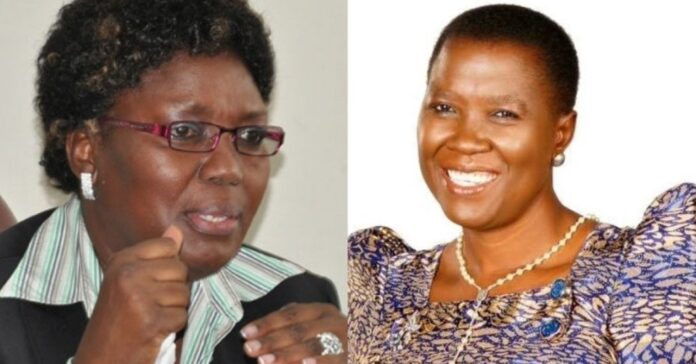
IGG Beti Kamya

Parliament deferred the approval of a supplementary budget of Shs292 billion for the financial year 2020/21 after it emerged that a request of Shs12 billion for compensation of individuals affected by land evictions in Bunyoro was made without the knowledge of the Uganda Land Commission.

This was noted by Hon. Gaffa Mbwatekemwa of Kasambya County who informed the Speaker of Parliament, Rebecca Kadaga that he had evidence that the Land Commission was not consulted before the supplementary request was made.

“I want the Minister (Hon Beti Kamya) to tell the House who initiates a supplementary. Within few minutes, I will bring a document from the Uganda Land Commission. They are protesting this supplementary because they are not aware of the people to be compensated in Bunyoro,” he said.

The letter from the Chairperson of Uganda Land Commission, Byenkya Beatrice Nyakaisiki which raised concern about the compensations was read by Mukono South MP, Hon. Johnson Muyanja Senyonga.

“I am dismayed and displeased that whilst watching Parliament on UBC this afternoon, I heard a list of people to be paid out as submitted by the Minister of Lands, Housing and Urban Development,” reads part of the letter.

“The commission is not privy to this list and wants the Minister to be brought to order for having usurped its powers knowingly. The Under Secretary who is two weeks old, accompanied the Minister as courtesy from the User Agency of these monies. To hood-wick parliament that we are privy to this list is deplorable.”

“Therefore I am kindly imploring your good office to un-tag the money given to Uganda Land Commssion so that it van expeditiously carry out its mandated responsibility. I await your positive response with much anxiety and gratitude,” the letter further read.

Hon Beti Kamya, the Minister of Lands, Housing and Urban Development was tasked to explain the matter and justify the need for the supplementary budget as MPs advised her to discuss the budget and reconcile with the Lands Commission.

“The Minister of Lands wrote to the Minister of Finance and brought all these matters to him and asked that funds should be provided for compensation of individuals in Bunyoro,” Kamya said adding that, “the letter was copied to the Uganda Land Commission three months ago and the Commission acting not in good faith did not raise the matter. The letter which has just been read is not even copied to the Minister of Finance and Lands.”

This prompted Speaker Kadaga to suspend the approval of the supplementary budget in its entirety.

“I have also received a letter and we need to ensure that we are moving together on this supplementary. I want to advise that we stand over the matter and allow the Budget Committee, the minister and all the stakeholders to review this matter,” she ruled.

Stories Continues after ad

Mps call for diplomatic pressure on Kenya over ‘milk war’

The Kenyan authorities stopped Lato Milk claiming the product is substandard

A section of MPs are calling for sanctions on Kenyan goods and services to retaliate the current blockade on Ugandan dairy products by Nairobi.

The Kenyan authorities stopped Lato Milk claiming the product is substandard, among troves of dairy traders.

In a statement to MPs, Trade and Industry Minister, Hon Amelia Kyambadde suggested government has exhausted diplomatic avenues to resolve the escalating trade war to no avail.

“We have also summoned the Kenyan High Commissioner to Uganda and issued a diplomatic protest note but we have not got any response yet,” said Kyambadde.

But a joint Committee investigated the claims and found them to be untrue, with the Kenyan side declining to sign the report on findings.

The Minister of State for East African Affairs, Hon Julius Maganda said the quality talk is a ruse by Nairobi to frustrate the farmers because Ugandan farmers’ milk is cheaper than Kenya’s.

This discrepancy in pricing, said Maganda comes from the near total zero grazing in Kenya which is costly, as against Ugandan free-range practice that yields higher quality yet cheaper dairy products.

“They are using some avenues of failing us; that is the truth; but we don’t only sell milk to Kenya alone, we have identified other markets like the United States,” he said.

A last ditch diplomatic effort to resolve the crisis, said Hon Maganda, will take place on the 25th and 27th of February after which the East African Court of Justice will have to adjudicate the dispute.

Bugiri Municipality MP, Hon Asuman Basalirwa said government should consider this as a dispute and invoke the provisions of the East African Treaty by suing the Kenyan government in an effort to protect its farmers.

Speaker Rebecca Kadaga criticised government for being slow on reciprocating Kenya’s recalcitrant behavior, saying private citizens should explore the avenue of suing Kenyan authorities as provided in the treaty.

“I am concerned about the inability to exercise the principle of reciprocity; the Ugandan government has been slow on acting yet farmers are suffering and there is nothing they are doing about their suffering,” she said.

“I want to encourage the people of Uganda to sue the government of Kenya; under the treaty, it is possible for citizens to take the countries to court,” she added.

The World Integrated Trade Solution, a subsidiary of the World Bank, last year reported Uganda’s export to Kenya to have surpassed the imports at $580 million as against $515.8 million stoking the trade tension.

President Museveni has been reluctant to escalate the trade war and has on various occasions rooted for a more integrated East Africa, terming the trade tensions as ‘non-ideological.’

Tanzania, Rwanda and Kenya have, however, rooted for market nationalism and have been skeptical of the fast-paced diplomatic efforts to political integration.

Stories Continues after ad

Plans to impose excise tax on agency banking and ATM withdrawals underway

agent banking

The government is in plans to impose excise tax on agency banking and ATM withdrawals in the commercial banks.

According to a letter dated February 9, 2021 by Patrick Ocailip, the deputy secretary to the treasury in the Ministry of Finance written to the Governor Bank of Uganda, they seek an opinion and data not later than Friday, February, 12, 2021 on the matter.

The proposed tax was reached at last week in a budget consultative meeting between the Ministry of Finance, Uganda Revenue Authority (URA), Uganda Communications Commission (UCC), Telecom Operators and Bank of Uganda (BoU).

“Following our budget consultative meeting held on February 5th, 2021, at this ministry attended by officials from Uganda Communications Commission, Ugandan Revenue Authority, Telecom Operators and Bank of Uganda, it was proposed that we explore taxation of cash withdrawals, from commercial banks,” reads part of the letter.

Currently, mobile money withdrawals are subject to a 0.5 percent excise duty while agency banking and ATM withdrawals in commercial banks are not subject to the same tax.

“We, therefore, wish to seek your opinion on the proposal and also request you to avail us with data on all categories of withdrawals for our further review and determination. We require tis date for the past three financial years (starting from FY 2017/18).”

According to the government, this will encourage cashless transactions and promote e-commerce, improve tax compliance in addition to raising revenue.

Ugandans will have to pay yet another tax, this time on withdrawals from commercial banks if finally considered by the government.

Stories Continues after ad

DPP drops charges against EOC boss two weeks after changing her name

Sylvia Muwebwa

The Director of Public Prosecution (DPP) Jane Francis Abodo has dropped corruption charges against the Chairperson of Equal Opportunities Commission (EOC) Sylvia Muwebwa Ntambi.

In a letter to the anti-corruption court, Justice Abodo discontinued the charges against Mrs. Sylvia noting that her office lost interest in the matter.

The dropping of charges happened barely a month after the accused changed her name. According to a deed poll, she renounced and abandoned the use of the name Sylvia Ntambi as it appears on her national identification card and in the lieu assumed the name Sylvia Nabatanzi Muwebwa.

The charging of Sylvia Muwebwa Ntambi and nine others follows the lunging of complaints to President Yoweri Museveni calling for his intervention. According to a petition dated 22nd May 2019, the whistleblower accused her of causing financial loss of over Shs 200 million through termination of workers contracts and forcing workers to resign and replace them with her relatives and friends.

Since she took over the chairperson-ship of the commission, the whistleblower said Mrs Ntambi has unfairly dismissed over 11 staff, terminated over 10 staff contracts, and four contracts have not been renewed. In 2017/ 2018, the Auditor General advised the commission to employ people on permanent contracts however the chairperson declined and this has since led to financial losses.

They accused her of directing the collection of Shs100 million which they had approved in the commission meeting and the said money was to be used as kickbacks for individuals who worked hard for passing of the commission budget in 2018/19.

“It was paid and collected through individual bank accounts. It was collected and handed over to her at Kampala International University (KIU), Kansanga on 7th March 2019,” the whistleblower said. Despite being chairperson of the commission, Mrs Ntambi is averred to have forced her secretaries to pay her as consultant in production of various reports.

“The money was paid to Prof. Sunday Nicholas Olwor (Shs 14M), Kamahoro Enid (Shs 13M), Nassanga Sarah (Shs 5M), Atukunda Susan (Shs 6M), Mugisha James (Shs 12M), Kwesiga Ronnie (Shs 12M), Kwesiga Ronnie (Shs 10.55M), Sarah Nassanga (Shs 9M), Kwihangana Manasseh(Shs 13M), Prof. Sunday Nicholas Olwor (Shs 9.8M), Kwesiga Ronnie (Shs 9M) and sylvia Muwebwa Ntambi (Shs 13M),” payment slips indicate.

She is also accused of irregular approval of allowances of various members of the commission, using commission vehicle for doing private businesses, irregular recruitment of staff without embracing commission procedures. It is said that she illegally recruited Betty Namazzi, Juma Waira and Petau Isabirye Babirye.

Stories Continues after ad

Gov’t fully restores internet and social media services

Minister of State for Sports, Peter Ogwang

Government has finally restored internet and social media services a month after shut down. The restoration of the internet has been confirmed by the state minister for Information and Communication Technology (ICT) Peter Ogwang.

“Internet and Social media services have been fully restored. We apologize for the inconveniences caused, but it was for the security of our country. Let’s be constructive, NOT destructive consumers/users of social media,” the minister said.

On February 13, 2020, President Yoweri Museveni ordered for shut down of all social media platforms a few days after Google had erased facebook accounts and pages of his campaign propagandists and barely two days to the general elections.

Facebook’s head of communication for sub-Saharan Africa, Kezia Anim-Addo, said; “We removed a network of accounts and pages in Uganda that engaged in CIB (Coordinated Inauthentic Behaviour) to target public debate ahead of the election.”

After Museveni’s directives, the Uganda Communications Commission (UCC) petitioned Telecom Service providers ordering them to immediately suspend access and use, direct or otherwise of all social media platforms and online messaging applications over the network until further notice.

Since then, Ugandans have been accessing social media platforms through Virtual Private Networks (VPNs).

Stories Continues after ad

Standard Chartered Bank, Gloat partner to create a virtual marketplace for workforce

Standard Chartered logo

Standard Chartered Bank and Gloat have announced a multi-year strategic partnership to enhance the Bank’s ability to use the best of their colleagues’ skills and experience for the good of its clients.

The partnership marks a significant milestone in its ambition to create an internal virtual marketplace for colleagues that offers different types of career and development opportunities across the organisation and where its leaders can identify, develop, and deploy talent quickly. This in turn creates possibilities for upskilling and reskilling; a new way of developing people, and ultimately unlocking potential, capacity and increasing productivity.

Standard Chartered’s implementation of Gloat’s solution is another step in its journey to drive innovation and build an inclusive culture. The partnership provides its workforce with an innovative AI-driven platform that matches employees with a range of career opportunities, many of which are linked to skills needed for the future of banking.

Following an experiment of 12,000 users in SCB India, including Global Business Services in Bangalore, 4000 hours of productivity has been unlocked, and the pilot locations have seen the biggest year-on-year increase in satisfaction with career and development opportunities in the Bank’s annual employee survey.

2021 will see a phased roll-out across the Bank, with the plan to make it available to all employees by 2022.

Tanuj Kapilashrami, Group Head, Human Resources, commented: “This partnership is a further step in building an organisation that is future fit. We have listened to what our colleagues are telling us around career progression, development opportunities and employee experience and have brought in a solution that offers upskilling and reskilling opportunities, while for the Bank, making it easier to deploy the right people to the right opportunities.”

“In a time when engaging, developing, and retaining existing talent is more important than ever to the long-term success of a business, we’re honoured to be working with Standard Chartered Bank to bring their forward-thinking vision for an agile virtual marketplace to life,” said Ben Ruveni, CEO of Gloat. “This is a first-of-its-kind initiative in the financial services industry, and we are excited to scale the impact we’re already seeing to the rest of the Bank’s colleagues and, in turn, the clients they serve.”

Gloat’s platform is the first of its kind, and the leading technology powering internal talent marketplaces at a global scale within Fortune 500 companies. Its solution has already been implemented and fully adopted by organisations with 100,000+ users, spread across more than 120 countries.

The Gloat partnership follows Standard Chartered’s November 2020 announcement on flexible working; implementing a hybrid approach, combining virtual and office-based working with greater flexibility in working patterns and locations. Both are steps towards making the Bank as flexible, dynamic and attractive to current and future employees as possible.

Stories Continues after ad

Gov’t releases Shs 6.27bn to cater for all retired judicial officers

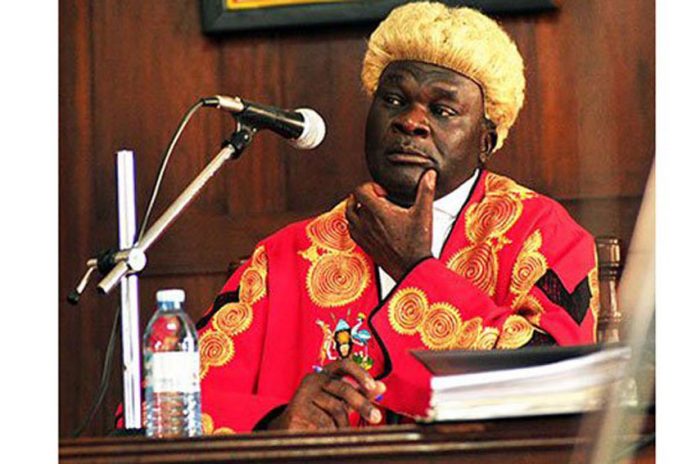
Retired Chief Justice, Bart Magunda Katureebe.

Government has released Shs 6.27 billion to cater for monthly benefits of all retired judicial officers. The revelation was made by the Permanent Secretary to the Judiciary, Mr. Pius Bigirimana.

The released fund money will cater for 224 retired judicial officers on the judiciary retired officers payroll. The retired officers include; justices and judges, registrars and magistrates, Chief Justices, Deputy Chief Justices and Principal Judges.

“This is to inform all beneficiaries that I received approval to pay, on a monthly-basis, retirement benefits from January to June 2021. Accordingly, retirement benefits for January have been paid. The process to pay those of February shall be paid before 15th February,” he said.

According to the Administration of the Judiciary Act (AJA) 2020, retired Chief Justices, Deputy Chief Justices are paid a monthly retirement benefit equivalent to that of the sitting Chief Justices, Deputy Chief Justices.

Other officials from Supreme Court down to the grade two magistrates court including principal judge are paid a monthly benefit of 80% of the salary payable to their sitting counterparts.

Government also pays each retired officers, a one off lump sum retirement benefit equivalent to 2.4 percent of his annually salary multiply by five and the years of services and where the judicial dies, his or her family is one off lump sum retirement benefit plus the months pension for 15 years.

Stories Continues after ad