Stanbic Bank
Stanbic Bank
17.8 C
Kampala
Stanbic Bank
Stanbic Bank
Home Blog Page 902

Kiira Motors to produce 1,000 buses in Uganda by end of 2021

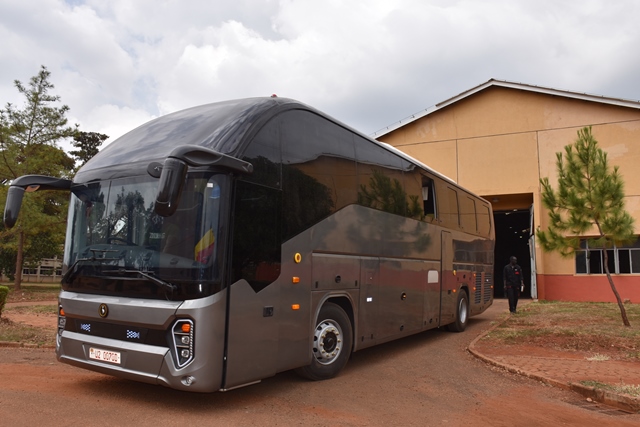
Bus made by Kiira Motors

Kiira Motors Corporation (KMC) is working with strategic partners to produce 1,030 buses by the end of 2021 to modernize public transport in the urban centers in Uganda and beyond.

This builds on the successful development of the Kayoola Electric and Diesel Buses built through technology transfer and utilizing the facilities and resources at the UPDF National Enterprise Corporation Luweero Industries in Nakasongola.

The buses 50 of which will be electric, are part of 30,000 Buses the company and its partners are set to produce for the regional market, with 65% parts and components localized by 2030.

“Kiira Motors and the partners plan to produce and deploy 1,030 Buses by end of 2021, 50 of which will be electric. The initiative is aimed at modernizing public transport in the urban centers in Uganda and beyond, while building the indigenous motor vehicle industry through technology transfer and localization of auto parts manufacturing,” a statement issued by Kiira Motors reads in part.

“Kiira Motors Corporation is working with reputable strategic partners to produce 30,000 Buses for the regional market, with 65 percent parts and components localized by 2030,” the statement adds.

The initiative is aimed at modernizing public transport in the urban centers in Uganda and beyond while building the indigenous motor vehicle industry through technology transfer and localization of auto parts manufacturing.

Kampala and other Cities in the region have for decades faced challenges of road and traffic congestion, pollution, unemployment and under employment resulting into low fuel economy, poor air quality, low labour productivity, and compromised road safety.

“This calls for the establishment of a robust integrated and inclusive mass transport system based on environmentally friendly transport solutions. Coupled with localization of capabilities to develop, make and sell vehicles and components, this provides an unprecedented opportunity for transforming the economy drawing on the demographic dividend of Uganda.”

According to Kiira Motors, the establishment of Mass Transit Bus Systems supported by the domestic manufacturing of buses and components for the regional market is consistent with Uganda’s aspirations and pathways to Vision 2040 outlined in the National Development Plan III and the NRM Manifesto 2021 – 2026.

The developments are projected to create over 30,000 jobs directly, 100,000 jobs indirectly, and catalyze investments by Micro Small and Medium Enterprise in the manufacture of motor vehicle parts. The strategic and long-term focus on electric buses for the cities further demonstrates Uganda’s commitment to enhance environmental stewardship.

Stories Continues after ad

Study: Culture and Heritage, unutilized in Uganda’s tourism

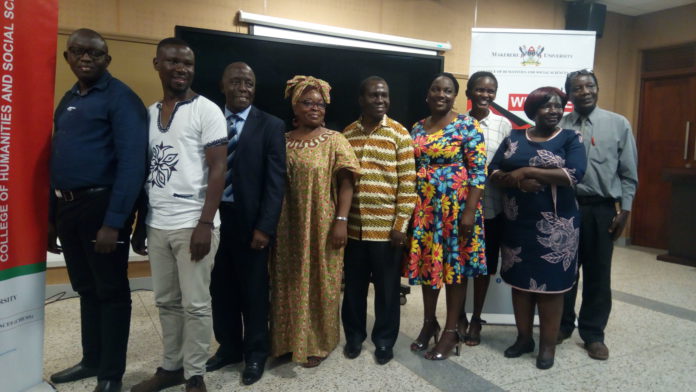
Researchers posing for a group photo in Central Teaching Facility one-CTF1., Makerere University.

Makerere University study has revealed that the tourism sector has not yet utilized various cultures and heritages in Uganda.

In a study titled Many People, Many Cultures, and Many Heritages: Going Beyond Nature-based Tourism in Uganda, Uganda’s tourism can be promoted through utilizing different cultures and heritages that Uganda is gifted with.

The study involved documenting the role and relevance of culture-based tourism as opposed to promoting nature based tourism.

The Principal Investigator of the study, Dr. William Wagaba, said revisiting Uganda’s tourism culture and heritage would not only benefit the tourists but as well help the domestic market because there is a lot which is un ventured into.

“Our emphasis was on documenting monuments, culture sites, neglected places, especially places that we take for granted and also comprehending how many they can add to the package of promoting tourism in this country,” says Wagaba.

Wagaba who is also the Head of Department of European and Oriental Languages in the school of Languages, Literature and Communication at Makerere University, said that he is optimistic that the approach will boost Uganda’s tourism even more.

The researchers looked at different places and stories around those places. Places included Uganda, Martyrs Museum, Namugongo, Bwaise a city suburb, Kabaka Anjagala road, Bulange building, River Nile, Sezibwa Falls, Bujagali Caves, Mapera tree in Kisubi,Nyakahondokoro and Gault tombs in Ibanda, Nakayima tree in Mubende, among others.

Dr. Enoch Sebuyungo a co-investigator and a lecturer in the department of European and Oriental Languages explained the finding about Martyrs Museum, Namugongo as one of the places they researched on,and said that the name Namugongo dates back in 1760s when Buganda Kingdom was thriving.

“This was a place of execution where King’s subjects in Buganda were killed for the acts of disobedience and the King was not supposed to see the bodies, so this place was located far from his Palace,” Dr. Sebuyungo highlights.

Namugongo was designed in 1760 during the reign of Kabaka Kyabagu, the 25th Kabaka of Buganda, and the culprits used to be dragged on their backs up to the place where their bodies would be predisposed off.

Then, the people would ask in Luganda that Omuntu on azze atya?, translated as, How did this person come? And Kabaka’s men would respond that azze namugongo-he came by his or her back.

Therefore, the reference was made to that dragging and peeling of the back and the phrase” azze namugongo” was shortened to “Namugongo” which became the name of the place and later on, the Christian martyrs were executed there. This is an interesting story about this place which is hardly stated even when the tourists visit the place.

Similarly, Associate Professor Edith Natukunda also from the Department of European and Oriental Languages says this is an important part of tourism that should be promoted. She says the project will diversify the tourism sector as well.

Meanwhile, Dr. Josephine Ahikire, the Principal of college of Humanities and Social Sciences remarked that there has been a discussion on the role of culture which is an intangible aspect of human life and she thinks the project will bring on board the questions of culture and stories around decolonization times.

Dr Stevens Aguto Odongo from the Department of Sociology and Anthropology Makerere University says this research aimed at broadening what people are already aware of.  He adds, “If a tourist is introduced to cultural places, they will promote our cultures”.

Stories Continues after ad

Bobi Wine hits at Museveni as he releases list of over 240 abducted NUP supporters

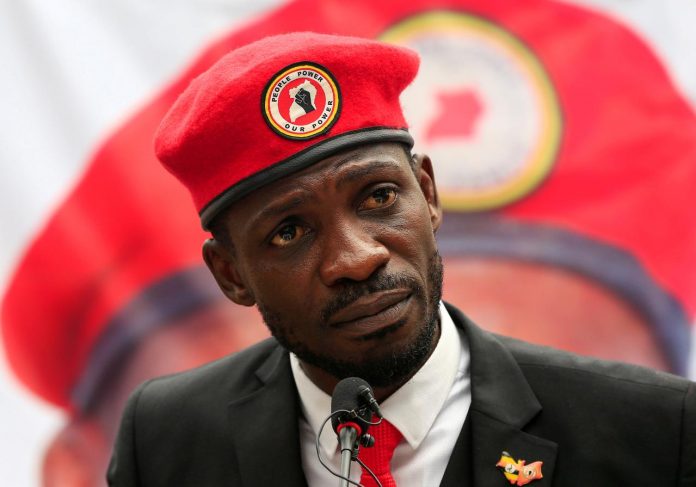
Robert Kyagulanyi aka Bobi Wine hails from Buganda.

Former National Unity Platform Presidential (NUP) presidential candidate Robert Kyagulanyi Sentamu aka Bobi Wine has released a list of abducted and missing party supporters.

Since November last year, the country has witnessed spates of kidnappings by both armed men in civilian clothes and security personnel traveling in numberless Toyota Hiace vehicles commonly known as ‘Drones’. Most of the victims have since not been arraigned before courts of law nor released on police bond.

While addressing the nation on Saturday, President Yoweri Kaguta Museveni assured the country that the kidnappings will soon stop.

Bobi Wine said Gen. Museveni was on TV trying to downplay the abductions of people by criminals on his orders.

“Like all tyrants before him, he tried to push the narrative that everything is well, even when mothers, fathers and siblings are in tears all over the country. Museveni and the few criminals he sends to torment citizens should be rest assured that they will answer for each and every crime they continue to commit against innocent citizens,” Bobi wine said.

Stories Continues after ad

Brig.CK Asiimwe moved back to CMI as deputy

CMI headquarters

Brigadier Charles Asiimwe popularly known as CK has been moved back to Chieftaincy of Military Intelligence as deputy chief.

Asiimwe who is credited with special investigative skills returns to CMI hardly a year after he was transferred from Counter terrorism.

Brig. Asiimwe has previously served as the Head of JAT as the Director of Counter Terrorism has been elevated to Assistant/Deputy Director of Chieftaincy of Military Intelligence (CMI) in charge of counter terrorism.
Stories Continues after ad

Whistleblower petitions Museveni over corruption at BoU, wants former officials prosecuted

Justine Bagyenda and Louis Kasekende

A whistleblower has petitioned President Museveni seeking to investigate and prosecute former executives of Bank of Uganda (BoU), over allegations of involving themselves in corruption and the fraudulent sale of seven defunct banks.

The petitioner, Sam Brian Kakuru, wants Museveni to institute an investigation into the operations of former Bank of Uganda Deputy Governor Dr Louis Kasekende and Justine Bagyenda, the former BoU Executive Director in charge of bank supervision over what he calls the ‘illegal closure’ of the banks according to evidence of the COSASE report of 2019. Others are current officials; Benedict Ssekabira and Margaret Kasule.

“Your Excellency as you may be aware that it’s now almost three years since COSASE committee of the parliament closed its investigations into the irregular sale of seven defunct banks, with recommendations to hold culpable the implicated officials, but nothing yet has been done. A forensic parliamentary audit by the Committee on Commissions, Statutory Authorities and State Enterprises (PAC-COSASE) discovered that the three – Kasekende, Bagyenda and Sekabira, profited from the botched closure of seven commercial banks and other fraudulent acts during the process,” part of the petition reads.

Kakuru writes; “Your excellency, there has been overwhelming evidence according to COSASE report of 2019 all over citing corruption scandals in the central bank to mention but a few; fraudulent closure of 7 defunct banks, irregularities on appointments within the Bank Of Uganda, conflict of interest in bidding processes in construction of bank of Uganda currency centers, among others in the bank of Uganda.”

He adds that in the committee report, it recommended that the relevant arms of government like the Inspectorate General of Government (IGG), Directorate of Public Prosecution (DPP) and the Financial Intelligence Authority (FIA) take interest in how the trio acquired astronomical wealth.

“Following the above background, we have petitioned the DPP, IGG severally on then irregularities in the closure of seven defunct banks prompting the call for further action but all in vain,” he says.

“It is very clear as per the COSASE report that the said officials abused their authority by doing whatever they did in contravention of section 90 of the Financial Institutions Act and other relevant laws,” Kakuru adds.

He says that he feels let down as no action has been taken against the alleged culprits as they petitioned on the same matter to CID police, IGG and DPP upon advice from the anti-corruption court of the high court of Uganda to carry out investigations and prosecute them.

“As petitioners and concerned citizens we served our petitions on the same subject matter to CID police, IGG and DPP upon advice from the anti-corruption court of the high court of Uganda to carry out investigations and prosecute the alleged culprits in the fraudulent closure of 7 defunct banks however as petitioners we feel let down as no action has been taken against alleged culprits,” he says.

“Creditors and owners (shareholders) of the defunct banks that is International Credit Bank (ICB), Greenland Bank and Cooperative Bank and Crane Bank among others whose properties were taken over and sold by Bank of Uganda fraudulently and at giveaway prices are still waiting for Justice thus justice delayed is justice denied.”

“Under your directive the anti-corruption agencies should take action on the above subject matter since they are already in receipt of the above complaint and available reports pinning the culprits in the Bank of Uganda saga.”

“The police is also supposed to investigate, how certificate of titles belonging to former clients of the above three defunct banks ended up in the possession of city lawyers, yet they were originally in the possession of the central bank, following the closure of the respective banks,” he writes.

Stories Continues after ad

Nubian Li, Eddie Mutwe further remanded to Makindye military prison

Nubian Li and Eddie Mutwe.

Makindye General Court Martial has again denied bail application filed by the head of National Unity Platform Presidential’s (NUP) Robert Kyagulanyi Sentamu aka Bobi Wine’s Private security team, Edward Ssebuufu aka Eddie Mutwe, singer Buken Ali aka Nubian Li and 36 other supporters.

Edie Mutwe and Nubian Li are part of the 124 people who were arrested in Kalangala District last year in December where Bobi Wine had gone to converse for support ahead of the concluded January presidential elections. The group had been released by the Masaka and Kalangala magistrate court. Only 88 were released.

This year they were arraigned before General Court Martial and leveled with charges of illegal possession of four rounds of ammunition. Through their lawyers led by Mr Benjamin Katana and Joseph Turyamusiima, the group applied for bail.

Appearing before the court chairman Lt. Gen. Andrew Gutti, their application has again been turned down on grounds that they will continue to incite violence if released.

Prosecution avers that all the accused and others still at large on January 3, at Makerere Kavule Kigundu zone, were found in possession of four rounds of ammunition which is a monopoly of the Defense Forces. However, at the time of the said offence, most of the suspects were in Kitalya Prison where they had been remanded by Masaka chief magistrates Court in December last year.

Stories Continues after ad

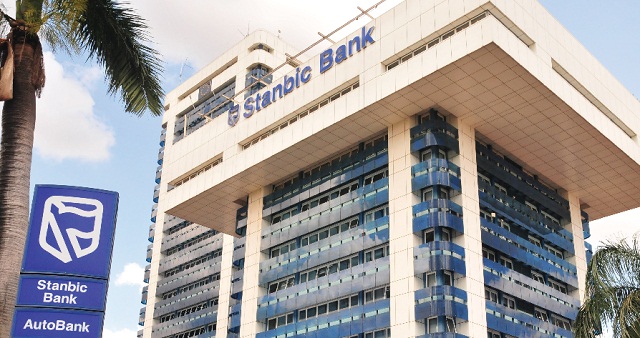
Stanbic Bank ordered to pay Shs400 millon over conduit company created by its employees

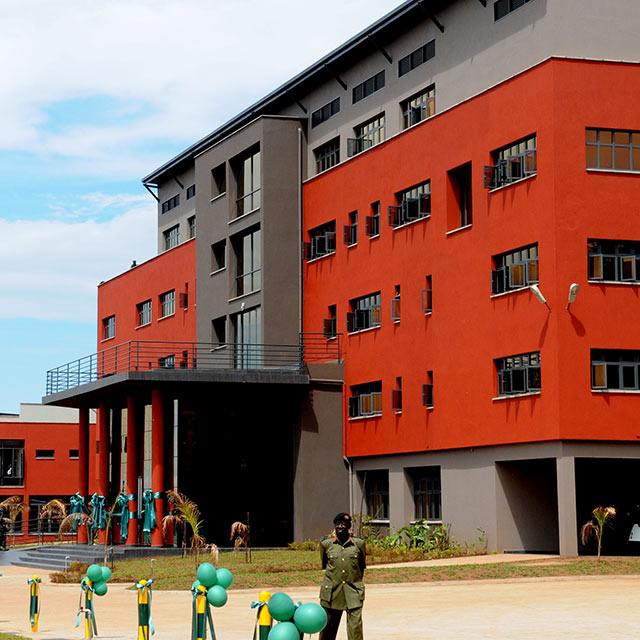
Stanbic Bank

The Commercial Division of High Court has ordered Stanbic Bank (U) Ltd, to pay Shs400 millon after its top employees created conduit company dubbed Myriad Investment Club limited and hence grabbing mortgaged properties and sold them among themselves.

The shareholders of Myriad Investment Club limited include; Kenneth Kitungulu (Executive and head Global markets Stanbic Bank), Lawrence Kaweesa (Global Business Manager Stanbic Bank), Allan Muhinda (interests dealer Stanbic Bank), Daisy Nitwe (Treasury sales dealer Stanbic Bank).

The others are; Emmanuel Rukeeba (head analytics and products Stanbic Bank), Maureen Kembabzi Katwebaze (works with Stanbic IBTC Bank Nigeria) and Thaib Lubega (Formerly Treasury Manager Stanbic Bank).

In 2017, Macdowel limited mortgaged its properties on plot 1, 3, 4, 5 and 6 closes, Luzira to Stanbic Bank Limited as security for a loan. The company at times failed to pay loan instalments on time and decided to go for Consent judgement to clear the loan by 30th June 2020. The company claimed that they paid off the loan but the bank has declined to release its titles.

It was revealed that Kenneth Kitungulu and Daisy Nitwe signed the sale agreement as the buyer’s directors. The sale agreement was drawn by the bank’s legal department, colleagues of the buyers/ directors/ shareholders.

The agreement bears a stamp of head BPP Credit, Stanbic and signature of Denis Lugoloobi, a senior manager Credit evaluation signing for the bank.

According to section 39 (2) and (3) of the mortgage Act, sale of mortgage property by a bank to its employees, is a crime punishable for not less than 24 months in prison.

Upon that the company ran to the High Court challenging the matter in which its properties were grabbed by Bank employees and sold among themselves. It also petitioned the Police CID to investigate the matter. The company claims that its properties were undervalued in that they were sold at Shs 1billion yet the actual value of the property is Shs 4billion.

And today, Justice Richard Wejuli Wabwire penalized the Bank and ordered it to pay over Shs 400millon to Macdowel limited.

“I could not turn a blind eye when employees of Stanbic Bank circumvented the law to the disadvantage of their esteemed customers,” he said in his ruling.

“It is very clear from the evidence on record contained in the affidavits in support of this application and rejoinder that the shareholders of the 2nd respondent (Myriad Investment Club)…..are employees of the 1st respondent (Stanbic Bank) on February 3, 2020, opportunistically incorporated a sham or conduit company in the name of 2nd respondent (Myriad), with a hidden motive of purchasing the securities, of the applicant (Macdowel),” he ruled.

Stories Continues after ad

Museveni to grace Janani Luwum day

Late Archbishop Janani Luwum

President Yoweri Kaguta Museveni is set to grace the 44th Janani Luwum day celebrations which will take place tomorrow at Mucwini, Kitgum district.

In 2015, President Museveni gazetted February 16th as Archbishop Janani Luwum Day, a public holiday for the country to celebrate the life of the late bishop who was killed on February 16, 1977 under orders of former President Idi Amin after the late clergyman blamed the dictator for his regime’s cruelty. Official accounts Bishop Luwum say he died in a car crash, which is disputed as it is said to have been stage managed.

The Most Rev. Dr. Stephen Samuel Kazimba, Archbishop of the Church of Uganda, will preach on the day’s theme, “Life in Its Fullness,” from John 10:10.

Who is Archbishop Janani Luwum?

Janani Luwum was born in 1924 in Mucwini, Chua, to Eliya Okello and Aireni Aciro. His father was a convert to Christianity. Janani was sent to school and eventually became a schoolteacher. In 1948 Janani accepted Jesus Christ as his personal Lord and Saviour. His conversion was so deep that he gave up teaching to join Church ministry full-time. He became very active in the East African revival movement, and became a lay reader, then a deacon, and then a priest in 1956.

He taught at Buwalasi Theological College and later became its Principal. In 1969 he was consecrated bishop of Northern Uganda. Janani Luwum’s leadership focused not only on preaching and spreading the Word of God, but also on the holistic development of people and communities; he repeatedly appealed to Ugandans to live together peacefully and in harmony. He was among the early visionaries for the sustainability of the Church through the Church House Project.

In 1974 Janani Luwum became Archbishop of Uganda, Rwanda, Burundi and BogaZaire (Eastern DR Congo). It was during a time of widespread terror after Idi Amin had overthrown President Milton Obote three years earlier in 1971. Amin had enacted a policy of repression, arresting anyone suspected of not supporting him. Hundreds of soldiers from the Lango and Acholi tribes were shot down in their barracks. Over the next few years, many Christians were killed for various offenses. A preacher who read over the radio a Psalm which mentioned Israel was shot for this in 1972. As Archbishop, Janani Luwum often went personally to the office of the dreaded State Research Bureau to help secure the release of prisoners.

Tension between the Church and state worsened in 1976. Religious leaders, including Archbishop Luwum, jointly approached Idi Amin to share their concern. They were rebuffed. Nevertheless, Archbishop Luwum continued to attend Government functions.

One of his critics accused him of being on the Government side and he replied: “I face daily being picked up by the soldiers. While the opportunity is there I preach the Gospel with all my might, and my conscience is clear before God that I have not sided with the present Government which is utterly self-seeking. I have been threatened many times. Whenever I have the opportunity I have told the President the things the churches disapprove of.”

Early in 1977, there was a small army rebellion that was put down with only seven men dead. Amin, however, determined to stamp out all traces of dissent. His men killed thousands. On Sunday, 30th January, Bishop Festo Kivengere preached on “The Preciousness of Life” to an audience including many high government officials. He denounced the arbitrary bloodletting, and accused the government of abusing the authority that God had entrusted to it. The government responded on the following Saturday (5th February) by an early morning (1:30am) raid on the home of the Archbishop, Janani Luwum, ostensibly to search for hidden stores of weapons.

The Archbishop called on President Amin to deliver a note of protest, signed by nearly all the bishops of Uganda, against the policies of arbitrary killings and the unexplained disappearances of many persons. Amin accused the Archbishop of treason, produced a document supposedly by former President Obote attesting his guilt, and had the Archbishop and two Cabinet members (both committed Christians) arrested and held for military trial.

On 16th February, the Archbishop and six bishops were tried on a charge of smuggling arms. Archbishop Luwum was not allowed to reply, but shook his head in denial. The President concluded by asking the crowd: “What shall we do with these traitors?” The soldiers replied “Kill him now.” The Archbishop was separated from his bishops. As he was taken away Archbishop Luwum turned to his brother bishops and said: “Do not be afraid. I see God’s hand in this.”

The three (the Archbishop and the two Cabinet members) met briefly with four other prisoners who were awaiting execution, and were permitted to pray with them briefly. Then the three were placed in a Land Rover and not seen alive again by their friends. The government story is that one of the prisoners tried to seize control of the vehicle and that it was wrecked and the passengers killed. The story believed by the Archbishop’s supporters is that he refused to sign a confession, was beaten and otherwise abused, and finally shot.

Luwum’s body was placed in a sealed coffin and soldiers secretly transported his desecrated body to Mucwini (his ancestral home and birthplace), and dumped it in a hurriedly-dug grave at the church yard at Wii Gweng on 19th February 1977. The villagers, however, were not satisfied with a sealed coffin. When they opened it, they discovered the bullet holes in his body. In the capital city of Kampala a crowd of about 4,500 gathered for a memorial service at St. Paul’s Cathedral, Namirembe, on 20th February. A grave had been prepared for him three next to that of the 1885 martyred Bishop, James Hannington. At the open grave, former Archbishop Erica Sabiti quoted the words of the angels at the empty tomb of Jesus, “He is not here, He is risen!” Instantly the Martyrs Song burst out with such power that “Glory, glory, hallelujah” was heard from that hilltop far into the city.

In Nairobi, about 10,000 gathered for another memorial service. Bishop Kivengere was informed that he was about to be arrested, and he and his family fled to Kenya, as did the widow and children of Archbishop Luwum.

The effect of Archbishop Janani Luwum’s martyrdom was expressed prophetically in the words of a lady who came to arrange flowers, as she walked through St. Paul’s Cathedral with several despondent bishops who were preparing for Archbishop Luwum’s Memorial Service. She said, “This is going to put us twenty times forward, isn’t it?”

The following June, about 25,000 Ugandans came to the capital to celebrate the centennial of the first preaching of the Gospel in their country, among the participants were many who had abandoned Christianity, but who had returned to their Faith as a result of seeing the courage of Archbishop Luwum and his companions in the face of death.

The assassination of Archbishop Janani Luwum is considered a turning point in Uganda’s history. For the international community, a line had been crossed and they were jolted into an awareness that Amin and his regime had to go. It set the stage for the Tanzanian-led campaign that removed Amin from power two years later.

 “Today I have become a leader in Christ’s army,” Janani Luwum said when he was converted. Prophetically, he went on to say, “I am prepared to die in the army of Jesus. As Jesus shed his blood for his people, if it is God’s will, I do the same.”

Stories Continues after ad

Absa Bank launches mobile capability for business clients

ABSA

Absa Bank Uganda has launched Business Banking capabilities on their Mobile Banking App, empowering business owners to perform multiple business-related transactions on their smartphones.

Without having to visit a branch, users can approve transactions, view statements and complete various other self-service tasks using their smartphones at any time of the day or night.

Speaking about the application, Albert Byaruhanga, Absa Bank Uganda’s Acting Head of Business Banking, said, “The COVID-19 pandemic caused a massive disruption to the country’s business environment, and this has amplified the need for unique digital solutions that can aid recovery, drive growth and in turn improve livelihoods.”

Perhaps the most affected businesses in the country have been small and medium-sized enterprises (SMEs), which, according to the Uganda Business Impact Survey 2020, account for approximately 90% of the entire private sector, over 80% of manufactured output and contribute about 75% to the gross domestic product (GDP).

The sector, having felt the setbacks brought on by the Coronavirus, has had to adapt to the new normal, which has been largely characterised by the evolution to online banking solutions that adhere to global health and safety guidelines while offering cost-effective business solutions.

As such, the government and the private sector have simultaneously promoted the uptake of e-payments and fintech solutions to accelerate economic recovery following the crisis.

Byaruhanga adds, “As a bank, Absa’s focus remains on bringing forth relevant innovation through key digital and other insight-led initiatives. We understand that entrepreneurs need speed and flexibility to grow their business portfolios and the Business Banking capability on our app serves as another digital solution that offers convenience, safety and cost-effectiveness.”

The bank also recently unveiled a ChatBanking function for the bank’s customers to make instant transactions 24/7 on the WhatsApp messaging app.

The function, called “Abby”, is available to all the bank’s account holders with non-business, transactional accounts and allows them to conduct transactions like making payments to beneficiaries, performing transaction search and history and making inter-account transfers.

Stories Continues after ad
Uganda open against Mozambique for maiden taste of U-20 Afcon

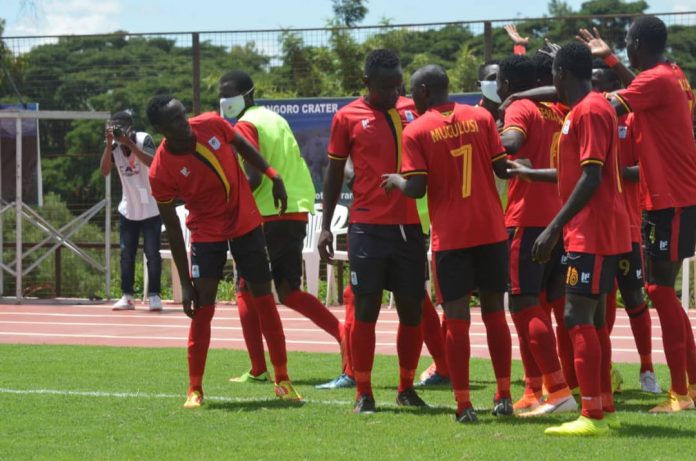
Uganda Hippos

The Uganda Hippos (U20) Team will have their first-ever engagement in the AFCON U20 tournament on Monday 15th February 2021 against Mozambique at the Stade Olympique in Nouakchott in Mauritania.

This will be the first time ever that the two countries will be playing at the tournament.

During the pre-match Press Conference, Uganda Hippos Head Coach Morley Byekwaso stated that the players have adapted to the weather and ready for Mozambique.

“We had some problems with the weather here. The wind was too heavy for my players but they have managed to adapt to it. We have made enough preparations to get the best from the match. We respect Mozambique but we are ready and we want to come out victorious,” said Coach Byekwaso.

Uganda Hippos played two buildup matches against Tanzania but won one 1-0 and lost the other 5-3.

This will be the first time Uganda U20 to play a Mozambican team at this U20 level.

The Hippos are the Champions of CECAFA and will play Cameroon in the second game on Wednesday 17th February before the last group game against the hosts Mauritania on 20th February 2021.

On the road to booking a ticket to the final tournament, Uganda finished top of Group B after demolishing Burundi 6-1 and drawing 0-0 with South Sudan. In the semi-finals, they were 3-1 winners over Kenya before trouncing Tanzania 4-1 in the final.

The Group A second match will kickoff at 4 pm.

Players in Mauritania

Goalkeepers:Komakech Jack (18) (Ascent SA), Oyo Delton (Busoga United FC), Ssenyondwa Denis Kaala (SC Villa).

Defenders:Kizito Mugweri Gavin (SC Villa), Semakula Kenneth (Busoga United FC), Musa Ramathan (KCCA FC) Kafumbe Joseph (KCCA FC), Begisa James Penz (UPDF FC), Baligeya Simon (Kibuli SS), Abdul Azizi Kayondo (Vipers SC)

Midfielders: Mugulusi Isma (Busoga United FC), Yiga Najib (Vipers SC), Bobosi Byaruhanga (Vipers SC) Sserwadda Steven (KCCA FC), Eyamu Ivan (Mbarara City FC), Kawooya Andrew (KCCA FC), Asaba Ivan (Vipers SC), Ssekajja Davis (Bright Stars FC), Wabyoona Faisal (Big Talent SA).

Forwards: Bogere Ivan (Proline FC), Ssenyonjo Samuel (KCCA FC), Kakooza Derrick (Police FC), Basangwa Richard (Vipers SC), Bukenya Joseph Kizza (KCCA FC), Ssali Alpha Thierry (Proline FC).

Stories Continues after ad