Stanbic Bank
Stanbic Bank
28.5 C
Kampala
Stanbic Bank
Stanbic Bank
Home Blog Page 905

DPP drops charges against EOC boss two weeks after changing her name

Sylvia Muwebwa

The Director of Public Prosecution (DPP) Jane Francis Abodo has dropped corruption charges against the Chairperson of Equal Opportunities Commission (EOC) Sylvia Muwebwa Ntambi.

In a letter to the anti-corruption court, Justice Abodo discontinued the charges against Mrs. Sylvia noting that her office lost interest in the matter.

The dropping of charges happened barely a month after the accused changed her name. According to a deed poll, she renounced and abandoned the use of the name Sylvia Ntambi as it appears on her national identification card and in the lieu assumed the name Sylvia Nabatanzi Muwebwa.

The charging of Sylvia Muwebwa Ntambi and nine others follows the lunging of complaints to President Yoweri Museveni calling for his intervention. According to a petition dated 22nd May 2019, the whistleblower accused her of causing financial loss of over Shs 200 million through termination of workers contracts and forcing workers to resign and replace them with her relatives and friends.

Since she took over the chairperson-ship of the commission, the whistleblower said Mrs Ntambi has unfairly dismissed over 11 staff, terminated over 10 staff contracts, and four contracts have not been renewed. In 2017/ 2018, the Auditor General advised the commission to employ people on permanent contracts however the chairperson declined and this has since led to financial losses.

They accused her of directing the collection of Shs100 million which they had approved in the commission meeting and the said money was to be used as kickbacks for individuals who worked hard for passing of the commission budget in 2018/19.

“It was paid and collected through individual bank accounts. It was collected and handed over to her at Kampala International University (KIU), Kansanga on 7th March 2019,” the whistleblower said. Despite being chairperson of the commission, Mrs Ntambi is averred to have forced her secretaries to pay her as consultant in production of various reports.

“The money was paid to Prof. Sunday Nicholas Olwor (Shs 14M), Kamahoro Enid (Shs 13M), Nassanga Sarah (Shs 5M), Atukunda Susan (Shs 6M), Mugisha James (Shs 12M), Kwesiga Ronnie (Shs 12M), Kwesiga Ronnie (Shs 10.55M), Sarah Nassanga (Shs 9M), Kwihangana Manasseh(Shs 13M), Prof. Sunday Nicholas Olwor (Shs 9.8M), Kwesiga Ronnie (Shs 9M) and sylvia Muwebwa Ntambi (Shs 13M),” payment slips indicate.

She is also accused of irregular approval of allowances of various members of the commission, using commission vehicle for doing private businesses, irregular recruitment of staff without embracing commission procedures. It is said that she illegally recruited Betty Namazzi, Juma Waira and Petau Isabirye Babirye.

Stories Continues after ad

Gov’t fully restores internet and social media services

Minister of State for Sports, Peter Ogwang

Government has finally restored internet and social media services a month after shut down. The restoration of the internet has been confirmed by the state minister for Information and Communication Technology (ICT) Peter Ogwang.

“Internet and Social media services have been fully restored. We apologize for the inconveniences caused, but it was for the security of our country. Let’s be constructive, NOT destructive consumers/users of social media,” the minister said.

On February 13, 2020, President Yoweri Museveni ordered for shut down of all social media platforms a few days after Google had erased facebook accounts and pages of his campaign propagandists and barely two days to the general elections.

Facebook’s head of communication for sub-Saharan Africa, Kezia Anim-Addo, said; “We removed a network of accounts and pages in Uganda that engaged in CIB (Coordinated Inauthentic Behaviour) to target public debate ahead of the election.”

After Museveni’s directives, the Uganda Communications Commission (UCC) petitioned Telecom Service providers ordering them to immediately suspend access and use, direct or otherwise of all social media platforms and online messaging applications over the network until further notice.

Since then, Ugandans have been accessing social media platforms through Virtual Private Networks (VPNs).

Stories Continues after ad

Standard Chartered Bank, Gloat partner to create a virtual marketplace for workforce

Standard Chartered logo

Standard Chartered Bank and Gloat have announced a multi-year strategic partnership to enhance the Bank’s ability to use the best of their colleagues’ skills and experience for the good of its clients.

The partnership marks a significant milestone in its ambition to create an internal virtual marketplace for colleagues that offers different types of career and development opportunities across the organisation and where its leaders can identify, develop, and deploy talent quickly. This in turn creates possibilities for upskilling and reskilling; a new way of developing people, and ultimately unlocking potential, capacity and increasing productivity.

Standard Chartered’s implementation of Gloat’s solution is another step in its journey to drive innovation and build an inclusive culture. The partnership provides its workforce with an innovative AI-driven platform that matches employees with a range of career opportunities, many of which are linked to skills needed for the future of banking.

Following an experiment of 12,000 users in SCB India, including Global Business Services in Bangalore, 4000 hours of productivity has been unlocked, and the pilot locations have seen the biggest year-on-year increase in satisfaction with career and development opportunities in the Bank’s annual employee survey.

2021 will see a phased roll-out across the Bank, with the plan to make it available to all employees by 2022.

Tanuj Kapilashrami, Group Head, Human Resources, commented: “This partnership is a further step in building an organisation that is future fit. We have listened to what our colleagues are telling us around career progression, development opportunities and employee experience and have brought in a solution that offers upskilling and reskilling opportunities, while for the Bank, making it easier to deploy the right people to the right opportunities.”

“In a time when engaging, developing, and retaining existing talent is more important than ever to the long-term success of a business, we’re honoured to be working with Standard Chartered Bank to bring their forward-thinking vision for an agile virtual marketplace to life,” said Ben Ruveni, CEO of Gloat. “This is a first-of-its-kind initiative in the financial services industry, and we are excited to scale the impact we’re already seeing to the rest of the Bank’s colleagues and, in turn, the clients they serve.”

Gloat’s platform is the first of its kind, and the leading technology powering internal talent marketplaces at a global scale within Fortune 500 companies. Its solution has already been implemented and fully adopted by organisations with 100,000+ users, spread across more than 120 countries.

The Gloat partnership follows Standard Chartered’s November 2020 announcement on flexible working; implementing a hybrid approach, combining virtual and office-based working with greater flexibility in working patterns and locations. Both are steps towards making the Bank as flexible, dynamic and attractive to current and future employees as possible.

Stories Continues after ad

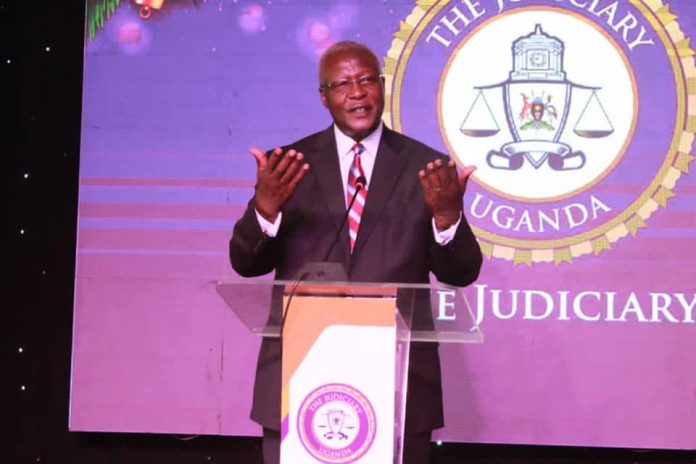
Gov’t releases Shs 6.27bn to cater for all retired judicial officers

Retired Chief Justice, Bart Magunda Katureebe.

Government has released Shs 6.27 billion to cater for monthly benefits of all retired judicial officers. The revelation was made by the Permanent Secretary to the Judiciary, Mr. Pius Bigirimana.

The released fund money will cater for 224 retired judicial officers on the judiciary retired officers payroll. The retired officers include; justices and judges, registrars and magistrates, Chief Justices, Deputy Chief Justices and Principal Judges.

“This is to inform all beneficiaries that I received approval to pay, on a monthly-basis, retirement benefits from January to June 2021. Accordingly, retirement benefits for January have been paid. The process to pay those of February shall be paid before 15th February,” he said.

According to the Administration of the Judiciary Act (AJA) 2020, retired Chief Justices, Deputy Chief Justices are paid a monthly retirement benefit equivalent to that of the sitting Chief Justices, Deputy Chief Justices.

Other officials from Supreme Court down to the grade two magistrates court including principal judge are paid a monthly benefit of 80% of the salary payable to their sitting counterparts.

Government also pays each retired officers, a one off lump sum retirement benefit equivalent to 2.4 percent of his annually salary multiply by five and the years of services and where the judicial dies, his or her family is one off lump sum retirement benefit plus the months pension for 15 years.

Stories Continues after ad

Joshua Cheptegei named Uganda’s new tourism ambassador

Cheptegei is new tourism ambassador

Long-distance runner and world champion Joshua Cheptegei has today been officially named as Uganda’s new tourism ambassador.

While speaking during the unveiling, Cheptegei said; “I am delighted to be here this morning to express solidarity with all the players in Uganda’s tourism industry, as they seek to rebuild an industry that has been nearly destroyed by the #Covid-19 pandemic. I am deeply grateful to the Uganda Tourism Board (UTB) for having chosen me for this huge responsibility, to be my country’s Tourism Ambassador.”

“I look forward to sharing my Ugandan story to the rest of the world. In the same breath, I wish to call upon every Ugandan, especially those in the diaspora to make it a point to visit and discover more about this our country.”

According to Uganda Tourism Board-UTB CEO, Lilly Ajarova, this is a mutually beneficial partnership where UTB shall collaborate with Cheptegei and provide support towards his athletics activities at both the domestic and international level and in turn, earn his support and access to his platforms to promote brand destination Uganda.

Cheptegei will consequently use his image in photos, videos and other promotional materials as deemed fit by the Uganda Tourism Board.

“World over, there are mixed signals about the tourism industry’s recovery in this year. In Uganda we expect regional and intra-African visitors to pick up in the second half of 2021,” Ajarova added.

In 2020, at a road race in Monaco, Cheptegei set a new world road 5 km record of 12:51, breaking through the event’s 13-minute barrier, taking 9 seconds from the previous best time of 13:00, set by Kenya’s Sammy Kipketer in 2000.

In August 2020, at the Monaco Diamond League meet, he set a new 5000 metres world record of 12:35.36, breaking Kenenisa Bekele’s 16-year-old world record of 12:37.35 set in Hengelo and On 7 October 2020, in Valencia, he set a world record time of 26:11.00 in the 10000 meters, which again improved on Kenenisa Bekele’s 15-year-old record by more than 6 seconds.

Stories Continues after ad

Police warns of fraudsters issuing fake Swedish visas

Passports

The Uganda Police has warned the public about fraudsters who are issuing fake visas to Sweden.

According to Twiine Charles, the CID Spokesperson, the said fraudsters operate in such a way that they obtain money from the victims and in turn promise to process and issue them with Swedish Visas and work permits.

“The general public is hereby informed that there is a group of fraudsters issuing fake Swedish Visas to unsuspecting members of the public,” the statement reads in part

“The said fraudsters operate in such a way that they obtain money from the victims and in turn promise to process and issue them with Swedish Visas and work permits.”

According to Police, they have received a number of complaints from various victims, and have commenced investigations into the matter.

“Police has so far received a number of complaints from various victims, and we have commenced investigations into the matter under CID headquarters GEF 1180/2020.”

“The culprits have been identified, profiled and efforts are underway to ensure they are arrested and brought to book,” Twiine Charles says in a statement.

“We appeal to the public to be on a look out and report any person suspected to be involved in such fraudelent tractions to CID headquarters.”

“We also appeal to members of the Public to seek consular services from the Embassies or official designated places,” Twiine said.

Stories Continues after ad

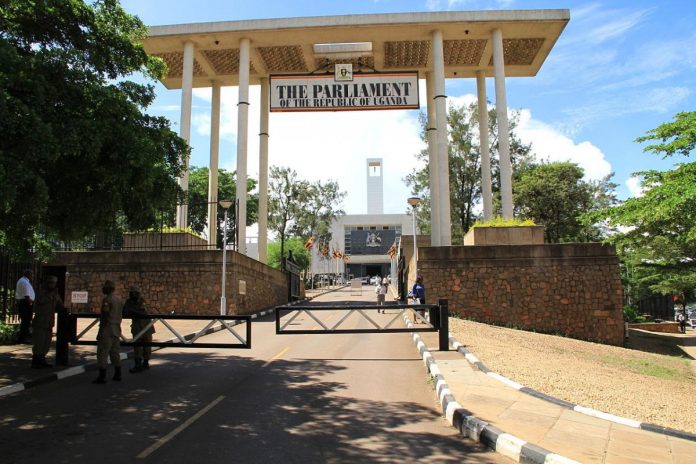
Parliament defers approval of Shs292 billion supplementary budget

Parliament of Uganda

Parliament has deferred the approval of a supplementary funding for the financial year 2020/21 of shs292 billion, after it emerged that a request of shs12 billion for compensation of individuals affected by land evictions in Bunyoro was made without the knowledge of the Uganda Land Commission.

Speaker of Parliament, Rebecca Kadaga who chaired plenary sitting on 09 February 2021 to consider the report of the Budget Committee on the supplementary budget deferred the approval after Hon. Gaffa Mbwatekemwa (NRM, Kasambya County) informed the House that he had evidence that the Land Commission was not consulted before the supplementary request was made.

“I want the Minister to tell this House who initiates a supplementary. Within few minutes, I will bring a document from the Uganda Land Commission. They are protesting this supplementary because they are not aware of the people to be compensated in Bunyoro,” he said.

Mbwatekamwa also questioned the criteria used to identify the beneficiaries of compensations saying that many individuals have been left out.

Mukono South MP, Hon. Johnson Muyanja Senyonga read the letter by the Chairperson of the Uganda Land Commission, Hon Beatrice Byenkya which raised concern about the compensations.

“The Commission is not privy to this list and wants the Minister to be brought to order. I am kindly imploring you, Hon. Speaker and your office to unpack the money given to the Land Commission so that I can carry out the mandate,” read the letter in part.

Attempts by the Minister of Lands, Housing and Urban Development, Hon Beti Kamya to explain the matter and justify the need for the supplementary budget fell on deaf ears as MPs advised the Minister to discuss the budget with the Lands Commission.

“The Minister of Lands wrote to the Minister of Finance and brought all these matters to him and asked that funds should be provided for compensation of individuals in Bunyoro,” Kamya said adding that, “the letter was copied to the Uganda Land Commission three months ago and the Commission acting not in good faith did not raise the matter. The letter which has just been read is not even copied to the Minister of Finance and Lands.”

Hon. Elijah Okupa (FDC, Kasilo County) raised a point of procedure, asking the Minister and the Lands Commission to reconcile their positions.

“I think this is turning ugly where we are seeing uncoordinated information. I think to save the face of Parliament and Government, it is procedural right that the minister asks for time and reconciles these issues or we just disregard the supplementary for the Land Commission and move with the rest of the items,” he said.

Dokolo District Woman Representative, Hon. Cecilia Ogwal advised the Minister to consider the information provided that Uganda Land Commission is not aware of the supplementary.

“I am saying this because we had a very serious situation in our hands when the Minister of Finance brought a supplementary in the name of Bank of Uganda and when we called the officials, they denied. It is very important that we get to know whether Uganda Land Commission is aware of that supplementary,” she said.


This prompted Kadaga to suspend the approval of the supplementary budget in its entirety, until Thursday.

“I have also received a letter and we need to ensure that we are moving together on this supplementary. I want to advise that we stand over the matter and allow the Budget Committee, the minister and all the stakeholders to review this matter,” she ruled.

Kadaga added that the government should also provide commitment that the supplementary budget amounting to shs11.2 billion for compensation of tobacco farmers will be paid back by the two companies that entered contractual arrangements with farmers to supply tobacco in 2018 and yet they still have the tobacco in their stores.

Part of the supplementary request is also meant for the purchase of 18 million doses of the AstraZeneca vaccine for vaccination of people against the Covid-19. It is also meant for handling of national exams by the Uganda National Examination Board (UNEB) during the COVID pandemic.

The Legislators also queried the supplementary budget allocation to Ministry of Education and Sports of shs1.4 billion to cater for outstanding administrative costs under Mandela National Stadium, given its designation as a Covid-19 treatment and isolation facility.

Hon. Joseph Ssewungu (DP, Kalungu West) objected to the request saying that the national stadium has been used for other activities which are not related to the Covid-19 pandemic.

“There is a lot of theft going on in Namboole and the Public Accounts Committee queried this but no answer was given,” he said.

The MPs also raised concern over the need to ensure that the committee recommendation to allocate a supplementary of shs34 billion to purchase ambulances for each district, instead of vehicles is well implemented.

Hon. John Baptist Nambeshe (NRM, Manjiya County) said that consideration should be made to procure air ambulances for mountainous areas.

“There are some areas where vehicles cannot access, and such need air ambulances,” he said.

Hon. Frederick Angura (NRM, Tororo South County) also asked for boat ambulances for Island districts, saying that lives are being lost in those districts due to absence of ambulances.

Hon. Nathan Nandala Mafabi (FDC, Budadiri County West) urged the legislators to interest themselves in knowing the cost of ambulances to ensure value for money.

“We should avoid a situation where government will hike the prices of these ambulances and yet they are not even taxed. If we do not take interest in this procurement, we risk getting few ambulances as opposed to the 282 budgeted for in the supplementary,” he said.

Government is seeking approval to spend the over shs4.2 trillion under the supplementary expenditure schedule 4 and addendum 1&2 to schedule 4 for financial year 2020/2021.

Stories Continues after ad

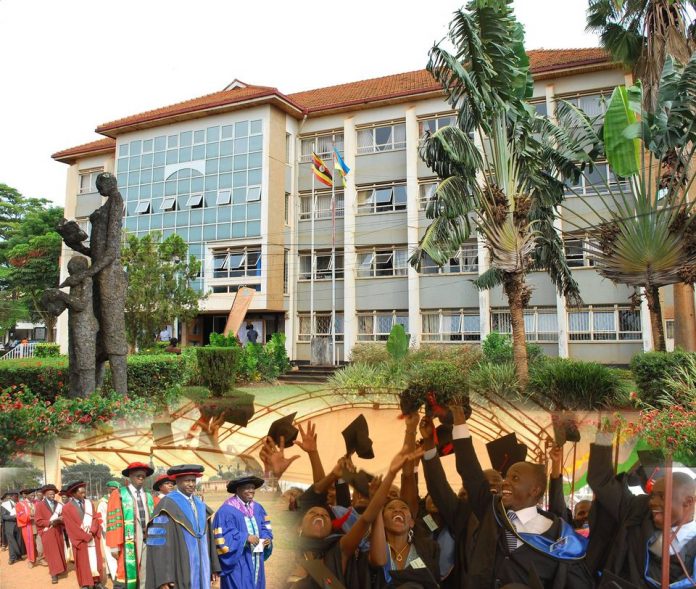
Kyambogo finally allows students to report for physical lectures

Kyambogo University main building.

Kyambogo University has allowed the continuing students  to report to University for Physical lectures.

Last month (January), the University cancelled 1st February, the date that students were supposed to report for physical lectures after spending two weeks on online classes, following the President’s directives to wait for further guidance.

President Museveni had guided that all Higher Education Institutions were to continue studying online for at least another three months, to enable Government find a lasting solution for Covid-19.

According to the communication from Vice Chancellor Professor Elli Katunguka Rwakishaya to all staff and students, the University will open to continuing  students on 1st March for three weeks face to face lectures,(1st to 21st March),  followed by examinations which will begin on 22nd March to 11th April.

Professor Katunguka further clarifies that first year students will self-enroll online between 22nd March and 11th April, and then, students will officially report to the University on 10th April.

The University is also preparing for detail program for semester one and two of academic year 2020/2021 and proposals for graduation, will be communicated in the subsequent circulars.

By the time, the University cancelled the first reopening date which was 1st February, most students had already reported in their respective hostels and Halls of residences, and some had started planning to go back due to the uncertainties surrounding the reopening of the University.

Prosper Ainembabazi, a second year Education student, said her parents have called her several times, demanding that she travels back home and waits for the way forward.

However, there are students who are arguing that 1st March is far for them to keep around, because the cost of living is also expensive. They contend that, they will travel back home and come back in March when they have the assurance that studies have resumed.

Stories Continues after ad

Supreme Court rejects application to amend Bobi Wine’s election petition

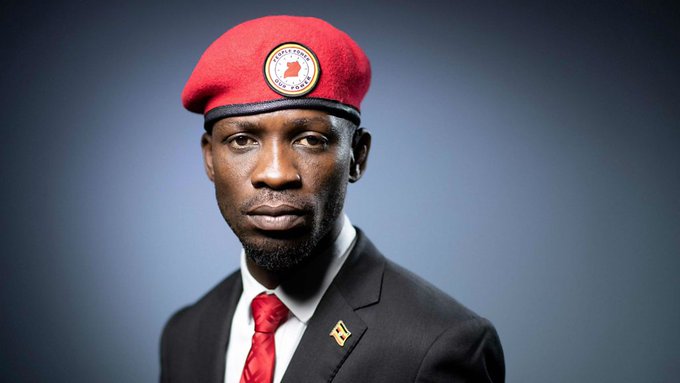
Bobi wine

The Supreme Court has dismissed National Unity Platform (NUP) presidential candidate Kyagulanyi Sentamu Robert aka Bobi Wine’s application to amend the main presidential electoral Petition challenging the outcome of the January 14, 2021 presidential race.

The application was dismissed on grounds that the matters brought challenging the legality of Museveni election were filed out of time.

The Kyadondo East MP wanted to adduce more evidence to support his 26 claims of election fraud, for which he wants president-elect Yoweri Kaguta Museveni victory annulled.

On 1 February, through his lawyers led by Medard Seggona, Bobi wine petitioned the Supreme Court challenging President Yoweri Museveni’s victory in the just concluded January general elections saying that the election was not free and fair.

He contended that throughout the campaign period the People of Uganda generally, and more particularly his supporters endured untold suffering, torture, degrading and inhuman treatment on the orders of Gen Museveni. He cited the dark days of 18th and 19th November 2020 which saw over 50 innocent, unarmed citizens murdered in cold blood by the police and military.

In the fresh grounds, Bobi had contended that Mr Museveni was not qualified as candidate and could not lawfully contest in the Presidential Elections being a person in command of military and police contrary to Presidential Elections amendment Act and the Constitutional Amendment.

The matter was presided over by nine justices of the Supreme Court headed by Chief Justice Alfonse Owiny-Dollo.

Others are Stella Arach Amoko, Mike Chibita, Paul Mugamba, Ezekiel Muhanguzi, Percy Night Tuhaise, Rubby Opio Aweri, Faith Mwondha and Dr Esther Kisaakye, the most senior on the panel.

Appearing before the panel earlier, Bobi Wine’s Lawyer Medard Sseggona told court that most of the 15 days in which he should have filed the petition, he was under house arrest which is why a few aspects of the evidence were left out.

The pre-hearing conference for the election petition is set for Thursday, February 11, 2021. This is one where parties involved in a case meet with judges to determine a number of issues before the case hearing begins.

The respondents in the petition including the Attorney General, Electoral Commission and the president-elect lawyers have since made their responses to the filed petition, ahead of the pre-trial conference.

A team of 40 lawyers has been set up to represent Museveni while 25 will represent Bobi Wine.

On Thursday 14th January, 2021, the Electoral Commission conducted presidential elections where Ugandans exercised their constitutional rights of choosing a president who will lead them through a five year term. Uganda has a total 18,103,603 registered voters and 34,684 polling stations however only 10,350,819 people turned up to vote.

The presidential election which comprised 11 candidates was won by President Yoweri Museveni Tibuhaburwa Kaguta who got 6,042,898 (58.38%). His closest opponent Kyagulanyi Robert Sentamu got 3,631,437 votes (35.08%).

Stories Continues after ad
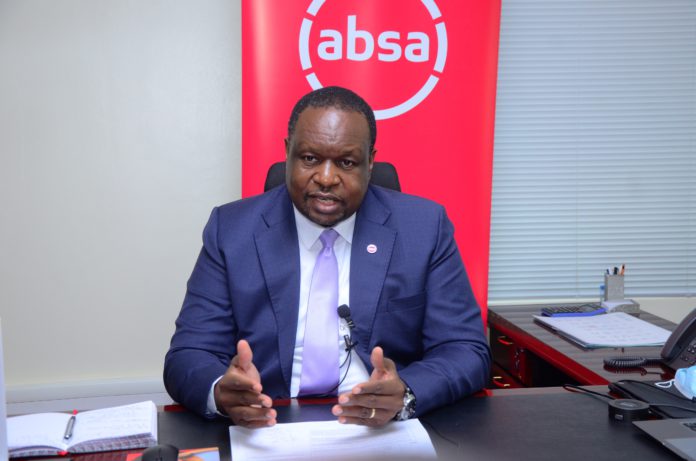
Uganda maintains its rank in Absa Africa Financial Markets Index amidst #Covid-19 pandemic

Mumba Kalifungwa, Managing Director of Absa Bank Uganda

The newly released Absa Africa Financial Markets Index indicates that Uganda has maintained its overall ranking of 10th from 2017. The national score increased from 50 in 2017/18 to 52 out of 100 in 2019/20.

However, Uganda remained in 10th position behind leaders; South Africa, Mauritius, Nigeria, Botswana, Namibia, Ghana, Kenya, Morocco and Zambia and respectively. The Index also shows Uganda was second in the East African Community (EAC) after Kenya, Tanzania and Rwanda, respectively.

The ranking is alluded to the country’s strength in access to foreign exchange, liquid forex market, healthy foreign exchange reserves that are above five months of import cover as well as a vibrant interbank swaps and forwards market that is supported by an active interbank money market.

Uganda strongly scored in market transparency, tax and regulatory environment, ranking sixth overall and first in the East African Community (EAC). This reflects the moderate risk of national debt distress, sustaining of the sovereign credit ratings at ‘B’ by Standard and Poor’s and ‘B+’ by Fitch Ratings, and compliance with International Financial Reporting Standards together with the commendable tax and accounting environment that is overseen by an independent oversight body, the Institute of Chartered Public Accountants of Uganda.

Speaking about Financial Markets Index, the Deputy Governor Michael Atingi-Ego said Uganda’s competitive macroeconomic opportunity, ranking sixth overall, and first in the EAC is due to a record of strong economic growth backed by appropriate monetary policy.

“Uganda has a lot to learn from its peers to catch up in market depth, the capacity of local investors, as well as the legality and enforceability of standard financial market master agreements. A host of reforms are underway to address the poor performance in some indicators, for better ranking in the future.”

He said the liberalisation of the pension sector in Uganda while preserving national interests and securing public confidence in the private institutional players, would significantly expand and deepen the non-bank financial sector.

“Uganda’s financial sector has been resilient through the pandemic partly through accelerated digitalisation and the containment of near term risks to financial stability aided by decisive policy measures by the BoU.”

“The slow economic recovery poses vulnerabilities to financial stability, including through the impact on earnings of households and businesses as well as the banking sector asset quality. But while credit extension remains subdued; on aggregate, banking institutions have strong liquidity and capital buffers to absorb emerging shocks.”

Stories Continues after ad