Stanbic Bank
Stanbic Bank
27.2 C
Kampala
Stanbic Bank
Stanbic Bank
Home Blog Page 907

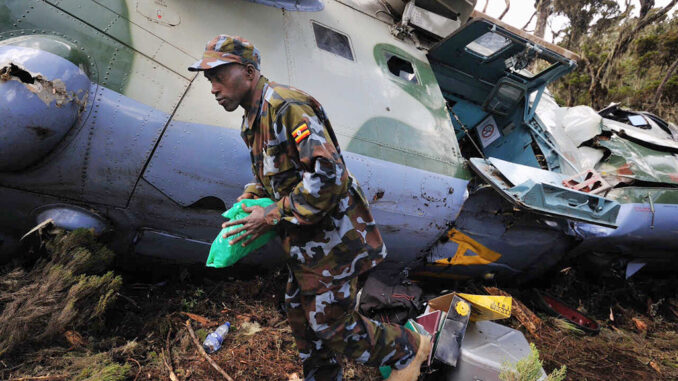
Four injured as UPDF helicopter crashes in Somalia

UPDF-helicopter-crash

The Uganda People’s Defence Force (UPDF) helicopter on a mission to support African Union Mission to Somalia (AMISOM) troops has crashed in Somalia injuring four.

The helicopter crashed soon after take-off in Balidogle in the Lower Shabelle region of Somalia on Friday, 5 February 2020.

According to a statement released by AMISOM, all the four soldiers aboard the helicopter were rescued and are in a stable medical condition.

“Investigations are ongoing to determine the cause of the crash. However, preliminary reports indicate that it was due to a mechanical failure,” AMISOM said.

The deputy UPDF spokesperson Lt Col Deo Akiiki has told Eagle Online that the crashed jet will affect their activities. ‘Such eventualities are bound to happen and we always have the second course of action to avoid any stoppage in planned operations. We have more than one set and they hardly operate at ago,” he said.

Stories Continues after ad

MPs call for restoration of Democratic Governance Facility

DGF logo

Members of Parliament are concerned about the suspension of the Democratic Governance Facility (DGF) over claims of subverting government activities.

In a communication last week, the President Yoweri Museveni said that the Ministry of Finance irregularly authorized DGF to be operated exclusively by a foreign mission without any representation from Uganda to oversee the function of its activities.

The President then directed that the activities of DGF be suspended and investigations be held.

However, while presenting a matter of national importance on Thursday, 04 February 2020, Kawempe North MP, Hon. Latif Sebaggala said that the move would deal a heavy blow to the efforts of DGF in fighting corruption and empowering communities around the country.

Sebaggala added that the President should do some due diligence and find out what DGF has been doing to support the communities and livelihoods of people instead of focusing on allegations of the Fund sabotaging the National Resistance Movement (NRM).

“There are a number of non-governmental organisations that are being funded by DGF and so many Ugandans have been employed by these NGOs to execute their activities,” he added.

Sebaggala also said that the President should not blame DGF for NRM’s loss in the central region following claims that the Fund has been supporting activities located in the region.

Bugiri Municipality MP, Hon Asuman Basalirwa said that political parties including the NRM have been beneficiaries of funding from DGF through the Inter-Party Organisation for Dialogue; adding that, “the President’s move stifles his own party.”

Kumi Municipality MP, Hon Silas Aogon said that government institutions like Parliament will be affected by the presidential directive which halts some of its activities.

“We have the Government Assurances Committee whose activities in the community are directly funded by the DGF; this puts the Committee’s activities in jeopardy,” he said.

Speaker Rebecca Kadaga directed the Prime Minister to present a statement to Parliament.

DGF is funded by seven of Uganda’s international development partners namely Austria, the Netherlands, Ireland, United Kingdom, European Union and Sweden.

DGF funds activities of several non-governmental and governmental organisations centered on democracy and governance.

Stories Continues after ad

Morocco defeat Mali to win second CHAN title

Morocco win CHAN 2021

Morocco won the African Nations Championship (CHAN) for the second time by overcoming Mali’s bold challenge 2-0 in a thrilling final at Ahmadou Ahidjo Stadium in Yaounde, Cameroon on Sunday night.

Two second-half headers by Abdelmouna Boutouil and captain Ayoub El Kaabi sealed the victory for the Atlas Lions in the tournament in Cameroon to hand them the title.

The Atlas Lions repeated the success on home soil three years ago by a margin that hardly looked possible as the Eagles stood toe-to-toe with the favourites for over an hour.

Houcine Ammouta’s side became the first country to win a second successive title in the tournament designed exclusively for home-based players.

Mali also felt their luck deserted them, but ultimately Morocco ran out victorious to revive the memories of the 4-0 victory over Nigeria in the CHAN 2018 final in Casablanca.

Morocco star midfielder Soufiane Rahimi swept the top awards at the championship after winning the best player and top scorers awards.

The 24-year-old, who plays for Raja Casablanca, was handed the award on Sunday night at the Ahmadou Ahidjo Stadium in Yaounde after inspiring his side to win the tournament.

Rahimi was the star player of the tournament thanks to his goal scoring prowess from his midfield position and impressive contribution to his team.

He received the top scorer award from the legendary Cameroon striker Samuel Eto’o after helping his side win the tournament.

He topped the scoring charts in the competition with five goals and also received three Man of the Match awards during the three-week tournament held in the Central African country.

He scored two goals in Morocco’s 5-2 victory over Uganda, netted the first goal in the Atlas Lions 3-1 win in the quarter-finals before scoring another brace against Cameroon in their 4-0 semi-final victory.

Stories Continues after ad

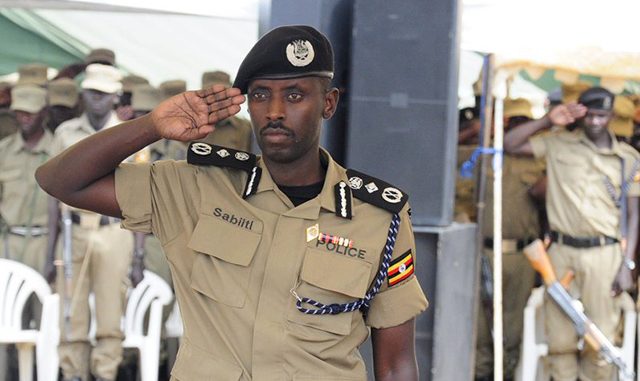
Museveni appoints Gen. Sabiiti Muzeeyi as General Manager Luwero Industries

Maj Gen Muzeeyi Sabiiti

President Yoweri Museveni has appointed Maj Gen Sabiiti Muzeyi as the General Manager of Luwero Industries, a subsidiary of National Enterprise Corporation (NEC).

He replaces Brig Octavius Butuuro who has been appointed Deputy Commandant Senior Command and Staff College Kimaka.

Luwero Industries is a UPDF firm involved in the production of ammunitions and repair of rifles. The firm also manufactures spare parts of military equipment, portable water and carpentry products, among others.

Maj. Gen Sabiiti was the Deputy Inspector General of Police (DIGP) of the Uganda Police Force since March 2018 until December 2020 when he handed over office to Maj. Gen Paul Lokech.


Stories Continues after ad

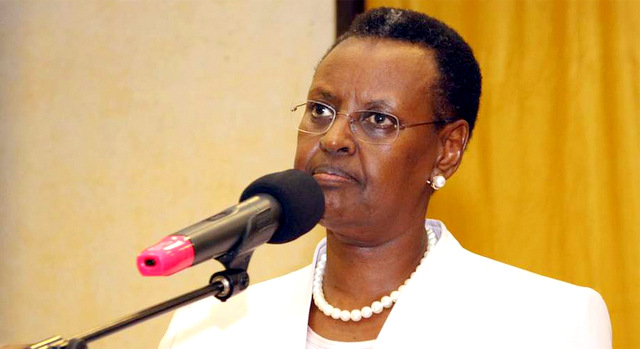
No more nursery or kindergarten schools until #Covid-19 is over

Minister of Education and Sports Janet Museveni

The Minister of Education Janet Museveni has revealed that there will be no more nursery or kindergarten schools until the #Covid-19 pandemic is over.

Yesterday President Yoweri Museveni okayed the reopening of schools to non-candidate students following his directive for closure in march last year. The closure according to Museveni peddled at curbing the spread of the deadly #Covid-19 pandemic.

“The schools will be allowed to reopen in a staggered manner that will ensure compliance with Covid-19 Standard operating procedure (SOP) of maintaining social distance, washing hands or sanitizing, and wearing of face masks,” Museveni said.

Mrs. Museveni said Children will now start school in Primary one at five years of age.

“Parents should instead take on the mantle and do play learning with their children at home before sending them to P1,” she said adding that Learners in this category cannot observe SOPs and are prone to respiratory infections and because many of the pre-primary institutions are day-based, there is a lot of interaction between learners, and parents, teachers which would increase the risk of contracting the virus.

In order to finish up the academic year and ensure progression, all semi candidate classes, which include primary six, senior three and senior five should report back to school in the short term and study with the candidate classes.

She said that apart from candidates who will sit for Uganda national examinations board (UNEB), Primary Leaving Examinations (PLE) and there will be no exams for the rest of the classes. Progression for other classes will be evaluated on attendance and a cumulative assessment.

Stories Continues after ad

UAF cancels another athletics competition

Ugandan Athletes

The Uganda Athletics Federation-UAF has once again cancelled the Track and Field Competition which was due this weekend in Kampala.

This marks the second competition in a row on the UAF 2021 calendar owing to lack of competition venue after the first one which was scheduled for January 23.

The cancelled 2nd UAF Trial competition was the second on UAF 2021 calendar season since the resumption of sports activities that were hampered last year by the outbreak of the global Covid-19 pandemic.

The unfortunate cancellation of the two track and field competition comes in the wake of looming Tokyo 2020 Olympics just at the corner, World Junior Championships, World Indoor Championships, Africa Senior Championships among others.

Efforts by UAF last week to secure tartan Mandela National Stadium, Namboole and Kyambogo  University grass track has been futile owing to both facilities being used by government while the other alternatives, Makerere University is unsuitable and ISU tartan track inaccessible.

“UAF has no option but to cancel the competition and now focus on the upcoming National Cross Country Championships due in Tororo on February 13, 2021,” Namayo Mawerere, the Publicity Secretary of UAF said.

“The federation is aware the cancellation of the two track and field competitions is a very big blow to athletes preparations for the Olympics and build up to the other international competitions.”

“UAF is however engaging the responsible government authorities over the matter.”

Stories Continues after ad

At least 44 people have been kidnapped before and after general elections – Gov’t

Minister for Internal Affairs Jeje Odongo

The Minister for Internal Affairs, Gen. Jeje Odongo has revealed that at least 44 people have been reported kidnapped and 31 of these are yet to be traced.

Since the launch of presidential campaigns in November last year, the country has witnessed a number of kidnappings by both armed plain clothe men and security personnel traveling in Toyota Hiace commonly known as drones. Most of the victims have since not been arraigned before courts of law nor released on police bond.

Speaking in Kampala, the Minister said that seven of the 44 people who were reported kidnapped had been arrested, charged and released on bail while the other four including Lumu Ronald, Kabaale Benard, Mugarura Ronald and Shafik were arrested for aiding and abetting terrorism.

“These suspects have since been interviewed, recorded statements and released on police bond,” he said adding that Galiwango Rogers allegedly kidnapped from Kyebando with 10 others resurfaced after three days.

Minister Odongo said that in Mukono, four people are reported to have been kidnapped identifying them as Male Musa, Kamata Muhammad, Kagimu Musa and Kiberu Julius.

He also revealed that 11 other people allegedly kidnapped in Masaka.

“I have tried to give an update on the continuous incidents of alleged kidnap. Investigations are ongoing and I undertake to give progress of these investigations with time. I would like to appeal to the public at large, please report these alleged incidents of kidnap to police. We undertake to investigate each and every one of the reported incidents,” Gen. Odongo added.

The Minister also said that Buganda region is not in any way targeted.

Stories Continues after ad

Amnesty International: Conviction of Dominic Ongwen provides overdue justice for victims of decades-long campaign of abuses

Dominic Ongwen

The Amnesty International’s Deputy Director for East Africa, the Horn and Great Lakes has said that the conviction of conviction of Dominic Ongwen, a former commander of the Lord’s Resistance Army (LRA) rebel group provides a measure of redress for the 4,000 victims who participated in the case.

Dominic Ongwen was convicted of war crimes and crimes against humanity including attacks against a civilian population; murder and attempted murder; rape; sexual slavery; forced marriage; torture; enslavement; outrage upon personal dignity; conscription and use of children under the age of 15 to participate actively in hostilities; pillaging; destruction of property and persecution.

“We hope this decision provides a measure of redress for the 4,000 victims who participated in the case and who can now receive reparations for their suffering.

“While this case is important, redress must extend to the thousands of victims of the LRA’s abductions, killlings and mutilations, who still have not seen justice for the harms they have suffered.”

In delivering its decision, the Chamber took the unprecedented step of reading out the names of a number of individual victims of the LRA’s attacks and Dominic Ongwen’s crimes, providing a powerful statement of the individual harms suffered by thousands of victims, and recognising the importance of victim participation in trials at the ICC.

Dominic Ongwen has an automatic right to appeal today’s decision.

Dominic Ongwen was the former commander of the Sinia Brigade, one of several LRA brigades. As one of the highest commanders of the LRA, Dominic Ongwen was responsible for devising and implementing the LRA’s military strategy.

An arrest warrant for war crimes and crimes against humanity was issued against him in 2005. Dominic Ongwen was transferred to the custody of the ICC on 21 January 2015, after being taken into custody in the Central African Republic by the United States working with the African Union (AU) Regional Taskforce on 5 January 2015.

The ICC opened its investigation into the situation in Uganda in July 2004. Arrest warrants for LRA commanders Joseph Kony and Vincent Otti are outstanding, as the two suspects remain at large. No ICC cases have commenced into allegations of crimes under international law committed by the Ugandan People’s Defence Force.

Stories Continues after ad

Court issues arrest warrant for Pastor Mondo

Pastor Mondo Mugisha

The Buganda Road Court magistrate Gladys Kamasanyu has issued an arrest warrant against Pastor Mondo Mugisha, the proprietor of Empowerment Christian Church International.

Pastor Mondo who is currently on the run is battling 53 counts related to obtaining money by false pretense and conspiracy to commit a felony. The accused allegedly conned pastors and private school directors over Shs 4 billion promising to avail the bursaries.

The matter came up when a group of pastors under their umbrella body, Hands Across the World petitioned the head of the State House Anti-Corruption Unit, Lt Col Edith Nakalema, accusing Pastor Mondo of using the group fleece people.

Prosecution avers that oscillating in the areas of Bombo-Luwero, Tororo, Iganga, Kaliro and Kampala Districts between 2014 and 2020, the man of God obtained over one billion shillings from parents with a motive of helping them.

He is charged along Pastor Siraje Ssemanda, Margaret Kayima also known as Nabbi Omukazi and Jimmy Arinaitwe, the Director of Hands Across the World Initiative Uganda Limited.

Mondo’s lawyer Erias Asiimwe has since told the court that his client fled the country amidst security threats and sickness. He said that by the time of his departure, Mondo’s life was in danger because he was being trailed by armed persons, and asked the court to halt the trial until Mondo’s condition stabilizes.

Stories Continues after ad

#Covid-19 crisis is fueling food price rises for world’s poorest

World Bank President David Malpass

By David Malpass

President of the World Bank Group

Over the last year, #Covid-19 has undone the economic, health and food security of millions, pushing as many as 150 million people into extreme poverty. While the health and economic impacts of the pandemic have been devastating, the rise in hunger has been one of its most tangible symptoms.

Income losses have translated into less money in people’s pockets to buy food while market and supply disruptions due to movement restrictions have created local shortages and higher prices, especially for perishable food.  This reduced access to nutritious food will have negative impacts on the health and cognitive development of Covid-era children for years to come.

Global food prices, as measured by a World Bank food price index, rose 14% last year. Phone surveys conducted periodically by the World Bank in 45 countries show significant percentages of people running out of food or reducing their consumption. With the situation increasingly dire, the international community can take three key actions in 2021 to increase food security and help prevent a larger toll on human capital.

The first priority is enabling the free flow of food. To avoid artificial shortages and price spikes, food and other essential goods must flow as freely as possible across borders.  Early in the pandemic, when perceived shortages and panic generated threats of export bans, the international community helped keep food trade flows open. Credible and transparent information about the state of global food inventories – which were at comfortable levels pre-Covid – along with unequivocal free-trade statements from the G20, World Trade Organization, and regional cooperation bodies helped reassure traders, and led to helpful policy responses. Special rules for agriculture, food workers and transport corridors restored supply chains that had been briefly disrupted within countries.

“To avoid artificial shortages and price spikes, food and other essential goods must flow as freely as possible across borders.”

We need to remain vigilant and avoid backsliding into export restrictions and hardened borders that make food and other essentials scarce or more costly.

The second priority is bolstering social safety nets. Short-term social safety nets offer a vital cushion for families hit by the health and economic crises. In Ethiopia, for example, households that experienced problems in satisfying their food needs initially increased by 11.7 percentage points during the pandemic, but participants in our long-running Productive Safety Net program were shielded from most of the negative effects.

The world has mounted an unprecedented social protection response to COVID-19. Cash transfers are now reaching 1.1 billion people, and innovative delivery mechanisms are rapidly identifying and reaching new groups, such as informal urban workers. But “large scale” is not synonymous with “adequate”. In a review of Covid-19 social response programs, cash transfer programs were found to be Short-term in their duration lasting just over three months on average, Small in value that is to say an average of $6 (£4.30) per capita in low-income countries and Limited in scope with many in need remaining uncovered.

The pandemic has reinforced the vital imperative of increasing the world’s investments in social protection systems. Additional measures to expedite cash transfers, particularly via digital means, would also play an important role in reducing malnutrition.

The third priority is enhancing prevention and preparedness. The world’s food systems endured numerous shocks in 2020, from economic impacts on producers and consumers to desert locust swarms and erratic weather.  All indicators suggest that this may be the new normal. The ecosystems we rely on for water, air and food supply are under threat. Zoonotic diseases are on the rise owing to growing demographic and economic pressures on land, animals and wildlife.

A warming planet is contributing to costlier and more frequent extreme weather events. And as people pack into low-quality housing in urban slums or vulnerable coastal areas, more are living in the path of disease and climate disaster.

Development gains can be wiped out in the blink of an eye. Our experience with hurricanes or seismic events shows that it is more effective to invest in prevention, before a catastrophe strikes. That’s why countries need adaptive social protection programs – programs that are connected to food security early warning systems and can be scaled up in anticipation of shocks.

The time is long overdue to shift to practices that safeguard and increase food and nutrition security in ways that will endure. The to-do list is long and urgent. We need sustained financing for approaches that prioritize human, animal and planetary health; restore landscapes and diversify crops to improve nutrition; reduce food loss and waste; strengthen agricultural value chains to create jobs and recover lost incomes; and deploy effective climate-smart agriculture techniques on a much greater scale.

“The world’s food systems endured numerous shocks in 2020, from economic impacts on producers and consumers to desert locust swarms and erratic weather.”

The World Bank Group and partners are ready to help countries reform their agriculture and food policies and redeploy public finance to foster a green, inclusive, and resilient recovery.

Focusing on food security would address a basic injustice: almost one in 10 people live in chronic hunger in an age of food waste and plenty.  This focus would also strengthen our collective ability to weather the next storm, flood, drought, or pandemic  with safe and nutritious food for all.

Stories Continues after ad