Stanbic Bank
Stanbic Bank
19 C
Kampala
Stanbic Bank
Stanbic Bank
Home Blog Page 916

Youth reject Kasekende’s daughter after eating her millions in the National Female race

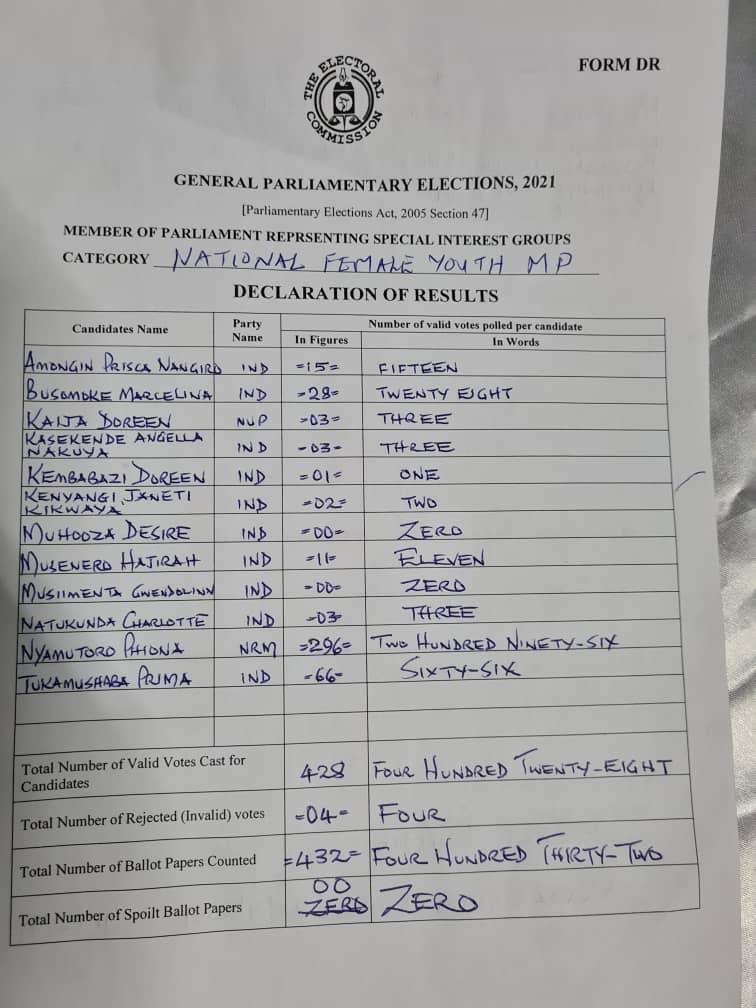
Youth have rejected Ms Angella Kasekende, an Independent a candidate in the National Female Youth Member of Parliament race.

According to sources, even when Ms Kasekende injected in huge sums of money, the youth ate her money but only gave three votes.

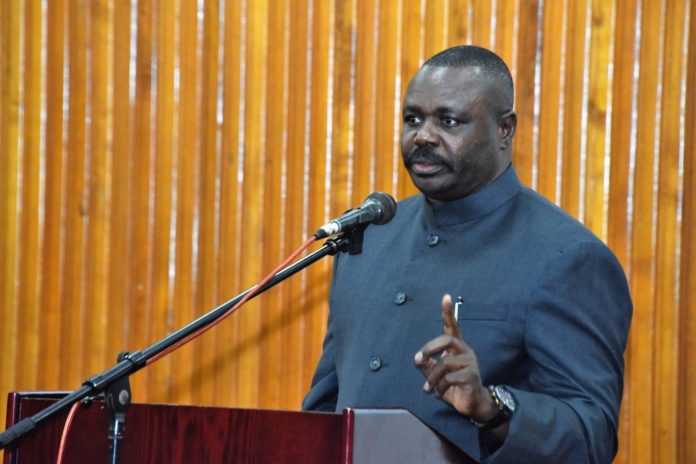
Angella Kasekende the daughter of former Bank of Uganda (BoU) Deputy Governor Louis Kasekende. She managed to get three votes out of 428 valid votes counted.

She was defeated by Phiona Nyamutoro of  National Resistance Movement (NRM) who got 296 votes.

Other contenders were Prisca Nangiro Amongin (Independent) 15 votes, Marcelina Busomoke (Independent) 28 votes, Doreen Kaija of National Unity Platform (NUP) three votes Muserero Hajirah, 11 votes, Prima Tukamushaba six votes, Doreen Kembabazi one vote, Janeti Kenyangi Kikwaya (Independent) two votes while  Desire Muhooza didn’t get any vote.

Stories Continues after ad

DJ Khaled to host MTV Africa Music Awards Kampala

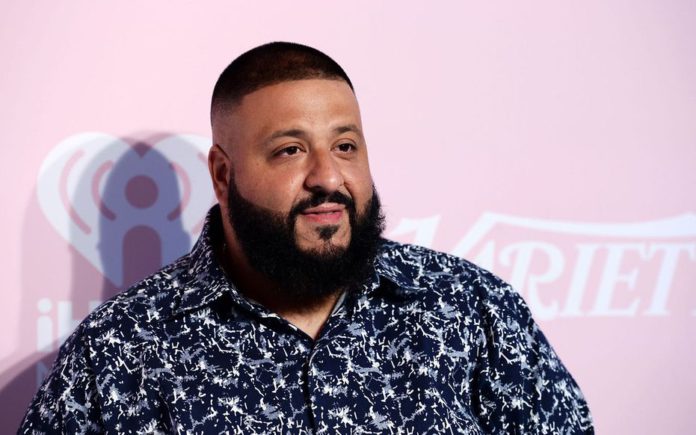
DJ Khaled

Grammy-winning producer, DJ and record exec DJ Khaled will host the MTV Africa Music Awards Kampala 2021 (MAMAs), broadcasting globally for the first time on MTV Feb 20th.

Due to #Covid-19 travel restrictions, Khaled will host the virtual ceremony from the comfort of his home in Miami.

“MTV has always been a great partner so I jumped at the opportunity to host this year’s Mamas,” said DJ Khaled.

“I can’t wait to celebrate the incredible music that comes out of Africa, which has inspired me throughout my career.”

DJ Khaled will be joined by African co-hosts that will be announced at a later stage for the awards ceremony set to air on MTV in 180 countries.

Khaled has made chart-topping hits featuring Jay-Z, Kanye West, Drake, Chris Brown, Ludacris, T.I., French Montana, Future, Big Sean, Rick Ross, John Legend, Nicki Minaj and Lil Wayne, among others.

“Africa is home to some of the world’s most dynamic talent and we’re excited to spotlight these artists as the MAMAs broadcast in 180 countries for the first time in MTV history,” commented Bruce Gillmer; president of music, music talent, programming and events for ViacomCBS Media Networks.

The MAMAs 2021 feature 20 awards handed out to celebrate the best in African talent over the past year. In addition to more general prizes: best male artist, female artist, song and collaboration, the MAMAs will recognize work from Portuguese and French-speaking Africa with the introduction of the Best Lusophone and Best Francophone categories. Other new awards include the MAMA Generation Change Award, Best Fan Base, Alone Together Best Lockdown Performance and Personality of the Year.

Stories Continues after ad

NUP secure 41 out of 44 council seats in KCCA

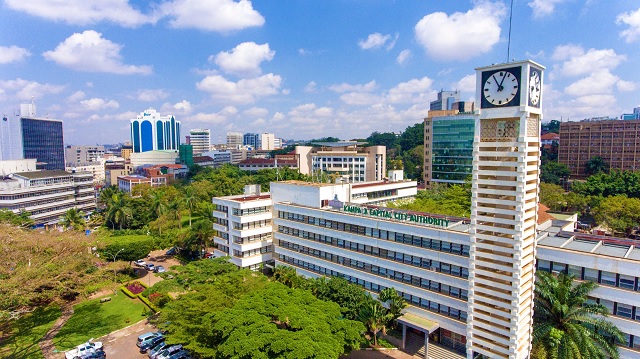
KCCA building

The National Unity Platform (NUP) party scooped 41 seats out of 44 seats for both the directly elected and woman councillors to Kampala Capital City Authority (KCCA) in the five divisions of the city.

This indicates a big win again in Kampala City and in the Buganda region for NUP, a party which is led by former Kyadondo East MP Robert Kyagulanyi Ssentamu aka Bobi Wine.

The other three seats were taken by members of the Forum for Democratic Change (FDC) which also sponsored the Lord Mayor Erias Lukwago. Deputy Lord Mayor, Doreen Nyanjura also retained her seat as the Makerere University Woman Councilor.

This will be the first time, two parties; National Resistance Movement-NRM and the Democratic Party (DP) will have no single representative at city hall.

In divisions such as Rubaga and Kawempe, NUP defeated all the other political parties scooping all city councillors seats.

In Nakawa, NUP took all the city councillors positions except Nakawa A where FDC merged the winner. NUP won all the six seats for the directly elected councillors (LC5) for Nakawa East and West.

For the women seats, NUP won Nakawa B, C and D.

Stories Continues after ad

CHAN 2021: Cranes target first victory against Togo

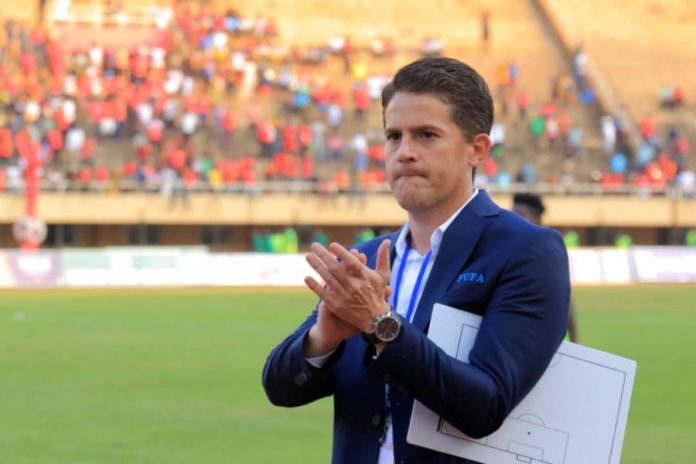
McKinstry

The next two matches for Uganda Cranes at the ongoing Total CHAN Finals in Cameroon will define the team’s journey at the tournament in Cameroon.

Having drawn goalless with Rwanda in the opening match on Monday, Johnathan McKinstry’s troops will be hoping to treat the matches against Togo and Morocco like Cup Finals.

However the Northern Irishman still has a lot of confidence in his team because they have been putting into practice what they have learnt during training sessions.

At the Pre-match Press conference on Thursday afternoon and a detailed interview session with fufa website in Cameroon McKinstry also revealed that strike Milton Karisa will not be available for the fixture against Togo on Friday.

“It is unfortunate that Karisa had to come out early in that game where we had a bright start against Rwanda. He had a good run during the Mini Tournament in Doula. The Medical team has done a wonderful job and will monitor the situation in the next few days. As we welcome back our captain Halid Lwaliwa, it is unfortunate that Karisa will not be available for selection on Friday,” said McKinstry after Wednesday’s training in Douala.

Uganda will aim to take full advantage of the Togolese’s poor form, however, as they are currently winless in each of their last nine matches across all competitions.

Having never qualified from the group stage before, the Cranes are banking on the experience of their squad to make a difference, with players from seasonal CAF Interclub competitions campaigners KCCA FC and Vipers SC.

Togo faces Rwanda in their last game on January 26th in Limbe, while Uganda locks horns with Morocco in Douala in a simultaneous kickoff.

Stories Continues after ad

Museveni returns to Kampala a week after presidential elections

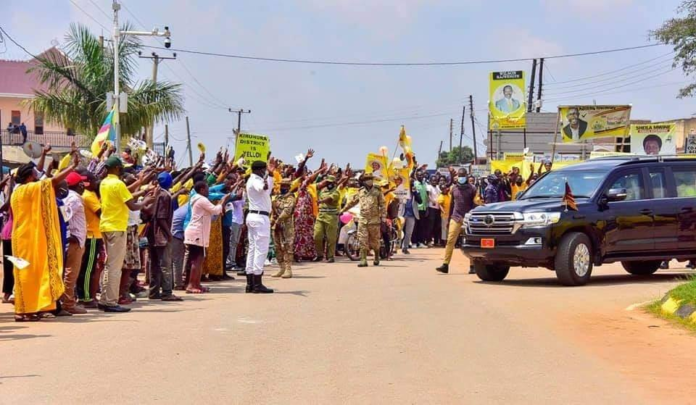
Museveni's supporters waving at him

President-elect Yoweri Kaguta Museveni has set off from his country home in Rwakitura Kiruhura District driving to Kampala, a week after the presidential elections.

Museveni was last week re-elected for a sixth term with 58.64% of the vote as his closest opponent Kyagulanyi Ssentamu Robert aka Bobi Wine won 34.83% of the vote. Museveni was on Saturday 16th January 2021 announced by the Chairman of the Electoral Commission (EC) Justice Simon Byabakama.

Accompanied by the First Lady who doubles as the Minister of Education and Sports, Janet Kataha Museveni, Museveni is driving himself amidst cheers and jubilation from his supporters who are eagerly waiting to wave at him at various trading centers.

Museveni has been making stopovers at the various designated towns of Lyantonde at 12pm, Kyazanga at 1pm, Lukaya at 2pm, Kayabwe at 3pm. He will later stop over at Mpigi at 4pm, Busega at 5pm and City Square at 6pm.

The self-drive and grand entry into Kampala is peddled at applauding his supporters for unanimously voting for him against others presidential candidates who were in the race. He will on May, 12th be sworn in for a term that will mark him 40 years in power.

Since he was declared a winner, the main opposition candidate Bobi Wine rejected the results and he has since been under house arrest with no one allowed in and out.

“For standing and defeating Gen. Museveni in an election, which he resoundingly rigged, I am still under house arrest eight days later! I thank all friends in Uganda and abroad who continue to stand with us, until we put an end to this indignity. Uganda will be free,’ Bobi Wine wrote on social media.

Stories Continues after ad

North and CEC members push for Oulanyah to be next Speaker

Speaker Jacob Oulanyah

A section of Central Executive Committee  and party members of the National Resistance Movement are pushing for Jacob Oulanyah to become the next Speaker of Parliament.

According to them, Mr Oulanyah deserves to be next Speaker given that his region voted party presidential flag bearer and posted high number of Members of Parliament.

Oulanyah is NRM Vice Chairperson for Northern Region. Oulanyah who has previously contested for the same slot but pulled out after party machinery prevailing over him to let it for the Kamuli district Woman MP, Rebecca Kadaga.

“It is no longer a secret, we are fronting Jacob Oulanya because he has been loyal to the party but above all, his region performed better. We are not against Kadaga but reality be told, she has been a deputy speaker and speaker trice. However, the overall factor is that her region didn’t vote our flag bearer”. a CEC source that sought anonymity told Eagle Online

According to media reports, Oulanyah has already indicated his interests to contest against Kadaga. Last year at a conflict resolution meeting at State House which was attended by both Kadaga, Oulanyah and other top party wigs that was presided over by President Museveni, Oulanyah affirmed to the head of state that come rain or sunshine, he was going to challenge Kadaga and nobody would compel him to quit the race.

What remains to be seen is whether the opposition and independents will front a candidate for any of the positions of Deputy and Speaker but what is known is that Kadaga has had the opposition and independents on her side.

Stories Continues after ad

FIFA to ban any European Super League players from World Cups

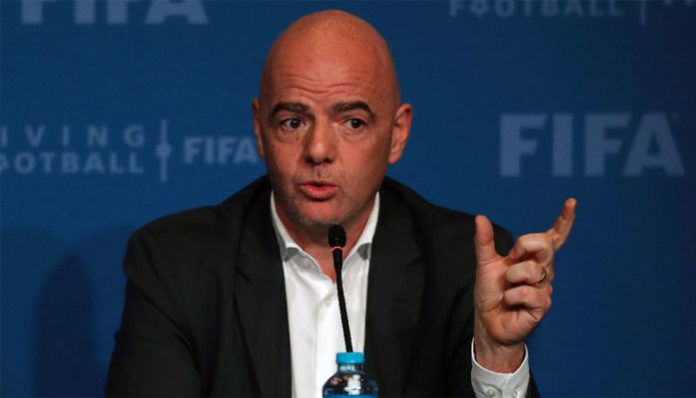
FIFA President Infantino

FIFA and six continental federations have threatened to ban any player that takes part in the proposed European Super League from international tournaments like the World Cup.

Reports of such a competition surfaced late last year where some of the biggest clubs in the top European leagues would hold their own tournament. It was to be a new 18 club pan-European competition, which would not be controlled by European’s governing body UEFA but by clubs.

However, a joint statement confirms the only such tournament that will receive official recognition is the Club World Cup, and any player involved in a breakaway event would be barred from being involved in official competitions.

The statement read; “In light of recent media speculation about the creation of a closed European ‘Super League’ by some European clubs, FIFA and the six confederations (AFC, CAF, Concacaf, CONMEBOL, OFC and UEFA) once again would like to reiterate and strongly emphasise that such a competition would not be recognised by either FIFA or the respective confederation. Any club or player involved in such a competition would as a consequence not be allowed to participate in any competition organised by FIFA or their respective confederation.”

“As per the FIFA and confederations statutes, all competitions should be organised or recognised by the relevant body at their respective level, by FIFA at the global level and by the confederations at the continental level. In this respect, the confederations recognise the FIFA Club World Cup, in its current and new format, as the only worldwide club competition while FIFA recognises the club competitions organised by the confederations as the only club continental competitions.”

“The universal principles of sporting merit, solidarity, promotion and relegation, and subsidiarity are the foundation of the football pyramid that ensures football’s global success and are, as such, enshrined in the FIFA and confederation statutes. Football has a long and successful history thanks to these principles. Participation in global and continental competitions should always be won on the pitch.”

Stories Continues after ad

Buganda in Uganda Politics

Map of Buganda

During the early independence times, Milton Obote and the Buganda Kingdom were on good terms politically. Together they ensured that Obote, not Benedicto Kiwanuka, became the Executive Prime Minister of Uganda. Obote’s small Cabinet had a sizeable number of Ministers from the Kingdom of Buganda, made easy by the political association of UPC and Kabaka Yekka.

The Ministers included Luyimbazi Zake, Sempa, Lumu and Kalule Ssettala. Hell, however, broke loose when Obote ignored the friendship that enabled him to assume power and subjected the decision of returning the Lost Counties of Bunyoro -Buyaga and Bugangaizi to Bunyoro through a referendum in the Lost Counties. The referendum favoured Bunyoro Kingdom, not Buganda Kingdom, when the occupants of Buyaga and Bugangaizi voted to belong to Bunyoro Kingdom. Buganda’s national heart towards Obote changed for the worse drastically. It was no longer going to be an easy political relationship between Obote and Buganda.

At the worst of their relationship Buganda angrily ordered, through the word of mouth of the then Katikiro of Buganda, Joash Mayanja-Nkangi, Obote to remove his Government from the soil of Buganda. However, it was like biblical David declaring war on biblical Goliath. A clash between Buganda and Obote’s instruments of coercion was inevitable. Blood flowed, the Kabaka of Buganda, Sir Edward Muteesa II fled to exile, and ultimately Obote abolished the Buganda Kingdom, alongside the Kingdoms of Ankole, Bunyoro and Toro and the semi-federal State of Busoga. That was a bad ending to a crucial political friendship.
Buganda never forgave Obote. She celebrated and ululated when Idi Amin overthrew Obote in 1971. That was undoubtedly expected, given the frosty relationship between Obote and Buganda. Amin’s earliest Cabinet had many sons of Buganda. Indeed, without Buganda’s solid support, Amin’s regime would have collapsed in the first few months of its existence. Explicitly, the real enemy of Buganda was perceived by the majority of the Baganda to be Obote. Even when they have suffered under the reign of Tibuhaburwa Museveni many Baganda have hitherto not considered him as much of an enemy as Obote was or is even in death.

Beyond Amin, one person Buganda did not want to see ruling Uganda again from her soil was Obote. Although the Kingdom had connived with Obote to deny catholic Benedicto Kiwanuka post-independence premiership, in 1980 it fielded behind Catholic Paul Ssemogerere’s Democratic Party to ensure the ballot paper denied Obote becoming President again and ruling from Buganda soil.

Ssemogerere did not succeed in flooring Obote and his UPC in the elections presided over by the Military Commission of the Uganda National Liberation Front (UNLF) even if the whole of Buganda was solidly behind him. When Ssemogerere cried foul, the second most powerful person in the Military Commission, which was led by strongman Paul Muwanga, took advantage and made himself the most forthright military crusader for electoral justice when he launched a rebellion against the Obote regime without first resigning from the Uganda National Liberation Army, whose Ministry of Defense he was the legitimate political head of. This crusader was Yoweri Tibuhaburwa Museveni. His crusade was helped by Baganda exiles in Kenya, led by former President Yusuf Lule, who in 1981 formed the National Resistance Movement (NRM) and its military wing, National Resistance Army (NRA), and invited him (Museveni) to be its Commander. It has never been different since.

Tibuhaburwa has remained commander in Chief and is these days commanding his army against Ugandans in general and Uganda in particular. Baganda got recruited en masse into the NRA and also perished en masse in the bushes of Luwero Triangle. Nevertheless the mission of removing Obote’s regime from power was realized when the Okellos overthrew the man from power, but the Okellos were subsequently also removed from power by the NRM/NRA on January 25th 1986, the very date in 1971 when Amin removed Obote’s first regime from power.Tibuhaburwa Museveni has never let go since then and has used elections since 1996 to legitimise a military adhesion to power. However, since 1996 the blood of Buganda has continued to flow despite the fact that they helped to affirm the NRM/NRA in power.

This is unfortunate. Even during the recent Presidential campaigns the majority of those who died were from Buganda. The Kingdom of Buganda, which the people of Buganda were told had been restored, remains a miniscule of its former self and glory since it was deprived of all political powers that were concentrated in one man constitutionally. The one man is using it effectively to exclude Ugandans from power by hook or crook.
The question is: did Buganda choose to use the 2021 Presidential and Parliamentary elections to express her despair, dissatisfaction and anger with the NRM/NRA (NRM/UPDF)?
Through the peaceful means of the ballot paper, Buganda seems to have succeeded in almost expelling NRM and NRA from effectively dominating her socio-political spectrum. There was almost no UPC in Buganda between 1962 and 1971, save for people like Samwiri Mugwisa and Paulo Muwanga, and the 2021 Presidential and Parliamentary elections of 14 January have reenacted that period: No big NRM people in Parliament anymore, thanks to Kyagulanyi’s decision to form a political party at a critical time and successfully sell it to Buganda. The tortures and killings of Buganda by army and police during the Presidential elections helped to unite Baganda under Kyagulanyi’s National Unity Platform, which also captivated many other Ugandans in the whole country. We shall soon know what went wrong in other parts of Uganda or during the elections to deny Kyagulanyi victory.

Are we beginning to see NRM/NRA decline in Buganda? It seems Buganda has chosen the National Unity Platform, led by strong, immensely popular Muganda, over NRM/NRA led by Tibuhaburwa Museveni. Well, time will tell. Tibuhaburwa Museveni has the money, jobs and political resources and the power of incumbency, which he can deploy to reverse the process of rejection by Buganda.
Whether we like it or not Buganda will remain a political force to reckon with in the politics of Uganda if she can meaningfully and effectively deploy it at the centre. Already Buganda, by virtue of the recently concluded elections, has become the greatest producer of Opposition members in the forthcoming Parliament. That must be a huge twist in the politics of Uganda. It means Buganda has become the leading regional force against NRM/A hegemony at the national level and at the centre of power: Kampala. If you say No then you are just being insensitive to the direction National Politics is taking: Wholesome Central Rejection of NRM/A hegemony. This is true even in Luwero, where NRM/A reigned its military exploits that catapulted it into power at the Centre. What can it mean if Opposition National Unity Platform takes almost all the Parliamentary seats in the area?

My thinking is that Buganda has accepted that if she led in bringing NRM/A into power militarily, she is the one that must lead in the determination to throw it out of power in Uganda. So far Buganda has succeeded in casting NRM/A as an occupation politico-military outfit. This is despite the fact that President Museveni has pumped trillions of taxpayers’ money to buy political party and himself. Even when Covid 19 struck President Museveni pumped billions in form of food, especially Wakiso and Kampala Districts, but the political effect has been negative for the President and his Party. It is clear Buganda wants change.

We can still ask: Is NRM/NRA really rolling out of Buganda? Is it true the people where President Museveni and his Party scooped enormous electoral success stories (in the periphery) don’t want change?
Well, if elections are what are left for Ugandans to use to communicate changing political attitudes as far as Kampala, Wakiso, and indeed the whole of Buganda, where most atrocities of the NRM/A have occurred over the years, then Ugandans have spoken, despite being harangued militarily. NRM/A is now like a small isolated island in the centre of an ocean of turbulent waters. It can only take refuge in the periphery to lengthen its stay in power politically; not militarily. But is the collective leadership of the NRM/A, so deeply wounded by the Presidential and Parliamentary elections, critically reflecting on what the elections results at the centre mean, if we are to take the results in the periphery as reflecting the current true collective political attitude of the people there?
Time for critical analysis has started, now that the INTERNET has been freed by the powers that be. It means our minds have also been freed.
“The Changing Political Attitudes in Uganda” is a reality, not fiction. What we see, however, could mean success of the NRM/A in the politico-military strategy of disconnecting the periphery from the centre for the purposes of power retention as long as it can.

For God and My Country

Oweyagha Afunaduula

Stories Continues after ad

Global economy to expand by 4% in 2021 as countries rollout #Covid-19 vaccine

#Covid-19 vaccine

The global economy is expected to expand four percent in 2021, assuming an initial COVID-19 vaccine rollout becomes widespread throughout the year. A recovery, however, will likely be subdued, unless policy makers move decisively to tame the pandemic and implement investment-enhancing reforms, the World Bank says in its January 2021 Global Economic Prospects.

Although the global economy is growing again after a 4.3% contraction in 2020, the pandemic has caused a heavy toll of deaths and illness, plunged millions into poverty, and may depress economic activity and incomes for a prolonged period. Top near-term policy priorities are controlling the spread of COVID-19 and ensuring rapid and widespread vaccine deployment. To support economic recovery, authorities also need to facilitate a re-investment cycle aimed at sustainable growth that is less dependent on government debt.

“While the global economy appears to have entered a subdued recovery, policymakers face formidable challenges in public health, debt management, budget policies, central banking and structural reforms as they try to ensure that this still fragile global recovery gains traction and sets a foundation for robust growth,” said World Bank Group President David Malpass. “To overcome the impacts of the pandemic and counter the investment headwind, there needs to be a major push to improve business environments, increase labor and product market flexibility, and strengthen transparency and governance.”

The collapse in global economic activity in 2020 is estimated to have been slightly less severe than previously projected, mainly due to shallower contractions in advanced economies and a more robust recovery in China. In contrast, disruptions to activity in the majority of other emerging market and developing economies were more acute than expected.

“Financial fragilities in many of these countries, as the growth shock impacts vulnerable household and business balance sheets, will also need to be addressed,” Vice President and World Bank Group Chief Economist Carmen Reinhart said.

The near-term outlook remains highly uncertain, and different growth outcomes are still possible, as a section of the report details. A downside scenario in which infections continue to rise and the rollout of a vaccine is delayed could limit the global expansion to 1.6% in 2021. Meanwhile, in an upside scenario with successful pandemic control and a faster vaccination process, global growth could accelerate to nearly 5 percent.

In advanced economies, a nascent rebound stalled in the third quarter following a resurgence of infections, pointing to a slow and challenging recovery. U.S. GDP is forecast to expand 3.5% in 2021, after an estimated 3.6% contraction in 2020. In the euro area, output is anticipated to grow 3.6% this year, following a 7.4% decline in 2020. Activity in Japan, which shrank by 5.3% in the year just ended, is forecast to grow by 2.5% in 2021.

Aggregate GDP in emerging market and developing economies, including China, is expected to grow 5% in 2021, after a contraction of 2.6% in 2020. China’s economy is expected to expand by 7.9% this year following 2% growth last year. Excluding China, emerging market and developing economies are forecast to expand 3.4% in 2021 after a contraction of 5% in 2020. Among low-income economies, activity is projected to increase 3.3% in 2021, after a contraction of 0.9% in 2020.

Analytical sections of the latest Global Economic Prospects report examine how the pandemic has amplified risks around debt accumulation; how it could hold back growth over the long term absent concerted reform efforts; and what risks are associated with the use of asset purchase programs as a monetary policy tool in emerging market and developing economies.

“The pandemic has greatly exacerbated debt risks in emerging market and developing economies; weak growth prospects will likely further increase debt burdens and erode borrowers’ ability to service debt,” World Bank Acting Vice President for Equitable Growth and Financial Institutions Ayhan Kose said. “The global community needs to act rapidly and forcefully to make sure the recent debt accumulation does not end with a string of debt crises. The developing world cannot afford another lost decade.”

As severe crises did in the past, the pandemic is expected to leave long lasting adverse effects on global activity. It is likely to worsen the slowdown in global growth projected over the next decade due to underinvestment, underemployment, and labor force declines in many advanced economies. If history is any guide, the global economy is heading for a decade of growth disappointments unless policy makers put in place comprehensive reforms to improve the fundamental drivers of equitable and sustainable economic growth.

Policymakers need to continue to sustain the recovery, gradually shifting from income support to growth-enhancing policies. In the longer run, in emerging market and developing economies, policies to improve health and education services, digital infrastructure, climate resilience, and business and governance practices will help mitigate the economic damage caused by the pandemic, reduce poverty and advance shared prosperity. In the context of weak fiscal positions and elevated debt, institutional reforms to spur organic growth are particularly important. In the past, the growth dividends from reform efforts were recognized by investors in upgrades to their long-term growth expectations and increased investment flows.

Central banks in some emerging market and developing economies have employed asset purchase programs in response to pandemic-induced financial market pressures, in many cases for the first time.

When targeted to market failures, these programs appear to have helped stabilize financial markets during the initial stages of the crisis. However, in economies where asset purchases continue to expand and are perceived to finance fiscal deficits, these programs may erode central bank operational independence, risk currency weakness that de-anchors inflation expectations, and increase worries about debt sustainability.

Stories Continues after ad

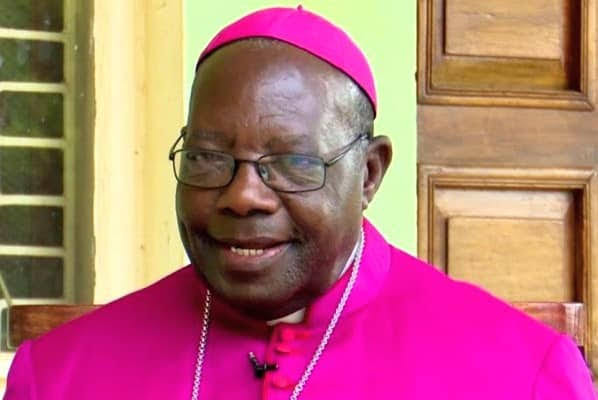
How Rtd Bishop John Baptist Kaggwa succumbed to #Covid-19

Rtd Bishop John Baptist Kaggwa

The Masaka Catholic Diocesan Chancellor Fr Edward Ssekabanja, has confirmed that Bishop John Baptist Kaggwa died of #Covid-19.

In a brief statement Fr Ssekabanja confirmed Kaggwa’s death which he said occurred on last evening. Kaggwa succumbed to Covid-19, which he had first contracted two months prior.

“It’s true the Bishop has gone to be with the Lord; he succumbed to Covid-19, which he has been battling for two months,” Fr Mayanja told Daily Monitor.

Bishop Kaggwa was born on 23 March 1943 at Bulenga, Busiro County, Wakiso District, in the Buganda Region of Uganda. He attended Lubaga Boys Primary School from 1952 until he completed Primary 6 in 1957. He then joined Kisubi Minor Seminary in 1958. While at Kisubi, he studied Latin. Later he studied at Katigondo Major Seminary, where he studied Philosophy.

In 1965, Archbishop Joseph Kiwanuka sent him to study at Pontifical Urban University, in Rome, on scholarship. He was ordained deacon in May 1970 in Rome. On 12 December 1971, he was ordained a priest, also in Rome, at the age of 28 years. He held a Doctor of Philosophy degree in Canon Law and Secular Law, awarded by Pontifical Urban University.

He was ordained a priest on 12 December 1971 in Rome, at the age of 28. Following his doctoral studies, he was appointed vice-rector of the Pontifical College of St Paul, in Rome, for five years. He returned to Uganda in the 1980s and was appointed the first rector of St. Mbaaga Seminary at Ggaba.

On 19 December 1994, he was appointed the coadjutor Bishop of Masaka. He was consecrated bishop on 24 June 1995 by his predecessor, Bishop Adrian Kivumbi Ddungu. He succeeded as Bishop of Masaka, Uganda on 10 January 1998.

On 6 July 2019, Bishop John Baptist Kaggwa was the Principal Consecrator of his replacement, Bishop Serverus Jjumba as the Ordinary of Masaka Diocese. Bishop Kaggwa then retired as bishop but continued to work in the diocese as directed by Bishop Jjumba.

Stories Continues after ad