Stanbic Bank
Stanbic Bank
27.3 C
Kampala
Stanbic Bank
Stanbic Bank
Home Blog Page 929

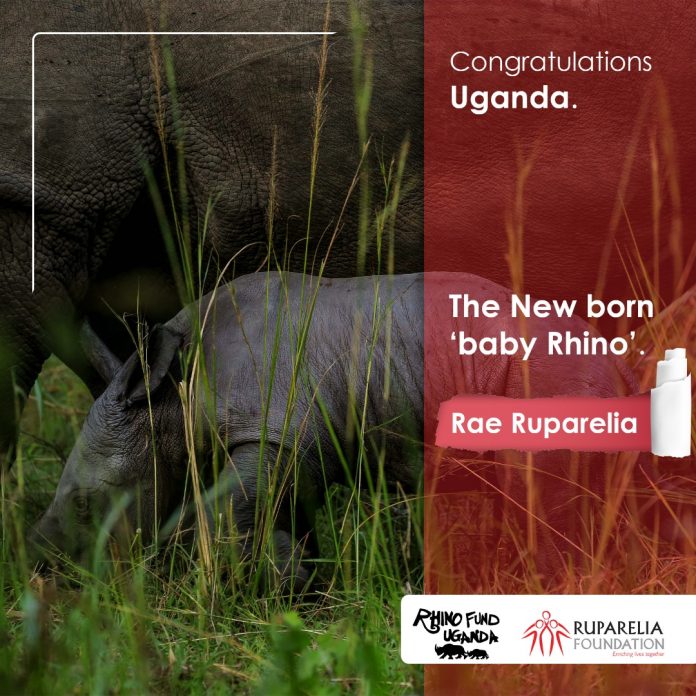
Uganda’s newest baby rhinoceros named Rae Ruparelia

Uganda's newest baby rhinoceros named Rae Ruparelia

Uganda’s newest baby rhinoceros at Ziwa Rhino Sanctuary in Nakasongola district has been named Rae Ruparelia.

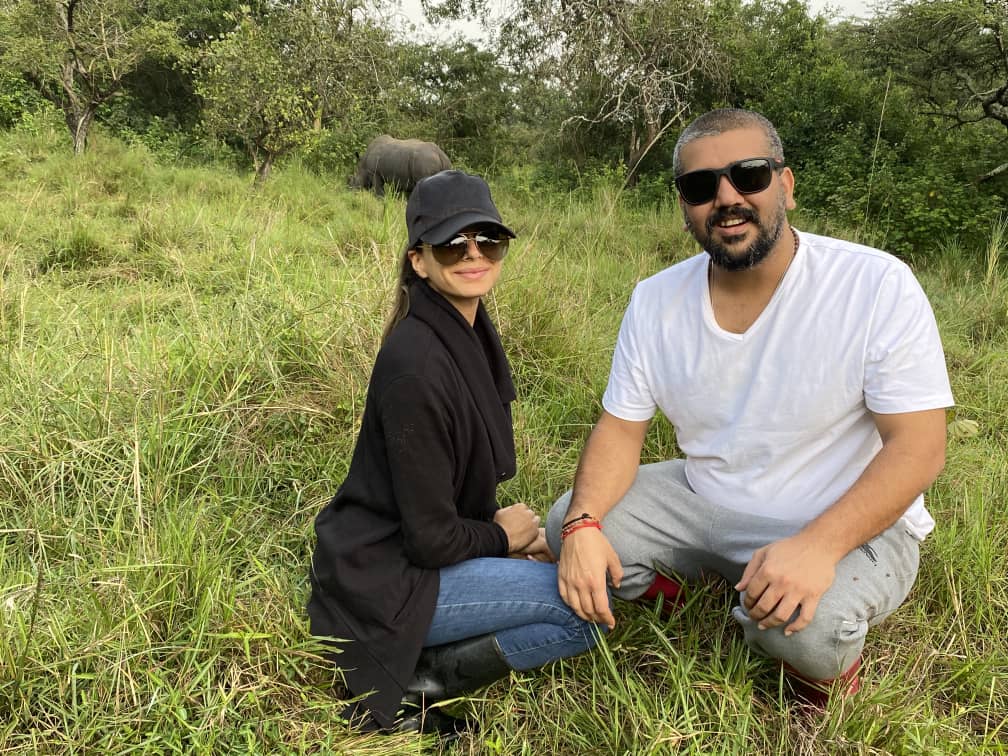
The name was decided by Rajiv Ruparelia, a Trustee Ruparelia Foundation and Managing Director Ruparelia Group together with his wife Rae Naiya as one of the conservation strategy during the naming ceremony on Thursday at Ziwa Rhino Sanctuary.

“Rae Ruparelia is the name given to the new born rhino at Ziwa Rhino Sanctuary in Nakasongola. I was joined with my lovely wife, Naiya Ruparelia to witness the naming on behalf of Ruparelia Foundation,” Rajiv said.

The businessman also revealed that the Foundation has been able to pay USD 5000 (Approx.18m) to Ziwa Rhino sanctuary to acquire naming rights for the baby rhino.

Rajiv urged the government of Uganda to incorporate a tourism course into the education curriculum right from lower classes if the country is to improve its tourism potential locally.

He said that there is a need for the next generation to learn and value the national parks and other protected national sites for the benefit of the country and the people of Uganda through earning livelihood.

He added that starting next year, Ruparelia Foundation will embark on networking Uganda’s tourism assets to the international community with the view of making the country a hotspot for tourism destination globally.

Angie Genade the Executive Director Rhino Fund Uganda said the fund is grateful for the Ruparelia foundation for partnering and naming the baby rhino.

Genade added that she wants the partnership to grow and Ruparelia Foundation to become the ambassadors of the rhino program.

Located 176km (100 miles) north of Kampala on the Gulu highway towards Murchison Falls (branch off at Nakitoma Trading centre) Ziwa is the home of the only wild rhinos in Uganda.

Presently the sanctuary is home to 22 southern white rhinos. The sanctuary has become increasingly popular with tourists; for Rhino Trekking, Shoebill Trek and Canoe Ride, Bird Watching, Night Walk, Nature Walk and Relaxation.

Stories Continues after ad

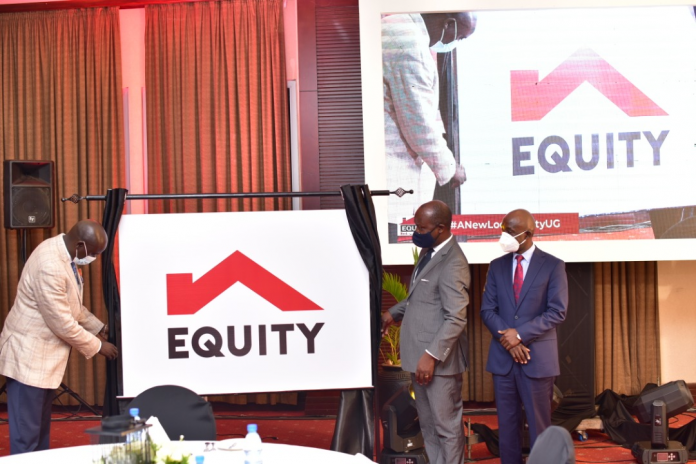
Equity Bank Uganda rebrands, unveils new logo

Equity Bank Uganda rebrands, unveils new logo

Equity Bank Uganda has unveiled a new identity in line with Equity Group Holdings’ ongoing transformation journey. The new identity is aimed at creating a sustainable growth path and service delivery in today’s dynamic financial services environment.

Going forward, Equity Uganda will present itself as a unified brand, with one basket of products and services under one roof. From an identity perspective, the new logo now features ‘Equity’ without an entity name such as Bank to signify a one-stop-shop and a consolidated business model for its inclusive range of financial services.

Speaking at the launch of the new identity, Managing Director Equity Uganda, Samuel Kirubi said that the new look is symbolic of Equity’s next phase of transformation to a unified brand offering integrated financial services in line with its vision of championing the socio-economic prosperity of the people of Africa.

“From tomorrow, you will see the new look signage in our branches, as part of our transformation program. Equity will roll out its refreshed look in all its physical outlets and digital banking platforms, social media assets, websites, mobile applications, mobile banking platform, online banking portals, ATM screens.” he said.

Mr. Kirubi added that the new look signals Equity’s commitment to an enhanced customer experience,  “We are constantly innovating to make the customer journey simpler and easier and to ensure that our offerings are constantly relevant to the evolving needs and aspirations of our customers. These improvements will continue to be progressively rolled out supported by customer education. We have witnessed how Equiduuka, our agency infrastructure has broadened financial access and deepened financial inclusion while at the same time earning them an extra revenue stream and creating jobs in rural and urban centres.”

Equity Group Holdings Plc CEO and Managing Director Dr James Mwangi noted, “The operating environment has changed, with the most dramatic shift being customers changing needs and aspirations in line with changing lifestyles brought about by technological advancements. Additionally, the market demographics are embracing youth-targeted products and services and becoming more mobile and digital. As a result, customers are increasingly showing preference for self-service banking, making banking something you do, and not somewhere you go. As a result, Equity will continue to innovate and disrupt its offerings to meet the current and future needs of customers.”

“The refreshed brand identity reflects the future we envision, one which communicates our global capability, strong heritage, innovative culture and agile business model that will carry and give the brand momentum to scale its strengths across Africa and the world,” Dr Mwangi added.

Equity maintains that the fresh identity matches the new realities, business model, customer segments and preferences and the evolving digital space; enabling it to focus on key areas that will see it remain relevant to the diverse and current consumer needs. This, it adds, will be achieved through spurring economic growth by empowering consumers; businesses and enterprises through innovative solutions, infusing digital capabilities at all touch points, while nurturing existing and building new relationships.

Going forward, Equity will now present itself to the world as one unified brand, with one basket of products and services under one roof ranging from banking, insurance and investment from a service delivery perspective.

The bank will continue investing and working for the great causes in the country such as financial literacy and access, entrepreneurship, agriculture, innovations and environment.

The roll-out of the new identity by Equity Group Holdings started in Kenya. Subsequently, Equity South Sudan and Equity Uganda have rolled out and more subsidiaries are expected to launch soon.

Stories Continues after ad

#Covid-19 could push 150 million people into extreme poverty by the end of 2021- David Malpass

David Malpass, President of the World Bank Group

The #Covid-19 pandemic is having a devastating impact on public health, societies, and economies around the world: it could push up to 150 million people into extreme poverty by the end of 2021. Countries cannot recover until all their people can live their lives with confidence.

To save livelihoods as well as lives, we need to reach people with vaccines as soon as these are available. Doing this on an unprecedented global scale poses a huge challenge, especially for developing countries.

Both Pfizer-BioNTech and Moderna have announced that vaccines could be available soon; other trial results are imminent. So, the question is moving from if we’ll have vaccines to when and how we can get them to people everywhere.

We want to make sure that low- and middle-income countries have fair, equitable access to vaccines , with priority for people who need it most urgently. In many places, we’ll also need to strengthen health systems and build logistical capacity for vaccination to succeed.

This is where the World Bank Group plays a key role. In October, the World Bank approved up to $12 billion to help developing countries purchase and distribute vaccines, tests, and treatments.  IFC, our private sector development arm, is making $4 billion available for manufacturers of vaccines and related supplies in low- and middle-income countries. Our staff have expertise ranging from public health to procurement to transport and logistics, and we have a strong presence on the ground in developing countries worldwide.

“We aim to support vaccination for up to a billion people. And once vaccines can be purchased, distributing them will be complex. Large-scale immunization needs careful planning, skilled personnel, and reliable health infrastructure. Three areas will be critical.”

First, logistics. Governments will have to ramp up transport and storage to maintain an unbroken cold chain for the vaccines. Some countries will need help to reach remote areas and to expand storage, build cold chains, and improve health facilities. We can learn from experience in West and Central Africa, where countries successfully deployed an Ebola vaccine requiring storage at around -60 degree Celsius – comparable to that needed for the BioNTech/Pfizer Covid vaccine – with dry ice packs on motorbikes reaching the remotest villages.

Second, delivery. Today, most countries immunize infants, but not large swathes of the adult population. Each will have to prioritize who gets the vaccine first. For example, frontline health care workers, the elderly, people with pre-existing conditions, and providers of public services like teachers, the police, and grocery workers. Most countries will be further stretched as they aim to restore other health services that have been disrupted.

Countries also need systems to track that medicines reach people and are distributed as intended, including the second dose that most vaccines require.   Digital and technological innovation can help. In Pakistan, for example, the World Bank has supported polio vaccination with digital data tools to locate infections, guide vaccinators, and monitor progress. This can help prevent pilferage and diversion of vaccines as well as minimize risks of fraud in administration of vaccines.

Third, public acceptance. Governments may face widespread hesitancy whether the new medicines, developed at record speed using new technologies, are indeed safe. Recent Ebola outbreaks highlighted the importance of building trust in immunization. In the Democratic Republic of Congo, this involved hiring local staff, engaging with community and religious leaders, and conducting campaigns in local languages to counter rumors and misinformation.

Over the next 100 days, the World Bank aims to help at least 100 countries get ready to deploy COVID-19 tests, treatments, and vaccines.  We are coordinating closely with Gavi, UNICEF, WHO, CEPI, and the Global Fund and offering financial and technical support. We’ll start by helping countries assess their readiness, quantify cost gaps, and boost health systems to implement vaccination.

IFC recently invested in BioE, an Indian vaccines manufacturer, and expects to help other manufacturers in developing countries expand local production when vaccines are available. Innovative solutions include the repurposing of food distribution channels to deliver vaccines and the use of blockchain to trace the delivery.

The Bank Group’s vaccine work builds on our pandemic emergency response. Projects in 112 countries are helping save lives and build stronger health systems.  Yemen and Ethiopia needed better facilities as well as medical supplies and equipment.

In Afghanistan, our support has boosted laboratory systems and delivery of services. We’ve helped Egypt launch a national campaign on COVID prevention and continue routine medical services. And we’ve helped acquire medical equipment in Argentina, Ecuador, Indonesia, Haiti, Senegal, Somalia, and Ukraine.

“The challenge of distributing COVID-19 vaccines demonstrates the need for strong, inclusive health systems in every country. We need to take a broad view and build more resilience, because it’s certain that there will be future health emergencies.”

The urgent need for vaccination can also bolster broader health efforts: for example, Afghanistan’s polio program and Nigeria’s routine immunization program have strengthened primary health care by improving common platform systems, including logistics and cold chain capacity.

I’m confident that we can focus our energies, and build a broader international coalition than ever before to overcome a challenge that affects each of us , rich or poor, in every country. I’m hopeful that this moment can be a watershed, where all of us recognize that no one’s health is fully protected until all of us are.

David Malpass is the President of the World Bank Group

Stories Continues after ad

Standard Chartered Bank Uganda wins four international and local Banking Awards

Standard Chartered Bank Uganda wins four international and local Banking Awards

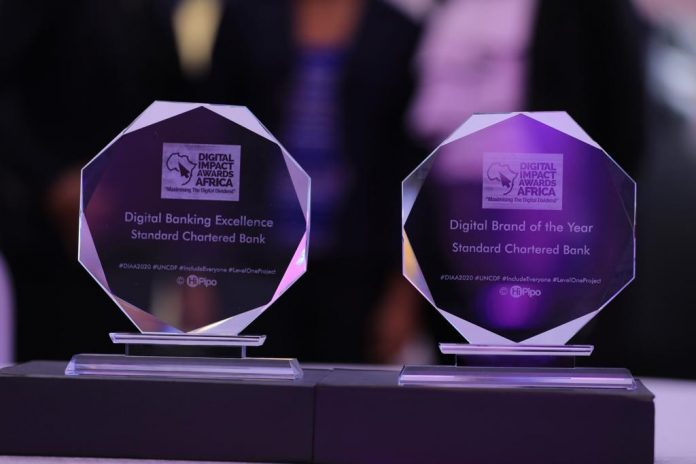
Standard Chartered Bank Uganda has clinched four international and local prestigious awards from the Financial Times’ Banker Awards, Global Finance and Digital Impact Awards Africa.

Standard Chartered was named Bank of the Year in Uganda 2020, an award accorded to them by The Banker Awards.

For the last 94 years, The Banker has been the world’s leading monthly journal of record for the banking industry. The aim of the Banker Awards is to highlight industry wide excellence within the banking community globally. Judges select winning banks in 120 countries based on performance, innovation, adding customer value and leadership in society.

The Banker ‘Bank of the Year’ Awards are regarded as the Oscars of the Banking Industry.  It is therefore a great honor and privilege to receive this prestigious and highly contested global banking award.

It was also named Best Consumer Digital Bank in Uganda 2020 by Global Finance. Recently Global Finance announced Standard Chartered Bank Uganda Limited among its winners during the 21st World’s Best Consumer Digital Banks Award Ceremony. The Bank was selected based on the strength of our strategy to attract and service customers digitally, success in getting clients to use digital offerings, growth of our digital customers, breadth of product offerings, evidence of tangible benefits gained from digital initiatives, and web/mobile site design and functionality. This is the 3rd time in a row that we have received this prestigious award from Global Finance.

The ‘Digital Brand of the Year’ by Digital Impact Awards Africa. This is the top award of the Digital Impact Awards Africa and the category recognizes a brand that demonstrates excellent use of the digital infrastructure. The bank received the award as a brand that made the most effective use of Distributed File System (DFS), web, mobile and social media platforms as well as for having excelled at innovative online service delivery, digital financial integration, digital marketing campaigns, social media performance and cybersecurity.

The ‘Digital Banking Excellence Award’ accorded by Digital Impact Awards Africa. The award recognized the bank’s excellence in offering a variety of Digital Banking services. Standard Chartered received the award after an in-depth analysis of our digital banking services features such as; account opening, funds transfers, payments, savings, and insurance, loans/credit and deposits/withdrawal capabilities.

The award also based on an assessment of our platforms, cybersecurity features, usability and innovativeness by evaluating whether our digital products offered a unique financial solution, solved a significant problem and used technology creatively.

Speaking about the accolades, the Albert Saltson, the CEO, Standard Chartered Bank Uganda said; “We are deeply honored and grateful to have been recognized and awarded by the various international and local institutions in a year riddled with challenges and while operating in a very difficult environment. We have walked the digital journey for half a decade now with a clear strategy to be a Digital First Bank and right now we are being recognized for the leading role we play in creating a shift toward a new world of banking in Uganda through our innovative, superior, state of the art digital platforms in which we have heavily invested since 2016.”

He said awards would not have been possible without the support of all out their stakeholders especially clients who continue to trust our digital platforms and embrace them, their diligent and committed workforce and all other stakeholders who contribute to our success.

“We have been investing in developing our digital banking solutions not only to transform our clients’ experience, but to also provide them with the highest levels of cybersecurity. We scaled up last year with the launch of the first-of-kind Digital Bank which gives our clients access to over 70 self-service requests. Core among these services is the ability for anyone to become a client of the Bank by downloading the Standard Chartered Mobile App, and then open a free online “Digital Life Account” in under 15 minutes.” he said

“We will continue to strategically invest in digital technologies that will shape the future of banking in Uganda by developing market-leading digital solutions that deliver affordable, secure, hustle-free, easy, flexible and convenient banking for all our clients,” he said.

Stories Continues after ad
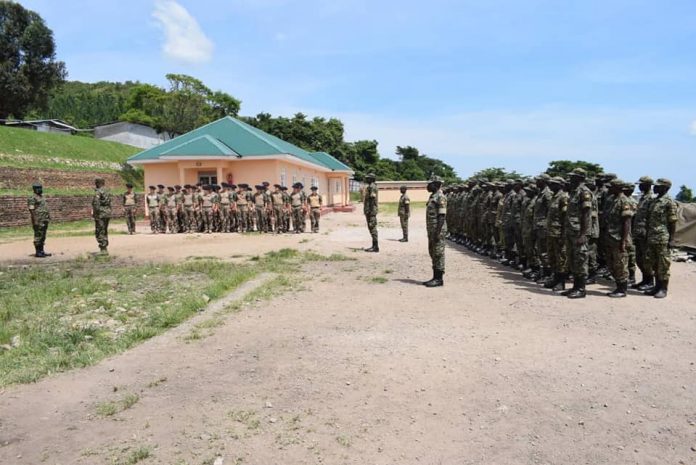
UPDF and French troops complete joint mountain operation exercise

UPDF and French troops complete joint mountain operation exercise

Uganda People’s Defence Forces (UPDF) and French soldiers have completed a seven-day joint mountain operation exercise.

The exercise that was conducted on mountain Rwenzori saw soldiers climb to its peak, Margherita.

The activities conducted during the exercise included; first aid, counter Improvised Explosive Devices (IED), logistics platoon, combat platoon as well as real rescue in mountainous environment.

While welcoming back the troops from the exercise at Mountain Warfare Training school (MWTS) in Karugutu, the mountain division second in command Col Chris Ogwal congratulated troops upon successfully completing the hectic exercise.

He said, “UPDF has built capacity in mountain warfare to deter any attacks on Uganda from the mountainous Rwenzori, Elgon and Kigezi regions, so this knowledge is vital to participants.”

He thanked the French government for the good collaboration and said they are always welcome for more of such exercises.

The French Defence Attaché to Uganda Lt Col Betrand De Boise thanked UPDF leadership for the great support during the exercise.

The Commandant of MWTS, Col Dothan Kavuma said this exercise was meant to develop more skills and capacity of troops, and the terrain was favourable. “With these skills, troops will be able to operate in mountains,” Col Kavuma said.

Present were mountain operation expert from France Maj Laurent Luchini, commanders, staff officers and soldiers from MWTS.

Stories Continues after ad
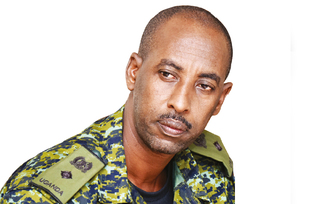
Museveni drops Col. Nuwagaba from UPDF Marines

Col. Nuwagaba.


President Yoweri Museveni has dropped Col. James Nuwagaba from Uganda Peoples’ Defence Forces Marine brigade.

Gen. Museveni sent Col. Nuwagaba to army general headquarters awaiting deployment. Details of Col. Nuwagaba’s sacking weren’t available by the time of Eagle Online published this story but sources within the security circles pointed to the cries by the population especially the Speaker of Parliament on allegations of torture.

Col. Nuwagaba and his team have been overseeing the security and fisheries sector on the lakes and other water bodies across the country but there were several cries by the population pinning them on torture.

The Fisheries Protection Unit banned fishing of undersized fish during its inception in 2017 as part of the move to end immature fish but also to realign the fishing sector.

The UPDF Marine led by Lt Col. James Nuwagaba believed the move would quickly help end illegal fishing. Two years after the Fisheries Protection Unit recorded tremendous success in the fight against illegal fishing, several leaders rose up against the unit alleging that soldiers deployed on the waters were torturing them.


Stories Continues after ad
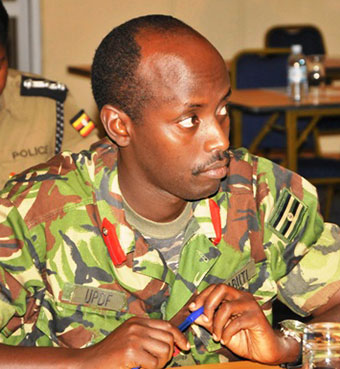
Who is Maj. Gen. Sabiiti Muzeeyi?

Col-SabIiti-Muzeeyi.

Major General Steven Sabiiti Muzeyi, has been the Deputy Inspector General of Police (DIGP) of the Uganda Police Force, the second-highest rank in that branch of Uganda’s government, effective 4 March 2018.

He replaced Martin Okoth Ochola, who was promoted to Inspector General of Police. Immediately prior to his present assignment, Sabiiti, at the rank of Brigadier, served as the Commander of the Military Police of the Uganda People’s Defence Force (UPDF).

Maj. Gen Sabiiti was born in Mbarara District circa 1975. Sabiiti’s father Zekeriah Muzeyi Magyenyi was married to one of Museveni’s maternal aunties. A veteran of Uganda’s bush war, Magyenyi died in June 2007. Sabiiti’s mother is Javanis Magyenyi. The young Sabiiti attended Ntare School, then Mbarara High School before he was admitted to Makerere University, Uganda’s oldest and largest public university.

At Makerere he studied biochemistry, graduating with a First Class Honors degree of Bachelor of Science. In 1997, he joined the UPDF, signing up in what was then the Presidential Protection Unit (PPU). PPU has since been renamed the Special Forces Command (SFC). Sabiiti attended boot camp at Kasenyi Training Wing, in Entebbe. A total of 117 recruits began the basic training course. Twenty five of them dropped out and the new Captain Sabiiti Muzeyi graduated at the top of the remaining 92.

Later, he studied at the Uganda Senior Command and Staff College, in Jinja, in Uganda’s Eastern Region. At the rank of Colonel, he won a slot to attend a senior command course at the United States Army Command and General Staff College at Fort Leavenworth, in Kansas. When the United States government blocked his admission, he was instead sent to a military college in Russia.

Sabiiti was a member of the PPU security forces that provided VIP security during the visit of United States President Bill Clinton to Uganda 1998. He then enrolled into graduate school and lectured part-time on the advice of family members, before returning to the PPU.

He progressively rose in rank, taking on increased responsibility on the way. When PPU was renamed Presidential Guard Brigade (PGB), with first-son Muhoozi Kainerugaba at the helm, Sabiiti Muzeyi was selected as his second-in-command. Sabiiti, at the rank of Lieutenant Colonel, commanded the unit, when Muhoozi was in South Africa, attending a military course.

When Muhoozi was promoted to Brigadier, Sabiiti was elevated to Colonel. He became Brigadier and Commander of the Uganda Military Police, after his return from the Russian military course. On the evening of Sunday 4 March 2018, he was appointed Deputy Inspector General of Police, to deputize Martin Okoth Ochola.

In February 2019, as part of a promotion exercise involving over 2,000 men and women in the UPDF, he was promoted from Brigadier to Major General.

Stories Continues after ad
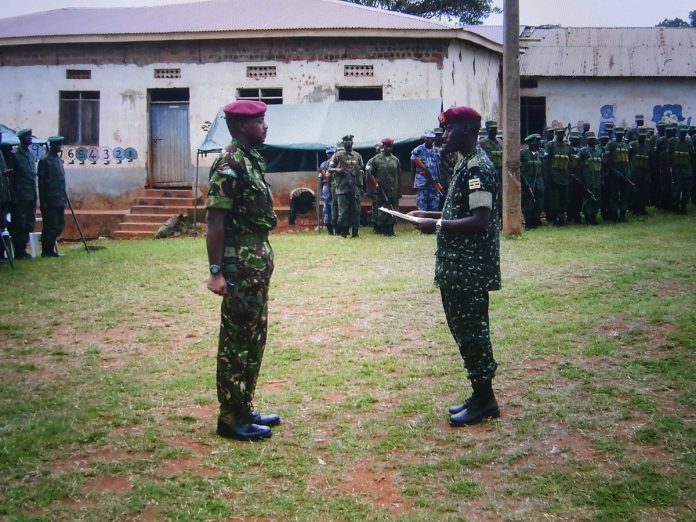
Museveni sacks Mzee Sabiiti as Deputy IGP as his son Gen. Muhoozi eats big in the latest reshuffle

Gen. Muhoozi and Gen. Sabiiti.

President Yoweri Museveni who doubles as the Commander in Chief has sacked  Deputy Inspector General of Police Maj. Muzeeyi Sabiiti and appointed Maj. Gen. Paul Lokech as Deputy IGP.

Muzeeyi has been sent to army headquarters awaiting deployment.

In the same changes, Museveni has assigned his son Lt.Gen. Muhoozi Kainerugaba who is senior presidential advisor on Special Duties as new commandant of the Special Forces Group replacing Maj. Gen. James Brungi who will  Gen. Lokech on special assignment in South Sudan.

Gen. Muhoozi will retain his post of senior presidential advisor on Special Duties.

“I congratulate UPDF for defeating the insurrection that the traitors with their foreign backers , attempted to stage a few weeks back. The police force must be made to do its duty of defending Ugandans from lawlessness, threat to life and property, any police person that does not do do this must leave police, there are thousands ready to replace them” Museveni wrote.

Stories Continues after ad

NRM’s flag bearer in Masaka Woman MP race passes on

Freda Nanziri Kase Mubanda

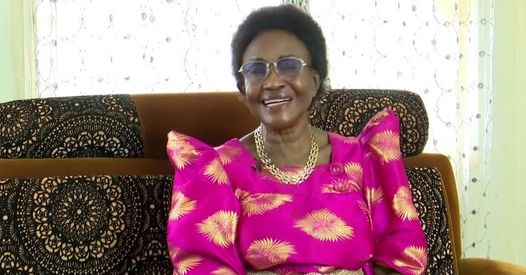
The National Resistance Movement’s (NRM) flag bearer in Masaka District Woman MP race Freda Nanziri Kase Mubanda has passed on.

Mubanda died at Aga Khan Hospital where she has spent a number of days. She has reportedly succumbed to #Covid-19.

The 76 year old was the Masaka District Woman MP from 2011-2016.

Stories Continues after ad

Ruparelia Foundation donates to Kids with special needs in 3 Orphanage Centers

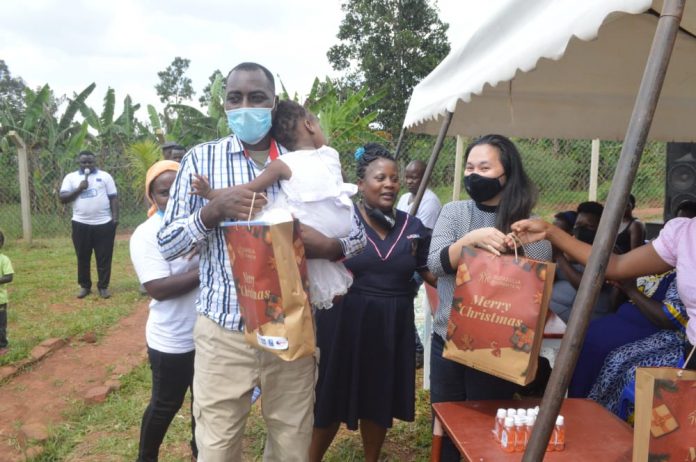
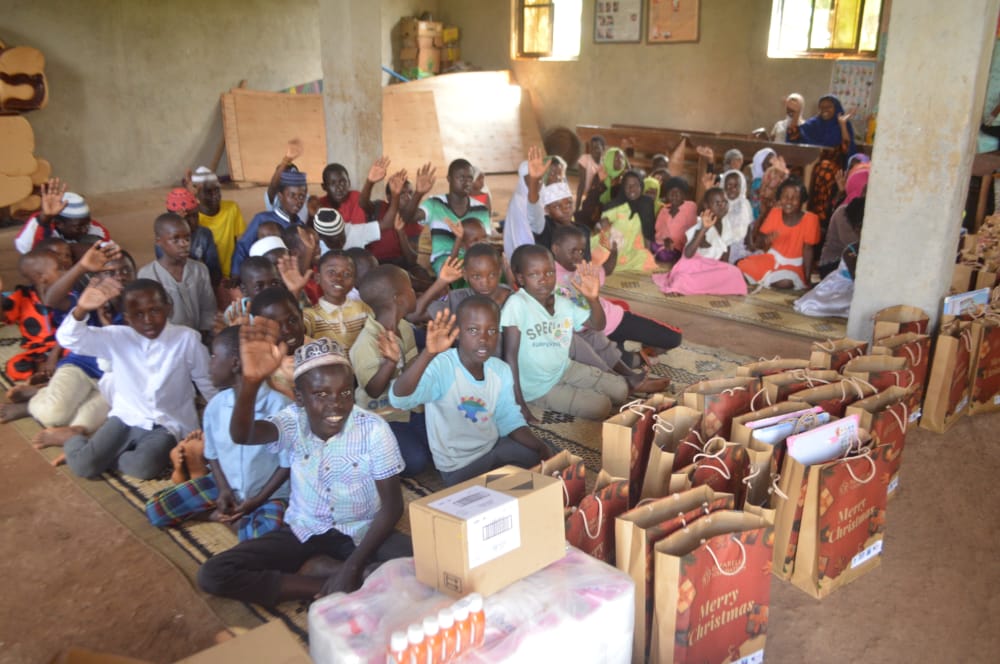
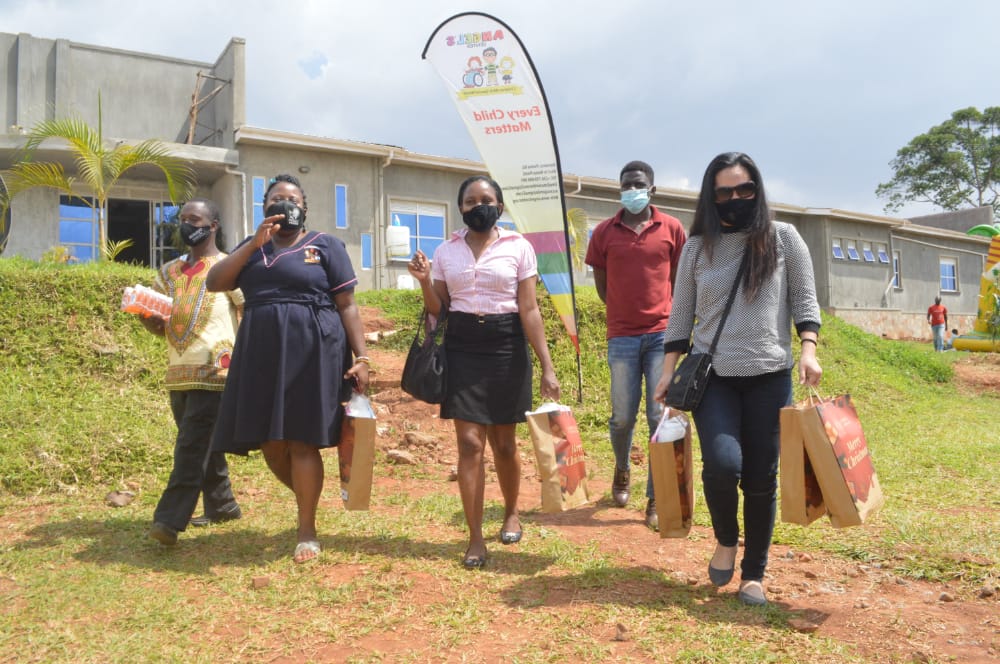
The Ruparelia Foundation has donated to children with special needs in three Orphanage Centers .

Every year the Foundation makes Christmas parties for the kids with special needs but due to Covid-19, the Foundation donated 5000 Christmas hampers to their care centers.

The Orphanages include; Eseza Foundation, Islamic Foundation and Angel Center.

The Items were handed over by Jerely Fernandez on behalf of Ruparelia Foundation.

Stories Continues after ad