Stanbic Bank
Stanbic Bank
24.7 C
Kampala
Stanbic Bank
Stanbic Bank
Home Blog Page 943

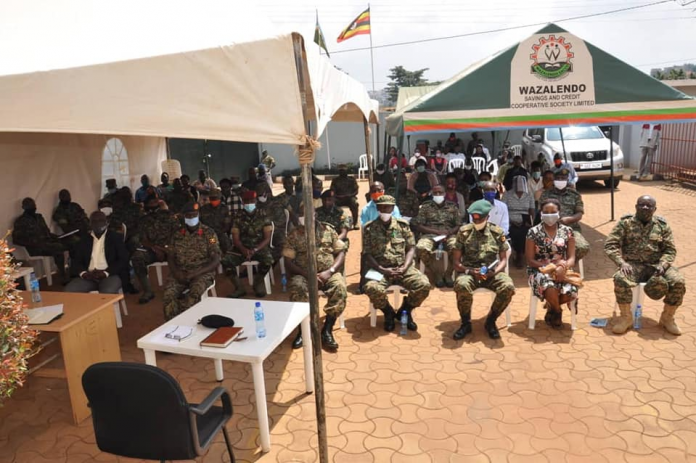
Examine your financial lifestyle to benefit from the SACCO Wazalendo members told

Wazalendo members attending the meeting.

The Chief Executive Officer of Uganda Peoples Defence Forces’ (UPDF) Wazalendo Savings and Credit Cooperative Society (SACCO), Col. Joseph Freddy Onata has urged staff to examine their financial lifestyles if they are to benefit from the financial opportunities the SACCO avails.

Col. Onata said this during the monthly scientific staff meeting at the SACCO headquarters in Kiwatule. “Wazalendo does not only give financial support through loans and salaries but also gives financial literacy to its staff and members on how to utilize the funds.” he said

He encouraged the staff to act exemplary in handling personal finances and went on to appreciate them for their efforts towards the growth of the SACCO regardless of a few challenges.

“The essence of the meeting is to foster cooperation amongst employees and management, to provide and share effective information, to review the previous issues and address any occurrences.” he said

He implored each staff to have targets as they come to work and be accountable for the position each one holds, in order to work towards achieving the objectives of WSACCO.

Stories Continues after ad

IOM launches continental strategy on migration for Africa


The International Organization for Migration (IOM) has launched the first Continental Strategy on Migration for Africa for the period 2020-2024.

The Strategy provides opportunity to further develop synergies for more robust migration dialogues and outcomes across regions and with all relevant partners.

The IOM’s Continental Strategy was conceived to reinforce commitment towards safe, orderly and regular migration within and outside the African continent. Through multi-stakeholder engagement, it is expected to give impetus for adaptive measures for better migration management and scale up the positive impacts, opportunities and benefits of migration for the whole of society

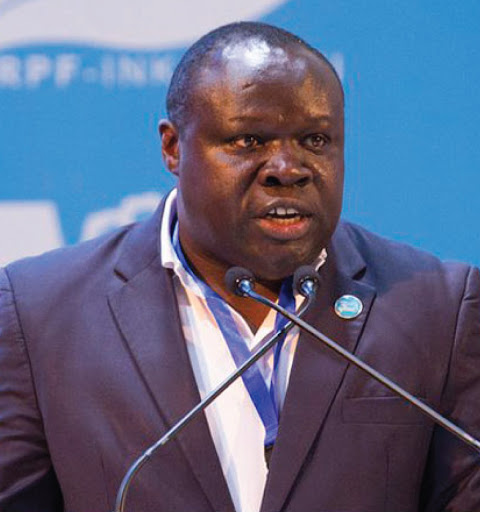
Speaking during the virtual launch of the strategy, which drew participation from IOM, African Union Commission, African Development Bank, UN Economic Commission for Africa and Regional Economic Communities in Africa, the EAC Deputy Secretary General in charge of Productive and Social Sectors, Christophe Bazivamo (Pictured Above), noted that the Strategy would enhance the governance framework for migration and realization of benefits arising from migration on this continent.

“As you are all aware, migration is a natural and unavoidable phenomena that knows no boundaries. Thus, its management requires combined efforts at different levels in order to deal with the barriers to safe and orderly migration,” Bazivamo said.

According to IOM, African migration in the 21st Century takes place mainly by land, not by sea. African migrants’ destinations are overwhelmingly not to Europe or North America, but to each other’s countries.

Noting the various faces of migration which include but are not limited to human trafficking and smuggling on the continent, the Deputy Secretary General said that the development of an effective policy instrument that responds to the current migration challenges in Africa was not only timely, but also relevant.

“This Strategy will therefore, enhance and guide the harmonization of member states’ and regional migration policies and legal frameworks,” he.

The EAC has called for deliberate efforts by other RECs to incorporate the Strategy interventions and recommendations in their policy frameworks and strategies.

EAC and IOM signed a Memorandum of Understanding (MoU) on 5th June 2006. The MoU has contributed towards overall efforts to ensure free and safe movement of people between EAC Partner States while tackling issues such as irregular migration, smuggling, human trafficking and labour migration.

Large refugee movements and internally displaced people, labour migration, irregular migration and traditional temporary migration characterize the region’s migration flows. Many of the migrants originating from the EAC Partner States remain within the region, making the Partner States countries of origin, transit and destination.


Stories Continues after ad

Gov’t reduces #Covid-19 testing fees as forgery of certificates increases 

Health Ministry PS, Diana Atwine.


The Ministry of Health has reduced the cost of testing for #Covid-19 from Sh240,500 ($65) to Shs 185,000 ($50) for people seeking testing services in government laboratories. In August, the government put the price at Shs240,500 for individuals who wanted to test for #Covid-19.

According to the statement released by the Permanent Secretary of the Ministry of Health Dr. Diana Atwine, the cost has been reduced by $15. The reduction of testing fees is alluded to resumption of international flights.

“I would like to inform you that the cost of transporting laboratory testing kits and other supplies from the point of manufacture to the country has reduced due to the resumption of international flights.” Dr. Atwine said

She said the government will continue to offer free testing services to patients who present to health facilities with #Covid-19 symptoms, contacts of people who have tested positive for #Covid-19, community surveys to establish the extent of the spread of the virus, frontline health workers and surveillance samples.

The reduction on covid-19 testing fees happens in the wake of the shooting numbers of forged #Covid-19 certificates. Last week, a total of 23 passengers of various origins were intercepted by the Aviation police at Entebbe International Airport after they presented forged #Covid-19 certificates.

According to the Kampala Metropolitan Police Spokesperson Patrick Onyango, the perpetrators who include 13 men and 10 women will be slapped with forgery charges and uttering false documents.

Currently, Makerere University Hospital was taking the lowest charges of Shs200,000 form the initial fees of Shs 150,000. Nakasero hospital is charging $97.93(ShS365000) with results in 24 to 48 hours,$ 107.32(Shs400,000) at Kampala hospital results in six hours, $99.28(Shs370,000) with results in 24-48 hours or $126.11(Shs470,000) results got in 12 hours.

Stories Continues after ad

Veteran journalists urge media houses to collaborate on investigative projects

Veteran journalists urge media houses to collaborate on investigative projects

Veteran investigative journalists have urged media houses to tame their rivalry and collaborate on various investigative projects to fulfill their watchdog role of making leaders accountable.

The clarion call was made during a debate where they discussed the state of investigative journalism in Uganda. The discussion was organized by African Institute of Investigative Journalism (AIIJ).

NTV’s investigative journalist Emmanuel Mutaizibwa said, “We should not look at journalism as competition. We need to encourage collaborative journalism. That’s the only way we are going to improve investigative journalism.”

They decried the under funding by the various media houses saying that they have prioritised business (money making) other than making leader’s accountable and changing people’s lives.

The seasoned investigative journalist and Executive Director of AIIJ, Solomon Serwanjja said in the next months, they will be focusing on collaborative investigations and grants making.

The Managing Editor of Monitor Publications Ltd Charles Bichachi said newsrooms need for better investigative stories through Courage, passion, curiosity, initiative, logical thinking, skepticism, organization, discipline, flexibility, teamwork, good reporting and writing skills.

The founder of the Independent Magazine and former investigative journalist at Daily monitor, Andrew Mwenda said journalists should rethink on how to do investigative journalism that is quick, sharp and short. “People have a lot of things to attend to, you should give us sort and precise pieces. In the modern time the bit of news has changed. We have to attend to social media, Parties, phones, whisky” he said.

“Investigative stories always come along with hardships. Most journalists are threatened most especially when it comes to covering stories that have prominent people. They are forced to sensor the facts or sugar coat them because of this fear,” Mwenda said.

He recounted an investigative report where a former army commander threatened to kill him (Mwenda) after he exposed his tendencies of inflating the number of soldiers and hence taking salaries of the inflated numbers of Soldiers.

Professor Monica Chibita who serves as the Dean, Faculty of Journalism, Media and Communication at Uganda Christian University (UCU) said there is a need to close the gap between the newsroom and classroom. “There is a huge gap between the two places since most of the lecturers and me myself-have never been to newsrooms but training journalists,” she said.

The managing director of African Center for Media Excellence (ACME) Peter Mwesige, said Investigative reporting is the least frequent reporting format in print media today, with just 4 per cent. This year between January and April, only 0.8 per cent of the articles were investigative.

Stories Continues after ad

WHO, Wikimedia Foundation expand access to trusted information about COVID-19 on Wikipedia

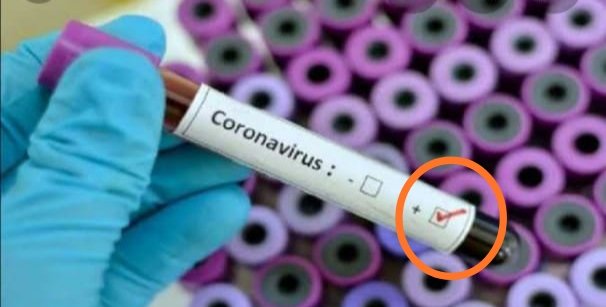
Covid-19 testing kits

The World Health Organization (WHO) and the Wikimedia Foundation, the nonprofit that administers Wikipedia, announced today a collaboration to expand the public’s access to the latest and most reliable information about COVID-19.

The collaboration will make trusted, public health information available under the Creative Commons Attribution-ShareAlike license at a time when countries face continuing resurgences of COVID-19 and social stability increasingly depends on the public’s shared understanding of the facts.

Through the collaboration, people everywhere will be able to access and share WHO infographics, videos, and other public health assets on Wikimedia Commons, a digital library of free images and other multimedia.

With these new freely-licensed resources, Wikipedia’s more than 250,000 volunteer editors can also build on and expand the site’s COVID-19 coverage, which currently offers more than 5,200 coronavirus-related articles in 175 languages. This WHO content will also be translated across national and regional languages through Wikipedia’s vast network of global volunteers.

“Equitable access to trusted health information is critical to keeping people safe and informed during the COVID-19 pandemic,” said Dr. Tedros Adhanom Ghebreyesus, Director-General of the World Health Organization. “Our new collaboration with the Wikimedia Foundation will increase access to reliable health information from WHO across multiple countries, languages, and devices.”

Since the beginning of the pandemic, WHO has taken steps to prevent an “infodemic”— defined by the organization as “an overabundance of information and the rapid spread of misleading or fabricated news, images, and videos.”

Wikipedia editors have similarly been on the frontlines of preventing the spread of misinformation surrounding the coronavirus, ensuring information about the pandemic is based on reliable sources and update regularly on Wikipedia.

By making verified information about the pandemic available to more people on one of the world’s most-visited knowledge resources, the organizations aim to help curb this infodemic and ensure everyone can access critical public health information.

“Access to information is essential to healthy communities and should be treated as such,” said Katherine Maher, CEO at the Wikimedia Foundation. “This becomes even more clear in times of global health crises when information can have life-changing consequences. All institutions, from governments to international health agencies, scientific bodies to Wikipedia, must do our part to ensure everyone has equitable and trusted access to knowledge about public health, regardless of where you live or the language you speak.”

WHO has served as the leading international health agency spearheading the global response to the coronavirus outbreak. Since the beginning, WHO has worked to rapidly establish international coordination, scale up country readiness and response, and accelerate research and innovation. Today, as information on the transmission and epidemiology of the virus evolves, WHO continues to provide essential guidance and public health recommendations to governments, communities and individuals everywhere.

At the same time, Wikipedia volunteer editors, many of whom are from the medical community, have been creating, updating, and translating Wikipedia articles with information from reliable sources about the pandemic. As one of the top ten sites in the world, studies have shown that Wikipedia is one of the most frequently viewed sources for health information.

At the moment, readers can access WHO’s mythbusting series of infographics on Wikimedia Commons. The infographics, which focus on addressing common misconceptions about COVID-19, are also available for Wikipedia editors to incorporate into Wikipedia articles.

In the coming months, the Wikimedia Foundation and WHO will continue uploading resources to Wikimedia Commons and collaborating with Wikipedia volunteer editors to better understand gaps in information needs on Wikipedia articles related to COVID-19 and how WHO resources can help fill these gaps.

Additionally, under the Creative Commons Attribution-ShareAlike license, other organizations, individuals, and websites can more easily share these materials on their own platforms without having to address stricter copyright restrictions.

Stories Continues after ad

Parliament investigates Shs15 billion loss from custodian board bank account

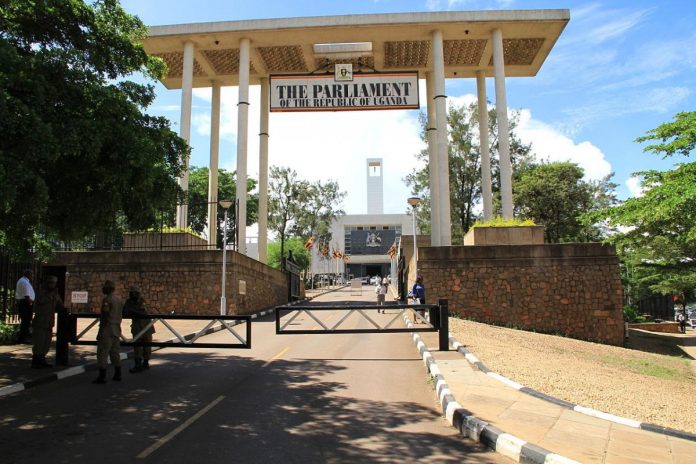
Parliament of Uganda

Parliamentary Committee on Commissions, Statutory Authorities and State Enterprises (COSASE), is investigating Shs15 billion which has gone missing from bank accounts of the Departed Asians property Custodian Board.

According to the report of the divestiture committee of the custodian board, the money was on a collection account in Central Bank. The said money was collected after the sale of 1524 properties belonging to the departed Asians.

The report indicates that Shs7 billion had been collected by 1994 after the expelling of Indians by late Idi Amin and before the relieving divestiture committee of the custodian board of its duties in 2006, the money had accumulated to Shs15 billion.

The vice chairman of COSASE Ibrahim Kasozi expressed his dismay of the loss of the money and asked the government to give accountability of the said money. “Gov’t sold all these properties but there is no accountability for all that money,” he added.

The Kampala central MP, Muhammad Nsereko said, the board does not show how it spent the said money and they didn’t compensate the departed Asians.

In December, 2001, the Auditor General report indicated that there was undervaluing of properties of departed Asians and mismanaging of the entire process and hence forth ceasing the financial loss. Since then, various people have been petitioning parliament to investigate sale of departed Asians properties.

Appearing before the committee, the Minister of Finance Matia Kasaija, and the permanent secretary in the Finance Ministry Keith Muhakanizi and Undersecretary Betty Kisimbizi were questioned over the subject matter.

Kisimbizi was queried over her role of creating two accounts in Stanbic Bank which acted as the collection accounts. The said two accounts were allegedly not approved by the accountant general for collection of money proceeding from the sale of Asian properties.

Kisimbizi later refuted Shs15 Billion figure noting that by the time she assumed office in 2007, she found only Shs1.1 billion proceeding from the sale of Asian properties and had no idea of the said created accounts.

Stories Continues after ad
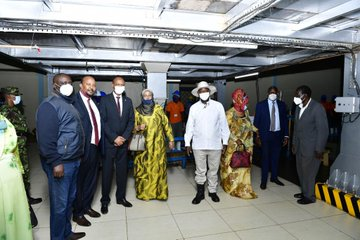
Museveni launches Atiak Sugar Factory

Museveni launches Atiak Sugar Factory

President Yoweri Museveni has launched Atiak Sugar Factory in Amuru district, with a plea to local leaders to desist from fighting investment projects.

Museveni said local leaders are obsessed with the ownership of factories as opposed to boosting production in the region, an attitude he says works to frustrate development.

“When you hear Ugandans talk about factories of the Indians, that is total confusion; If I go to India and build a factory, that factory belongs to India,” he said.

He added, “Your local politicians wasted a lot of time fighting development; people are fighting development; somebody brings what you do not have and you say that you do not want it.”

Museveni said the factory will stabilise the sugar prices in the country and also create enough stock for export.

With the factory now in place, the deputy speaker Jacob Oulanyah said the region is warming up for more, as it races past the scars of the grueling Lord’s Resistance Army (LRA) war that affected the area.

“So many lives are going to be touched by this single project; the over 5,000 women who are going to be part of this idea, some of them include returnees who could not be accepted back into their communities because they came with children whose fathers they don’t know,” he said.

Located in Atiak near the Uganda-South Sudan border, the factory in which Dr Amina Hersi Moghe owns a 60 per cent stake and the Uganda Development Corporation (UDC) 40 per cent on behalf of government, seeks to use its proximity to the vast South Sudan market and also wade into the DR Congo.

The factory will also produce ethanol, animal feeds and other by-products.

Stories Continues after ad

Bank of Uganda maintains CBR at 7%

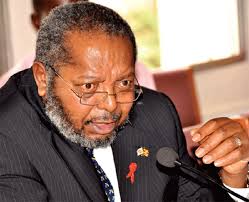
BoU Governor Emmanuel Tumisiime-Mutebile

Bank of Uganda (BoU), has maintained the Central Bank Rate (CBR) at 7 per cent in October 2020, this is according to a Monetary Policy Statement issued by Governor Bank of Uganda, Prof. Emmanuel Tumusiime Mutebile.

According to the statement, the high frequency indicators for economic activity in the quarter to September 2020, point to a mild recovery of economic activity with estimated growth of 2 percent from a sharp contraction of 6 percent in the quarter to June 2020.

“The simultaneous fiscal, monetary, and financial stimuli have been effective in avoiding the most negative economic consequences of the COVID-19 shock. The easing of the lockdown, the stability of the exchange rate, as well as a feeble improvement in both foreign and domestic demand are supporting economic growth recovery. However, economic growth is tepid, uneven, and still fragile and projected to contract in the range of 0.2 and 0.5 percent in 2020,” Mutebile said.

He said that barring a renewed worsening of the course of the COVID-19 pandemic, GDP growth momentum in 12 to 24 months ahead is likely to be modest against sluggish external demand, subdued consumer expenditure, the weak performance of the service sector, commercial banks’ cautious lending, and uncertain economic outlook.

The economic growth in Financial Year (FY) 2020/21 is projected at 2.0-3.0 percent and is expected to increase to 5.0-6.0 percent in FY 2021/22 and to 6- 7 percent in the outer years.

“The economic outlook is extremely uncertain, largely because of the unpredictable course of the virus and the wide range of shocks hitting the economy. The downside risks to the economic growth projection include the possibility of an increase in new infections and a longer period to get the virus under control,” he said.

“On the upside, economic growth could recover swiftly than currently projected if the threat from COVID-19 fades more quickly than currently envisaged and global economic growth strengthens. Such a scenario could lead to greater business and consumer confidence, which factors would likely lead to a stronger domestic economic growth,” he added.

The annual headline inflation eased to 4.5 percent in September 2020 from 4.6 percent in August 2020, annual core inflation edged up to 6.2 percent from 5.9 percent in same period. The overall risks to the inflation outlook appear to be on the upside in the near term (12 months ahead).

“The annual core inflation will remain above 5 percent target in the near term but is projected to gradually converge to 5 percent in 2022. While there are no demand side pressures evident, cost push pressures emanating from higher taxes on imported consumer and intermediate products and social distancing measures could cause inflation to edge up further in coming months.”

“In addition, price pressures could increase, due to the further easing of lockdown measures as households increase spending on items that they had been forced to defer, e.g. expenditure on school fees. These pressures could also increase due to higher production costs from persistent supply disruptions. Offsetting such forces are those that will weigh on demand. These include a persistent increase in consumers’ precautionary saving prompted by higher perceived risk of joblessness and COVID-19 infection, less transfers from abroad and restrained credit extension by banks. In addition, oil prices remain low and local food price inflation is expected to remain contained,” he said.

Despite a higher than target core inflation outcome since June 2020, the MPC notes that the slowing down of the economy and gradual recovery will bring back inflation to around target 12-24 months ahead.

Inflation is expected to be well contained over the medium-term, on the premise that both global and domestic risks do not materialize. Against this backdrop, the MPC decided to keep CBR rate unchanged at 7 percent and maintain liquidity support to supervised financial institutions.

The band on the CBR has also been maintained at +/-2 percentage points, while the margin on the rediscount rate and bank rate is unchanged at 3 and 4 percentage points on the CBR, respectively. Consequently, the rediscount rate and the bank rate have been maintained at 10 percent and 11 percent, respectively.

Stories Continues after ad

Pastor Yiga is still alive – ABS TV

pastor yiga

ABS TV has rubbished reports circulating on several blogs and media sites that Kawaala-based Revival Church Pastor Augustine Yiga ‘Abizaayo’ has passed on.

The renowned pastor is currently at Nsambya Hospital where he is receiving medical attention. Reports indicate that the ‘Miracle performing pastor’ was last week admitted to the medical facility over unrevealed illnesses.

“Pastor Yiga is not dead! Pastor Yiga Augustine Abizayo is still alive, he is not yet dead. We take this opportunity to warn whoever is spreading the news, do it at your risk,” Yiga’s son Andrew Jjengo said live through ABS TV Facebook page.

Pastor Yiga is widely known for his hilarious way of preaching and presenting on his ABS Television.

Stories Continues after ad

Lower oil demand likely to persist beyond 2021

oil pipes

While metal and agricultural commodities have recouped their losses from the COVID-19 pandemic and are expected to make modest gains in 2021, energy prices, despite some recovery, are expected to stabilize below pre-pandemic levels next year, the World Bank said.

Oil prices fell dramatically in the early stages of COVID-19 and have only partially regained pre-pandemic price levels, while metal prices declined relatively modestly and have returned to levels that preceded the shock, according to the semi-annual Commodity Markets Outlook report. Agriculture prices were relatively unaffected by the pandemic, but the number of people at risk of food insecurity has risen as a result of the broader effects of the global recession.

“The impact of COVID-19 on commodities has been uneven, and could have lasting effects for energy markets,” said Ayhan Kose, World Bank Group Acting Vice President for Equitable Growth, Finance & Institutions and Director for the Prospects Group. “When declines in commodity prices are short-lived, policy stimulus can buffer their impact. However, when prices remain depressed for an extended period, policy makers need to find solutions so their economies can adjust smoothly to a new normal. Because of COVID-19, the new normal for oil-exporting emerging and developing economies arrived earlier. In the post-COVID world, these countries need to be more aggressive in implementing policies to reduce their reliance on oil revenues.”

Oil prices are expected to average $44 per barrel in 2021, up from an estimated $41 per barrel in 2020. Demand is expected to rise only slowly as tourism and travel continue to be held back by health concerns and as global economic activity is anticipated to return to pre-pandemic levels only in the year after next. Supply restraint is expected to be eased steadily.  Energy prices overall — which also include natural gas and coal are expected to rebound sizably in 2021, following large declines in 2020, an upward revision from April’s forecast. A resurgence of a second wave of the pandemic that results in more lockdowns and less consumption, and delays in vaccine development and distribution, could lead to lower energy prices than forecast.

Metal prices are expected to post modest increases in 2021 after falling in 2020, supported by the ongoing recovery in the global economy and continued stimulus from China. A prolonged period of weak global growth would lead to lower prices than forecast.

Agriculture prices are expected to rise slightly in 2021, following an estimated 3% increase in 2020 following some shortfall in edible oil production. Concerns about food insecurity remain relevant in several emerging market and developing economies. These concerns are prompted by hits to incomes from the global recession, bottlenecks in food availability at the local level, and border restrictions that have constrained labor supply. Food price inflation has spiked in several countries.

The pandemic is only the latest in a long history of shocks to commodity markets. A Special Focus looks at the nature of commodity price shocks on 27 commodities during 1970-2019. It finds that highly persistent and short-lived shocks have contributed almost equally to commodity price variation, although with wide variety across commodities. Permanent shocks account for most of agricultural commodity price variability while transitory shocks are more relevant in industrial commodity prices. The varied duration of such shocks points to a need for policy flexibility.

 A transitory commodity price shock may call for stimulative fiscal policy to smooth consumption; countries that depend on exports of commodities subject to cyclical price swings may want to build fiscal buffers during the boom phase and use them in the bust period to support economic activity. In countries that rely heavily on commodities that are subject to permanent shocks, structural policies such as economic diversification and broadening the tax base may be needed to facilitate adjustments to new economic environments.

Stories Continues after ad