Stanbic Bank
Stanbic Bank
19.4 C
Kampala
Stanbic Bank
Stanbic Bank
Home Blog Page 944

City riot victims demand compensation from Gov’t

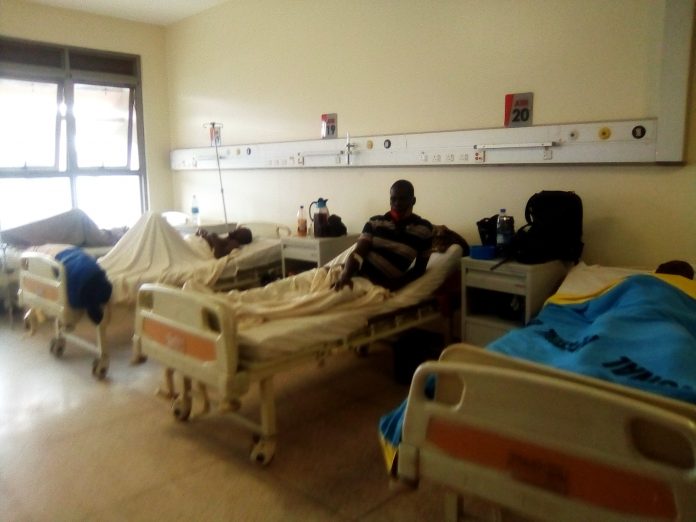
Some of the patients in New Mulago (1)

Victims who sustained injuries during the riots in Kampala want the government to compensate them for the damages caused.

On Wednesday 18th November 2020, riots broke out in Kampala and other parts of the country as people protested against the arrest of National Unity Platform Presidential Candidate Robert Kyagulanyi Sentamu.

Kyagulanyi was arrested and detained at Nalufenya Police station in Jinja and charged with an act likely to spread an infectious disease.

This prompted supporters of Kyagulanyi across the country to protest and Police and the army used tear gas and live bullets indiscriminately to quell the protests leading to the death of over 50 people and several others sustained injuries.

According to the victims whom this reporter found at Mulago National Referral Hospital, they were innocently shot by police and the army yet they were not among the protestors.

Peter Oguyi, a boda boda rider in Kisenyi at the KCCA Health Center Stage narrates that, that fateful day, he had asked for food from a nearby kiosk when he was hit by a bullet.

He narrates that while he was eating food near the health facility, a speeding army pick up came and randomly started shooting towards the health facility and he realized his leg breeding.

He was first admitted at the KCCA health Center before he was transferred to Mulago Hospital where he has now spent over a week.

Oguyi now wants the government to compensate him for the damages caused to him innocently saying that the motorcycle he drove was acquired through a loan and that his family of 3 children and wife is destined for suffering.

Leopold Nyakauma, who deals in spare parts in Kiseka market where the riots started from, narrates that when the chaos erupted, he closed his shop and boarded a boda boda to go home but his journey was cut short when a police officer shot at the boda boda rider.

According to him, when the boda boda rider was shot at, he lost control and they both fell off the motorcycle but he stood up and started running but he was also shot at twice in his both legs before the police van picked him picked and took him to Wandegeya Police station before he was rushed to Mulago.

Nyakauma who has a wife and toddler said that the government should come in and pay for crippling him and now rendering him useless to his family.

Musa Kasolo, a brother to one of the patients said that the bullet found his brother in the park where they work from. He said that his brother should now be compensated and helps his five children who now don’t have a caretaker.

Stories Continues after ad

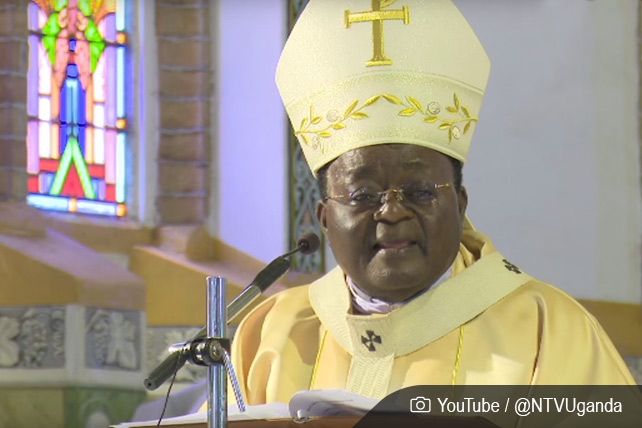
Archbishop Lwanga rallies Ugandans to use peaceful demonstrations, not riots

RIP: Archbishop Cyprian Kizito Lwanga

Cyprian Kizito Lwanga, the Archbishop of the Archdiocese of Kampala, has called upon Ugandans to refrain from rioting and resort to peaceful demonstrations to practice their constitutional rights.

Archbishop Lwanga says that most Ugandans do not know the difference between demonstrations and rioting, that is the reason why they confuse both and end up battling with security agencies.

Archbishop Lwanga’s communication comes in after at least 50 Ugandans lost lives and hundreds still nursing wounds as a result of protests that were sparked off when Robert Sentamu Kyagulanyi, the NUP presidential candidate was arrested in Luuka district last week.

The Archbishop argues that it was unfortunate that many innocent Ugandans lost lives, others sustained injuries and many lost properties as a result of this protest yet Ugandans had an option of using peaceful demonstration which is their constitutional right to show their grievances.

He calls upon fellow religious actors to discourage rioting among Ugandans and teach them to always carry out peaceful demonstrations if the need arises, adding that rioting is evil and should be discouraged.

According to the Constitution (1995) of the republic of Uganda, Article 29(1) (d) provides for  the  right  of  every  person  to  the  freedom  of  assembly  and  demonstration together with others, peacefully and unarmed. The idea that citizens should meet peaceably to consult one another about public affairs and to petition for redress of grievances is at the heart of democratic governance.

The right to demonstrate and  to  protest  on  matters  of  public  concern  is  a  right  ‘which  is  in  the  public interest that individuals should posses’ so long as it is not done to propagate violence or do anything unlawful.

In the same manner, the Archbishop condemned the shootings and brutality that the security agencies showed while managing the situation. He said, it was unnecessary and that it is against human rights which are God given entitlements.

According to Lwanga, if a person commits  crime, arrest and produce them to court for further decisions instead of killing or injuring them which is un-Godly, because the bible says “thou shall not call kill Exodus 20:13.”

He calls upon Ugandans to keep peace in this campaign period and follow the standard operating procedures-SOPs as a way of fighting COVID-19, adding that defying the directives of government is wrong.

Archbishop Lwanga said all these during the requiem mass at Rubaga cathedral, celebrating the life of Maria Josephine Mugerwa, a mother to former East African Legislative Assembly-EALA speaker and the NRM Flag bearer for MP Nakawa West, Margret Zziwa Babu Friday evening.

Stories Continues after ad

BoU hands over refurbished Nakaloke Health Centre III to Mbale district

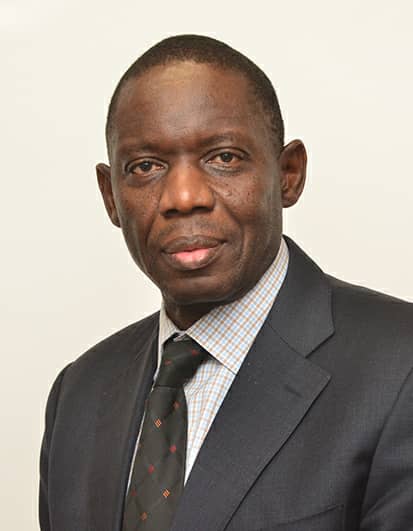
Deputy Governor, Dr Michael Atingo-Ego


The Deputy Governor Bank of Uganda (BoU) Michael Atingi-Ego has handed over the refurbished Nakaloke Health Centre III.  The health facility has been restored to a cleaner, brighter, and more functional state through the outstanding team efforts of the central bank, the district, and the health centre itself.

The refurbishment of Nakaloke Health Centre III, was inspired by the spirit of Ubuntu and the BoU’s delivery of its functions in the service of the people of Uganda.

In 2016 the BoU commemorated its Golden Jubilee through a series of activities and events that aimed to maximize tangible engagement between the central bank and all its diverse stakeholders.

In that charity walk, the BoU staff joined hands with well-wishers and stakeholders to raise funds in support of maternal and child health in the locations that host the central bank’s branches across the country.  The Bank’s staff were driven by ‘the belief in a universal bond of sharing that connects all humanity’, also known as ‘Ubuntu’.

“We, as a BoU community are much less without you, the people of Nakaloke, the people of Mbale city/district, the people of Uganda, and all humane people across the world. We are richer, much richer because we give and share what we have with the community. Indeed, the Greek philosopher Aristotle said that giving is about improving the moral character of the giver.” He said

“We firmly believe that every woman has a right to give birth in a proper health facility with appropriate medical equipment. Every woman has a right to hold her newborn baby or babies in her arms and to nurse and nurture them from tender toddlers to fully functional adults. Nakaloke Health Centre III will now serve the people more effectively because the BoU, the Mbale district officials, and the management and staff of this health centre worked smoothly together to uplift this centre.”

He said the Bank’s direct financial contribution and the gracious commitment of the district together with Nakaloke Health Centre III itself, they were able to develop a water supply system for the centre in addition to the improvement of the maternity ward as well as the provision of relevant medical equipment and supplies.

The BoU contributed directly to the project because it was in line with its public mandate. The Bank is mostly known for ensuring that the prices in the markets do not increase quickly or by huge jumps across the basket of the typical goods and services.

BoU is known for promoting financial sector stability through regulating and supervising commercial banks, credit institutions, micro-deposit taking institutions, foreign exchange bureaus and money remittance service providers, and the relevant national payment systems.

He encouraged Mbale district/city leaders to work with the micro, small and medium-sized enterprises so that they are properly prepared to access the ACF to fund the value-adding agricultural projects in this region.


Stories Continues after ad

DCJ gets Mbarara, Kabale Case Backlog Clearance Plans

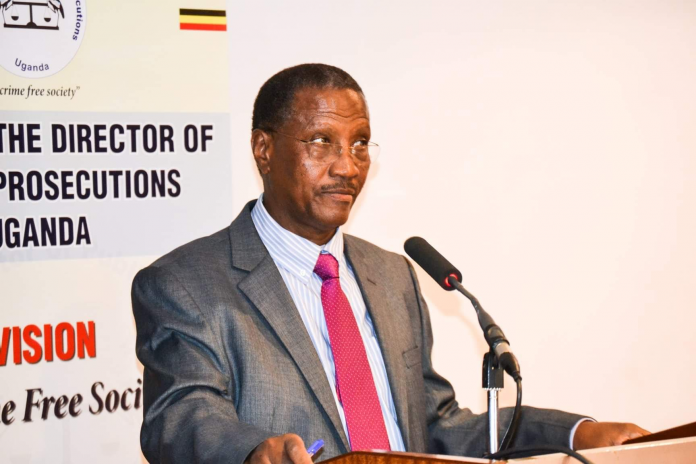
DCJ Richard Buteera

The Deputy Chief Justice, Richard Buteera, has embarked on a Case Backlog Assessment field visits, starting with Mbarara, Kabale and Masaka High Court circuits.

The DCJ, who doubles as Chairperson of the Case Backlog Monitoring Committee, started his visit at Mbarara High Court where he was received by Resident Judge Joyce Kavuma and Ag. Deputy Registrar Samuel Twakire.

His visit was to ascertain firsthand the status of case backlog according to case category and the case backlog clearance plans.

The DCJ learned that only 23 out of the 86 Small Claims Procedure matters registered at the Mbarara CM Court since January 2020 had been completed  the low resolution was attributed to the #Covid-19 pandemic and its attendant problems.

Justice Kavuma Said; “Regarding compliance with delivering pending judgments we have improved, and we can rate ourselves to 80 per cent.”  She observed that the Circuit has huge volumes of cases with a limited number of Judicial Officers to handle them.

There are 1,742 backlogged cases both at the High Court and Chief Magistrates Court. Of these, 700 are unallocated cases.

Justice Kavuma said the Court is incapacitated due to the limited session funds as well as lack of personnel such as transcribers to manage the three recording equipment. This, she said, causes a delay in availing records of proceedings.

To minimize on the backlog, the Resident Judge called for weed-out and more Plea Bargaining sessions.

As part of the interventions, she asked for visiting Judges to handle backlogged matters. “There is need to get visiting judges to handle backlog cases in land and civil like we have had three visiting judges who completed criminal sessions and this greatly reduced the backlog,” she said.

She also called for fast-tracking old cases by giving them priority, provision of civil session funds and creation of Ibanda High Court Circuit. Others were stopping registration of Notices of Appeal as appeals and allowances to data entry clerks to clean up CASS and ensure that it is updated with accurate data..

He went on to outline the various case backlog reduction strategies that the Circuit will employ to handle the backlog of 292 cases in all categories. These cases were accumulated between 2012 and 2018. The DCJ will on hold a similar exercise in Masaka on Monday.


Stories Continues after ad

Housing Finance Bank named best performing primary dealer of government securities

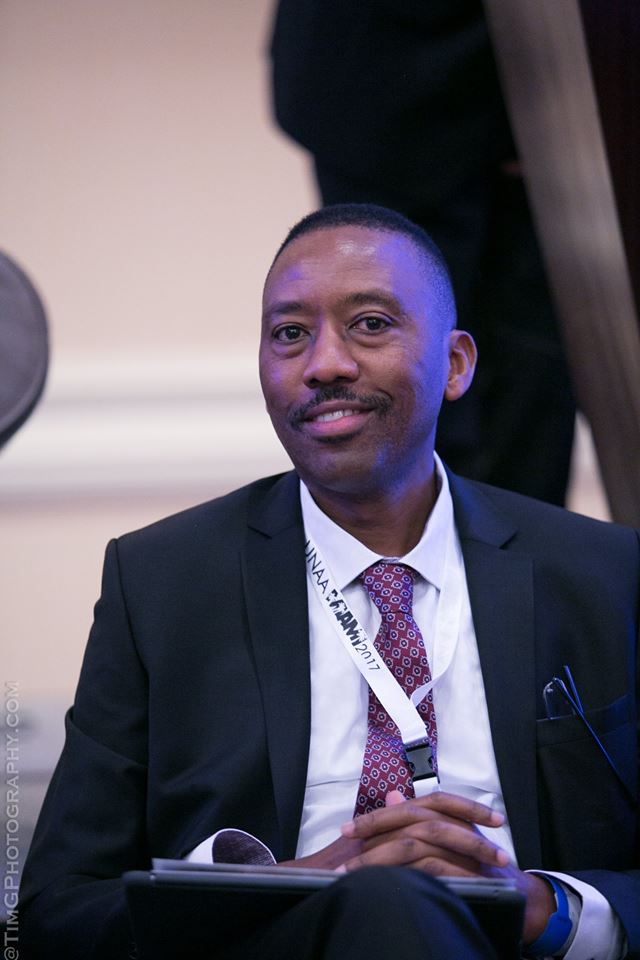
Michael Mugabi

The Governor, Bank of Uganda Prof. Emmanuel Tumusiime-Mutebile has recognized and awarded Housing Finance Bank Uganda for being the best performing Commercial bank in Uganda Government Securities for the month of October 2020.

The award comes barely a month after being confirmed as a Primary Dealer of government securities.

The award was received by Housing Finance Bank Managing Director Mr. Michael K. Mugabi during the Governor’s meeting with the Uganda Bankers Association (UBA) on November 18, 2020.

Speaking about the accolade, Mugabi said that the recognition is testament to the bank’s well-defined strategy regarding the enhancement of the market for government securities.

“Housing Finance Bank remains a stronger partner with the Government of Uganda in the mobilization of debt and is your primary dealer of choice because of our flexibility, convenience and competitive pricing,” he noted, adding. “We have demonstrated that we can trade government securities from the volume and value of transactions that we do in both the primary and secondary market.”

Housing Finance Bank is one of the seven commercial banks appointed as Primary Dealers by the Central Bank effective October 1, 2020 after a new Primary Dealer system was introduced with reforms whose aim was to deepen the market and liquidity for Government Securities.

Mugabi further explained that the debt market was a very component to the Ugandan economy as the funds mobilized here are used to finance the development of much needed national infrastructure in the socio-economic transformation of the country.

The award honours financial institutions that promote participation in trading in government securities in a bid to foster the development of financial markets and improve the secondary market trading system.

Stories Continues after ad

Every move counts towards better health–WHO

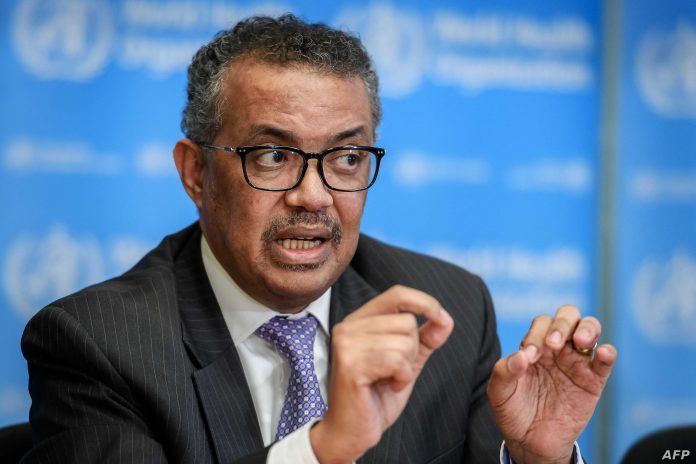
World Health Organization (WHO) Director-General Tedros Adhanom Ghebreyesus


Up to five million deaths a year could be averted if the global population was more active. At a time when many people are homebound due to #Covid-19, new WHO Guidelines on physical activity and sedentary behaviour, launched today, emphasize that everyone, of all ages and abilities, can be physically active and that every type of movement counts.

The new guidelines recommend at least 150 to 300 minutes of moderate to vigorous aerobic activity per week for all adults, including people living with chronic conditions or disability, and an average of 60 minutes per day for children and adolescents.

WHO statistics show that one in four adults, and four out of five adolescents, do not get enough physical activity.  Globally this is estimated to cost US $54 billion in direct health care and another US$14 billion to lost productivity.

The guidelines encourage women to maintain regular physical activity throughout pregnancy and post-delivery. They also highlight the valuable health benefits of physical activity for people living with disabilities.

Older adults (aged 65 years or older) are advised to add activities which emphasize balance and coordination, as well as muscle strengthening, to help prevent falls and improve health.

Regular physical activity is key to preventing and helping to manage heart disease, type-2 diabetes, and cancer, as well as reducing symptoms of depression and anxiety, reducing cognitive decline, improving memory and boosting brain health.

“Being physically active is critical for health and well-being – it can help to add years to life and life to years,” said WHO Director-General Dr Tedros Adhanom Ghebreyesus. “Every move counts, especially now as we manage the constraints of the #Covid-19 pandemic. We must all move every day – safely and creatively.”

All physical activity is beneficial and can be done as part of work, sport and leisure or transport (walking, wheeling and cycling), but also through dance, play and everyday household tasks, like gardening and cleaning.

“Physical activity of any type, and any duration can improve health and wellbeing, but more is always better,” said Dr Ruediger Krech, Director of Health Promotion, World Health Organization, “and if you must spend a lot of time sitting still, whether at work or school, you should do more physical activity to counter the harmful effects of sedentary behaviour.”

“These new guidelines highlight how important being active is for our hearts, bodies and minds, and how the favourable outcomes benefit everyone, of all ages and abilities”, said Dr Fiona Bull, Head of the Physical Activity Unit which led the development of the new WHO guidelines.

WHO encourages countries to adopt the global guidelines to develop national health policies in support of the WHO Global action plan on physical activity 2018-2030. The plan was agreed by global health leaders at the 71st World Health Assembly in 2018 to reduce physical inactivity by 15 per cent by 2030.

Stories Continues after ad

What Are the Odds… And How Are They Calculated?

When you visit a sports betting website for the first time, you’ll see things that are familiar, and some others that, at first sight, make no sense to you. For someone with a bit more knowledge about the matter, these things called “odds” have a meaning: they express the chances of one athlete or team to win as opposed to the opponent. And, of course, the amount the betting site pays out if you win.

Betting at Betway is easy: all you need to do is find the match, sporting event, media event or whatever else you want, choose the side that’s more likely to win, and place your bet. The hard work is done behind the scenes by the oddsmakers trying to predict the correct outcome for it.

Probabilities

If you want to oversimplify things, you could say that each party has a 50% chance of winning – as in they’ll either win or not. While this is technically true, the probability of either of the two parties winning is not the same. There are always things that incline the odds in the favor of one of them.

When two soccer teams face each other in the field, one of them has a higher chance of winning even if the two teams are, by and large, equals. For example, the team that is playing at home has a better chance of performing well because the other has to deal with the stress of travel, the unfamiliar field, and such. There are many other factors that give one of the parties a slight edge over the other, all of them capable of influencing the outcome.

Mountains of data

Oddsmakers rely on mountains of data to be able to predict the outcome of a sporting event. Aside from the location, they also take into account the time of the day when the match is played, the officials, the weather (playing soccer on a soaking wet turf is not the same as playing on a dry one), and many other factors that can influence the outcome of a match.

Besides, there are the individual players that also need to be factored into the odds. A lot of things can be predicted based on the players’ statistics – how they performed at their previous matches, did they have an injury or some other events that may influence their performance, and even their potential conflicts with other players count.

Taking all these into account gives oddsmakers the ability to predict the outcome of an event with certain precision.

When they go wrong

There is one thing that oddsmakers can’t take into account, though: the unexpected. There are stories about bookmakers making the payouts to their bettors early only to see the event take a completely different turn.

Just last year, an Australian bookmaker made early payouts on the local elections before the competition was called – a mistake that cost them a big pile of cash. Namely, they backed Australia’s Labor party, and they were confident enough to pay out $1.3 million before the election was called. The final results surprised them, though – it was the Coalition that won. The group is not at its first election mistake: in 2016, it made early payouts to those betting on Hillary Clinton’s victory before Donald Trump making a surprise recovery and winning the US Presidential Elections.

Stories Continues after ad

#Covid-19: CSO calls for strengthening of child protection in Uganda

Stella Ayo-Odongo

The Coordinator of African Partnership to End Violence Against Children Stella Ayo-Odongo has called for strengthening of child protection during and after the unprecedented nature of Covid-19 pandemic.

Over the months the world witnessed the pandemic evolve rapidly, initially with governments instituting total lockdowns and travel restrictions, to partial easing of the restrictions and a slow return to normalcy in many countries. Since the onset of the COVID-19 pandemic, hundreds of thousands of people in Africa have been affected and the livelihoods of billions have been disrupted.

Speaking during the learning event organised by the Ministry of Labour Gender and Social Development (MGLSD), Stella said over 1.5 billion children are out of school causing unprecedented global learning crises; this resulted into the introduction of online learning for children that has potentially to increase the risk of exposure to online abuse (cyberbullying, risky online behavior and sexual exploitation). For some children this resulted in their exclusion because they lack access to internet services or the schools were not able to facilitate online learning.

She said during this period, there have been heightened reports of violence against children (VAC), increase in teenage pregnancies, child marriage, sexual violence, inability to access child protection services and the list goes on.

“Covid-19 is likely to increase in number of children dropping out of the education system, heightened risk of online abuse,” She said adding that there is fear that many children may be deprived of care or be forced to play the role of caregivers to younger siblings when parents or caregivers become infected or die.

COVID-19 has not only severely affected health, education and other services in Africa, but it is also pushing millions into extreme poverty. According to UNECA estimates, up to 29 million Africans are expected to be pushed below the extreme poverty line of $1.90 per day owing to the impact of COVID-19. An estimated 42-66 million children could fall into extreme poverty as a result of the crisis this year.

Stories Continues after ad

WHO urges African countries to ramp up readiness for #Covid-19 vaccination drive

WHO

As the race to find a safe and effective COVID-19 vaccine is showing increasing promise, a new World Health Organization (WHO) analysis finds that Africa is far from ready for what will be the continent’s largest ever immunisation drive.

All 47 countries in the WHO African Region have received WHO’s Vaccine Readiness Assessment Tool which is intended to be used by Ministries of Health, with support from WHO and UNICEF. It provides a roadmap for countries to plan for COVID-19 vaccine introduction and covers 10 key areas: planning and coordination, resources and funding, vaccine regulations, service delivery, training and supervision, monitoring and evaluation, vaccine logistics, vaccine safety and surveillance and communications and community engagement.

Forty countries have updated the tool and provided data to WHO. An analysis finds that based on the self-reports by the countries, the African region has an average score of 33% readiness for a COVID-19 vaccine roll-out, which is well below the desired benchmark of 80%.

“The largest immunization drive in Africa’s history is right around the corner, and African governments must urgently ramp up readiness. Planning and preparation will make or break this unprecedented endeavour, and we need active leadership and engagement from the highest levels of government with solid, comprehensive national coordination plans and systems put in place,” said Dr Matshidiso Moeti, WHO Regional Director for Africa.

WHO together with Gavi, the Vaccine Alliance, Coalition for Epidemic Preparedness Innovation and other partners is working to ensure equitable access to vaccines in Africa through the COVAX facility, the vaccines pillar of the WHO Access to COVID-19 Tools Accelerator. When vaccines are licensed and approved, COVAX will work to secure enough doses to provide protection to an initial 20% of the African population.

However, the WHO analysis of the country readiness data finds only 49% have identified the priority populations for vaccination and have plans in place to reach them, and 44% have coordination structures in place. Only 24% have adequate plans for resources and funding, 17% have data collection and monitoring tools ready and just 12% have plans to communicate with communities to build trust and drive demand for immunization.

“Developing a safe and effective vaccine is just the first step in a successful rollout,” said Dr Moeti. “If communities are not onboard and convinced that a vaccine will protect their health, we will make little headway. It’s critical that countries reach out to communities and hear their concerns and give them a voice in the process.”

WHO estimates the cost of rolling out a COVID-19 vaccine on the African continent to priority populations will be around US$ 5.7 billion. This does not include an additional 15% – 20% cost for injection materials and the delivery of vaccines, which require trained health workers, supply chain and logistics and community mobilization. This cost is based on COVAX facility estimates of the average vaccine price at US$ 10.55 per dose and that a two-dose regimen will be needed.

WHO and partners recently released guidance on COVID-19 vaccination planning and deployment for national governments, aiming to help them design strategies for the deployment, implementation and monitoring of COVID-19 vaccines and better integrate their strategies and financing to boost efficiency.

Dr Moeti spoke during a virtual press conference today facilitated by APO Group. She was joined by Professor Helen Rees, Executive Director, Wits Reproductive Health and HIV Institute at the University of the Witwatersrand, Chairperson, African Regional Immunization Technical Advisory Group (RITAG) and Chairperson of the South African Health Products Regulatory Authority. Other speakers were Professor Pontiano Kaleebu, Director Uganda Virus Research Institute (UVRI) and MRC/UVRI and London School of Hygiene and Tropical Medicine Uganda Research Unit; and Professor Fredrick N Were, Perinatal & Neonatal Medicine, University of Nairobi and Chief Research Scientist, Kenya Paediatric Research Consortium.

Stories Continues after ad

Tighten #Covid-19 safety measures – Kampala Industrial & Business Park Taskforce Chairman cautions operators

COVID-19 Structure

Kampala Industrial & Business Park COVID-19 task force has cautioned residents and operators in the area to continue observing safety precautions and Standard Operating Procedures in the continued fight against COVID-19. This comes after a reported increase in COVID-19 cases registered in Mukono District with majority originating from Kampala Industrial and Business Park in Namanve.

The increasing infections within the area have been traced to the factories, business premises, the residential areas and marketplaces frequented by the employees of organizations within the park.

Due to the alarming numbers and the risk posed by business activity in the area, a COVID-19 Taskforce was set up in October that constitutes representatives of the different factories and businesses within the Park and various representatives of the Government offices as a platform for the residents and operators within the Park to implement all measures aimed at controlling and stopping the spread of COVID-19 within their premises and surrounding areas.

According to Simon Kaheru, Communication and Public Affairs Director, Coca-Cola Beverages Africa, and the current chairperson of the Kampala Industrial & Business Park COVID-19 Task Force, the statistics of infection within Mukono District raise serious concerns as more than 200 COVID-19 cases have been registered in Mukono district and, so far, one death has been attributed to the disease. More worryingly, each case could easily be linked to 25 contacts, meaning that 5,000 people more could be potential cases if certain measures were not followed strictly.

The Task force has passed out a communication stipulating what is expected of all operators in the affected areas:

Protecting employees and other residents is of utmost importance. People safety should be at the center of all business operations. From employees, their families, visitors to factory premises, and all other residents and operators as well as surrounding community.

In addition to implementing the COVID-19 SOPs, all factories in the area are strongly encouraged to invest in Occupational Health and Safety at your business premises. The Task Force will readily provide guidance in coming weeks benchmarking against companies and factories that have successfully established Occupational Health and Safety best practices.

Every factory and business operation within the Kampala Industrial & Business Park is advised to establish a COVID-19 Committee. This Committee will work together with the COVID-19 Task Force and the Government of Uganda to coordinate efforts to fight this disease. The members of the COVID-19 Committees will be the key contact persons on matters to do with COVID-19 within your premises.

Communication is the number one tool in the fight against COVID-19. You are therefore required to support the sensitization and awareness efforts with authentic COVID-19 prevention messaging within your operations and premises and amongst your employees. The Task Force will periodically share information which you can disseminate to your employees, their families and all persons who encounter your businesses through any means. Knowledge is Power

Utilize Liberty ICD Testing Centre: All residents and operators are strongly encouraged to make use of the COVID-19 Testing Centre that has been set up by the Ministry of Health at the facility generously provided by Liberty ICD.

“The presence of a testing center within the Kampala Industrial & Business Park provides a major advantage for all residents and operators because it shortens the time suspected cases within the Park can be identified and isolated for treatment – a key step in saving lives and limiting the spread of the infection. Ensuring that your employees and other residents of the Park make use of the Liberty ICD Testing Centre also limits the spread of infection through travel to testing centers in the center of Kampala or further away,” remarked Simon Kaheru, the chairperson of the Kampala Industrial & Business Park COVID-19 Task Force.

“We cannot handle a second lockdown, after this recent one that shock our economy to the bone. So as a business community, it’s important that we adhere to these guidelines and minimize the increase of cases in our specific premises. I believe, if we work together, we can beat this setback and grow stronger,” he concluded.

Stories Continues after ad