Stanbic Bank
Stanbic Bank
17.6 C
Kampala
Stanbic Bank
Stanbic Bank
Home Blog Page 949

One in 13 children in Sub-Saharan Africa die before their fifth birthday

child- (courtesy photo)

The newly released United Nations Inter-agency Group for Child Mortality Estimation (UN IGME) report indicates that one in 13 children in Sub-Saharan Africa died before their fifth birthday in 2019.

There are still huge disparities in child survival by region and by country. In 2019, more than 8 in 10 under-five deaths occurred in just two regions: Sub-Saharan Africa (55%) and South Asia (27%).

Sub-Saharan Africa continues to suffer the highest under five mortality rate in the world (76 deaths per 1,000 live births) followed by South Asia (40 deaths per 1,000 live births).

The chance of survival depends highly on where children are born. By country, Nigeria has the highest under five mortality rate at 117 deaths per 1,000 live births.

Born girls have a biological advantage in survival compared to newborn boys and this advantage continues throughout life. On average, boys have a higher probability of dying before reaching age five than girls.  Globally, the under-five mortality rate is 40 per 1,000 live births for boys and 35 for girls. The probability of dying is higher for boys and girls in all the regions.

There have been dramatic reductions in child and youth mortality over the last 29 years. Globally, under five mortality has dropped by 59% since 1990from 93 deaths per 1,000 live births then to 38 deaths in 2019.  Mortality among 5 to14 year olds declined by 54% from 15 deaths per 1,000 to 7 deaths, and among 15 to 24 year-olds by 34% from 17 deaths per 1,000 to 11 deaths.

However, the global burden of child and youth deaths remains immense. 7.4 million Children, adolescents, and youths died in 2019 alone, mostly of preventable or treatable causes, equivalent to more than 20,000 deaths per day.  70% or 5.2 million of them were children under five years old.

Among children, the risk of dying was highest in the neonatal period. Nearly half of the deaths of children under five in 2019 were such neonatal deaths.  Because the rate of decline for neonatal mortality has been slower than that for under five mortality, deaths have been increasingly concentrated in the neonatal period. The share of neonatal deaths among all under five deaths increased from 40% in 1990 to 47% in 2019, as the global under-five deaths declined from 12.5 million in 1990 to 5.2 million in 2019.

Within the neonatal period, the youngest lives are at even greater risk. About a third of all neonatal deaths occur within the first day after birth and close to three quarters occur within the first week of life.

Reductions in neonatal mortality will require greater investment in building stronger health systems and improving coverage and quality of care in the antenatal period. It will also require care at birth and in the first week of life to save maternal and newborn lives.

The new UN IGME estimates cover the years up to 2019 that is, before the novel coronavirus global pandemic started. The UN IGME report warns that the enormous progress made up to 2019 sits at the precipice of a global child mortality crisis brought by the effects of the coronavirus pandemic in 2020.

Initial evidence suggests that the impact of COVID-19 on direct mortality for children and youth may be small, but indirect effects can be severe. Many lifesaving services have already been disrupted by COVID-19.  These include medical and food supply chain disruptions, declining utilization and provision of basic health services as well as the reallocation of healthcare resources and personnel.

For example, the Global Financing Facility (GFF) estimates that as many as 26 million women could lose access to contraception across 36 countries, leading to nearly 8 million unintended pregnancies.

These disruptions are putting tens of millions of women and children at risk of dying or enduring lifelong health impacts. Governments and the global health community will need to double down on the provision of essential health services if years of progress are not to be compromised. The GFF actively supports countries to prioritize and plan for continuation of essential health services, strengthen frontline service delivery and address constraints in service demand.

Stories Continues after ad
Namboole Stadium gets new Board of Directors

Sports Minister Hamson Obua

The Minister of State for Sports Denis Hamson Obua has appointed a seven member committee to oversee operations of Mandela National Stadium, Namboole.

The new board will be chaired by Rosette Lubwama Kebba for the next three years.

Other members on the board include: Mustapher Achidri, Godfrey Wamani, Anne Abeja, Mark Namanya, Veronica Mukyala and Ebil Jimmy Segawa.

Their mandate will run for the next three years (September 2020 to September 2023) effective immediately.

The tenure of the previous board had expired on August 31st, 2020.

Mandela National Stadium was constructed in 1997, and is the biggest sporting arena in the country, regularly hosts the biggest sports events, hired for political, religious, musical and social events among others in Uganda.

The stadium has of late been in a worrying state, not being on the international standard to host football matches and currently under renovation plans.

At present, it has been gazetted as a COVID-19 isolation and treatment center.

Stories Continues after ad

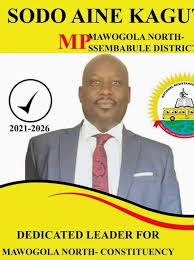
Museveni in Mawogola to mediate his brother Aine Kaguta and Shartis Kuteesa

President Yoweri Museveni is today expected to meet Sembabule district leaders and the aspiring members of parliament to amicably solve the discrepancies which led to suspension of National Resistance Movement (NRM) primaries.

There is a tight race between Shartis Kuteesa Musherure, a daughter to Foreign Affairs Minister Sam Kuteesa, and Godfrey Aine Kaguta, President Museveni’s younger brother. The two are vying to represent Mawogola North in parliament.

In Maogola West, there is a tight contest between Hanifa Kawooya and Joseph Ssekabito. The election was suspended on allegations that the Sekabito’s supporters manhandled Hanifa Kawooya and caused grievance harm on her body.

In Lwemiyaga County, Fisheries State Minister Joy Kabatsi rejected results after it was declared that she lost to the incumbent, Theodore Ssekikubo.

Before suspending NRM elections in the two counties, there has been heavy deployment in the area commanded by Deputy IGP Maj Gen Sabiiti Muzeyi.

Stories Continues after ad

Roko Construction Limited dragged to court over Shs336m debt

roko

Roko Construction Limited, a civil engineering and construction company in Uganda has been dragged to Commercial division of High court over failure to pay Shs 336million.

According to Specialized Coating Uganda Limited, Roko has failed to clear the accumulated sums rising from paint they supplied on various construction sites of Imperial mall and Namugongo martyrs shrine.

According to suit, Specialized Coating Uganda Limited supplied paint and other related equipment as agreed however Roko has not paid as stated in the contract and this has prompted the High Court registrar to summon the construction company.

Specialized Coating Uganda Limited avers that Roko’s failure to clear the debt has caused financial distress to the company as well as crippling their business and supply chain.

Roko has therefore been given two weeks to defend itself before court and failure to do so, court will deliver its judgment basing on evidence and submissions made by the complainant.

Specialized Coating Uganda Limited claims that they have served Roko with various notices however that have not responded. They therefore want the court to compel the construction company to pay the outstanding shs 336 million.

Stories Continues after ad
Standard Chartered sharpens focus on personal clients in new strategy

Standard Chartered logo

Effective 1 January 2021, Standard Chartered PLC (the Group) has announced that it will update its organisation structure as part of the ongoing execution of its refreshed strategy.

The changes are designed to grow the Group’s affluent and retail customer-facing businesses and more effectively deliver its unique international network. This will create a leaner organisation and improve the Group’s ability to serve clients where it has distinctive competitive advantages.

The Group’s individual clients and related products (Retail Banking, Private Banking, and Wealth Management) will be combined within a new business Consumer, Private and Business Banking (CPBB) – led by Judy Hsu, currently Regional CEO, ASEAN and South Asia.

Judy’s responsibilities will include growing the affluent client base, for whom the Group manages assets worth over $200 billion, developing the Group’s innovative mass market digital banking solutions, and delivering further efficiencies in the combined business, in each case working closely with our Regional CEO’s. In her new role Judy will continue to be based in Singapore.

The Greater China and North Asia and ASEAN and South Asia regions will be combined into a new Asia region led by Ben Hung, currently Regional CEO, Greater China and North Asia and CEO, Retail Banking and Wealth Management.

This will allow the Group to better leverage its international network to facilitate increasing trade and investment flows across the Asia region, while continuing to pursue strategic opportunities in China’s Greater Bay Area, and to capitalise on the wealth and business opportunities ASEAN presents. Ben will continue to be based in Hong Kong.

Tracy Clarke, Regional CEO, Europe and Americas and CEO, Private Bank, will retire at the end of 2020 to focus on her external board roles. The Group’s business in the region predominately enables corporate and institutional clients based there to utilise its network through Asia, Africa and the Middle East.

As such Torry Berntsen who is currently CEO, Americas, will assume Europe and Americas leadership. He will report into Simon Cooper, head of the recently fully integrated Commercial Banking and Corporate and Institutional Banking businesses and currently CEO, Corporate, Commercial and Institutional Banking (CCIB). Simon will continue to be based in Singapore.

Bill Winters, Group Chief Executive, said: “These changes will further strengthen our business with individual clients, supporting growth in all aspects of this profitable and differentiated business. Separately, the increased focus on connecting our Asian business will allow us to better serve our corporate and institutional clients as they develop their businesses across these dynamic markets.

“These changes will lead to expansion of the scope and responsibilities of several senior roles below the Group’s Management Team, improving management bench-strength and accelerating our pursuit of a more diverse, performance-orientated and innovative culture.

“I would like to thank Tracy for her outstanding contribution to the Group over three decades of service. She embodies the values and spirit of Standard Chartered and we all wish her the very best in what promises to be a busy next chapter.”

The Group will report its results according to the current structure with four segments and four regions for the remainder of 2020. From 1 January 2021 the results of the CCIB and CPBB segments will be disclosed on the new combined basis, while the current product, large market and regional basis of external reporting will remain the same.

Further information will be given at the Group’s third quarter results on 29 October 2020.

Stories Continues after ad

UNEB clears air on ‘clash’ with the Ministry of Education on reopening of schools

UNEB Executive Secretary Dan Odong

UNEB has cleared the air on rumors making rounds especially on social media that it has clashed with the Ministry of Education on the re-opening of schools, and has not set plans for the national examinations.

In a press release from the Executive Secretary, Mr. Dan Odongo, the examination body said it has been brought to their attention of rumours about a clash with the Ministry of Education about the re-opening of schools. UNEB has insisted that the claims are false.

“We would like to clarify that this is not correct. Several media houses have been calling UNEB to find out its state of readiness to conduct the national examinations, and when those examinations would be conducted.

“The response every time has been that UNEB will not make any comments on how ready it is to conduct the examinations until there is an official communication from either H.E The President or the Minister of Education and sports on the re-opening of schools. This doesn’t amount to a ‘clash’!” Part of the statement reads.

The examinations body said it is in preparations to conduct the national examinations at an appropriate time in line with the Ministry of Education revised school calendar that will be published.

“UNEB is proceeding with its preparations to conduct the national examinations at an appropriate time, and in accordance with a revised school calendar which will be published by the Ministry of Education and sports when schools re-open.”

Stories Continues after ad

DTB VS HAM: Why bank is in the comfortable lead

Businessman Hamis Kiggundu.


The raging court battle between city businessman Hamis Kiggundu and Diamond Trust Bank (DTB) is raising questions that may in fact leave the “tycoon” even more exposed after it emerged that the case may be a ploy to allow the businessman buy time and find ways of paying back the billions of shillings borrowed from DTB.

In January this year , Ham Enterprises owned by businessman Hamis Kiggundu took Diamond Trust Bank (DTB) to court arguing that the bank had “fraudulently, illegally and irregularly debited huge sums of money,” from its account. It sought to recover Ugx.100 billion,

In its part, DTB had moved to recover monies owed by businessman and his related group of companies. The bank had moved to fast track the material case which it argued was a question of audit to establish whether the businessman’s accounts were wrongly debited as claimed by the plaintiff.

In its bid to have the material case handled expeditiously and without further delays, DTB voluntarily sought to weave the 30% advance payment requirement that would have the businessman deposit close to USD2 Million with the courts before the case could commence. Those privy to this case say that the businessman was unable to raise the money and consequently used legal technicalities to cause adjournment and delay the hearing of the material case.

According to court documents, Kiggundu acquired the money in four tranches; $6.2 Million, $3.2, $458,604 and Ugx2.8 Billion both from DTB Uganda and DTB Kenya between February 2011 and September 2016.  The loans were consolidated later in 2018 and were to run for five years ending August 23 2023.

In a letter dated April 2011 to DTB, Kiggundu acknowledged the debt and promised to pay them by selling his properties in Makerere. Court Documents file by DTB show that Kiggundu was served with reminders and notices but still failed to meet his obligations.

After several adjournments instigated by Ham’s lawyers, the case came up for hearing on August 27 2020.  During the proceedings, a preliminary matter was raised by Ham’s lawyers who filed a separate application for it, alleging that DTBK was carrying out illegal banking business in Uganda by lending money to Ham Enterprises. They also stated that DTBU was facilitating and abetting the illegal conduct of Financial Banking Business in Uganda contrary to the Financial Institutions Act.

Load Syndication

A statement by Uganda Bankers Association (UBA), though not aimed directly on this matter, sought to reaffirm that the banking sector in Uganda was robust and solid but required borrowers to meet the loan obligations so as to allow the industry to continue offering affordable credit to the economy.

The statement acknowledged the process of loan syndication which involves a group of lenders funding portions of loan to a single borrower. Loan syndication often happens when a borrower requires an amount too large for a single lender to provide or when the loan is outside the scope of a lender’s risk exposure levels.

Controversial

Even though the businessman has had a long standing relationship with DTB and other banks and financial institution, there are constant murmurs about his style of doing business which in some circles has raised questions about the source of his funds.

For instance  a number of businessmen and prominent personalities came out openly to deny claims that they were part of Ham’s dispute with DTB.

Businessman Yiga Moosa, who operates from Entebbe and deals with produce amongst other businesses said he was shocked to see his name being dragged into the matter which he says he has no knowledge of. “We have absolutely no issue with DTB Bank and we know they are a reliable and professional partner in business since they have supported us to grow some of our businesses’” he said.

The businessman says he started banking with DTB in 2016 and in 2017, there is a small matter that arose but was settled amicably which in the right way to do business as partners. “I had an issue of delayed repayments with DTB but this matter was resolved and all the payments were settled. I do not see why anyone would now want to drag my name in their own disputes. If anyone is in default, he should pay his obligation or discuss on how to pay since everyone is facing some hardships during this period”.

Questions also abound about his award and handling of the Nakivubo Stadium project which critics say has stalled because Ham failed to pay contractors and other services providers.


Stories Continues after ad

NIRA temporarily closes office in Wakiso due to COVID-19

nira

The National Identification and Registration Authority (NIRA), has temporarily closed its Wakiso district office after one police personnel attached to it tested positive for COVID-19.

“As we manage the situation, the NIRA Wakiso district office will be temporally closed to avoid any possible further spread of infections and will be reopened to the public on Wednesday, September 16 once the premises have been disinfected in line with the Ministry of Health guidelines,” reads part of a notice by the NIRA management.

The police officer who is said to have tested positive for the virus is currently under case management.

The issuance of National IDs, birth and death certificates, fresh registration for National IDs, replacement of lost, defaced and damaged National IDs and correction of errors have all been suspended.

“Clients may however all other services from any other NIRA office nearest them except for National ID card issuance for those who registered at Wakiso office,” the statement reads.

Members of the public have been encouraged to continue observing the COVID-19 Standard Operating Procedures (SOPs) and to take necessary precautionary measures stipulated by the Ministry of Health to reduce spread of infections.

As of September 9, the cumulative coronavirus cases in Uganda reached 4,101 with 46 deaths and 1,876 recoveries recorded according to figures from the Ministry of Health.

Stories Continues after ad

CSOs call for domestic funding for effective service delivery among people living with HIV

during the media briefing at Golf Course hotel in Kampala

The Civil Society Organisations (CSO) advocating for Sexual Reproductive Health and Rights (SRHR), AIDS and Gender Based Violence (GBV) have called for domestic funding for comprehensive, efficient and effective service delivery to people living with HIV in the country.

The clarion call was made by the Executive director for the Foundation for Male Engagement Uganda (FOME) Mr. Joseph Nyende at Golf Course hotel in Kampala. He also called for integrated service provision at the various health centers in the country.

According to CSOs, HIV services can provide an effective entry point for the key SRHR and SGBV services such as family planning, cervical cancer screening, post-exposure prophylaxis (PEP) and other SGBV support and maternal health.

The CSOs advocacy coalition for integration, is a group of over 23 organisations working to promote integrated SRHR, HIV, GBV programing and an enabling environment in Uganda. The coalition is coordinated by the FOME with support from Uganda aid information center (AIC).

“By integration we mean that clients should be able to receive medical attention in a one stop center. In this a client can be referred to a different service point but within the same facility to access all the required services,” he said.

Despite the progress toward integration in Uganda, there is inadequate domestic funding for SRHR, HIV and GBV. This according to Mr. Nyende has retarded the serves delivery in the country and this in manifested in continuous stock out of medical supplies.

Martha Nakato from the Uganda Network of Young People Living with HIV (UNYPA) urged the ministry of labour gender and social development to expedite the process of finalizing and approving the national out of school sexuality education framework and the implementation guidelines for adolescents and young people.

“School sexuality education is not sex education. The policy will help guiding school going children and best handle menstrual challenges, and other issues which contribute to the hiking numbers of school dropouts,” she said.

Winfred Ikilai, from the national forum for people living with HIV and Aids network in Uganda (NAFOPHANU) said there is inadequate human resource to support SRHR, HIV and GBV services, recruitment and retaining of health workers remain a big challenge especially in the remote areas.

Stories Continues after ad

How Jacob Kiplimo stunned Ethiopia’s Barega in thrilling 5000m race

jacob kiplimo

Uganda’s Jacob Kiplimo won the 5000m clocking a time of 12:48:63 at the IAAF Golden Spike 2020 Athletics in Ostrava, Czech Republic on Tuesday.

The men’s 5000 was billed as a potential meet (12:48.81) and maybe even world record (12:35.36) attempt for 20-year-old Selemon Barega of Ethiopia. Barega, the 5th-fastest man in history (12:43.02 pb), lived up to his end of the bargain and went out very aggressively with the two rabbits as the first 1k was covered in under 2:30. When the second rabbit stepped off just before 3k (7:41), it was pretty clear the world record wasn’t going to fall but Barega was still on pace for a good time.

Then suddenly, we had a race. Behind Barega, 19-year-old Jacob Kiplimo of Uganda was running his own race. 3.5 laps into the race, he was more than four seconds behind Barega. But at 3k, the gap hadn’t grown any larger; in fact, it had shrunk to under four seconds. With four laps remaining, Barega’s lead was down to three seconds. Just before 4k (10:18.41), Barega’s lead was gone entirely.

Kiplimo kept the pressure on and with two laps remaining he went to the lead. Barega responded and stayed right behind him until the finishing stretch. Coming off the final turn, Barega moved wide to try to pass Kiplimo and fans got to witness a fantastic finish. Watch a GIF of it here.

Barega pulled almost dead even with Kiplimo but in the end Kiplimo got the win in a massive personal best of 12:48.63, which also was a meet record. We timed his last 1600 in 4:02.0 and his last 200 in 27.3 (last 400 roughly 56.3). Kiplimo ended up second as Italy’s Yemaneberhan Crippa (13:02.26) broke the 30-year old Italian record in third, breaking 1988 Olympic 10,000 silver medallist Salvatore Antibo’s 13:05.5.

Coming into the race, Kiplimo’s personal best was just 13:13.64, but that came when he was just 16 years of age at the 2017 Prefontaine Classic. It’s not like Kiplimo didn’t have significant credentials; he did, just not on the track. He was the silver medallist at World XC last year in Denmark, beating the likes of Geoffrey Kamworor and Barega himself handily (Kamworor was third, 11 seconds behind Kiplimo, and Barega was 5th, 32 seconds behind).

The 19-year-old long-distance runner has elevated his profile high enough with three world records (WR) in nine months to add to last year’s 5000m Diamond League (DL) trophy, the World Cross-country title and the world 10000m gold.

Meanwhile, middle distance runner Winnie Nanyondo finished ninth in the 1500m race.

Stories Continues after ad