Stanbic Bank
Stanbic Bank
22.7 C
Kampala
Stanbic Bank
Stanbic Bank
Home Blog Page 953

2021 General Elections: NUP to begin nationwide consultations next week

nup

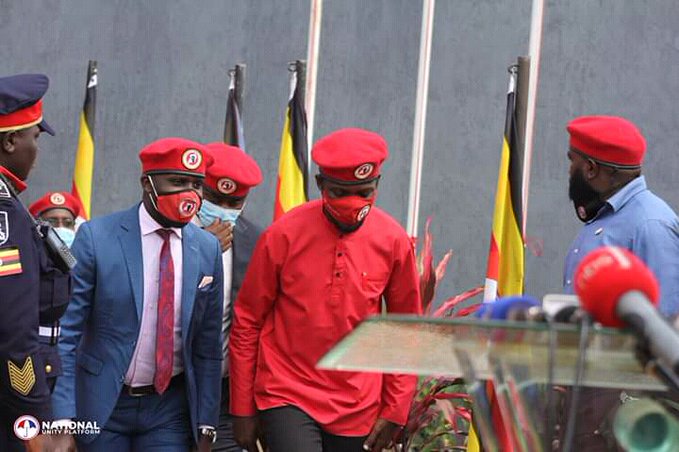
The National Unity Platform (NUP) is next week expected to carry out a nationwide tour peddled at meeting various party leaders to protract ways on how they will conduct their campaigns ahead of the 2021 general elections.

The revelation was made by the party president who doubles as the Kyadondo East MP Robert Kyagulanyi Sentamu aka Bobi Wine. Over the past few days, NUP electoral management team has been conducting various events which culminated into the vetting of party flag bearers for various elective positions in the country.

“I want to congratulate all party flag bearers for making it. Let not only be a flag but a representation of the people of people power, a symbol of discipline, I know it was a tough decision but I want to tell you that we stand for values and we shall continue to support you.”

He said that through tough campaigns the state will try to ascend to them, but the people of Uganda should support them and their decisions will be reflected in the 2021 elections.

“Next week, we shall start national wide consultations, open up NUP offices allover the country. I encourage you to have tough skins. This is the time we have been waiting for to converse for support and people will be making decisions on which kind of Uganda they want to live in,” he said.

Stories Continues after ad

Ismail Watenga joins Onyango at Mamelodi Sundowns

onyango with watenga

South African giants Mamelodi Sundowns FC have signed Ugandan goalkeeper Ismail Watenga as a free agent.

Watenga is expected to sign a three year deal with the Premier Soccer League (PSL) champions having left Kenyan Premier League side Sofapaka FC after a short stint with them in January as injuries denied him enough playtime.

The 25-year-old is expected to be loaned out by Mamelodi for the upcoming 2020/21 season as he continues his development in South Africa, according to football256.

Watenga will follow the footsteps of his senior compatriot Denis Masinde Onyango who has achieved legendary status with Masandawana since joining the club in 2011.

The highly-rated custodian left Vipers at the end of 2018 after he failed to renew his contract to join Ethiopian side Bunna FC. Watenga’s seven-year stay at Vipers saw him win two UPL titles and a domestic trophy before his exit.

Posnet Omwony is another Ugandan goalkeeper who made his name in the PSL at Bloemfontein FC and at Black Leopards.

Stories Continues after ad

COVID-19: Standard Chartered bank extends $50M loan to Flex

Standard Chartered logo

Standard Chartered has announced that Flex, a global technology, supply chain and manufacturing solutions company, tapped into the bank’s USD1 billion financing commitment to help companies tackling COVID-19.

The shortage of ventilators and other critical care equipment is partly due to the limited number of companies that can manufacture at scale, globally. With capabilities to scale production and a global footprint, Flex has seen an uptick in critical care equipment demand from customers as a result. The USD50m loan will support Flex and its efforts to accelerate production of essential healthcare equipment.

Simon Cooper, CEO of Corporate, Commercial and Institutional Banking at Standard Chartered, said: “Flex has been actively addressing the supply chain issues facing the manufacturers of medical equipment, and we’re very pleased to be able to help accelerate the speed and scale of their response. This is a great example of how our commitment to lending specifically for the COVID-19 response has benefitted everything from small companies that require USD500,000 to produce or procure masks or hand sanitiser, to multinationals such as Flex who, with USD50 million of financing, can make a significant impact on the supply of equipment such as ventilators and other critical healthcare equipment.”

This drawdown by Flex follows recent disbursals from the programme in markets including Uganda, Kenya, Sri Lanka, Vietnam, Singapore, the U.S. and China, with more transactions in the pipeline.

Standard Chartered has been part of a number of transactions this year that help the fight against COVID-19, and launched this additional USD1 billion programme to provide financing on a non-profit basis to companies making products and services that help the front line fight the virus and its impacts.

The programme requires specific use of proceeds, in this case for the purposes of unlocking the ability to maximise impact and speed of delivery. Products and services being financed under the programme include diagnostic equipment and ventilators, masks and other personal protective equipment, antiviral medicines and conversions into emergency facilities.

Stories Continues after ad

The journey of independent Uganda 1962 – 2020

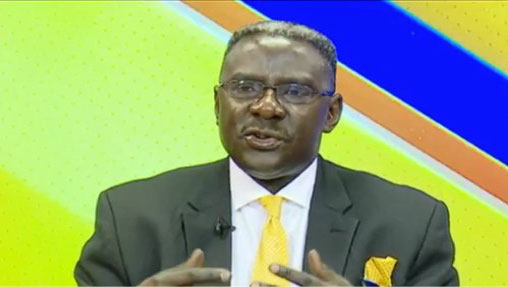
Ambassador Henry Mayega.

Amb. Henry Mayega

The statehood and story of Uganda birthed on October 9, 1962 as an independent country are a mixed grill of ups and downs. Yet that journey presents a myriad of noteworthy achievements. It should be recalled that before 1962, our country was ruled by British colonialists who at one point in time referred to us in 1894 as a “protectorate,” none of us knows against whom they were protecting us! Like a child grows from infancy to adulthood, Uganda, after the lowering of the Union Jack (the British flag) on October 9, 1962, has soldiered on under similar circumstances.

Some have suggested that the cultural, economic and political gulf created between the colonized and colonizers was indestructible; their intuition and axiom was faulty. We have come a long way because before 1962 it was not possible for indigenous Ugandans to copiously tread Kampala road; they loitered in Katwe and other lowly places. With that background, this column will, mainly, look at the political direction of Uganda since independence.

Firstly, after attaining independence, Uganda was admitted to the UN and OAU, a milestone that placed Uganda at the international scene; as a result, Uganda was particularly instrumentally convoluted in supporting the admission of China to the UN (a matter that had been resisted by some in the western hemisphere) and the independence struggles of southern Africa.

Secondly, the period from 1962 – 1986 was largely dotted by political instability, a phenomenon that had far reaching consequences for independent Uganda. Nevertheless, the country registered two important epochal milestones after 1962 namely: the country became a sovereign state and it simultaneously obtained self-determination. Whereas before these two were achieved Uganda used to be ruled from London, UK, the times after 1962 saw self- government based in Kampala and by Ugandans not British governors appointed by the Queen’s government. That also meant we had our own three independent and indigenous arms of government namely the executive, legislature and judiciary, un-encumbered by the colonial yoke!

Thirdly, there was an attempt at entrenching democratic practices in 1962 but a couple of things colluded to immobilize that; the pedigree of inexperienced and untried hands of independence leaders both at the national and federal echelons plus the ever overarching and intrusive former colonial masters betrayed that attempt! Whereas those independence leaders were akin to apprentices operating without instructors, the former colonial masters continued with their meddlesome games.

It was much later that a man who many under-rated and cold-shouldered in equal measure, Yoweri Museveni, repudiated the undemocratic practices of the period between 1962 – 1986; the times after saw greater involvement of all and sundry, the youth, women, PWDs, workers and the general populace who were mobilized to participate in the governance of their country; never before had we seen that level of inclusion. The west has always had a tendency of defining democracy for the rest of the world but Yoweri Museveni set a different pace, pulse and tone by establishing countrywide local council committee structures; that form of democracy was unprecedented because it replaced the repressive and monolithic colonial political configuration.

The Yoweri Museveni administration for the first time created an environment of good governance based on constitutionalism and truly democratic principles. Initially, Uganda had layers of repressive chiefs (at parish, Gombolola, Saza and district levels plus the all-powerful British governor at the helm) with a colonial mindset purposed to serve masked imperialists, their agents and the parasitic British Empire. This column can confidently argue that the bigger part of the achievements of independent Uganda have been made during the tenure of the Yoweri Museveni administration.

Fourthly, the post-independence administration of Apollo Milton Obote inherited a largely colonial army in 1962, the Uganda Army, which morphed into UNLA in 1979. That outfit, apart from changing names, comprised of the same old guard who were particularly semi illiterate and, and as usual, purposed to serve the colonial administration. Elements of it were imported from Sudan and they owed it all to their pay masters, the British colonialists, not the Ugandan citizenry! The Yoweri Museveni administration disbanded that old guard and it simultaneously created a truly modern national army, the UPDF. That prodigious and awesome post-independence achievement has seen the UPDF participate in peace keeping and enforcement operations outside our national borders. Their stellar performance has, for instance, been exhibited in Somalia where the Americans intervened and failed.

This column can confidently argue that the UPDF is a disciplined security organ of the country compared to its predecessors. It is because of that regimen that we have been insulated against coup d’etats and take overs for a cool thirty four years to the yonder.

Relatedly, the NRA and its successor, the UPDF have collectively been the precursors of the restoration of peace, security and stability in Uganda; never before did Ugandans luxuriate and bask in tranquility like during the Yoweri Museveni administration; that unprecedented equanimity has permitted the growth of indigenous business personages, corporate class, political class and others giving them the requisite dexterity in managing national affairs. Those achievements by indigenous people have concomitantly led to the growth of the national economy employing millions of citizens.

Fifthly, whereas the first twenty or so years of independence dispersed all sectors of Uganda, citizens can bombastically boast of the renaissance of our country since 1986. This administration restored traditional leaders that had been banned in 1966 by the Milton Obote government (because states could not be accommodated within a state) and enacted a law to insulate them from the manipulative opposition that had always sought to malignantly wallow them in the heaving political waters after 1986. That restoration calmed the nerves of regions that yearned but were deprived of their cultural direction; relatedly, this administration has attained a level of restitution by returning kingdom assets hitherto confiscated by the central government in 1966 to rightful owners thereby promoting harmonious co-existence between the state and cultural institutions. It will be hard for anyone to fathom banning those institutions in the future because they are apolitical now.

Sixthly, whereas the 1962 independence constitution was negotiated outside our national borders and the “pigeon hole” constitution of 1966 was pushed down peoples’ throats, the 1995 constitution was a culmination of popular nationwide consultations at the behest of the Yoweri Museveni administration rendering the infamous mode of legislating by decrees of Idi Amin in the 1970s a thing of the past. Relatedly, the lack of rule of law and extra judicial killings were back-yarded never to be part of our body politic anymore.

Lastly but not least, this administration implemented the decentralization policy under the local government act of 1997; this unprecedented measure enacted in 1992 devolved a host of powers from the center to local governments. The local government further entrenched those entities as bodies corporate with powers to enter into contracts including investment ventures with individuals or other corporate bodies as well as sister local governments.

The policy of decentralized service delivery institutions and their governance for purposes of improving access to services for the rural poor.

Amb. Henry Mayega

Deputy Head of Mission

Uganda Embassy

Beijing, China

Stories Continues after ad

Kyambogo University private hostel owners oppose accommodation fees guidelines

Kabojja Hostel which is found in Banda, a Kampala Suburb.(PHOTO BY RONARD SHABOMWE)

Hostel Owners around Kyambogo University have opposed the University’s demand of carrying forward hostel fees of Semester two to cater for the remaining period.

According to Elli Katunguka the Vice Chancellor Kyambogo University, the management negotiated with some hostel owners and agreed that the hostel fees which the students had paid for semester two will be carried forward to cater for this period to enable the students complete their studies.

Professor Katunguka reveals that the majority of their students reside in private hostels and rentals in the communities surrounding the University.

Eagle online visited a number of hostels and the owners say, the University should know that when students are in hostels, they use a variety of services which include water and electricity, hostel shuttles and the hostel has to pay the service providers.

They argue that when students were sent home, they were almost done with the semester and they left their property in the hostel which has been the responsibility of the hostel to keep them safe. Therefore, they are not demanding anything from the hostels.

The University also issued out measures that must be followed to ensure that the students are safe from COVID-19, which the hostel owners argue that it is hard to implement some of them when there is no money taken from students.

The measures include; reduction in numbers of occupants (students) per room to observe social distance. This implies that a room which was previously occupied by two students will now accommodate one student, Fumigating and disinfecting the hostel premises and all students’ property before entering the hostels, restrict entry to only hostel members and keep a record of all persons accessing the hostels to ease contact tracing.

Others are to ensure that there is someone at the entrance of the hostel premises to check the temperature of everyone accessing the hostel premises, installing hand washing facilities including hand sanitizers at the entrance and around the hostel premises, among others.

Hellen Nakanja the owner of Maria hostel in Banda says that as hostel owners, they have bills to pay and if the university requires them to have all the measures in place, how will they handle it?

She adds that she will sit with her students and agree on what they will do for the benefit of all of them and the less she can charge them is shillings 200,000 each for the remaining period.

Moses Kigundu the caretaker of Kabojja hostel explains that the students use a hostel shuttle which moves over 12 times a day and in a month, he spends over shillings 1.2m on fuel only. To Kigundu, they have already notified their students to come with shillings 300,000, which he says will help catering for their services.

This is not different from the arguments from the owners of hostels like TAL, Cariton, LIAM, Servite, ENIAD all found in Banda.

However, this is different with Good Shepherd hostel caretaker, Denis Asiimwe who told us that they are expecting only fifteen finalists who will be catered for at no cost since they had already paid their dues.

Some students who are already in Banda like Jimmy Odongo and Aggrey Atwiine say that the university has enough spaces in their halls of residence, so if they care for their students, they should accommodate them rather than stressing hostel owners.

Kyambogo University is reopening for final year students on Saturday 17th and the teaching will start Monday 19th for a period of four weeks.

Stories Continues after ad
FUFA Big League, Regional League playoffs schedule confirmed

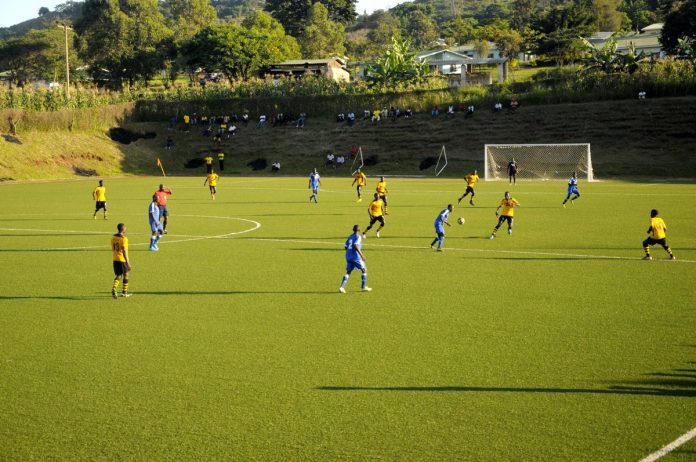
Fufa technical centre where playoffs will take place

The FUFA Competitions Department has released the dates and fixtures of the StarTimes FUFA Big and Regional League playoffs. All plays will be hosted at the FUFA Technical Centre, Njeru.

The FUFA Big League Playoffs will kick-off on the 18th and end on 21st October 2020.

Four teams; Kitara FC, Kataka FC, Kiboga Young and Ndejje University FC are vying for the final promotion slot to the StarTimes Uganda Premier League.

The Regional League playoffs commence on 22nd October till 6th November 2020 with sixteen teams battling for four slots to the Second Tier Legaue (StarTimes FUFA Big League).


Full playoff schedules

18th October: Arrival of Kitara FC, Kiboga Young FC, Ndejje University FC and Kataka FC.

19th October

Kitara FC vs Kataka FC 10:00AM, Njeru

Kiboga Young vs Ndejje Univ 2:00PM, Njeru

20th October: Rest Day

21st October

Play-off Final: Winner bewteen Kitara FC and Kataka Vs Winner Kiboga Young and Ndejje Univ 12:00PM, Njeru


REGIONAL PLAY OFFS

22nd October: Arrival for Buwambo Utd, Edgars FC, CATDA, Luweero United.

23-October

Buganda: Buwambo Utd vs Luweero Utd. 10:00AM, Njeru

Kampala: Edgars FC vs Catda FC 2:00PM Njeru Njeru

24th October: Rest day

25th October

Final Playoff: Winner between Buwambo Utd and Luweero Utd Vs Winner between Edgars FC and Catda FC – 12:00PM, Njeru.


26th Oct: ARRIVAL of Gadafi FC, Sansiro FC, Admin FC, Team Church.

27th October

Eastern: Gadafi FC vs Admin FC 10:00 Njeru

North East: Sansiro FC vs Team Church 2:00PM Njeru

28th October: Rest day

29th October

Final Playoff: Winner between Gadafi FC and Admin FC vs Winner between Sansiro FC and Team Church – 12:00PM, Njeru.


30th October: ARRIVAL FOR ASINGYE FC, BOOMA FC, KIGEZI FC, TERRAZO AND

31st October

Kitara: Asingye FC vs Booma FC 10:00AM Njeru

Western: Terrazo and Tiles vs Kigezi FC 2:00PM Njeru

1st November: Rest Day

2nd November

Final playoff: Winner between Asingye FC and Booma FC Vs Winner between Terrazo and Tiles vs Kigezi FC – 12:00PM, Njeru.


3rd November: ARRIVAL FOR YOUNG ELEPHANT, CALVARY, HOTSPRINGS, NORTHERN GATEWAY

4th November

Northern: Young Elephant vs Northern Gateway 10:00AM Njeru

West Nile: Calvary FC vs Hot Springs 2:00PM Njeru

5th November: Rest Day

6th November

Final Playoff: Winner between Young Elephant and Northern Gateway Vs  Winner between Calvary FC and Hot Springs – 12:00PM, Njeru.

Stories Continues after ad
2021 General Elections: Amuriat names his campaign team

amuriat

The Forum for Democratic Change (FDC) party presidential flag bearer Patrick Amuriat Oboi has named his campaign team ahead of the 2021 general elections.

The team consists of Wasswa Biriggwa who will work as Director General of campaigns, Roland Kaginda Mugume (National Field Coordinator) and Albert Okello Oduman (Executive Director- Campaign Bureau).

Speaking at party headquarters Najjanankumbi, Amuriat said; “The team is expected to set up a campaign bureau and campaign structures. The complete campaign team will be unveiled on Monday October 19th 2020 after the necessary approvals. The team will also help set up various fundraising platforms.”

“I will commence a country wide mobilization campaign on Saturday October 17th. During this exercise I will interact with FDC leaders, supporters and nominated candidates. This exercise will be concluded with a grand homecoming in Soroti .The detailed program will be issued in due course. We also intend to visit cultural, religious, health and education institutions,” he said.

Amuriat was last week confirmed FDC presidential flag bearer after Wasswa Biriggwa opted out of the race.

As the country gears towards the 2021 general elections, Amuriat revealed that the party has made payments of requisite nomination fees to all eligible candidates who have expressed interest to contest. “All our candidates are instructed to present themselves for nominations on the first day of the exercise (October 15th),” he added

Stories Continues after ad

Civil Aviation Authority approves six training organisations in Uganda

CAA

The Uganda Civil Aviation Authority (UCAA) has approved six training organisations in the country.

The approved organisations include; Moriah Aviation Training Center, Aero consultants EA Ltd, East African Civil Aviation Soroti, Vine Air, Kajjansi flying school and the Uganda aviation Academy.

UCAA is mandated to coordinate and oversee Uganda’s aviation industry, including licensing, regulation, air search and rescue, air traffic control, ownership of airports and aerodromes, and Ugandan and international aviation law.

According to the statement released by UCAA, the institutions are provide training for prospective pilots, cabin crew staff, aviation customer managers and related courses in the aviation industry

The approved institutions are tasked to enhance quality Civil Aviation training and provide end to end solutions to rapid growth and expansion in the east and central Africa’s dynamic Aviation industry.

Stories Continues after ad

ISO staff celebrate Col. Kaka Bagyenda’s sacking at a private party

Col. Frank Kaka Bagyenda who has been appointed Uganda's Ambassador to Angola.


Internal Security Organisation top operatives held a party last night to celebrate the exist troubled Director General Col. Kaka Bagyenda.

The party that was held in Ntinda suburb of Kampala in the night is said have attracted many officers who were sidelined by the Kaka regime.

Col. Bagyenda who assumed office four years ago is accused of using thugs and former criminals  like Gangster Sobi in exclusion of his duties while sidelining seasoned spymasters.

Eagle Online understands that Kaka was sacked while in his private office at Musa Courts where is was reported locked drafting reports for his comrade/line minister Gen.Elly Tumwine.

Kaka was reported to have met the Commander in Chief summoned the meeting with other security chiefs after it was reported to him by Chief of Defence Forces that ISO Chief Col. Kaka Bagyenda was the principal behind the arrest of Moses Nkonge Kibalama of National Unity Platform.

Kibalama had disappeared from his home and this triggered a allegations that he had been kidnapped by the state. However, consultation and investigations, it was discovered that ISO operatives were holding Kibalama.

It is at this stage that CDF General David Muhoozi summoned Kaka to produce Kibalama at his office along Wampewo Avenue who in turned briefed President Museveni over the development and hence summoning of the security meeting by the president.

According to a sources who is knowledgeable of what transpired, it is reported General Museveni asked Col. Kaka why he arrested Kibalama and yet if he (Kibalama) had issues, then, it was supposed to be police to summon and arrest him.

“The president was really made because there was no case as to why ISO indulged in the arrest of Kibalama because in any case if he had any issue, it wasn’t the responsibility of police. Kaka was put on the defensive to defend himself but failed and so this was his last meeting which seem to have sealed his fate”

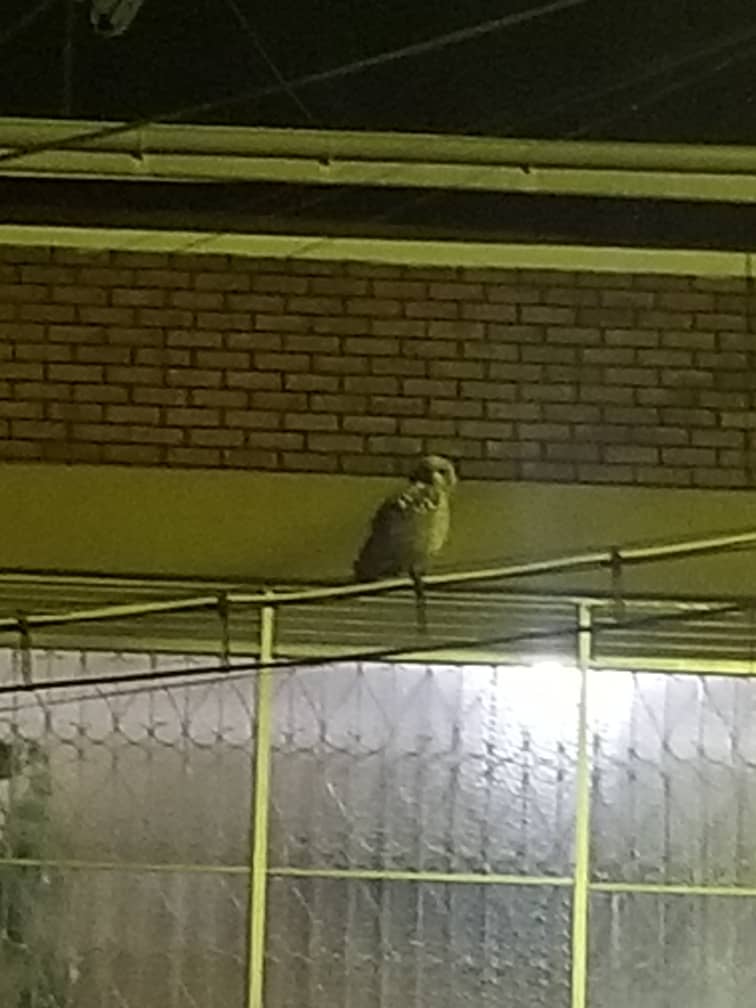
Meanwhile ss the news about his sacking came, ISO staff were the happiest as they claim he had suffocated them for long time with no allowances for close to six month.  However, as fate would be, owl stationed itself at the entrance ISO headquarter.

An owl is to the night as an eagle is to the day. Owls are generally a symbol of paranormal wisdom, regal silence, and fierce intelligence. … While some cultures believe owls to be magicians or heralds of death, the white owl symbolizes wisdom and endurance. The mixed zymology makes us curious even more.

Stories Continues after ad

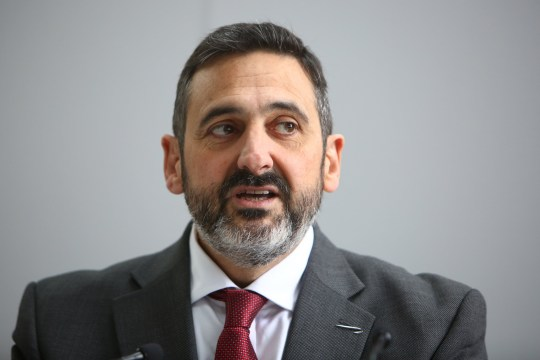
Covid-19: Over 13,000 workers lose jobs as British Airways chief executive Alex Cruz steps down

British Airways chief executive Alex Cruz

British Airways (BA) Chief Executive Alex Cruz has stepped down from the role with immediate effect, owner International Airlines Group (IAG) has said.

IAG boss Luis Gallego said the shake-up came as the company navigated the worst crisis faced in our industry which has seen demand crushed by the coronavirus crisis and thousands of jobs axed.

BA’s new chief executive will be Sean Doyle, who is being brought in from Irish carrier Aer Lingus also part of IAG.

It was one of a series of management changes announced on Monday by Mr Gallego, who took over as IAG chief executive a month ago after the retirement of Willie Walsh.

Mr Gallego said: “We’re navigating the worst crisis faced in our industry and I’m confident these internal promotions will ensure IAG is well placed to emerge in a strong position.”

He said Mr Cruz had worked tirelessly to modernise the airline, adding that he had also led the airline through a particularly demanding period and has secured restructuring agreements with the vast majority of employees.

Mr Doyle, BA’s new boss, previously worked at the airline for 20 years before moving to head Aer Lingus two years ago.

Mr Cruz will remain non-executive chairman of BA for a transition period before also handing over that role to Mr Doyle. BA has been undergoing a painful restructuring as it counts the cost of the coronavirus crisis and slashes flight schedules.

It also said a total of up to 13,000 were expected to lose their roles at the airline, with more than 8,000 having already gone.

BA’s handling of the restructuring drew accusations of a despicable” fire-and-rehire approach, but Mr Cruz told MPs last month that it was on course to secure agreement with trade unions.

He also reiterated that the impact of the pandemic means it is fighting for its survival.

Stories Continues after ad