Stanbic Bank
Stanbic Bank
19.9 C
Kampala
Stanbic Bank
Stanbic Bank
Home Blog Page 956

Bamugemereire land probe quashed

Lady Justice Catherine Bamugemereire whose parts of the report was quashed.

It was unconstitutional for Bamugemereire land probe to order for detention of businessman Abid

The Constitutional Court has ruled that land probe that was headed by Justice Catherine Bamugemereire, was wrong to order for the arrest and detention of city businessman, Abid Alam when he had appeared before it to inquire about his over 10,000 acres of land in Mubende District.
In a 4:1 majority decision of the Nakasero-based court, the justices held that the move to cause his arrest violated his right to a fair hearing, own land among other constitutional breaches.

City lawyer Fred Muwema who represented businessman Abid Alam (petitioner) filed the case in the Constitutional Court challenging Justice Bamugemereire actions.

“The act of the land commission of inquiry in directing or ordering the arrest of the 1st petitioner (Abid Alam) on account of his violation of mediation settlement initiated and endorsed by the land commission, violated the plaintiff’s right to land, liberty and fair hearing,” ruled justice Barishaki in his lead decision today.
In his petition, the businessman had claimed that he is the proprietor of approximately 10,000 acres of land in Mubende District.
He adds that he acquired the said land between 2001 and 2004 and had fully developed it with suitable infrastructure for commercial farming.

The businessman went on to contend that on December 8, 2016, the land probe was instituted by the President and in 2017, the same commission conducted a public hearing on his land which saw many complaints raised by ex-world war servise men, claiming to have interest on his chunks of land.

“The commission of inquiry gave a directive for preservation of the status quo in regard to the 2nd petitioner’s land as it conducts a mediation between the warring parties,” Mr Abid stated in his petition
Adding:”On November 7, 2017, the commission of inquiry issued a warrant of arrest of the 1st petitioner (Mr Abid). When the 1st petitioner appeared before the commission, he was arrested and detained at Wandegeya Police Station on the orders of the commission. He was detained from 11am to 11pm when he was released upon his undertaking not to interfer with the status quo of the 2nd petitioner’s land.”

Further, the justices held that the acts of the commission of exercising judicial power by issuing orders preserving the status quo on Mr Abid’s land run by Mityana Farm Group Enterprise Ltd, were unconstitutional as they contravened Articles 2 (2)& 126 (1) of the constitution.
The other justices who concurred with justice Cheborion were Egonda Ntende, Owiny Dollo, Kenneth Kakuru while Justice Christopher Izama Madrama differed but agreed on certain issues.

Stories Continues after ad
NUP cautions defectors on joining the party with ill motives

Joel and other NUP members briefing journalist recently.

The National Unity Platform NUP has again warned its new members against their personal intentions far from the struggle.

Recently the party president as well as the presidential party flag bear Robert Kyagulanyi said that a number of people are being planted in them with other intentions of causing disorganization among them.

Bobi Wine’s comments came after the sacking of DP stalwart Samuel Walter Lubega Mukaku as the Vice-Chairperson of the Electoral Management Committee of NUP for allegedly promoting DP interests.

Speaking to a new group of members who have crossed from NRM mostly from Eastern region districts at the party headquarters in Kamwokya Kampala, Joel Senyonyi, the NUP spokesperson says, many people have joined with the aim of showing off to President Museveni to buy them back in NRM.

People who have joined NUP include; pastors like David Ojambo, Julious Nyerere, Soucepata Wamike, Kenneth Mugabane, Richard Muhumuza, Kato Steven and Andrew Muwanguzi, all from eastern part of Uganda among other many people.

Ssenyonyi reiterated that while other people are joining them with good and clear intentions, some people are coming with ulterior motives.

He warned new members to desist from being manipulated by the ruling NRM party but committing to NUP.

Yesterday, after weeks of hurling insults at leaders and supporters of the National Unity Platform (NUP), political commentator, Basajja Mivule closed and joined the ruling NRM after spending only 27days in NUP

Stories Continues after ad

URA FC appoints Henry Mayeku as the Chief Executive Officer

URA Football Club has announced the appointment of Henry Mayeku as the new club’s Chief Executive Officer (CEO).

The URA FC interview panel sat on the 31st August 2020 and appointed Henry Mayeku as the new CEO replacing Ivan Kakembo who left the position last season.

The previously URA FC Secretary General (2011-2016) has been given a one-year renewable contract effective 1st September 2020 after a rigorous recruitment process.

“We warmly welcome Henry and believe that he has the necessary experience to lead the club to greater heights.” URA FC wrote in a statement.

“URA FC is a club everyone would dream to work with. I am so happy to come back and associate with a place I call home. I promise to bring professionalism, experience and interpersonal skills which I believe will take back URA FC to the top where it’s supposed to be.” Henry Mayeku said after receiving the news of his appointment.

URA FC, coached by Sam Ssimbwa finished fifth with 40 points behind Vipers, KCCA FC, SC Villa and Busoga United when the league was ended due to the Covid-19 pandemic.

Stories Continues after ad

NUP to consider party loyalists in 2021 general elections

Robert Kyagulanyi and Sempala Kigozi

National Unity Platform (NUP) has announced that as a party, they will consider and support those candidates who have been loyal to the party during the struggle.

This has come in when the National Unity Platform is facing the dilemma on who should be endorsed as a flag bearer in a number of constituencies, especially in the central region.

The problem has been aggravated by the defection of what one would describe as political heavy weights such as Mayors and MPs to NUP.

The defectors know that they will automatically be the NUP flag-bearers, however, there are people power “historicals” who are close to Robert Kyagulanyi, the NUP leader and have already shown interest in standing.

Some areas where there is this challenge include; Rubaga north with James Mubiru Moses Kasibante and Abubakar Kawalya who are vying for member of parliament position, Joseph Mayanja aka Jose Chamerion and Latif Ssebagala on Kampala city mayor ship among others.

Earlier today while addressing journalists at NUP secretariat in Kamwokya, Mercy Walukamba the chairperson of People Power National Elections Management Committee noted that as a party they know whoever has supported the party from the beginning and such people will be having the party support because they have shown loyalty.

She says that there are many people who are fighting to be on the NUP ticket yet they are not working hard to support the party.

Walukamba explains that they will also consider other criteria like academic level, citing that to stand as MP or district chairperson is minimum senior six, councilors senior four etc.

Adding that they will also consider the ability to manage the campaigns financially, able to express themselves and they are able to support the party.

However, to some candidates, the criteria of considering the loyalists is not good because there are people who were not with people power from the beginning but they will be able to serve the part once supported.

They argue that it will bring confusion as well since whoever has come up to support the party, no matter at what point, they all love the party.

Patience Nantege Jackie the aspiring member of parliament Kyadondo east on NUP ticked says that the things that should be considered should be based on capability, people person among others, not considering loyalty because they will leave out many people.

Ivan Sentongo who is an aspiring member of parliament of Mukono municipality where the incumbent MP Betty Namboze also is likely to stand on people power ticket, says that if loyalty will be looked at in a broad way, they will get good candidates.

He however notes that if they consider only those people they started with, it will leave out many who are capable and they are willing to help the party achieve its goals.

According to sources from National Unity Platform, NUP is still a young party which cannot carry out party primaries and therefore, it is the party leaders who should decide on who to front as a flag-bearer.

Stories Continues after ad

Eddy Kenzo named Uganda’s tourism ambassador

kenzo

Singer Idrisa Musuza commonly known as Eddy Kenzo has been named Uganda’s Tourism Ambassador.

He has been unveiled by the State Minister for Tourism Godfrey Kiwanda Suubi. Kenzo is expected to market the country’s tourist attractions on the international scene.

Eddy Kenzo joins the campaign to push forward majorly three Tulambule campaigns. The campaigns include Twende Uganda campaign whose purpose is to increase the awareness amongst the east African community (EAC), Destination Uganda campaign- targeting the rest of Africa and the Pearl of Africa Tourism Campaign whose target is the international scene.

“In such a dull period of the pandemic, A voice of hope and  reassurance is what we need to soldier on, and Eddy Kenzo’s Music has been that Instrumental voice that’s restored hope, built confidence and showcased our strength to move forth,” Mr. Kiwanda said.

He said that while there have been other personalities that have taken on showcasing the beauty of the Pearl on their own personal made fame, Eddy Kenzo’s fame and following are a resource to utilise in marketing our own country.

In his remarks, Eddy Kenzo emotionally narrated how Kiwanda called to ask him how much it would take him to market his own country in 2017 after he was appointed Kenya’s tourism Ambassador.

“It’s from this background that he felt so touched and decided that once his contract with Kenya ended, he would willingly market Uganda’s Tourism and as a destination at no cost.”

Kenzo handed his best international awards to Uganda National Museum in 2018 to act as an inspiration for the young generation, and increase the numbers of museum visitors.

Stories Continues after ad

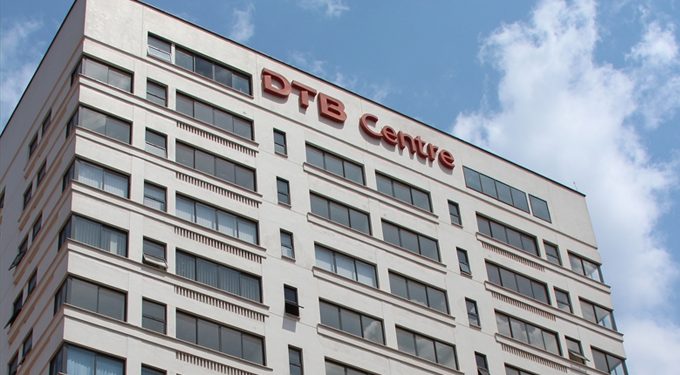
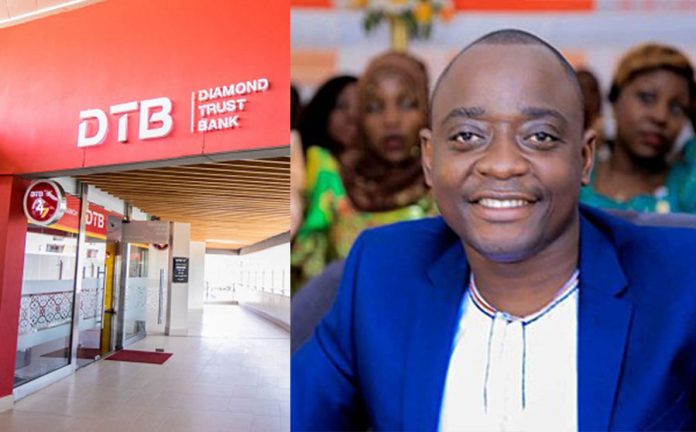
Court to rule on dismissal of DTB’s defense in the Sh120bn fraud case

dtb

The Commercial Division of the High Court has set 5th October as the date to rule on a high-profile case between City tycoon Hamis Kigunddu and Diamond Trust Bank (DTB).

The Commercial Division will deliver the ruling after Hamis Kigunddu’s lawyers led by Fred Muwema floored DTB’s defense team led by Kiryowa Kiwanuka.

Justice Peter Adonyo will deliver the ruling.

Kiryowa Kiwanuka,or KK,as he is fondly known in the legal circles, conceded a legal own goal after admitting in court that DTB Kenya is not licenced to operate in Uganda and thus illegally accessed Kigunddu’s accounts held in DTB Uganda.

“DTB Uganda helped DTB Kenya to do an illegality. DTB Uganda facilitated DTB Kenya to do an illegality in Uganda,”said Counsel Muwema, Kigunddu’s lawyer.

Kiwanuka’s admission triggered suspicion that DTB Kenya and DTB Uganda may be colluding to either evade taxes or under-declare profits since their transactions are conducted behind the back of Bank of Uganda,the regular of commercial banks.

With no license to do business in Uganda, Kigunddu’s lawyers warned that it was illegal for DTB Kenya to debit Shs 120bn from his account.

Kigunddu’s lawyers have warned that DTB Uganda’s conduct violates the Finance Institutions Act,2004.

Kigunddu’s lawyers contend that DTB Kenya illegally debited Shs34b and $23m from his accounts, amounts over and above the loan facility he had with DTB Uganda.

Kigunddu had staked a prime plot on Makerere Hill Road as security for the loan facility.

Stories Continues after ad

Court summons Bobi Wine over false documents

Bobi Wine

Wakiso Chief Magistrates Court has summoned Presidential aspirant and Kyadondo East Member of Parliament, Robert Kyagulanyi Sentamu aka Bobi Wine over cases of providing false documents and giving false information.

The summons follows an application filed by a renowned lawyer Male Mabirizi contesting the MP’s year of birth saying that it is not true that Bobi wine sat for Uganda certificate of education exams at the age of 14.

According to Court summons, the MP is required to appear before Count on the 16 September 2020. He was required to answer charges of giving false information contrary to section 115 (a) of the penal code act, obtaining registration by false pretense contrary to section 312 of the penal code act and uttering false documents contrary to section 315 and 347 of the penal code act.

Last month Mabirizi petitioned Uganda electoral commission to avail him with academic papers which the MP filed when he contested in Kyadondo East.

The availed academic papers indicate that the MP failed mathematics at ‘O’ level and general paper at ‘A’ level. This sparked discussions on whether the MP is suitable to lead the country after failing the two subjects. On the other note, the MP missed a first grade by one aggregate at ‘O’ level.

And yesterday Bobi wine said: “The issue of my academic documents and age have been brought up to derail our struggle. I want to encourage all the students out there who miss exams because they haven’t paid fees on time that I went through the same.”  He said adding that the world is looking for people who have done something, not how they did it.

Below is the statement regarding his academic documents and age

I was born on February 12th 1982 in Nkozi. My brother Julius Walakila, who I follow- same father, same mother, was born on 23rd October 1979 according to all his official records. There is no way I would be born on 12th February, 1980, only four months after the birth of my elder brother.

I started school in 1986 at St. Mary Gorreti Nursery School in Kamwokya.

For my P.1, I went to City Primary School (now Arya Primary School) in Kamwokya in 1987.

For my P.2. I went to Kanoni UMEA (Uganda Muslim Education Association) in 1988. That is where I learnt reciting Islamic prayers that have stayed with me to-date.  For my P.3. I went to Kasaka Primary School in 1989 still in Gomba.

For my P.4. And P.5. I went to Kanoni Catholic School from 1990 up to 1991.  For my P.6 I went to St. Aloysius Bukalagi Primary School in 1992.

While I was at Bukalagi in P.6, my father went and requested Mr Kato, the headmaster of my former school, Kanoni Catholic School to allow me register and sit P.7. Exams there. I therefore spent my third term of P6 in P.7.  I registered there and sat for PLE in 1992.

My father was advised that in order for my age to match with that of other candidates who included my elder brother Julius Walakila who was sitting PLE at Bukalagi the same year, he needed to increase my age by two years. That is when my year of birth was altered from 1982 to 1980. Despite sitting PLE without studying P.7, I passed my exams well.

But I would continue with this anomaly in age throughout my education both at S.4, S.6 and university education. Nine years ago, in 2011, my late father, J.W. Ssentamu talked about this story and the video recording is available. Similarly, 14years ago, in 2007, my elder brother Eddy Yawe was interviewed by the New Vision – an extract of which is available. He also spoke of how I skipped P.7 and sat PLE. The same fact is spoken of in previous different interviews by my elder brother Chairman Nyanzi. From as far back as 2008, I have done several interviews in which I spoke of this story.

Therefore, it was at the point of getting my first Passport in March the year 2000 that I decided to correct this anomaly in my date of birth to reflect the real which is February 12th 1982. I remember swearing an affidavit to reflect this change, which is what was required at the passport office at the time.

I saw some misguided people claiming that I changed my age at the time I was joining Parliament in 2017. No. All my records outside the academic documents since 2000 bear my true year of birth.

Regarding the arrangement and spelling error in my names, I swore a Statutory Declaration in 2017 as required by law, and filed it accordingly. It was the basis of my nomination as Kyadondo East Member of Parliament. At that time, I also applied for verification of my UNEB results and they were verified.

I hope this clarification brings comfort to all those well intentioned supporters and comrades who might have been worried about these schemes.

I have been a law abiding citizen who values and treasures integrity, my shortcomings here and there notwithstanding. If my legal team deems it fit to undertake any other steps to clarify these issues in light of the most recent jurisprudence, they will do so, and I will inform you friends accordingly. For now, we stand confidently right before the law and any other moral code! The detractors as we say, will die in their own movie!

Back to my education, when I proceeded to Secondary School, I went to St. Maria Goreti Katende in 1993 for my S.1. First term.

For my S.1 second term up to senior three, I was at Brain-trust Academy in Rubaga. That was from 1993 to 1995.  For my S.4. I went to Kitante Hill School and that is where I sat for my UCE in 1996. For my S.5. First term, I went to Alliance Advanced Secondary School in Kamwokya in 1997.

For my S.5. Second term, I went to Lubiri Secondary School in 1997. That was the time I lost my mother.  For my S.5. third term, I went to Kololo Senior  Secondary School, still in 1997 and stayed there until I completed Senior Six (S.6) in November/ December 1998.

I was admitted to Makerere University for a Bachelors Degree of Social Sciences in 1999. I studied for the whole year (majoring in anthropology, political science and economics), but later dropped out of the course on account of lack of tuition.

 I applied for a Diploma in Music Dance and Drama (MDD), Makerere University because I was aiming at getting a government scholarship and also because I had started picking a lot of interest in music and drama.

In the year 2000, I was admitted on government scholarship to  study Music, Dance and Drama and I graduated in 2003.

The good thing is that for all my school life and for each of the schools I have mentioned, I studied with some people who are now prominent in society and hopefully some of them will one day tell the story.

As it is well known, in August 2016, I decided to go back to school- this time to pursue legal studies. I joined the International University of East Africa (IUEA) in Kansanga for my Law degree. A few months later when Cavendish University opened its law school in Kamwokya, I transferred from IUEA because Kamwokya was much nearer to my workplace (firebase) than Kansanga.

I also did a short course on Leadership for the 21st Century at Harvard, and I am currently enrolled at the Southern New Hampshire University for further studies.

I have had to put both my studies at Cavendish and SNHU on halt on account of the busy schedule and the ongoing persecution. God willing and time permitting, I hope to complete both courses at the right time.

Stories Continues after ad

UGANET and partners launch bodily autonomy and integrity campaign in Uganda

Ms Dorah Kiconco Musingunzi

The Uganda Network on Law, Ethics and HIV/AIDS (UGANET) and its partners have launched ‘My body is not a democracy’, a campaign peddled at supporting National Advocacy on Bodily Autonomy and Integrity in Uganda.

It was launched by UGANET in conjunction with Uganda Key Populations Consortium (UKPC), Uganda Network of Young People Living with HIV/AIDS (UNYPA) and the AIDS & Rights Alliance for Southern Africa (ARASA).

Speaking at the launch Ms Dorah Kiconco Musingunzi the Executive Director UGANET said the program will ensure everybody’s voice is hard and respected in order to promote and protect everyone’s human right and community engagement and inclusion.

“There is denial of SRHR services and information due to age, race. HIV status and gender norms/stereotype have influenced the increased incidence of violence on AGYWs (Teenage pregnancies, Forced marriages, FGM etc.),” She said at the Naguru Skyz Hotel

Ms Musinguzi stressed that UGANET in this partnership with UNYPA, UKPC, ARASA and other Civil Society Organizations will continue working with the government to advocate for one’s body as integrity and autonomy.

“Today we ask the policy makers gathered here to ensure that they bridge the gaps of inequality, revise the HIV/AIDs criminalization law, and repeal every policy and law that marginalizes human rights.

“The criminal justice system needs to bring to book the perpetrators, and more than magnify what makes us different, lets us celebrate what makes the same, our humanity, our human rights.” She added.

The program also aims at providing possible solutions for young people to get awareness on the basic concept of bodily autonomy and integrity and also help them acknowledge and understand the fact that bodily autonomy and integrity are a basic human right.

That project that will run for the next two years to help young people acknowledge the fact that the right to bodily autonomy and integrity in Uganda is not respected where there are harsh realities.

It will also foster, nurture and remind this generation about Teenage pregnancies which is obviously and evidently still reoccurring, child and forced marriages plus HIV/AIDs related stigma and discrimination in communities

Bruce Tushabe who represented the Executive Director of Uganda Network of Young People Living with HIV/AIDs said that this program will help to achieve a number of things, singularly the coalition among Civil Society Organizations will help bring together young people in protection of one’s body autonomy with self-independence and Integrity.

Asuma Basalirwa, a Member of Parliament Bugiri Municipality stressed that there are fundamental problems that should be addressed even when there is a broken justice system.

“It’s important to take keen interest in broadening our interests in advocating for human rights especially the freedom of speech and freedom of expression.

Dr. Daniel Byamukama Executive Director Uganda Aids Commission implored UGANET and other Civil Society Organizations for attracting and lobbying for international support and asked them to continue demanding for accountability.

He said he had the government to partner and support them on such programs and that they will always provide avenues for NGOs to continue pushing for such campaigns.

Byamukama added that Uganda AIDs Commission as a prevention center would like to hear that everyone’s rights are respected and promoted and they will provide an avenue for this.

Stories Continues after ad

MP Kato Lubwama: My first term was for me to ‘eat’

kato lubwama

The Member of Parliament (MP) for Rubaga South Kato Lubwama has said that his first term in Parliament was for him ‘to eat’ and if voted back in 2021, he will now ‘eat with his voters’.

During an interview on a local TV, Lubwama said that his supporters sent him to parliament in 2016 to enjoy the cash bonanzas as a legislator.

In the forthcoming 2021 general elections, he is requesting them to send him back so that they can now enjoy the money together.

“Last time, I told my people in Rubaga South to vote for me so that I can also eat but I’ve finished eating. Now I want them to vote for me so that we eat together this time,” Kato Lubwama said.

The MP was asked why he has not joined Bobi Wine’s political party National Unity Platform (NUP) and he said he’s a bigger brand than NUP.

“I am bigger than NUP. I can only make an alliance with NUP so that they can also grow their brand,” he claimed.

He also assured journalists that he has already won in Rubaga South and that no one can defeat him.

Stories Continues after ad

Covid-19: 90% of countries experience disruptions to essential health services

Covid-19 testing kits

The World Health Organization (WHO) indicative survey on the impact of COVID-19 on health systems based on 105 countries’ indicates that 90 per cent of the countries experienced disruption to its health services, with low- and middle-income countries reporting the greatest difficulties.

Data collected from five regions over the period from March to June 2020 illustrates that most countries reported that many routine and elective services have been suspended, while critical care such as cancer screening and treatment and HIV therapy has seen high-risk interruptions in low-income countries.

“The survey shines a light on the cracks in our health systems, but it also serves to inform new strategies to improve healthcare provision during the pandemic and beyond,” said Dr Tedros Adhanom Ghebreyesus, WHO Director-General. “COVID-19 should be a lesson to all countries that health is not an ‘either-or’ equation. We must better prepare for emergencies but also keep investing in health systems that fully respond to people’s needs throughout the life cause.”

Services hit across the board: Based on reports from key informants, countries on average experienced disruptions in 50% of a set of 25 tracer services. The most frequently disrupted areas reported included routine immunization  outreach services (70%) and facility-based services (61%), non-communicable diseases diagnosis and treatment (69%), family planning and contraception (68%), treatment for mental health disorders (61%), cancer diagnosis and treatment (55%).

Countries also reported disruptions in malaria diagnosis and treatment (46%), tuberculosis case detection and treatment (42%) and antiretroviral treatment (32%). While some areas of health care, such as dental care and rehabilitation, may have been deliberately suspended in line with government protocols, the disruption of many of the other services is expected to have harmful effects on population health in the short- medium- and long-term.

Potentially life-saving emergency services were disrupted in almost a quarter of responding countries. Disruptions to 24-hour emergency room services for example were affected in 22% of countries, urgent blood transfusions were disrupted in 23% of countries, and emergency surgery was affected in 19% of the countries.

Disruption due to a mix of supply and demand side factors. 76% of countries reported reductions in outpatient care attendance due to lower demand and other factors such as lockdowns and financial difficulties. The most commonly reported factor on the supply side was cancellation of elective services (66%).  Other factors reported by countries included staff redeployment to provide COVID-19 relief, unavailability of services due to closings, and interruptions in the supply of medical equipment and health products.

Adapting service delivery strategies. Many countries have started to implement some of the WHO recommended strategies to mitigate service disruptions, such as triaging to identify priorities, shifting to on-line patient consultations, changes to prescribing practices and supply chain and public health information strategies. However, only 14% of countries reported removal of user fees, which WHO recommends to offset potential financial difficulties for patients.

The pulse survey also provides an indication of countries’ experiences in adapting strategies to mitigate the impact on service provision.  Despite the limitations of such a survey, it highlights the need to improve real-time monitoring of changes in service delivery and utilization as the outbreak is likely to wax and wane over the next months, and to adapt solutions accordingly.

To that end, WHO will continue to work with countries and to provide supportive tools to address the fallout from COVID-19. Given countries’ urgent demand for assistance during the pandemic response, WHO is developing the COVID19: Health Services Learning Hub, a web-based platform that will allow sharing of experiences and learning from innovative country practices that can inform the collective global response. WHO is also devising additional surveys at the sub-national level and in health facilities to gauge the longer-term impact of disruptions and help countries weigh the benefits and risks of pursuing different mitigation strategies.

Stories Continues after ad