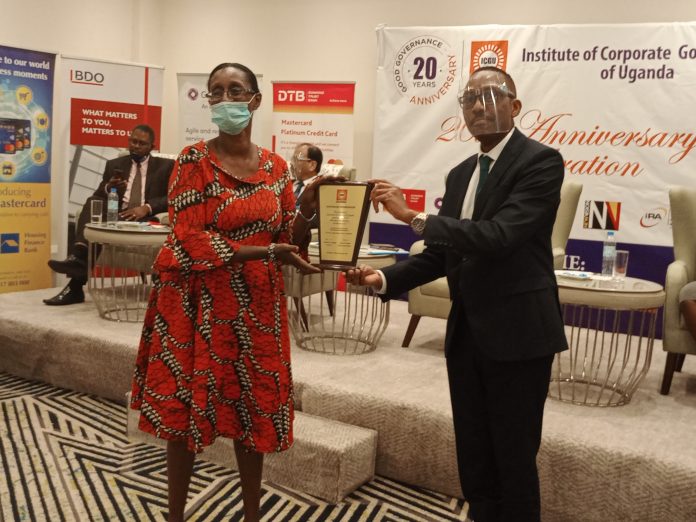
In a recent webinar organized by the Strathmore Business School, Peace Kabunga, the Executive Director, Housing Finance Bank responded to a number of questions regarding how leaders and managers can better position themselves so as to emerge stronger from the effects of the Covid-19 pandemic. Below are the excerpts from this session.
Qn: The general effects of #Covid-19; that is the effects on business, how have these affected “managers’ way” of doing things.
It’s no longer news that the #Covid-19 Pandemic has evolved into a global crisis, with Economic activities paralyzed across the globe pushing households, businesses and economies into financial distress.
The roles and responsibilities of business leaders or managers have dramatically changed in the past few months with the pandemic. Before #Covid-19, CEOs and other executives in high-growth companies were focused on fostering innovation, driving revenue, and gaining market share. We all had strategic plans well thought out and drawn ready to execute in 2020. Things changed in a matter of days or months… Today, many of us leaders must make rapid decisions about controlling costs and maintaining liquidity in order to survive and thrive.
There has been lots of unforeseen roadblocks for some businesses; supply chain and operational challenges -that drastically alter the scope of our roles and priorities. The banking industry has not been spared with massive loan restructures as a result of slowdown in business activities, job losses, among others.
Meanwhile, leaders and their teams are navigating health and safety concerns, working remotely, and supporting their families through the pandemic. This is not easy transition for sure.
Qn: Regarding the emerging trends and topical issues affecting leaders, how can middle level managers lead successfully in this crisis?
Leadership isn’t only for those with formal authority and everyone needs to think, perform and operate from this frame of reference. This will ultimately make our organisations undefeatable in the market-place. Because each person is thinking like a leader rather than an employee, every teammate is behaving like an entrepreneur rather than a passive bystander, because with everyone leading regardless of whether they have a title or not, the company becomes stronger and resilient.
Digital domination
While the majority of firms struggle, there are others that are soaring (facebook, Amazon, Apple, Netflix, Google, Zoom and many others). People won’t be gathering in large masses for quite a while and so businesses that can deliver their products and services via digital will dominate.
Build personal resilience
Dynamic adjustments to meet your own personal needs and those of the workforce during crisis. As we are reminded on every airline flight, in an emergency you must first take care of yourself so as to take care for others, the same applies to organizational leadership in times of crisis. Establish a routine of self-care: a healthy diet, exercise, meditation, or whatever works best for you. Stock up on energy, emotional reserves, and coping mechanisms.
Adaptive leadership
As business processes are changing and evolving to adapt to disruptions, so should leaders. When a company faces a disruption that forces deep-rooted change in how operations are carried out, leaders need to be able to elevate the quality of their leadership to meet those new demands. Adaptive leadership can be seen as a practical leadership framework, helping both individuals and larger teams and organizations adapt to changing environments so they can effectively respond to recurring or sudden disruptions in a timely manner. Ability to transcend all the stresses, fears and to emerge stronger than before. In this pandemic crisis, resilient leaders must respond and adjust to fluid circumstances across the organization in a climate that changes day by day and hour by hour.
Empower alternates
Ensure that trusted alternates are informed and empowered to make decisions. I think if there is a time our succession plans were tested is now….
Qn: What global best practices, structures, processes and game changing leadership strategies are leaders using to navigate and revolutionize their leadership approach?
Decide with speed over precision.
The situation is changing by the day — even by the hour in some instances. The best leaders quickly process available information, rapidly determine what matters most, and make decisions with conviction. Focus on things that matter most. An example of total lockdown – where only vehicles with stickers of essentials workers would move… night virtual meetings, management with the crisis management team to make decisions on how we would serve customers.
Adapt boldly.
Strong leaders get ahead of changing circumstances. They seek input and information from diverse sources, are not afraid to admit what they don’t know, and bring in outside expertise when needed. Decide what not to do. Put a hold on large initiatives and expenses, and ruthlessly prioritize. Throw out yesterday’s playbook. The actions that previously drove results may no longer be relevant. The best leaders adjust quickly and develop new plans of attack.
Reliably deliver.
The best leaders take personal ownership in a crisis, even though many challenges and factors lie outside their control. They align team focus, establish new metrics to monitor performance, and create a culture of accountability. In our case, Focus shifted to loan restructuring… daily performance reviews and agreed on realistic short-term targets.
Engage for impact.
In times of crisis, no job is more important than taking care of your team. Effective leaders get to understand their team’s circumstances and distractions, but they find ways to engage and motivate, clearly and thoroughly communicating important new goals and information. This point deserves extra attention, because although the #Covid-19 pandemic is, of course, a health crisis, it has sparked a financial crisis as well. As leaders, we need to reiterate new priorities frequently to ensure continued alignment in this time of constant and stressful change.
We had weekly team engagements and monthly town hall meetings, relevant trainings like on health, finance, offered counselling services for those who needed it. Had a moment of sharing Covid 19 heroes and heroines and what each staff did to deserve recognition
Qn: What are the opportunities and challenges in the new normal? What should we expect ahead?
The crises may have paved way for uncertainties, but also created opportunities for sectors to emerge and grow while some will fall and vanish. The New Normal is here to stay, but with new challenges come new opportunities to learn and grow. Being able to adapt will make all the difference.
Customer and employee experience. Most organizations have been focusing more on the former- customer. There is an opportunity to make customer experience better with accelerated digital solutions and employee on the side of home working- while you are taking care of the family. Managing the New realities – Opportunities and challenges managing virtual teams for instance Driving Team productivity, Performance management, Employee Motivation, Virtual collaboration, structural changes and processes etc
Design new operating models: Crisis has caused a fundamental change in human- human interactions and behaviour. Well designed and executed innovation pushes any organization to the top of the competitive market, setting them apart in terms of what they can offer to potential clients, customers, and shareholders. In the new world, companies need to review and redesign operational flow and operating models. These changes have an impact on design, running expenses, communication etc. This can bring huge cost savings- rent, trainings, staff expenses, utilities etc.
Identify opportunities and move very fast! No-one was really ‘ready’ for this, but we have seen a lot of businesses transforming. “For example, distillers which were once making craft gin or vodka, are now making hand sanitisers. Fashion labels are now making masks and other protective wear for essential service workers. When pushed out of a comfort zone, people will be more innovative.
Qn: As middle level managers, how can one solidify their credibility as a leader? How can one influence from the middle – that is making the leap from management to leading effectively? How is this different in crisis situations?
Accept the changes
The first and most important thing to do for as a manager or leader to adjust to the new normal is to accept the changes and embrace the new normal. Waiting for things to go back to normal before you continue your business or work is the wrong move because things might never go back to the way they were.
Embrace technology. Innovation and the use of technology in businesses have been on the rise, before the pandemic. Technology is the future of the business world. The latest trend since the pandemic started is to replace manpower with technology. With this, the business continues without endangering the lives of the employees.
Collaboration, flexibility and accountability
The best time for flexibility, collaboration and accountability in business is now. Adopting systems such as informal interactions and remote work would help build a flexible, accountable and better workforce. Not only will this make your employees happy, but it will also give your business the exposure it needs.
Qn: Managing realities – opportunities and challenges managing virtual teams e.g driving team productivity, performance management, employee motivation, virtual collaboration, structural changes and processes etc. What do these trends mean for your people and business today?
Increase in Flexible Schedules
Offering flexibility in how employees work might seem an impossible task when work is required to be remote. However, implementing a system of a shorter workweek for example, may in fact be the solution. Recent studies have proved that employee morale improves with flexible work schedule arrangements, with over 90 per cent of employees agreeing their enthusiasm for work would increase if their leaders were to be more lenient in discussions of time scheduling.
Leaders should remain steadfast in reinforcing the requirements and expectations for the work quality and amount that is expected from their employees, but they should remain receptive to new ways of providing flexibility to their employees.
Leading Remote Workers
As flexible scheduling increases, so too does the number of remote workers you have to manage. Not only that, but many organizations today are managing a near-complete remote workforce. Some may be finding that the reduced cost for employers to run the workspace, and the reduced commute times and costs for employees, are benefitting the organization. Some others, however, may be finding that their workplace-accustomed employees are having trouble adapting to this new way of working.
As beneficial as remote work may be for some employees, not all will be receptive to it, especially when it is their only option. Workplaces are slowly reopening across the country, but workers and leaders alike should still be well-equipped to manage and work in remote settings as efficiently as they work in-office. Some general strategies leaders can use to remedy the unique challenges of remote work can include:
*Remembering that remote team members will have varying responses to the new standards and expectations involved in remote work and that some employees have challenging work-from-home disruptions
*Building and maintaining trust-based relationships, as much of the work you could monitor in-office, will be done without your direct supervision
*Setting clear standards for conduct and expectations for work
*Constantly communicating and maintaining a positive, morale-boosting company culture
*Getting employees together face-to-face via online video chatting meeting rooms to increase communication and limit isolation
Acquire wider set of skills;
These days it isn’t feasible to only use employees for a single task. Ensure they have a broader view, a wider set of skills, and more knowledge and apply their skill-sets across the organisation. While leaders cannot make people develop new skills, they can influence and challenge them to take the necessary steps. The future of work is not Job security but Income security, the ability to earn income regardless of salary. Work as we know it today will be different post-#Covid-19. There will be downsizing, salary slashes, and layoffs and so on. The truth is the insecurity in the job Market will triple. These days it isn’t feasible to only use employees for a single task.
Increase in Accountability
In the 2020 business market, accountability and radical transparency are more prominent than ever. In the digital age where workflow and demands travel at rapid speeds, and where employees are digitally connected, executive leaders cannot afford to be uncommunicative with critical information. Similarly, with the abrupt increase in remote work, the need for personal accountability in employees and managers alike is skyrocketing.
As a leader, managing accountability is one of the most critical parts of ensuring your relationship with your employees is trustworthy and strong.
Human Resources: A Constantly Growing Field
Human Resource professionals play a strategic and important role as the world faces an unfamiliar challenge and workers are navigating a technological, distinctly un-human way of working. Ensuring people adjust to their WFH environments is in fact, a very diverse undertaking. Several studies conclude that employees are battling everything from loneliness to remembering to take breaks while combating the distractions of their small children’s needs. There are also connectivity issues and coaching opportunities to engage employees in finding new ways in managing their workloads…to mention a few. HR will be tasked with extending support mechanisms that do ensure work continuance while respecting employee’s unique and personal needs.
Qn: Any final remarks?
Disruptions can be challenging to navigate, especially when they are deeply unfamiliar and unprecedented like what we are feeling today.
However, they also have the potential to be a great source of inspiration when envisioning the future of the company, leading to new methods of organizational operations that may not have been possible as recently as last year. So as leaders, we need to stay on top of all the current trends that are influencing our companies, industry, team members, and ourselves.
As a leader, it is important to recognize disruptions not as obstacles that will hinder your advancement as a company, but rather opportunities to improve upon existing organizational processes, or develop new ones better suited to the modern business world.
“What the caterpillar calls the end of the world the master knows is the butterfly” Richard Bach
Stories Continues after ad