Stanbic Bank
Stanbic Bank
27 C
Kampala
Stanbic Bank
Stanbic Bank
Home Blog Page 994

WHO Experts head to China for identification of zoonotic source of Covid-19

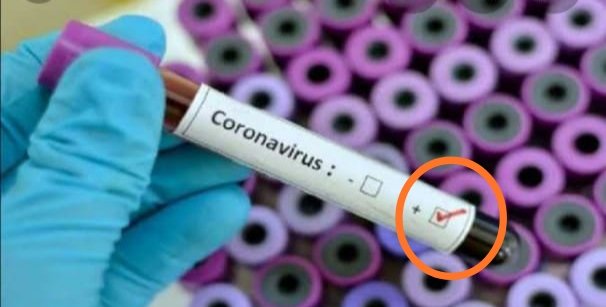
Covid-19 testing kits

The Director General of the World Health Organization (WHO) Dr. Tedros Adhanom Ghebreyesus has confirmed that all preparations have been finalised and the organization’s experts will be traveling to China this weekend to prepare scientific plans for identifying the zoonotic source of Covid-19.

Over the past few months, there has been a lot of discussion about the origins of COVID-19. The outbreak is accelerating. Currently, there are 11.4 million cases of COVID-19 and more than 535,000 lives lost.

“The experts will develop the scope and terms of reference for a WHO-led international mission. The objective is to advance the understanding of animal hosts for COVID-19 and ascertain how the disease jumped between animals and humans.” He said

He noted that WHO has partnered with Facebook and Praekelt.org to provide the organization’s COVID-19 information in Free Basics and Discover, in a mobile friendly format.

Through this collaboration, WHO will reach some of the most vulnerable people who will be able to access lifesaving health information without any data charges in more than 50 countries.

“We have launched this product in English, French, Spanish and Arabic and other languages will follow in the coming weeks. I want to thank Google for its continued support and dedication to keep the global community safe and informed and for its recently increased ad grant to WHO.” He said

He said the support will enable WHO to catch trending falsehoods early, respond to them quickly, and give people better access to lifesaving information when they need it most; wherever they are in they are in the world.

“This pandemic has shown the importance of being able to see each other online while being physically apart.”

Stories Continues after ad

Standard Chartered bank joins International Banking Network

Standard Chartered logo

Standard Chartered has joined IBOS Association (IBOS), an international banking network where members collaborate to serve each other’s international clients in markets where they themselves do not operate.

Standard Chartered’s history and extensive network a will complement IBOS’ strong geographic coverage in Europe and the Americas, thereby creating compelling global opportunities for clients of all member banks.

IBOS Managing Director, Manoj Mistry, commented; “I am delighted that Standard Chartered is joining IBOS, further strengthening our network across this key region and opening more doors in Asia for our clients. We are relishing this next chapter and we are thrilled to be working with Standard Chartered.”

Standard Chartered will initially add Singapore, India, mainland China, Hong Kong, Taiwan, and Malaysia to the IBOS network. In time, both parties will explore expanding the relationship to additional markets where Standard Chartered operates.

Speaking on behalf of Standard Chartered, Jiten Arora, Global Head, and Commercial Banking, said “Helping businesses to connect and grow internationally is central to our brand promise. We are pleased to be a part of IBOS, which will further strengthen our role as a strategic partner in our clients’ growth journeys. We also look forward to supporting internationalizing mid-corporate clients of member banks who are keen to venture into the markets across our footprint and using our deep local knowledge to help them enter, navigate and prosper by accessing some of the most vibrant economies, trade corridors and supply chain ecosystems globally.”

Despite the current pandemic, IBOS remains open for business and the network is utilising technology to succeed at achieving its goals and ensuring that clients continue to have access to services as normal. IBOS also has its sights set on growth into the markets that the ever changing economic and geographical developments demand, as it continues to develop its expansion into Australasia.

Moreover, Manoj noted that additional markets across Central and Eastern Europe are also being contemplated to serve the network as other banking association groups are starting to wind down.”

Matt Tuck, Head of Commercial Product, Service and Operations at NatWest Group, said  “As a long-standing member of IBOS since its inception in 1994, NatWest Group is delighted that with Standard Chartered’s membership, IBOS is extending its reach into Asia for the first time. As a market leading UK Commercial Bank, NatWest Group is looking forward to working even more closely with IBOS to support our clients’ international banking needs across this region.”

Chris Ward, Executive Vice President and Head of Product Management and Operations, PNC Treasury Management and IBOS Chair and Board of Directors’ member said “The addition of Standard Chartered presents an incredible growth opportunity for the IBOS network and for its members.” He added that the continued global expansion of the network will help to provide our members’ customers with the service and resources they need to be successful.

Stories Continues after ad

Emmanuel Tegu’s death: Police blocks journalists as Makerere University hands over CCTV footage

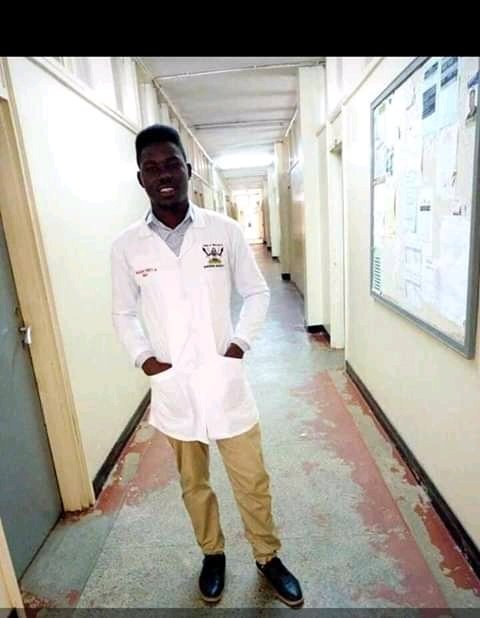
Tegu

Several journalists have been blocked from accessing St Augustine Chapel as Makerere University authorities hand over CCTV footage recorded during and after the assault of the third year student Emmanuel Tegu.

Tegu, who was pursuing BSc. Animal production (BAP), was beaten by a mob on 28th June at 11:00 PM near Lumumba hall. He later passed on at Mulago hospital on Saturday 4th July.

He is averred to have been battered by aggressive Local defence unity (LDU) officers for allegedly flouting curfew guidelines. Following his death, over 10 residents of Makerere University have been arrested and detained at Wandegeya police station.

According to Police Spokesperson Fred Enanga, Preliminary findings indicate the deceased informed his girlfriend that he was going to church. He revealed that the victim was a son to a police officer identified as Sgt. Sam Okwalinga.

Enanga said Tegu had Bipolar, a mental illness and was found half-naked in Makerere University by patrol teams.

“Tegu became more aggressive as they (patrol teams) tried to pursue him and started pelting them with stones.” Enanga said, adding that CCTV footage shows him pelting officers with stones.

“Police teams got a disturbance call from area councillors. Tegu reached Centenary Bank in Makerere University and tried to attack the guards there. One of the guards raised an alarm and residents from Lumumba Hall descended on him,” Enanga said

Tegu was laid to rest on July 5, 2020, at the family’s ancestral home in Kanyum village, Kolir sub-county, Bukedea district.

Stories Continues after ad

Post COVID-19: Africa’s growth stands to rebound to 3% in 2021

Africa’s economic growth could rebound in 2021, provided that governments manage the COVID-19 infection rate well, according to updated forecasts from the African Development Bank, released yesterday.

In a comprehensive socio-economic assessment of the pandemic’s impact, the Bank said growth was now projected to rebound to 3% in 2021 from -3.4% in the worst-case scenario for 2020.

The predictions are contained in a supplement to the Bank’s African Economic Outlook, which was released on 30 January. At the time, Africa’s growth was forecast at 3.9% in 2020 and 4.1% in 2021.

The supplement cautioned that the growth outlook for 2021 and beyond would depend largely on African governments’ effectiveness in flattening the curve of the outbreak and policies to reopen economies.

Charles Leyeka Lufumpa, Acting Chief Economist and Vice President for Economic Governance and Knowledge Management, at the African Development Bank, said: “To reopen economies, policymakers needed to follow a phased and incremental approach that carefully evaluates the trade-offs between restarting economic activity too quickly and safeguarding the health of the population. “

“Economic activities can be restarted incrementally on the basis of the transmission risks of different sectors,” Lufumpa said.

The spread of the virus in Africa depends largely on the preparedness of countries to separate and treat infected patients, the supplement stated, noting that only 21 out of 54 African countries are clinically prepared to deal with epidemics.

Executive Director of the African Economic Research Consortium and Former Governor of the Central Bank of Kenya, Njuguna Ndung’u described the African Economic Outlook 2020 supplement as “a very important and useful policy tool for African countries who actually need it  at this time.”

“It will be useful now and in the future. It gives us important short, medium- and long-term strategies,” he added, stressing crises like COVID-19 present a good opportunity for innovative  reforms in countries.

The supplement noted that the curve of the pandemic in Africa was flattening gradually. However, COVID-19 remains a serious threat to lives and livelihoods, given weak healthcare systems and limited social protection. The continent also remains vulnerable to other regional threats such as the locust swarms that have struck East Africa, as well as to extreme climate events.

Under projected scenarios for contraction of growth, Africa could lose between $145.5 billion and $189.7 billion of GDP in 2020, according to the publication.

Hanan Morsy, Director of the Macroeconomic Policy, Forecasting and Research Department at the African Development Bank, said “The African Economic Outlook 2020 Supplement shows that for the first time in the last half-century, Africa would be facing an economic recession as a fallout of the COVID-19 pandemic. This would affect the gains achieved in poverty reduction as an estimated 49 million Africans could be pushed into poverty, with about 30 million jobs at the verge of disappearing.  Policymakers need to act fast to alleviate the impact of the crisis on vulnerable groups through well targeted social safety net measures.”

The report called for urgent policy interventions to mitigate the impact of the pandemic: “Across Africa, the response must be well-sequenced and multipronged, involving a public health response to contain the spread of the virus and minimise fatalities, a monetary policy response to ease liquidity constraints and solvency risks, and a fiscal response to cushion the economic impacts of the pandemic on livelihoods and to assist businesses.”

Other proposed interventions included labour market policies to protect workers and their jobs, and structural policies to enable African economies to rebuild and enhance their resilience to future shocks.

The supplement warned that the tourism, transportation, and entertainment sectors may take longer to recover. Between 2017 and 2018, African travel and tourism grew by 5.6%, compared with the global average of 3.9%.

According to Morsy, the supplement projected that, in the worst-case scenario, an additional 49 million Africans could be pushed into extreme poverty by the pandemic and its aftermath. The number of people in extreme poverty in Africa (using the $1.90 international poverty line) could reach 453.4 million in 2020 as a result of the pandemic, compared to 425.2 million under the no-outbreak scenario.

People in West and Central Africa faced a higher risk of falling into extreme poverty due to the pandemic, but COVID-19 would also deepen poverty in East and Southern Africa.

Confirmed cases of COVID-19 in 54 African countries stood at 304,642, with 8,087 reported deaths as of 22 June 2020. According to the supplement, reported figures were likely to be higher in reality because of limited testing capabilities in most countries.

The authors said to reopen economies, policymakers needed to follow a phased and incremental approach that carefully evaluated the trade-offs between restarting economic activity too quickly and safeguarding the health of the population. They also must build public trust and buy-in and address structural bottlenecks that make the continent more vulnerable to future shocks.

Stories Continues after ad

Airtel launches campaign encouraging customers to avoid unsafe activity during the pandemic

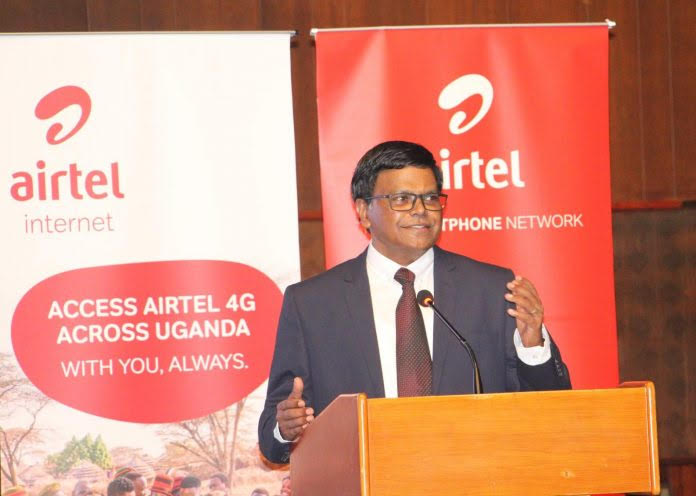
Airtel MD- V.G Somasekhar

Airtel Uganda has launched a campaign encouraging its smartphone users to use the ‘My Airtel App’ to avoid potentially unsafe activities during the COVID-19 crisis.

The ‘COVIDUPS’ campaign introduces a quirky, humorous twist to COVID-19 social responsibility messaging. The creative features a series of animated characters – the ‘COVIDUPS’ – who each represent a different aspect of people’s behaviour in response to the safety measures, including Mr. No Personal Space Guy, Mr Cash is King Guy and Mr. Party Don’t Stop Guy.

The campaign shows how these familiar – and potentially unsafe characters can all be avoided by using the ‘My Airtel App’, which offers a one-stop digital solution to pay bills, buy goods and services, and transfer money to family and friends through Airtel Money. With no need to queue, customers can, therefore, keep away from ‘COVIDUPS.’  In addition to this, the My Airtel App further enables customers to top-up data, download videos, stream live music and video chat from home.

Since the outbreak of COVID-19 and countries went into lockdown, Airtel Africa raised its game to ensure consumers are connected to their friends and families. Airtel Africa has seen a 10 fold climb in registrations with 36% of the registered users using the My Airtel App actively, demonstrating its value in enabling customers to continue to manage their finances and stay safely entertained while adhering to the socially distancing measures put in place as a result of the pandemic.

The integrated campaign is running across social media channels including Facebook, Twitter, Instagram, Tik Tok, YouTube and Tinder, Airtel’s internal and owned channels, and digital channels, for the next eight weeks.

V.G Somasekhar, the Airtel Uganda Managing Director, said; “This new campaign is about injecting some light-hearted relief into our #BeSmartBeSafe messaging.  We want to demonstrate the full functionality of the My Airtel App and how it can fulfill a wide range of needs during the current crisis, from making digital payments to staying entertained and hosting virtual gatherings during the pandemic.”

Airtel Uganda has also rolled out a Community Champion initiative, designed to keep customers connected and ensure they can financially support themselves, their friends and their family during these unprecedented times.

Customers can top up any amount for friends and family using Airtel Money and earn 5% extra airtime, or make a purchase using a debit/credit card via the My Airtel App and similarly earn 5% extra airtime. This extra airtime can also be sent to friends and family using the Me2U feature on the My Airtel App, empowering customers to support those in urgent need.

Across all markets, the Community Champions program has seen over 50,000 community champions transact close to a million dollars since the outbreak of COVID-19, three months ago.

Stories Continues after ad

Court summons Jose Chameleone over uncustomed goods

Jose Chameleone

Kampala City Lord Mayoral Aspirant and legendary musician Joseph Mayanja aka Jose Chameleone has been summoned to appear before the Anti-corruption Court after he was found in possession of uncustomed goods.

According to Court summons issued and signed by Chief Magistrate Pamella Lakunu Ocaya, legendary singer-cum aspiring politician was directed to appear before Court on July 30, 2020 to explain charges related to flouting tax systems.

Prosecution avers that Uganda revenue authority (URA) custom officials found Chameleone in possession of a vehicle Toyota Land cruiser V8, model GRJ 200 registration number SSD 449B along Wakaliga-Bulange Mengo. The singer was requested to vail them however he declined claiming that they are at home in Seguku.

The singer has been leveled with two charges of failure to produce documents when required contrary to section 204(b) of the east African community customs act of 2004 and being in possession of uncustomed goods contrary to section 200 (iii) east African community customs act of 2004.

“You are hereby commanded by the Ugandan government to appear in the Anti-Corruption Court in Kololo, on the 30th day of July 2020, at 9:00am” Reads in part of Court summons.

Stories Continues after ad
Parliament directs Minister to investigate state of Nsambya Police barracks

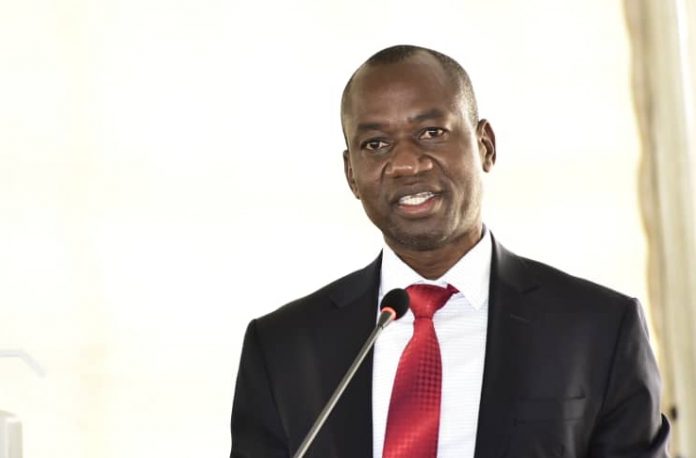
Hon. Maurice Kibalya speaking about the welfare of Police officers in Nsambya Barracks

The Speaker of Parliament, Rebecca Kadaga, has directed the Minister of Internal Affairs to investigate the state of affairs at the Nsambya Police Barracks in Kampala.

The directive was prompted after Hon. Maurice Kibalya (NRM, Bugabula County North) raised a matter of national importance in regard to the living conditions in the barracks.

“It is a sad state of affairs as the barracks does not have water or power. If this week there is water, then the following week, there will be no power. These officers are committed to serve the country but their environment is not appealing. We need to look into this matter,” he said according to the Parliament website.

Kibalya added that the children of the Police officers using television and radio sets for learning during the Covid-19 pandemic, like their other counterparts, were disadvantaged as a result of the inconsistent electricity supply in the barracks.

He also requested that the Committee on Defence and Internal Affairs investigates the situation at the Nsambya Police Barracks. “Nsambya Police Barracks needs some sort of intervention. The housing there is pathetic for a barracks in the middle of Kampala. They need decent homes,” he added.

While chairing the House on Tuesday, 7 July 2020, Kadaga was concerned about the housing project to decongest the police barracks in and around Kampala. The project involved construction of houses for its officers in Naguru, a suburb of Kampala and also the seat of the police headquarters.

“While Gen. Kale Kayihura was still the Inspector General of Police, he had started a construction project to decongest some of these barracks. What happened to them? Did they just stall?” she asked.

Stories Continues after ad
#Covid-19: Salon and Spa operators petition Parliament over their business

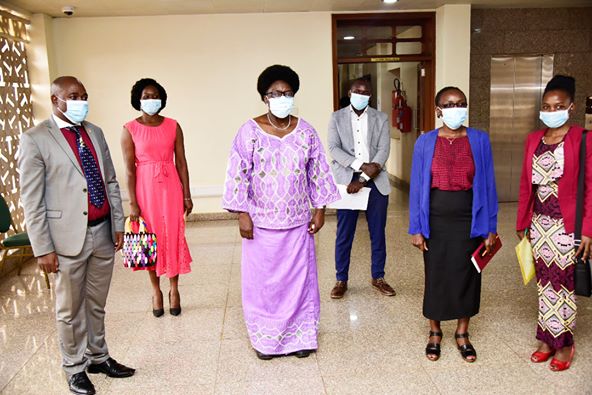
The Salon and Spa operators have petitioned the speaker of parliament Rebecca Kadaga seeking for her interventions following the closure of their businesses.

In March president Museveni ordered for closure of salons, Spas in a bid to curb the spread of deadly Covid-19 pandemic. Currently there are 11,468,979 confirmed cases of COVID-19, including 535,181 deaths.  According to the World Health organisation (WHO), there 938 confirmed cases in Uganda and zero death.

According to the petition, Chairperson Abdu Karim Mucunguzi, said that they wrote to the Ministry of Health in regard to their plight but have not got feedback.

“With over 1.5 million saloons and spas in the country, their continued closure has affected youths who are the majority of the employees.”

“I do understand the difficult situation the saloons and spas find themselves in. Although we have this pandemic, we shall find ways of facilitating our people to work but also to keep safe. I shall take up this concern to the attention of the government.” Kadaga said

Stories Continues after ad
Peter Kaujju named Head of Communications at UMEME

Peter-Kaujju

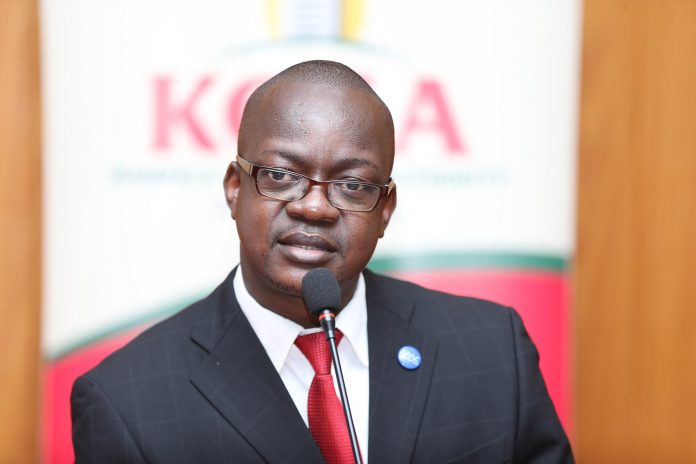
The former head of Public and Corporate Affairs at Kampala capital city authority (KCCA) Peter Kaujju has been named the Head of Communications at power distribution company UMEME.

“We take this honour to introduce Peter Kaujju as our Head of Communications. He comes with a wealth of experience in communication, stakeholder engagement and partnerships. He is passionate about public relations and we are happy to have him on the team,” reads in part of the statement released by Umeme.

In June, Mr Kaujju tendered in his resignation letter after serving for nine years at KCCA.

Kaujju joined KCCA in 2011 as a Communications Supervisor in the Public and Corporate Affairs (PCA) Office and has risen through the ranks over the years until to-date where he’s been serving as the Head of Public and Corporate Affairs Department of the Executive Office.

Under his tenure at KCCA, Kaujju was instrumental in successfully establishing KCCA’s brand voice and guiding Management on formulation of a coherent Communications Strategy as well as its execution in the media, relations with our development partners, members of the diplomatic Corps and a larger percentage of the Public while leading the Communications function of the Institution a pillar on which the Institution is and will be hinged for the years to come.

He was critical in building networks and positioning KCCA as a client centric Institution while at the same time strengthening partnerships.

Stories Continues after ad

Kyambogo University to demolish Dilapidated Structures

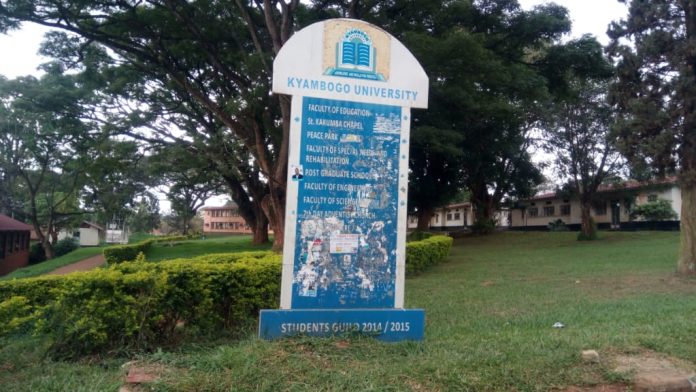
Kyambogo University 2014/2015 student guild post.

Kyambogo University authorities are set to raze down old and dilapidated structures as they move to give the Banda institution a face lift.

The university currently operates in buildings it took over from the Institute of Teacher Education-Kyambogo-ITEK, Uganda National Institute of Special Education-UNISE and Uganda Polytechnic Kyambogo (UPK).

However, most of the buildings are visibly in sorry state due to lack of routine maintenance.

“For God’s sake these structures give a Bad impression. No one can believe that this is even one of the most prestigious universities in Uganda. It looks less than a village primary school,” one of the residents by-passing the campus commented.

Kyambogo University Engineer, Patrick Kalule, agrees that the depleted structures give the university a bad image as compared to other public universities, which have since improved their infrastructure.

He blames their delayed improvement on the buildings on limited funding.

Kalule however notes that with the new physical development master plan of the university, they have identified structures that can be renovated and those that need to be razed down.

The university has also already embarked on major construction projects including upgrading several roads to standard bitumen paved surface, main university gate, drainage system and sports field.

Kalule says despite the fact that they were affected by the lock down; they resumed work immediately the president eased the restrictions.

He is optimistic that they might complete the works before the university reopens to the general public.

Kyambogo University first underwent major infrastructure development in 2016, more than a decade after it attained university status.

Stories Continues after ad