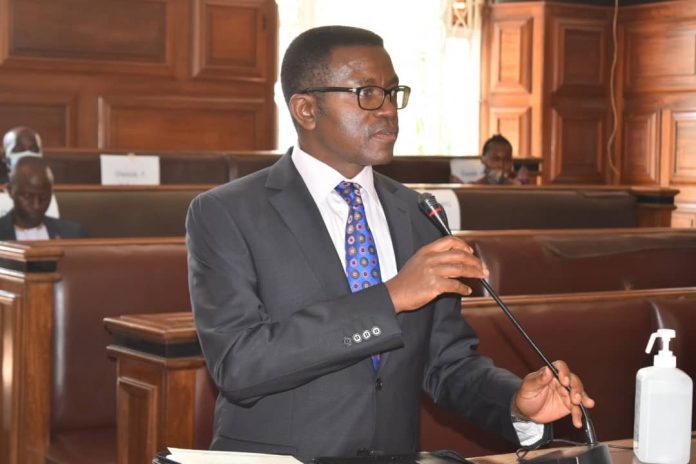
Katikkiro Charles Peter Mayiga has told the Electoral Commission to consult with all stakeholders in the electoral process and come up with a harmonised position on how the 2021 general elections will be conducted.
The Katikkiro made the remarks during the presentation of Shs 109 billion 2020/21 budget of Buganda kingdom at Mengo.
Earlier this month, the chairperson of the electoral commission, Justice Simon Byabakama, announced that the 2021 elections will be held digitally in a bid to curb the spread of the deadly Covid-19 pandemic.
Byabakama said there will be no mass rallies instead the campaigns will be conducted through the media and thereafter people will go to cast their votes.
“Meet with both the opposition and government bigwigs. Uganda did not come from heaven; we have history to reflect on. Baganda, people of Acholi and others, they all have history,” he said, adding that the electoral commission should reflect on the country’s turbulent political history for peace to prevail.
There are concerns that the it will be expensive for candidates especially those with low income to afford digital campaign because they will have to buy airtime and space in the media.
According to the roadmap, political parties will have to elect their flag bearers between 22nd of June 21st of July 2020. The nomination of those who want to stand for parliament will take place from 12th to 13th of October.
The deadline for resignation of public servants intending to contest for elective positions is set for 12th July 2020 and the polling period for all general elections will be from 10th Jan to 8th February. The exact polling date will be announced after nominations
Katikkiro Mayiga tells EC to consult with all parties for a free and fair election
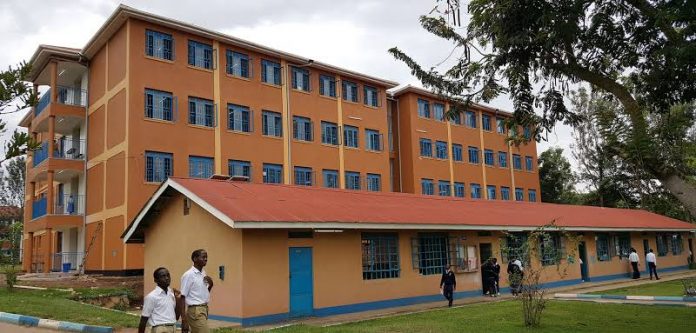
Ndejje Senior Secondary School Suspends Payments, Won’t pay salaries and Allowances Starting July 1
Staff at Ndejje Secondary School have become a victim of the current Covid-19 pandemic after the school suspended their salaries and allowances, a decision taken due to lack of money to meet these financial obligations.
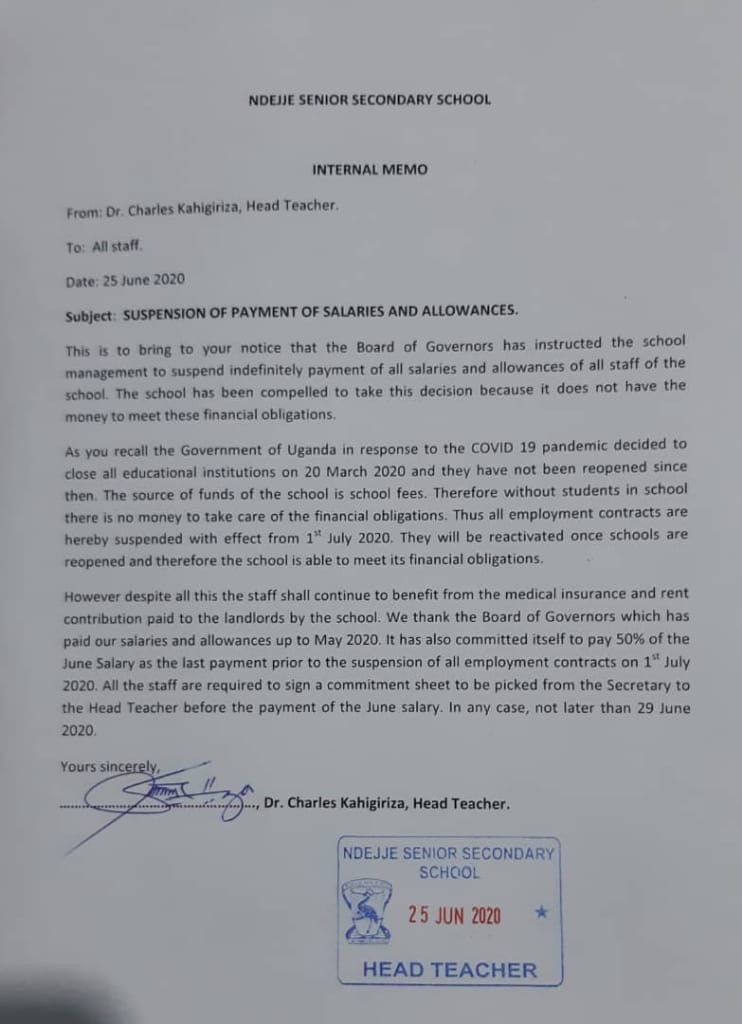
In a June 25 internal memo to all staff, the school Head teacher, Dr. Charles Kahingiriza said the board of Governor instructed the school management to suspend indefinitely payment of all salaries and allowances of all staff of the school.
“The source of funds of the school is school fees. Therefore, without students in school, there is no money to take care of financial obligations. Thus all employment contracts are hereby suspected with effect from July 1” reads in part the internal memo.

The Head teacher said that however, despite all this, the staff continue to benefit from the medical insurance and rent contribution paid to the landlord by the school. It has also committed itself to pay 50% of the June salary as the last payment prior to the suspension of all payments contracts.
He further notes that all the staff are required to sign a commitment sheet to be picked from the Secretary to the head teacher before the payment of the June salary. In case, not later than 29 June.
The head teacher explains that it will be reactivated once schools are reopened and therefore, the school is able to meet its functional obligations.
In April, the sister school, Ndejje University suspended staff payments and advised them to use the money they had with caution because it could be what they were left with until the university opened.
The university cleared salaries for March since the university was closed following a presidential directive on coronavirus measures on March 20.
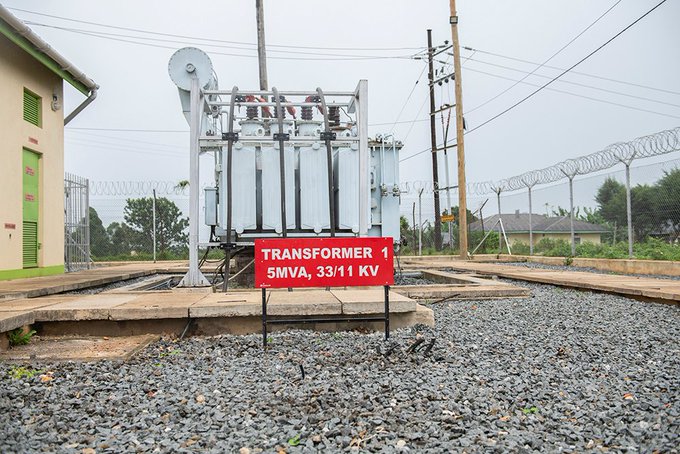
Umeme unveil Shs 310 billion capital expenditure plan, vows to address energy losses
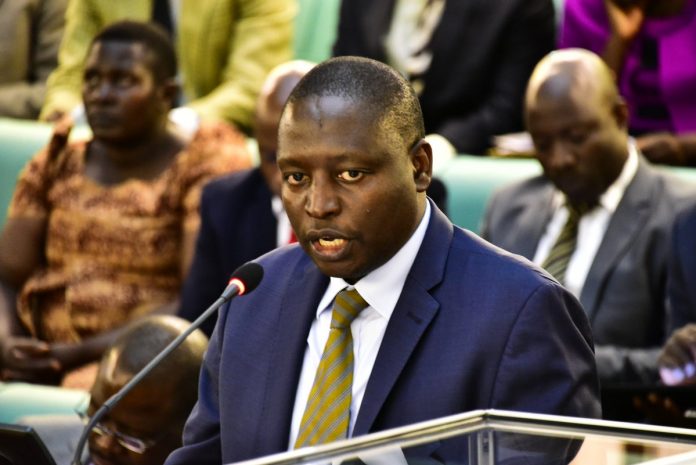
The Managing Director of Umeme, Mr Selestino Babungi has unveiled Shs 310 billion capital expenditure plan and vowed to strategically continue investing in support of the government agenda of increasing population’s access to electricity.
Unveiling the investment plans for 2020, Selestino said the power company would, including the USD83.3 million, invest altogether up to USD450m (UGX1.7 trillion) between 2019 and 2025 investment agenda, in support of Uganda’ major energy objectives- increasing grid connections, increasing demand, reliability of supply and driving efficiencies.
“In 2020, Umeme, secured approval from the Electricity Regulatory Authority (ERA) and has gone ahead to allocate USD83.3 million to six critical areas of the business, which when completed, will see us reliably connect over 300,000 customers this year alone,” Babungi said
He noted that, their sixth strategic areas will shift to addressing energy losses and improve operational efficiency (USD 26.89 million), addressing load demand growth (USD22.72 million), power supply reliability (USD18.89 million), power generation evacuation and supply (USD10.79 million), network systems automation (USD1.93 million) and network protection and security (USD2.06 million).”
Babungi said that in light of the government’s bold energy agenda Umeme had increased its investment by 7.2% this year, much closer to the 9.1% growth in demand. Umeme last year invested UGX289 billion and UGX230 billion in 2018. Altogether, Umeme has to date invested over $650 million since it started running the energy distribution concession in 2005, adding 1,210,000 customers.
The number of customers has crossed the 1,500,000 mark, up from the 290,000 the company inherited. Energy losses have also been more than halved from 39.8% in March 2005 to 16.4% as of 2019 at the end of 2019.
In 2019 Umeme connected 180,000 new customers, out of whom, 178,152 were financed by the Government and development partners under the Electricity Connections Policy.]
As at the end of December 2019, Uganda had 528.9 MW of surplus power supply, the country’s peak system demand was 723.76 MW versus installed generation capacity of 1,252MW. When Karuma Hydropower Dam which is at 98% stage of completion is finally inaugurated, peak excess could as well reach 1,000MW.
With significant generation ability, Uganda needs an equally significant investment into the last-mile connection, getting power to where it is needed most with huge focus placed on households, factories and schools.
“With the new capital investments we expect to boost our new customer connections to about 250,000- 300,000 per year,” he said, adding: “We are also investing in leveraging technology and business process improvements to reduce power losses and continue delivering more reliable power affordably,” he said.
“Everymoney saved in energy losses, our customers benefit directly by way of reduced cost of electricity,” Babungi said.
4,000 Recovered COVID-19 Church Members in South Korea Declare Donation of $83 Billion Worth Plasma for Cure
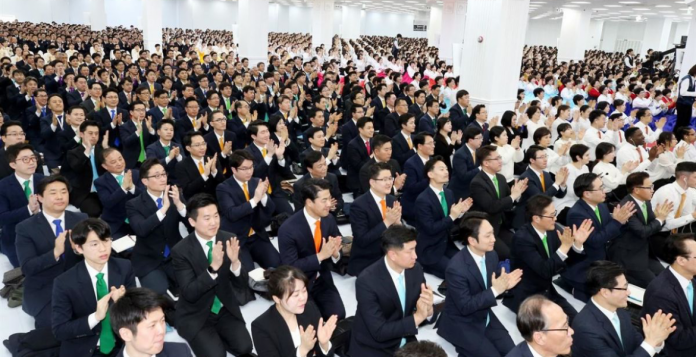
A South Korea-based religious group named the Shincheonji Church of Jesus said that over 4,000 members of the church recovered from COVID-19 are willing to donate plasma for developing a new treatment.
The amount of blood will be about $83 billion worth if the 4,000 patients donate 500ml individually, according to the current transaction in the United States. “It is difficult to accelerate developing a medicine for COVID-19 with only 200 recovered patients who expressed their will to donate blood. The massive donation from the recovered patients in the Shincheonji Church will solve the problem of the lack of blood for research,” said an official from Green Cross Pharma, a biopharmaceutical company in South Korea.
For the first quarter of this year, the rapid virus spread hit the church members in Daegu of South Korea, where the early signs of the crisis appeared with the controversy over the massive visitors from China before the infection of church members.
Mr. Man Hee Lee, founder of the Shincheonji Church, said that members of the church are advised to donate plasma voluntarily. “As Jesus sacrificed himself with his blood for life, we hope that the blood of people can bring positive effects on overcoming the current situation,” said Mr. Lee.
“We had a discussion with the health authorities and tried to establish a plan with details for donation. Some of the recovered members have already donated individually, feeling thankful for the assistance from the government and medical teams. They expressed their will to make contribution to the society,” said an official in the church.
Some local governments in South Korea recently brought lawsuits against the church with allegations that the church did not cooperate with the authorities by not submitting the full list of church facilities and members.
“No evidence has been found that Shincheonji supplied missing or altered lists. And there were only minor differences,” said Kim Kang-lip, vice-minister of Health. Academic researches on Shincheonji and COVID-19 stated that the church “provided the list of its South Korean members six days after it was requested” and “it was initially unclear whether shut down facilities and properties should be included” when the government asked for the lists of real estate.
(Shincheonji and Coronavirus in South Korea: Sorting Fact from Fiction – A White Paper
https://www.eupoliticalreport.eu/covid-19-and-the-shincheonji-church-in-south-korea-a-white- paper-reveals-the-truth/)
A Shincheonji media coordinator said the church will cooperate fully with investigations from government agencies.
South Korea reported 12,535 confirmed cases and 281 deaths from COVID-19.
Parliament queries the delayed payment of South Sudan traders
Parliament has directed the Minister of Finance, Planning and Economic Development, Matia Kasaija, to explain the delay in compensating the majority of Ugandan traders who supplied the Government of South Sudan during the civil unrest in the country between 2013 and 2015.
Legislators from across the political divide expressed their displeasure over the continued delay by the government in paying out the Shs76 billion that was approved by the House in Financial Year 2019/2020.
“We need the minister to understand that this issue is serious, so consequently we shall not process any more work from the Ministry of Finance until the Minister has come and explained why he has not paid these traders,” said Speaker Rebecca Kadaga.
The Speaker issued the directive to the Finance Minister during the plenary sitting on Thursday, June 25, 2020, after the State Minister for Finance in charge of Planning, Planning, David Bahati, was unsuccessful in presenting a plausible statement on the compensation.
Speaking to the matter, Bahati said Parliament had appropriated Shs76 billion to pay Ugandan companies verified by South Sudan, adding that however, the current hindrance was a petition in court by the traders.
“Last week we got communication from the Attorney General that the said companies have gone to court. I do not think it will be possible now to clear those resources in the last one day remaining. We are now in court, which is one of the challenges facing the payment,” Bahati said.
The Speaker said the item had been on the Order paper since April 2020, adding that the court case “could be a strategy to avoid paying”.
Kasilo County MP, Elijah Okupa, said the traders had rushed to court following disappointment that the government had failed to pay them even after Parliament had appropriated the funds.
“Government could end up losing more money if these businessmen win the court case, because this could mean double payment on the part of the government,” said Okupa.
Henry Kibalya alluded to internal misunderstandings within the finance ministry, for delaying the payment of the verified traders.
“Madam Speaker, we have information that within the Ministry of Finance, there is a battle between the ministers. They have refused to pay simply because they have information that some people are beneficiaries who do not want others to benefit,” Kibalya said.
He said the finance minister (Kasaija) ought to give the House reasons as to why the payments for Ugandan businesses-persons who operated in South Sudan and were verified, have stalled.
While meeting a Select Committee of MPs who visited Juba as part of their investigations into the payment of the Ugandan traders on Tuesday, 30 April 2019, the Speaker of the Transitional National Legislative Assembly of South Sudan, Rt Hon. Anthony Makana, said South Sudan was committed to paying Ugandan traders who supplied goods.
South Sudan’s Deputy Minister for Finance and Planning, Goc Makauc Mayol, told the same committee on 6 May 2019, that the Government of South Sudan had established a committee to verify the Ugandan traders claiming compensation for supplying goods to South Sudan before and after the 2013 civil war.
During a plenary sitting on May 29, 2019, chaired by the Deputy Speaker of Parliament, Jacob Oulanyah, Bahati said that only companies that dealt with the South Sudan government would be paid, and that private traders who did not directly supply the South Sudan government would not receive any compensation.
Uganda’s second licensing round: Joining Africa’s next oil & gas frontier

The agreement puts an end to a long-standing capital gains tax dispute with Ugandan authorities
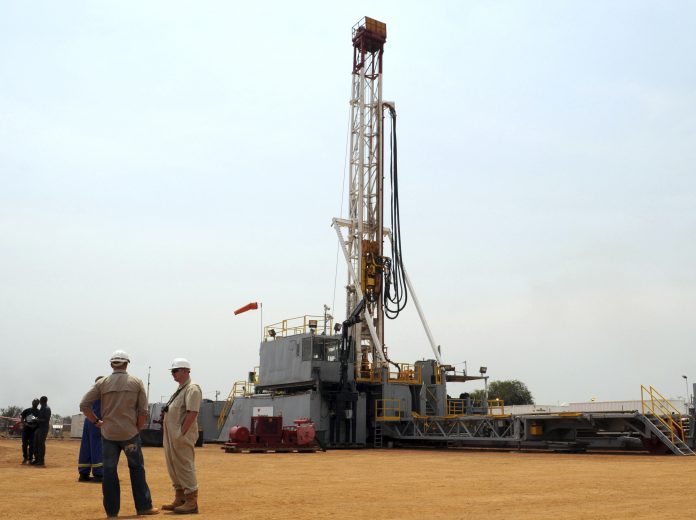
Among the few ongoing licensing rounds on the continent this year is Uganda’s Second Licensing Round, announced by the Ministry of Energy and Mineral Resources last year. The deadline for submitting the application for qualification on the five blocks on offer in the Albertine Graben is September 30th, 2020.
The acreages on offer have become even more attractive since Tullow Oil announced the sale of its entire stake in the Lake Albert Development Project earlier this year to Total. The agreement puts an end to a long-standing capital gains tax dispute with Ugandan authorities, and opens up the way for the upstream development of up to 200,000 bopd by Total and CNOOC, along with an oil refinery and an oil export pipeline to through Tanzania.
As Total and CNOOC develop billions of barrels of proven oil reserves near Lake Albert, the government is committed to attracting more investment into the development of its hydrocarbons potential through the Second Licensing Round.
The Uganda National Oil Company is now also inviting interested entities to establish joint-venture partnership and participate in the licensing round in order to apply and secure an exploration license. All exploration and production companies with a proven track record of operating petroleum exploration licenses are eligible for such a joint-venture with UNOC. The joint-venture proposal guidelines are accessible after sending a company profile and power of attorney to jvexploration@unoc.co.ug. The joint venture proposals will need to be submitted no later than 5pm local time on July 24th, 2020.
“Partnerships between National Oil Companies and International Oil Companies is a great opportunity for successful transfers of skills and technology. The call for such joint-venture partnerships in Uganda is a clear example of forward-thinking from the Uganda National Oil Company and the government. Uganda has a talented and trained youth who is eager to participate in the development of the country’s hydrocarbons sector, and partnerships are the way forward to achieve that,” declared Nj Ayuk, Executive Chairman at the African Energy Chamber.
The African Energy Chamber encourages all eligible exploration and production companies in Africa and abroad to participate in the round and form joint-ventures with the Uganda National Oil Company. This is a proven way to both develop local content by bringing in key expertise and capital into Uganda but also to efficiently enter a proven hydrocarbons province by directly partnering with the national oil company.
#COVID-19: Vision Group to lay off more senior staff
Vision Group Chief Executive Officer Robert Kabushenga has announced that the media conglomerate is set to lay off more senior staff, as the Coronavirus pandemic continues to wreak havoc in the jobs industry.
In an email to all staff, Mr Kabushenga the Vision Group Board of Directors met on June 25, 2020 and decided to render some jobs and positions redundant.
In his email to all staff, Mr Kabushenga says the company has been experiencing significant challenges due to the #Covid-19 pandemic.
“As a result, a number of jobs and roles have been rendered redundant. For that reason, the Board at its meeting on June 25th decided to terminate the services of those whose jobs and roles have been affected in this manner, “reads the email.
It adds that: “The concerned staff will be informed on Monday by their respective Heads of Department. The decision was a difficult one to make but the current market circumstances are even more difficult and complex compounded by the business uncertainty.”
This is the second time that Vision Group is laying off staff on grounds that the business is not doing well due to the effects of the Covid-19 pandemic.
After the first lay-offs, MPs questioned why such a profit-making government entity was laying off staff.
Without women at the top, gender equality remains a façade
BY: Georgia Tumwesigye and Patricia Munabi Babiiha
With only one woman occupying a position among the top 7 offices in the land, gender equality remains a myth as Ugandan women are shunted to periphery while men continue occupying offices that move and shake things in the country. Two studies by the Forum for Women in Democracy (FOWODE) titled, “Reality Check:
Women in Leadership Positions in Uganda,” that interrogates the position of women in the public sector and, “Women Shattering the Glass Ceiling: Experiences from the 2016 Elections in Uganda,” have been quite eye opening reading on the status of women in the country.
According to Uganda’s Order of Precedence as set out in the Constitution and the protocol guidebook published by the Ministry of Public Service, Uganda’s top Seven offices are President, Vice President, Speaker of Parliament, Chief Justice, Deputy Speaker of Parliament , Deputy Chief Justice and the Prime Minister.
All those offices, with the exception of the Speaker, are occupied by men.
To further contextualise the magnitude of this marginalisation, it is important to note that positions like that of Prime Minister, President and Chief Justice, have never been occupied by a woman.
That speaks volumes about the perceptions surrounding women and the roadblocks they face when they attempt to challenge the status quo by going for the top offices in the land rather than settling for the crumbs thrown at them.
When Ms Miria Kalule Obote declared that she would be running for the presidency in the 2006 General Elections, becoming the first woman to run for the presidency, she was in effect upsetting the applecart, triggering an avalanche of snide remarks.
Other women who have given a shot at the presidency have been dismissed as sideshows, as Maureen Kyalya, who contested in the 2016 General elections can attest.
And where women have been given a chance to occupy top positions, they have undoubtedly impressed in the fight to ensure gender equity and equality.
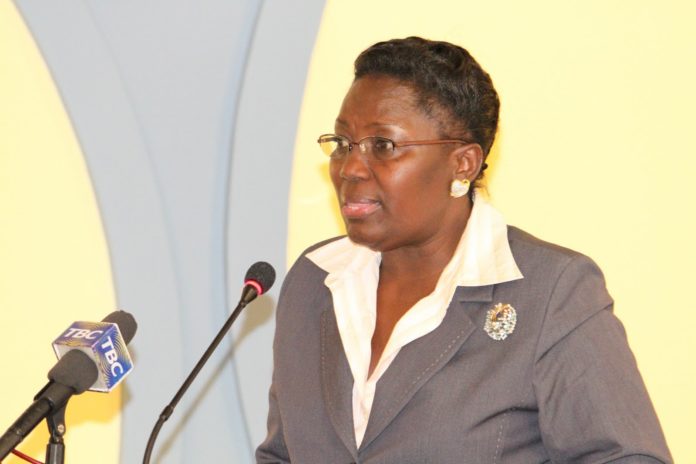
As Speaker of Parliament, Ms Rebecca Kadaga has been at the forefront of ensuring legislation and policies that are crucial in the fight for the space of Ugandan women.
Some of the critical pro-women legislation that has been passed under the leadership of Speaker Kadaga include the Prohibition of Female Genital Mutilation Act; a piece of law that criminalises the barbaric act of cutting female genitalia.
Ms Kadaga also led Parliament in ensuring that the Public Finance Management Act has a clause stipulating that all Ministries, Departments and Agencies (MDAs) must have a Certificate of Gender Equity and compliance (CGE) before their budgets are passed.
The Certificate of Gender equity and compliance is an important piece of legislation because it requires MDAs to meet a 50% score of gender and equity budgeting before their budgets are passed by Parliament. The rating for CGE is conducted by the Equal Opportunities Commission (EOC).
Ms Kadaga has been pulling all stops to have the Marriage and Divorce Bill passed but the legislation has faced staunch opposition from the Executive, meaning that Parliament still faces an uphill task to have the Bill passed.
Women MPs, backed by Ms Kadaga, have also been very vocal about the need to change succession laws in Uganda to amend legislations that impede the protection of the rights of women and the girl child’s right to inherit the property of a deceased relative.
The Succession Amendment Bill (2018) and the Sexual Offences Bill (2015) are two important legislations that were drafted to eliminate these and other negative laws but attempts to amend them have faced stiff opposition from the Executive.
Ms Kadaga has also been a key supporter of the Uganda Women Parliamentary Association (UWOPA), a parliament caucus comprising of all women MPs but open to male members as associates or honorary members.
Formed during the National Resistance Council (NRC) in 1989, UWOPA has been very critical in fighting for legislation and policies that advance the cause of women empowerment.
As Deputy Chief Justice, Her Lordship Laeticia Kikonyogo (RIP), who doubled as the Head of the Constitutional Court, also excelled well in her other judicial duties. She is the only woman to have ever served as Deputy Chief Justice.
As Vice-President, Specioza Wandira Kazibwe was very passionate about matters affecting women, choosing to take on the bull by its horns and openly speak about issues that affect women using very unequivocal language.
In her controversial way, Ms Wandira Kazibwe spoke out against polygamy, especially in the Islamic religion where it is more entrenched, cheekily arguing that muslim men who marry four women cannot satisfy them and therefore force them to cheat.
During her tenure as Vice-President, Ms Wandira Kazibwe was also very vocal on the issue of domestic violence, urging women to train in martial arts in order to defend themselves from their violent husbands
Among the women that have occupied top positions, it is perhaps Speaker Rebecca Kadaga who has run into stronger headwinds in taking up an office previously ‘ring-fenced’ for men.
Ms Kadaga has not shied away from challenging men to maintain her position, further giving women down the leadership ladder hope that there is always light at the end of the tunnel.
To win the race for Speaker in the 2011 elections, Ms Kadaga defeated opposition kingpin Nathan Nandala Mafabi (FDC Budadiri West) and in 2016, she had to put up a strong fight to secure the nomination from the National Resistance Movement (NRM), winning a spirited challenge from Deputy Speaker Jacob Oulanyah.
The crisis of lack of women at the top ladder of the leadership of the three arms of government is best captured by a newly released report by the Forum for Women in Democracy in Uganda (FOWODE), a non-partisan women organisation.
The report titled: Reality Check: Women in Leadership Positions in Uganda, which is a second edition of one that was first published four years ago, notes that with only one woman out of the 7 heads of the three arms of government, Uganda remains stuck with “male-centered leadership”.
“Just as it was four years ago, only 1 out of the three heads of arms of government is a woman. At the level of the deputies of heads of Executive, Judiciary, and Legislature, women representation remains non-existent. This image of male-centered political leadership is ingrained and normalized in leadership cultures of other public and private institutions, as this report will demonstrate later, “reads the report.
The report puts particular emphasis on how critical it is for Speaker Rebecca Kadaga to be the lone woman in a male dominated leadership of the three arms of government.
It notes that: “It is notable that although women remain marginal at this level of leadership, the choice of a female Speaker as the head of one of the three arms of government is an important step towards having women in critical leadership positions.”
“Having served as a Deputy Speaker of Parliament and now in her second 5-year term as the speaker of the House, Ms Rebecca Kadaga remains the most senior ranking woman in the country. Her presence is a pointer to women’s ability to lead in top leadership, despite many forms of resistance they encounter along their managerial paths,” says the report.
The report also hailed the Speaker also lauded the Speaker for leading reforms in the Parliamentary rules of procedure to promote gender balance in the leadership of committees of Parliament.
As the report notes, the“institutionalized masculine norm in the three arms of government” is best illustrated by images captured at important state functions like Budget Day and the State of the Nation Address.
The image of President Museveni alongside Chief Justice Bart Katureebe, Speaker Rebecca Kadaga, Deputy Speaker Jacob Oulanyah, Prime Minister Ruhakana Rugunda and Deputy Chief Justice Owiny-Odollo sends a powerful message; without women at the top, the fight for gender equity has just started.
For the MDAs,it is one step forward, two backward
Though progress has been made in attempts to have women occupy leadership positions in Ministries, Departments and Agencies (MDAs), there is still a lot of work to do if the gap between men and women in leadership is to be narrowed further.
A new report titled: Reality Check: Women in Leadership positions in Uganda, shines a spotlight on how women are faring in Uganda’s leadership positions in MDAs, contrasting the current situation with 2014, when a similar study was last conducted.
The report was conducted by the Forum for Women in Democracy (FOWODE), a non-partisan organisation fighting for women empowerment in Uganda.
In majority of the MDAs, women remain relegated to junior-level positions, and, as the report points out, the “absence of women at these [top] managerial levels negatively impacts women’s participation in critical decision-making fora of ministries.”
Though, as the report reveals, it is not all dark and gloom for the fight for gender equity and equality, it is not lost on anyone that despite the laudable baby steps that have been taken to ensure that women are on the same footing with men in terms of leadership in MDAs, the war yet to be won.
Sadly, the report found out that on average, female staff representation in the 18 ministries that were studied in 2014 stood had reduced by 2% from 39% in 2014 to 37% in 2018.
Despite slight improvements in the composition of women in some individual ministries, there were no deliberate and systematic attempts to recruit female staff to bridge the gender gaps in human resources, explains the report.
The writers, Georgia Tumwesigye is the Programme Officer, Women and Leadership Programme [WLP] Forum for Women in Democracy (FOWODE) while Patricia Munabi Babiiha is the Executive Director, FOWODE.
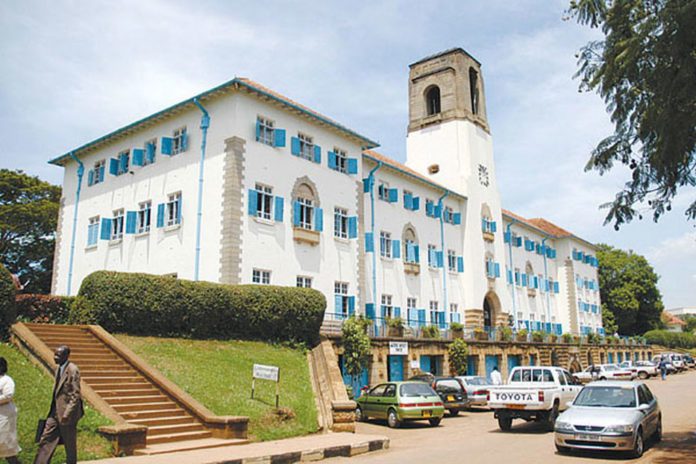
Makerere suspends admission of Dental Surgery students over failure to meet minimum requirements
Makerere University has deferred admission of Bachelor of Dental Surgery (BDS) students following guidance from the Joint East African Medical and Dental Council.
In February, Makerere University was ordered to stop the admission of dental students over dentistry’s failure to meet minimum requirements for training of students. This followed the third joint inspection of medical and dental schools and teaching hospitals in Uganda.
The inspection which was rolled out in seven universities offering medical and dental courses executed by a team composed of the chairpersons, registrars and the chairpersons of the education committee of the EAC partner states medical and dental councils. The officials saw a number of gaps which need to be bridged for production of well qualified medical officers and dental surgeons.
“Makerere University shall not admit any new dental students for the academic year 2020/2021 until a re-inspection by the joint EAC partner states’ medical board and councils is carried out at the university’s cost and approval given.”
According to a statement released by the University’s academic registrar, Alfred Masikye Namoah, the University is making good progress to address the issues and meet the requirements by the Council for the next inspection expected in July 2020.
“In the meantime we recall the advert for the Bachelor of Dental Surgery and advise all applicants for Private Sponsorship for 2020/2021 Academic Year to adjust/amend their applications with other choices available.” Reads in part of the statement
Masikye said candidates admitted to the Bachelor of Dental Surgery programme on government sponsorship for 2020/2021 Academic year will be shifted to other choices that they applied for on their application forms and where they meet the cut-off points for Makerere University.
Pierre Nkurunziza laid to rest in Burundi
Former President of Burundi, Pierre Nkurunziza has been buried in the capital, Gitega.
Nkurunziza who died on 8 June 2020 was expected to hand over power to the newly elected president of Burundi, Evariste Ndayishimiye who won May 20 elections as the country entered the post-Nkurunziza era.
Upon his death, the government said he died of cardiac arrest. Nkurunziza who ruled for nearly 15 years was scheduled to be crowned the ‘Supreme leader of patriotism’.
The government has urged the public to be on the roadsides and give him respect as his hearse travels from Karusi hospital where he died, to Gitega stadium, for the last honours.
Nkurunziza’s term as president began on 26 August 2005 and he soon adopted a number of popular policies. He presided over the reconstruction of the Burundian state on the basis of the inter-ethnic compromise enshrined in the Arusha Accords which mandated the partition of state positions between Tutsi, Hutu, and the minority Twa ethnic groups.
Nkurunziza’s second term saw rising discontent with his leadership. Outdoor jogging was banned in June 2014 out of fear that group exercise might be used as cover for political meetings. Dissent came to a head with the public announcement on 25 April 2015 that Nkurunziza would stand for a third term in the presidential elections scheduled for June that year.
This appeared to be contrary to the term limits established in the Arusha Accords and sparked widespread protests in Bujumbura and elsewhere which led to violent confrontations. However, the Constitutional Court ruled on 5 May that the projected third term was legal. The protests then escalated and dozens were killed.
A military uprising was attempted on 13 May 2015 by soldiers loyal to Godefroid Niyombare but collapsed after extensive fighting in Bujumbura. Assassinations of opposition politicians and critics took place and it was reported that detained protesters were tortured or raped at so-called “black sites” by regime loyalists. Despite the instability and a continuing opposition boycott, the elections took place in July and Nkurunziza was re-elected for a third term.
Nkurunziza’s third term saw the country’s increasing isolation in light of international condemnation of the repression which accompanied the 2015 unrest. The East African Community and African Union attempted to mediate the conflict unsuccessfully and Nkurunziza’s regime became increasingly isolated. Fearing an outbreak of genocidal violence, the African Union attempted to dispatch a peacekeeping force to Burundi in 2016 but this was blocked by Nkurunziza.
Nkurunziza withdrew Burundi from the International Criminal Court in 2017 and advocated constitutional reforms which would allow longer presidential terms which were approved in a disputed referendum in May 2018. However, in June 2018 he announced that he would not be standing for a fourth term and that he would consequently step down in 2020.
He endorsed Évariste Ndayishimiye. The elections took place in May 2020 and resulted in a large majority in favour of Nkurunziza’s candidate. However, the elections occurred against the backdrop of criticism of Nkurunziza’s response to the COVID-19 pandemic in Burundi during which representatives of the World Health Organization (WHO) were expelled. Election monitors from the East African Community were also kept out.