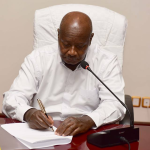
President Yoweri Kaguta Museveni has ordered an overhaul of Uganda’s citizenship verification system, directing that all future verifications be conducted by local community structures rather than centralized government bureaucrats.
Recalling from the meeting with the Bavandimwe—Ugandans of Banyarwanda descent on June 23 at State House, Entebbe, the President acknowledged that he had underestimated the seriousness of complaints raised by sections of immigrant communities.

“I was beginning to be irritated by claims that, especially our Banyarwanda immigrants, were being mistreated,” Museveni said.
He added, “I thought some people were making false allegations for evil ulterior motives. But after hearing them, I understood where the problem has been.”
Museveni described Uganda’s current citizenship verification process dominated by officials from the Ministry of Internal Affairs, Immigration and the National Identification and Registration Authority (NIRA) as inefficient and disconnected from local realities.

“The problem of citizenship is a mass, community issue,” Museveni stated. Noting, “It is best known to and best handled by communities—area by area. Bureaucrats should be guided by community structures like LCs and elders.”
Drawing from personal history, Museveni recalled how immigrant families had long been integrated into Uganda’s social fabric, including some he considered kin. He named individuals like Mzee Yoramu Kabuteembe—whose family came from Rwanda—and Indians like Budala and Haali in Ntungamo as natural Ugandan citizens by every logical standard.
“It cannot be fair that Kabuteembe or Budala should beg Immigration for their right as citizens,” Museveni argued. “They are citizens unless they choose not to be.”
Museveni unveiled a detailed decentralization plan to remove bottlenecks and restore fairness to the system. He directed that all citizenship registration now be conducted at the parish level by Local Verification Committees composed of LCI officials, ISO representatives, and a respected elder. NIRA will continue enrolling applicants and issuing National IDs, but must refer cases in doubt to the local committees.
If either NIRA or the applicant is dissatisfied with a local committee’s decision, the case will be escalated to a District Citizenship Verification Committee chaired by the RDC and including the District Chairperson, area councilor, and DISO. These district committees will serve as final arbiters in cases of dispute.
Applicants whose families were in Uganda before 1962 will not pay any registration fees. However, those who settled after independence will be required to pay for applicable immigration services.
“With this guidance, there is no reason whatsoever why an applicant should not tell the truth,” Museveni warned. “False declaration is an offence under the law.”
The President defended the legal framework that classifies citizenship based on when families settled in the country particularly the year 1926, when Uganda’s colonial borders were finalized.
“Some people want to deny these categories, but that we reject,” he said. “The facts are clear: when did your family come to Uganda? Was it before or after 1926? That’s what matters.”
He also stressed that dual citizenship should remain limited for now to Ugandans who fled abroad during past insecurity and their descendants.
Verification committees will ask applicants to answer 14 core questions related to ancestry, birth, language, marriage, and historical residence in Uganda. These questions aim to filter out fraudulent claims without excluding legitimate citizens.
“The fear of infiltration by non-citizens should not delay giving out IDs, passports or citizenship,” the President said. “Where fraud is discovered, documents can still be cancelled and culprits punished.”
The President’s position marks a philosophical shift in state administration from central technocracy to grassroots accountability.
“The locals are the ones who know who is who,” Museveni said. “I, for instance, can tell you the entire history of three parishes in Ntungamo—who came when, who belongs where.”
He emphasized that bureaucratic arrogance and disconnected processes have caused real harm and disenfranchised legitimate citizens.
While recognizing that many refugees have since returned home, Museveni said Uganda should prepare to integrate those who have stayed—through constitutional and legal amendments. He further hinted at a future where East Africans might enjoy shared regional citizenship under the East African Federation.
“We shall have the citizenship of East Africa,” he concluded. “But until then, we must sort ourselves out with truth, fairness and history as our guide.”
With this landmark directive, President Museveni is not only decentralizing the citizenship process but redefining how Uganda defines belonging—placing trust in communities over bureaucracies, and history over paperwork.