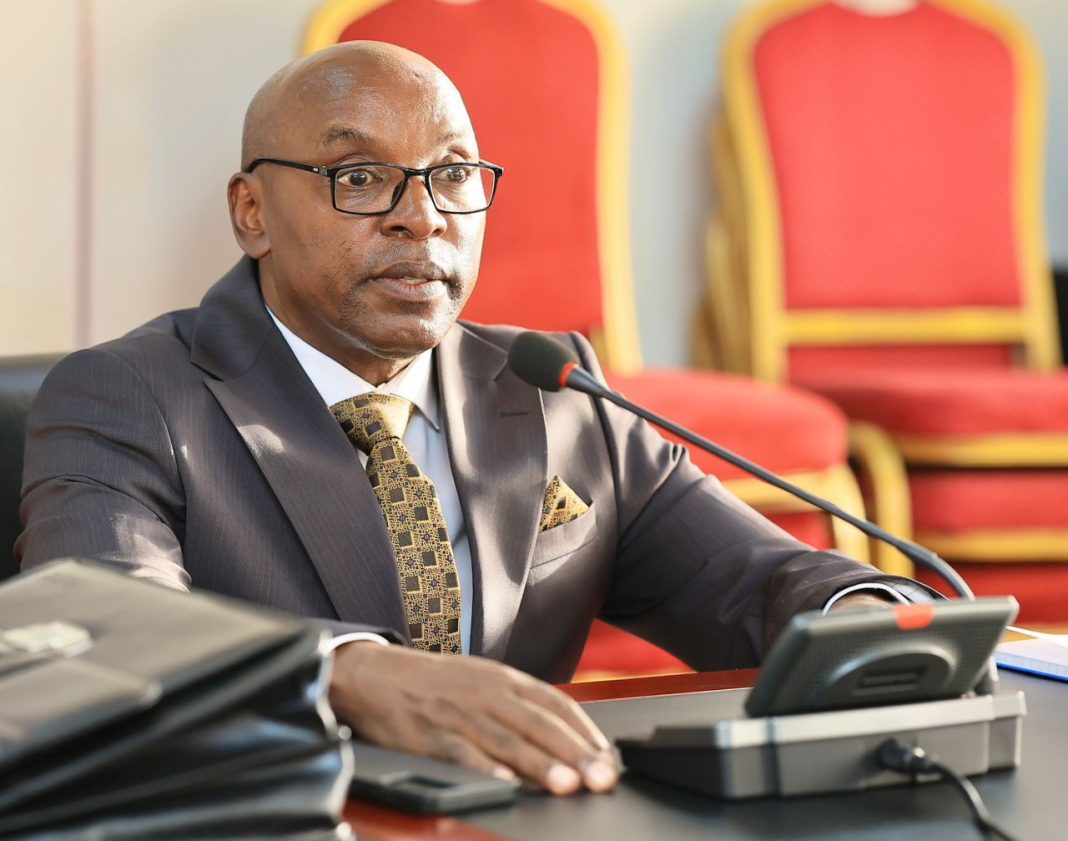
The Deputy Chief Justice, Dr. Flavian Zeija, has appeared before the Appointment Committee of Parliament for vetting after President Yoweri Museveni appointed him to replace Justice Alfonse Chigamoy Owiny–Dollo.
Justice Dollo officially retired on January 18, 2026, after clocking the mandatory retirement age of 70 years. However, in a twist of events, President Museveni ignored the ongoing Judicial Service Commission recruitment process that had enlisted candidates for the same job. Judicial sources told Eagle Online that the president’s decision could have been informed within the time bound, given that there will be swearing in for the head of state and other leaders, like members of parliament, but most importantly, the ongoing filing of the 2026 presidential petition by the former National Peasants Party candidate, Robert Kasibante.

Is Justice Zeija a Blue-eyed boy or lucky?
Uganda’s Parliament last year vetted Dr. Flavian Zeija for the role of Deputy Chief Justice, a critical step in a series of changes reshaping the country’s judiciary. The vetting, conducted on February 10, 2025, included over 30 judicial nominees and was part of Parliament’s constitutional responsibility to ensure senior judges meet standards of integrity, competence, and professionalism.
The Appointments Committee, chaired by Speaker Anita Among, questioned nominees on issues ranging from case backlog and judicial independence to court administration and reforms. Sources at the session described the scrutiny as firm but orderly, reflecting Parliament’s intention to balance political oversight with judicial independence. At the end of the process, all nominees, including Zeija, were approved, paving the way for his swearing-in as Deputy Chief Justice in April 2025.

A Career of Legal and Judicial Leadership
Dr. Zeija’s legal career spans over two decades, combining private practice, academia, and judicial service. Born in 1969, he holds a PhD in Law from the University of Dar es Salaam and has taught at several Ugandan universities. Before joining the bench in 2016, he served as a managing partner at a Kampala law firm.
As Principal Judge of the High Court, a role he held from 2019, Zeija supervised High Court operations and magistrates’ courts nationwide. He was credited with deploying judges to busy regions and implementing administrative reforms aimed at reducing case delays — an experience that informed his vetting and approval as Deputy Chief Justice.
From Deputy to Chief Justice
In January 2026, following the retirement of Chief Justice Alfonse Owiny-Dollo, Dr. Zeija was appointed Chief Justice of Uganda by President Museveni. The transition comes amid heightened public scrutiny, particularly after the 2026 presidential election, with ongoing legal challenges to the election results. Zeija now leads the Supreme Court and the judiciary, tasked with navigating complex constitutional cases while improving access to justice across the country.
Observers note that his appointment is both a personal milestone and a reflection of ongoing efforts to strengthen Uganda’s judicial institutions. During the handover, Owiny-Dollo emphasized the importance of continuity and urged the judiciary to remain focused on fairness, efficiency, and public confidence — themes that hadframed Zeija’s parliamentary vetting months earlier.
Speaker of Parliament Anita Among announced oh ere X handle that the August House had vetted Justice Zeija for the number four top job in the country.
“Earlier today, we convened the appointments committee of parliament to vet the Honourable Justice Flavian Zeija, who was appointed by His Excellency the President to serve as the Chief Justice of the Republic of Uganda. The committee’s report will be forwarded to the appointment authority in accordance with our rules of procedure.” Among wrote.
Looking Ahead
Dr. Zeija’s elevation to Chief Justice represents the culmination of years of legal service and leadership. How he balances the pressures of political scrutiny, case backlogs, and judicial reforms will be closely watched by legal practitioners, civil society, and Ugandans nationwide. His tenure will likely set the tone for the judiciary’s independence and effectiveness in the years to come.