The Government of Uganda, through the Office of the Prime Minister, has cautioned that several parts of the country could face flooding, landslides, and disease outbreaks during the March to May 2026 rainy season, urging communities and local authorities to strengthen preparedness measures.
In a press briefing released by the Office of the Prime Minister following the seasonal forecast by the Ministry of Water and Environment, officials said most regions are expected to receive near-average rainfall, although some areas may experience heavier rains.

“According to the March–April–May 2026 seasonal forecast, most parts of the country are expected to receive near-average rainfall. However, the Northwestern region, areas around Lake Victoria and parts of the Eastern region are likely to experience near-average to above-average rainfall during this period,” the statement said.
The forecast further indicates that the country will likely experience warmer-than-normal temperatures throughout the season.
Government officials explained that regions including West Nile, Lango, Rwenzori and Kigezi, as well as parts of Acholi, Bugisu, Bukedi and Teso, are expected to record near-to-above-average rainfall. Other regions such as Ankole, Karamoja and sections of Busoga, Bunyoro and Buganda are projected to receive rainfall within the near-average range.

Authorities warned that the expected weather conditions could trigger a range of disasters across the country.
“Flooding and waterlogging are likely to occur in low-lying areas and on the lower slopes of Mount Elgon, potentially affecting districts such as Butaleja, Rubanda, Kisoro, Amuru, Obongi, Pakwach, Kayunga, Kalungu, Rakai, Kitgum, Otuke, Lamwo, Serere, Bukedea and Kasese,” the statement noted.
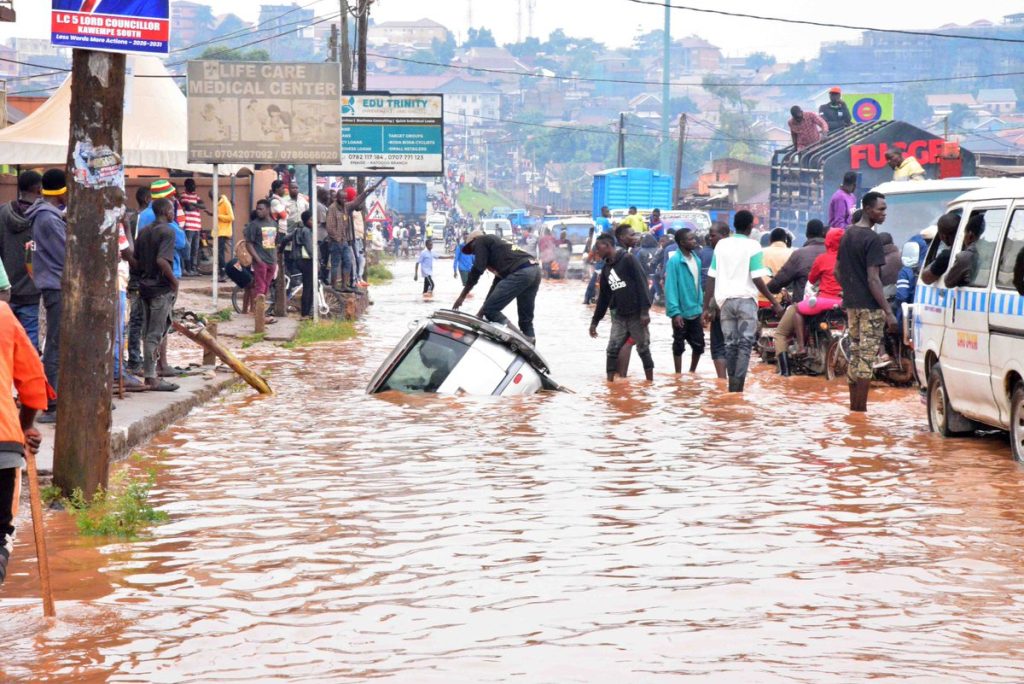
The government added that flash floods could also occur in urban areas including Kampala, disrupting transport networks and business operations.
The highland areas of Mount Elgon, the Rwenzori region and Kigezi may also face landslides, mudslides and soil erosion as rainfall intensifies.
“Hailstorms and strong winds are also expected at the onset of the rains and may affect districts including Kibaale, Sembabule, Ibanda, Buvuma, Kalangala, Bukomansimbi, Isingiro, Mbarara, Mitooma and Tororo,” the government warned.
Officials also raised concern about possible increases in livestock diseases and crop pests such as the Fall Army Worm, which could affect agricultural productivity during the season.
Public health risks are also expected to rise, with authorities warning of potential outbreaks of waterborne diseases including cholera, typhoid, dysentery and malaria if preventive measures are not taken.
“Increased lightning strikes are also anticipated in high-risk districts such as Kisoro, Lamwo, Bushenyi, Ntungamo, Nwoya, Amuru, Busia and Bugiri,” the statement added.
To mitigate the potential impact of the rains, government said it has already initiated several preparedness measures across vulnerable regions.
These include the registration of households and acquisition of land for resettlement of communities at high risk of landslides in the Elgon sub-region, dissemination of the seasonal weather forecast at regional level, and strengthening community disaster management capacity in partnership with the Uganda Red Cross Society.
Authorities also said relief food has been procured for communities likely to be affected during the rainy season while early warning information is being disseminated through the media.
The government has urged local leaders and communities to remain vigilant and take precautionary steps to reduce potential losses.
“We urge city, district and urban authorities to activate contingency plans for hotspot locations and improve stormwater drainage systems by clearing urban drainage channels, especially in flood-prone areas,” the statement said.
The office emphasized that timely preparedness by communities, local governments, and humanitarian agencies will be key to reducing the impact of disasters during the upcoming rainy season.