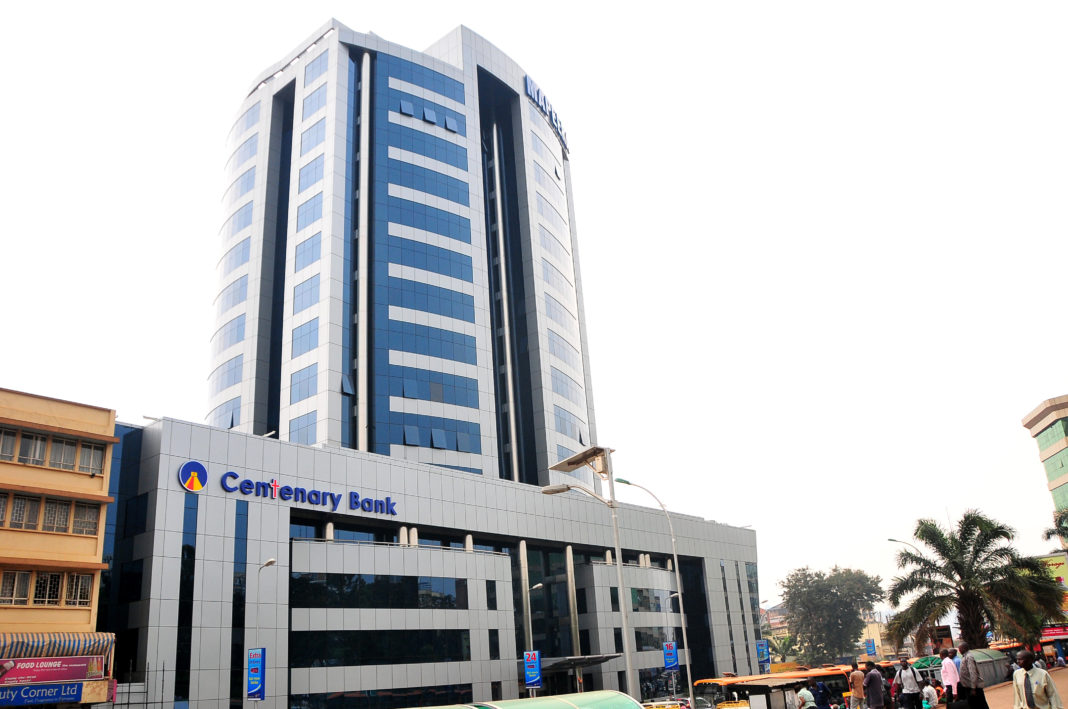
Centenary Bank has reported a robust financial and social performance for the year 2025, registering significant growth across all key indicators while deepening its footprint in financial inclusion, sustainability and community transformation.
The bank closed the year with a profit after tax of Shs424.2 billion, up from Shs342.3 billion in 2024, representing strong growth driven by disciplined execution, rising customer confidence, and expansion of its loan and deposit base.

Total assets rose sharply to Shs8.61 trillion from Shs7.11 trillion, reflecting the continued expansion of the bank’s balance sheet and its growing role in Uganda’s financial sector. Customer deposits increased by 25.1 percent to Shs5.27 trillion, while net loans and advances grew to Shs4.16 trillion, underscoring sustained demand for credit among households, small businesses, and enterprise clients across the country.
According to Managing Director Dr Fabian Kasi, the results go beyond financial performance and reflect a deeper developmental mission anchored in Uganda’s real economy.
“Centenary Bank delivered solid growth across all key metrics this past year. Our profit after tax increased to Shs424.2 billion, and our total assets grew to Shs8.61 trillion. Beyond the balance sheet, these figures represent our continued investment in Uganda’s economic future and reflect our deep commitment to empowering the people, businesses, and communities that rely on us every day,” he said.

Dr Kasi emphasized that the bank’s growth strategy remains firmly rooted in inclusion, noting that more than 77.6 percent of its 3.4 million active customers come from underserved segments including smallholder farmers, women, youth, refugees and rural communities. He explained that this model is intentional and central to the bank’s identity.
He stated that Centenary Bank exists to transform lives and has, for over four decades, focused on serving communities often excluded from mainstream financial services, not as a charity, but as a core business approach that sustains both impact and growth.
The bank’s outreach was further strengthened through its extensive distribution network comprising 81 branches, 214 ATMs, and over 9,000 agent banking points, which now account for nearly half of all transactions. This expansion has significantly improved access to financial services in rural and hard-to-reach areas, allowing millions of Ugandans to save, borrow, and transact closer to where they live and work. By the end of 2025, the bank had supported over 2.39 million customers from underserved communities, while its MSME and agriculture portfolio stood at Shs1.76 trillion.
Centenary Bank also recorded notable progress in sustainable finance, disbursing Shs281.7 billion towards green and social impact projects that benefited more than 180,000 people. These investments supported agriculture, micro and small enterprises, women-led businesses, and youth entrepreneurship programs, reinforcing the bank’s role in driving inclusive economic growth. Key initiatives such as GROW, Supawoman, Cente Youth, and the National Youth Venture Capital Fund continued to expand access to opportunity for vulnerable and emerging entrepreneurs.
Dr Kasi highlighted that sustainability is now deeply embedded in the bank’s operations and governance.
“Our performance in 2025 reflects the depth of our environmental, social, and governance integration and our alignment with national and global development priorities. We are intentionally managing our carbon footprint, reducing emissions and ensuring that social economic inclusion remains at the centre of everything we do,” he said.
He further noted that the bank reduced operational emissions by 6.3 percent to 6,734.53 tonnes of carbon dioxide equivalent, supported by the transition of ten branches to solar energy and improved energy efficiency systems.
Beyond finance and environmental action, the bank invested Shs4.9 billion in corporate social responsibility programmes that reached more than 1,153 community initiatives. These included health outreach activities, financial literacy training, and support for local development programmes. Through its long-standing partnership with Rotary International, Centenary Bank contributed significantly to health-related causes such as the Cancer Run, bringing its total support to Rotary initiatives to over Shs6.2 billion over the past 13 years.
Looking ahead, Dr Kasi said the bank remains focused on strengthening digital systems, improving operational efficiency, and expanding access to finance under Uganda’s national development priorities.
“In 2026, we will focus on the successful rollout of our new core banking system, enhancing customer experience, and deepening financial access across key sectors, including agriculture, microfinance, and small and medium enterprises. We are confident in our direction and committed to delivering long-term sustainable value,” he said.
He also reaffirmed the bank’s long term philosophy, stating that Centenary Bank’s strength lies in its purpose driven model.
“A bank that serves Uganda’s most underserved communities with excellence is ultimately the most resilient bank of all,” Dr Kasi said.