Uganda’s economy registered broad-based improvements in June 2026, with the Government posting a fiscal surplus of Shs517.07 billion, revenue collections exceeding targets, the private sector remaining optimistic about business prospects and the Uganda shilling strengthening against all international currencies.
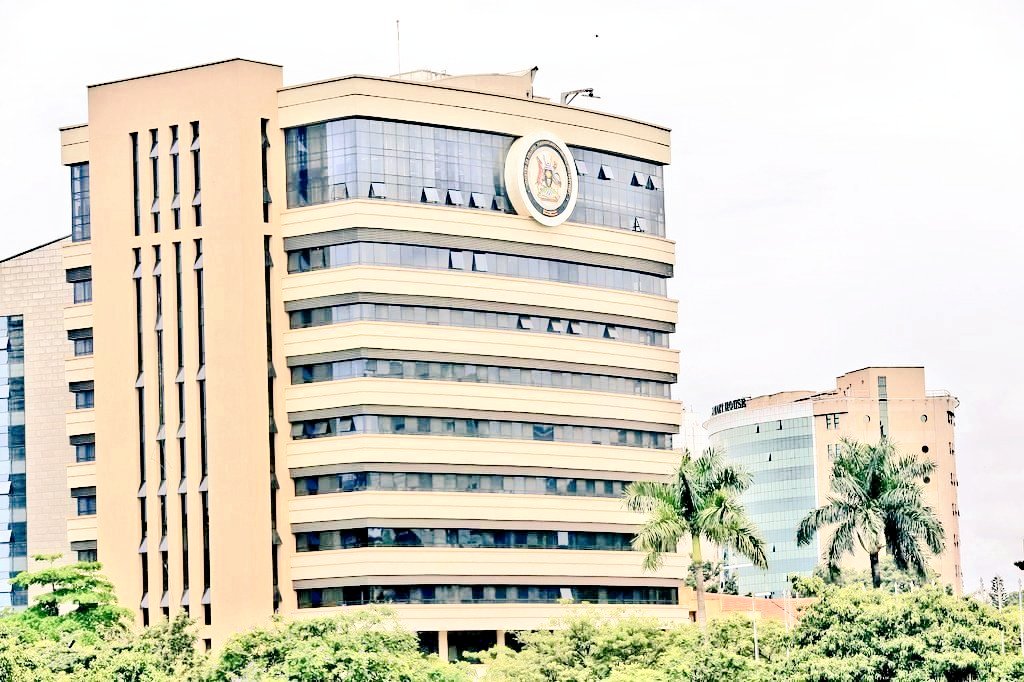
The latest Performance of the Economy Report for June 2026, released by the Ministry of Finance, Planning and Economic Development attributed the positive performance to stronger domestic revenue mobilisation, improved tax administration, sustained economic activity and a stable macroeconomic environment.

According to the report, Government operations ended June with a net lending position of Shs517.07 billion, instead of the projected fiscal deficit of Shs690.73 billion.
“Preliminary data for June 2026 indicates that government operations resulted in a net lending (fiscal surplus) of Shs517.07 billion, compared to the planned net borrowing (fiscal deficit) of Shs690.73 billion. This was on account of higher than expected domestic revenue collections coupled with lower than programmed expenditure on acquisition of non-financial assets,” the report states.
Revenue collections, including grants, reached Shs5.81 trillion during the month, representing 116 percent of the target of Shs5.01 trillion and delivering a surplus of about Shs800.9 billion. The Ministry said the strong performance reflected improved taxpayer compliance and enhanced tax administration during the final month of the 2025/26 financial year.

Domestic revenue collections amounted to Shs5.72 trillion, exceeding the target by 18.2 percent. Of this, tax revenue contributed Shs5.57 trillion while non-tax revenue stood at Shs156.33 billion.
The strongest performance came from direct domestic taxes, where corporation tax, Pay As You Earn (PAYE) and withholding tax all exceeded their targets. Consumption taxes also outperformed projections, supported by higher collections from Value Added Tax, excise duty on products such as beer, sugar and bottled water, as well as increased activity in the construction, wholesale and retail sectors. Taxes on international trade equally surpassed expectations on the back of stronger collections from petroleum duty, import VAT, import duty and the infrastructure levy.
The report further indicates that economic activity continued to improve during June, with high frequency indicators pointing to sustained expansion.
“There was continued improvement in the level of economic activity as shown by the high frequency indicators of economic activity. Both the Purchasing Managers’ Index (PMI) and the Composite Index of Economic Activity (CIEA) recorded improvements compared to the previous readings,” the Ministry said.
Private sector confidence also remained strong during the month, with the Business Tendency Index standing at 54.4, comfortably above the 50 point threshold that signals optimism.
“The private sector remains highly optimistic about business conditions and the general outlook on the economy. This optimism is partly driven by improving prospects in domestic and external demand and a stable macroeconomic environment,” the report adds.
The financial sector also posted encouraging results. The Uganda shilling appreciated by 1.4 percent against the US dollar, 2.8 percent against the euro and 2.6 percent against the British pound during June, supported by increased foreign exchange inflows from commodity exporters and offshore investors.
At the same time, lending rates declined slightly, while outstanding private sector credit expanded to Shs26.72 trillion, largely driven by increased lending to the manufacturing and trade sectors. Investor appetite for government securities also remained strong, enabling the Government to raise Shs2.5 trillion through Treasury bills and bond auctions.
Uganda’s export sector also continued to perform strongly despite a slight month-on-month decline. Merchandise export earnings rose by 12.8 percent year-on-year to $1.346 billion in May 2026 from $1.193 billion recorded in May 2025.
“Earnings from merchandise exports increased by 12.8 percent year on year to $1.346 billion in May 2026, up from $1.193 billion in May 2025. This growth was primarily driven by higher earnings from gold, tobacco and oil re-exports, and electricity,” the report states.
Gold exports remained the biggest contributor after earnings surged by 67.7 percent to $814.78 million due to higher export volumes and stronger international prices. However, coffee export earnings fell sharply following lower export volumes and declining global coffee prices, as increased harvests from other producing countries saturated the international market.
Overall merchandise exports for the period July 2025 to May 2026 reached $14.47 billion, representing a 34.4 percent increase over the same period of the previous financial year, mainly supported by strong coffee and gold exports. The Middle East remained Uganda’s largest export destination, accounting for nearly half of total export earnings, followed by the East African Community and Asia.
On the import side, Uganda’s merchandise import bill increased by 12.5 percent year-on-year to $1.462 billion, mainly due to increased imports of machinery, vehicles, petroleum products, gold, plastics, and rubber. Cumulatively, imports for the July 2025 to May 2026 period rose by 20.4 percent to $15.92 billion. Despite this annual increase, imports declined by 3.2 percent compared to April 2026 following reduced private sector imports of gold, machinery, base metals and vehicles.
The report notes that the merchandise trade deficit widened to $115.69 million in May 2026 because imports continued to grow faster than export earnings.
Inflation, however, edged up during June. Annual headline inflation increased to 3.7 percent from 3.2 percent in May, largely driven by higher domestic fuel prices, which also pushed up the cost of other goods and services.
Government expenditure on recurrent activities amounted to Shs3.53 trillion, slightly above the planned level due to supplementary budgets and end of financial year spending by ministries, departments and agencies. Meanwhile, development expenditure reached Shs1.76 trillion, representing 79.8 percent of the planned budget, with spending concentrated on land acquisition for infrastructure projects, procurement of security equipment and road construction works.
Within the East African Community, Uganda recorded trade surpluses with the Democratic Republic of Congo, South Sudan and Rwanda but continued to register significant trade deficits with Kenya, Tanzania and Burundi. The report attributes the persistent deficits with Kenya and Tanzania to non-tariff barriers and continued high levels of imports from the two countries. It notes that EAC partner states have agreed to eliminate non-tariff barriers beginning in the 2026/27 financial year to facilitate regional trade and improve the free movement of goods.