The identities and roles of the six Ministry of Works and Transport engineers dismissed by President Yoweri Museveni over poor have been revealed.
The shake-up follows the President’s directive after investigations into delayed and poorly managed road projects, particularly the Busega–Mpigi Expressway, which has become a symbol of the government’s growing frustration with inefficiency within the ministry.

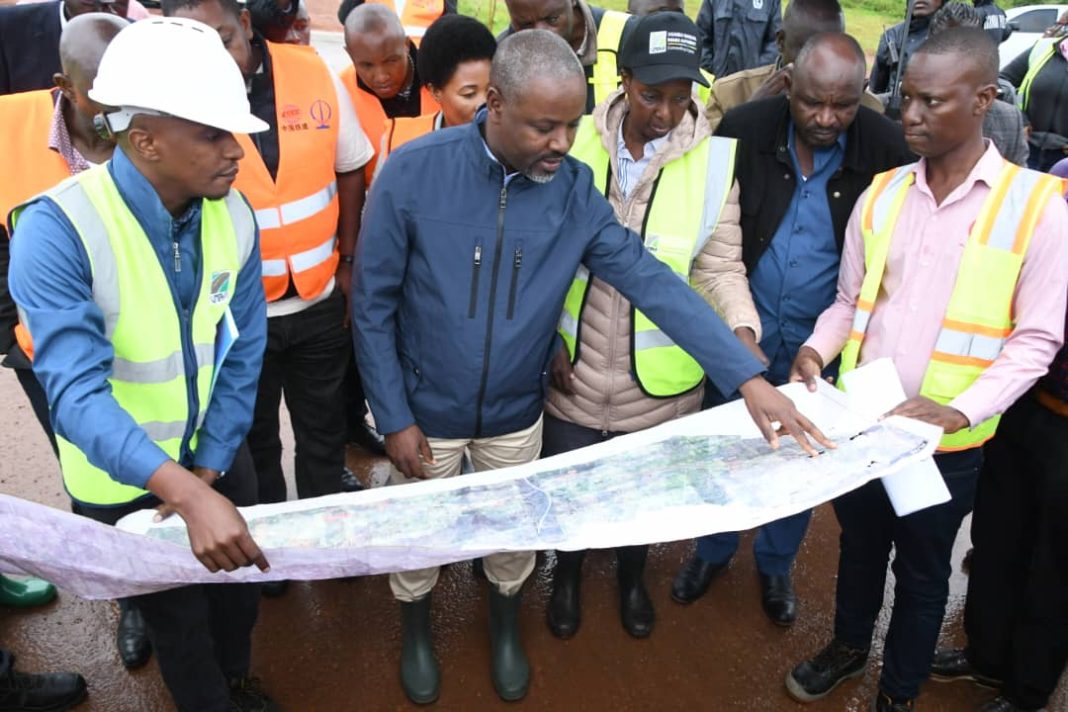
The sacked include Eng. Edwin Raymond Kiyaga, the Project Manager of the Busega–Mpigi Expressway, Eng. Dickens Ahimbisibwe, the supervising engineer on the project, Eng. Patrick Muleme, a senior engineer named in the investigations, Eng. Isaac Wani, the Commissioner for Roads and Bridges, as well as senior engineers Eng. Geoffrey Ssebaggala and Eng. Samuel Mubiru.
Following the directive, the Inspectorate of Government ordered the suspension of Eng. Edwin Raymond Kiyaga and Eng. Dickens Ahimbisibwe to facilitate investigations into the alleged embezzlement of funds earmarked for the expressway. Eng. Patrick Muleme was also named in the President’s directive.
The President further instructed Permanent Secretary Waiswa Bageya to step aside to pave the way for investigations, with Under Secretary Barbara Namugambe appointed Acting Permanent Secretary.

The suspended officials were directed to hand over all government property and official documents, refrain from accessing ministry premises without authorisation and remain available to investigators throughout the inquiry.
The Inspectorate of Government commended the Ministry of Works and Transport for promptly implementing the directive, saying the swift action reflected the ministry’s commitment to accountability and good governance.
The latest action comes after President Museveni publicly laid bare what he described as entrenched corruption within the Ministry of Works and Transport, accusing some officials of attempting to fraudulently inflate the cost of road construction projects, including roads being built in preparation for the 2027 Africa Cup of Nations.
In a letter addressed to Works and Transport Minister Fred Byamukama, the President said investigations had uncovered attempts by what he described as “thieves” within the ministry to increase the cost of Afcon road projects from Shs4 billion to Shs8.5 billion per kilometre.
“I have been getting reports that there is massive corruption in the Ministry of Works. Proof of this corruption has been the delays on road construction, reconstruction, repair and maintenance,” Museveni wrote.
The President cited several projects that he said reflected the extent of the problem, including the Busega–Mpigi Expressway, the Mubende–Fort Portal road, the Masaka–Mutukula road and Jinja Road. He also pointed to the malfunctioning scanners at Entebbe International Airport as further evidence of poor supervision and mismanagement.
Museveni vowed to take a tougher approach against corrupt public officials, saying both criminal prosecution and administrative sanctions would be used to restore discipline within government institutions.
“On account of this betrayal, I will use, henceforth, two weapons: the criminal and the administrative,” he said.
Appearing before Parliament, Byamukama acknowledged that corruption in the roads sector remains a major challenge, saying some ministry officials have colluded with contractors to inflate project costs, manipulate procurement processes and oversee substandard works.
The minister revealed that government is losing an estimated Shs50 billion every quarter through corruption in road projects and said stronger enforcement measures had become unavoidable.
“As I was leaving my office this morning, I saw a letter from the President sacking six engineers, including a few I am seeing on this front bench here. Sacking them, not even interdicting. They should go,” Byamukama told Parliament.
He said the dismissals demonstrate the government’s resolve to hold public officers personally accountable for delays, cost overruns and the misuse of taxpayers’ money.