Parliament has directed its Committee on Tourism, Wildlife and Antiquities to investigate the long-standing boundary dispute between communities neighbouring Mt Elgon National Park and the Uganda Wildlife Authority (UWA), following renewed allegations of human rights abuses, arbitrary arrests and uncertainty over the park’s legally recognised boundaries.
The directive was issued during Wednesday’s plenary sitting chaired by Deputy Speaker Thomas Tayebwa after Bungokho Central MP Muhamood Masaba raised concerns over the continued suffering of residents living near the protected area.

Masaba told Parliament that residents of Busaano, Wanale and Budware sub-counties in Mbale District continue to face harassment during boundary enforcement operations carried out by UWA officials.
“Our people are suffering at the hands of officials who confiscate livestock, assault residents and arbitrarily detain innocent people,” Masaba said.
He reminded the House that the matter had previously been brought to the attention of President Yoweri Museveni, who directed the Office of the Prime Minister (OPM) to find a lasting solution to the conflict.

“Since then, we have never received a report. I request the Office of the Prime Minister to formally update Parliament on the progress made,” Masaba added.
The dispute between UWA and communities surrounding Mt Elgon National Park has persisted for decades, with disagreements over the exact location of the park’s boundaries frequently sparking tensions. Residents have repeatedly accused wildlife authorities of encroaching on community land, while UWA has maintained that it is protecting gazetted park boundaries from illegal settlement, cultivation and grazing.
Deputy Speaker Tayebwa recalled previous engagements with affected communities, clarifying that the complaints had consistently been directed at UWA rather than the National Forestry Authority (NFA).
“I remember when I served as Government Chief Whip and visited Bungokho and Wanale. The issues raised at the time concerned UWA and not NFA,” Tayebwa said before inviting the Ministry of Tourism, Wildlife and Antiquities to respond.
Responding on behalf of the ministry, State Minister for Tourism Susan Nakawuki condemned any acts of violence committed during boundary enforcement exercises and urged victims to report criminal acts to the Police.
“If anyone was assaulted, that constitutes a criminal offence which should immediately be reported to the Police so that the perpetrator is held accountable,” Nakawuki said.
However, Manjiya County MP and Parliamentary Commissioner John Baptist Nambeshe criticised the minister’s response, arguing that it overlooked years of grievances raised by communities living around the national park.
“We have testimonies from more than 20 people who have cumulatively lost their lives in confrontations involving armed UWA rangers. We also have cases where rogue officers allegedly extort money from residents to allow cultivation inside the park. Is the Minister in order to present such an incomplete picture of what communities have endured?” Nambeshe asked.
Tayebwa said Parliament had a duty to ensure allegations against public officials were thoroughly investigated and that those responsible were held accountable.
“If there are rogue elements acting outside the law, Parliament is precisely the forum where such issues should be raised so that the responsible ministry can investigate and provide redress,” he said.
Nakawuki later assured the House that the ministry would engage UWA to investigate all the allegations.
“Those remain allegations at this stage, but I will engage UWA to investigate them thoroughly. If any officers are found culpable, appropriate disciplinary action will be taken,” she said.
The minister also revealed that President Museveni had directed the ministry to strengthen engagement with communities living around Mt Elgon National Park as part of efforts to reduce conflicts between conservation authorities and residents.
“The President directed the ministry to identify community leaders from the Mt Elgon area and facilitate capacity-building training in Switzerland on how communities can peacefully coexist with wildlife and minimise human-wildlife conflict,” Nakawuki told Parliament.
Tayebwa subsequently directed the Committee on Tourism, Wildlife and Antiquities to investigate the boundary dispute and present a report to Parliament, saying its findings would guide both Parliament and government on resolving the long-running conflict.
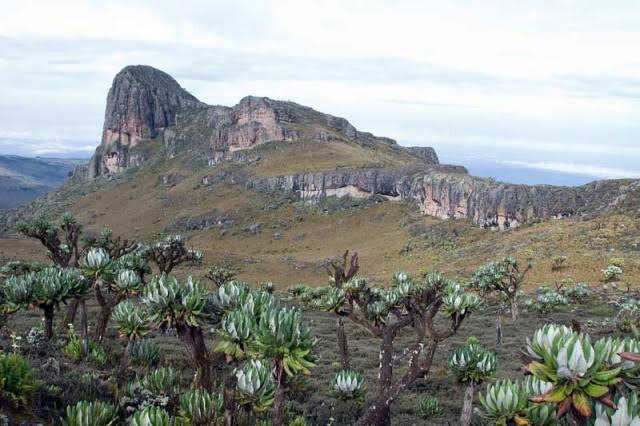
Mt Elgon National Park, which lies along the Uganda-Kenya border, covers about 110,971 hectares on the Ugandan side and stretches across the districts of Bukwo, Kween, Bulambuli, Kapchorwa, Bududa, Mbale, Sironko and Manafwa. The park is surrounded by one of Uganda’s most densely populated rural regions, where thousands of households depend on the fertile volcanic slopes for farming.
The area is renowned for the production of Arabica coffee, bananas, maize, beans, Irish potatoes, sweet potatoes, soybeans and vegetables. The high population pressure and heavy dependence on agriculture have for years intensified disputes over land ownership, grazing rights and access to natural resources, making the Mt Elgon boundary conflict one of the country’s longest-running conservation-related disputes.