SPOTLIGHT: This is the first case in which the bank is accused of shortchanging clients in a way that is not agreeable to them. The bank is also battling over 500 cases in court over clients’ properties, with some auctioned.
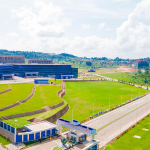
Equity Bank has been accused of charging businessman Matthias Magoola and his companies an interest rate of 21 per cent instead of the scheduled 17 per cent on loans advanced to finance the construction of Dei’s pharmaceutical manufacturing facility in Matugga, Wakiso District, in a dispute involving US$39.91 million (Shs147.7 billion).

The allegations are contained in a legal notice published by Muwema & Co. Advocates and Solicitors, representing Dei Industries International Ltd, Dei BioPharma Ltd (formerly Dei Natural Products International Ltd) and Magoola, who are challenging the bank’s calculation of their outstanding loan balances and its decision to recover the money through the sale of their properties.
The lawyers accuse Equity Bank Uganda Ltd and Equity Bank Kenya of pursuing recovery of disputed loan balances, interest and associated charges before an independent and transparent reconciliation of the accounts has been completed.
At the centre of the dispute is the interest rate applied to the facilities. The companies maintain that their loans were scheduled at 17 per cent, but Equity Bank subsequently charged them 21 per cent, a four-percentage-point difference which they argue contributed to the disputed debt.

The companies also challenge what they describe as inflated principal and interest balances, unexplained deductions and irregular consolidation of loans during successive restructuring arrangements.
In the notice, the lawyers argue that the bank cannot legitimately proceed with the sale of their clients’ properties when the actual outstanding loan balance remains contested in court.
“At the moment, there is no legitimate outstanding loan balance or interest ultimately established in this matter, which can validly be recovered under any advertisement of intended sale of our clients’ properties,” the lawyers state.
The legal notice follows an advertisement of intended sale published in the New Vision newspaper on November 5, 2026, by Jald (U) Ltd, auctioneers appointed by Equity Bank to recover the disputed debt.
The properties advertised for sale include several industrial, commercial and residential assets in Matugga, Luzira, Katwe, Muyenga-Kisugu, Kitende and Seguku.
Among the properties targeted are several plots on Kyadondo Block 82 in Matugga and Kyamul-Kungu, including Plots 988, 3325, 3326, 3238, 4778 and 4779. Others include Plot 2A and Plot 22A along Sixth Link Road in Luzira, Plot 491 on Kibuga Block 6 in Katwe, Plot 1112 on Kyadondo Block 244 in Muyenga-Kisugu, Plots 5641 and 5642 on Busiro Block 383 in Kitende and Plot 149 on Kyadondo Block 266 in Seguku.
The Matugga properties are particularly important because they are associated with Dei’s pharmaceutical manufacturing investment, which was established to manufacture medicines and other pharmaceutical products locally and reduce Uganda’s dependence on imported medical supplies.
The proposed auction has triggered another legal confrontation, with Muwema & Co. warning prospective buyers against participating in the sale while the dispute remains unresolved.
“The public is therefore warned that any participation in the purported auction of our clients’ advertised properties shall be at their own grave risk,” the lawyers state.
The dispute is connected to High Court Civil Suit No. 929 of 2024, filed by the companies in August 2024 against Equity Bank Uganda and Equity Bank Kenya over the lender’s demand for Shs82 billion and US$43 million.
The companies challenged the computation of the outstanding principal, interest balances, deductions and loan consolidations, arguing that successive restructuring arrangements had resulted in irregular accounting and inflated demands.
During the court proceedings, the parties initially agreed in December 2024 to appoint KPMG to conduct a comprehensive audit of the disputed loan accounts.
However, that arrangement was subsequently abandoned, and the court directed the Institute of Certified Public Accountants of Uganda (ICPAU) to nominate an independent auditor.
ICPAU appointed Clayton & Co., whose audit report dated June 28, 2025, placed the disputed indebtedness at US$39,911,245, equivalent to Shs147.7 billion.
The audit process itself became another point of disagreement, with Magoola’s companies questioning the independence of the appointed auditor and alleging that the process had been compromised.
According to Muwema & Co., the bank had initially acknowledged its ongoing business relationship with KPMG, including a conflict of interest arising from the appointment of the auditing firm to conduct the exercise. The lawyers further contend that the bank subsequently revoked the appointment and replaced KPMG with ICPAU.
The lawyers also state that, before the ruling in the ICPAU appointment matter could be delivered, the bank decided to pay Shs120 billion, equivalent to US$33 million, in December 2024, with the intention of bringing the dispute to an end through refinancing of the pharmaceutical project at Matugga.
However, the arrangement did not resolve the disagreements over the loan accounts.
The companies subsequently challenged the audit process, prompting further proceedings in the High Court and Court of Appeal.
In July 2026, the High Court dismissed an application by the companies seeking to revoke ICPAU’s appointment of Clayton & Co. and amend their pleadings. The companies challenged that decision before the Court of Appeal.
On September 9, 2026, the Court of Appeal granted an application staying proceedings in the main High Court case pending determination of the appeal challenging the audit process.
The decision meant that the main case could not proceed until the appellate court determined the challenge to the audit arrangements. It did not, however, determine the final amount owed to Equity Bank.
The dispute dates back to credit facilities obtained to finance the construction and development of Dei’s pharmaceutical manufacturing complex in Matugga.
Equity Bank provided financing running into US$100 million, equivalent to Shs368.7 billion, while Uganda Development Bank contributed US$20 million (Shs73.7 billion) and Tropical Bank provided US$2 million (Shs7.4 billion).
The financing was intended to establish a pharmaceutical manufacturing facility capable of producing medicines and other medical products for the Ugandan and regional markets.
However, the project encountered financial difficulties, with the Covid-19 pandemic, changes in the original business plan and additional financing requirements affecting its implementation.
The companies subsequently sought restructuring of the facilities, but disagreements over repayment terms, interest charges and the outstanding balances continued.
In 2023, Bank of Uganda rejected a request by Equity Bank for further restructuring of the facilities, citing concerns about the previous restructuring arrangements and the operational status of the project.
The latest auction dispute also comes amid questions over the government’s investment in Dei BioPharma.
Government has committed Shs723.4 billion to the pharmaceutical project through different allocations, with the State reported to hold a 9.4 per cent stake in the company.
The investment has previously attracted parliamentary attention over the documentation of government shareholding, accountability for public funds and the expected returns from the pharmaceutical manufacturing venture.
The proposed sale of the properties therefore raises questions about the future of the manufacturing investment and the protection of public funds committed to the project.
Muwema & Co. maintains that its clients are not opposed to settling genuine outstanding obligations but insist that the amount payable must first be established through an independent and transparent audit and reconciliation of the accounts.
The lawyers say they intend to pursue appropriate legal remedies against Equity Bank and its agents over what they describe as misconduct in the recovery process.