
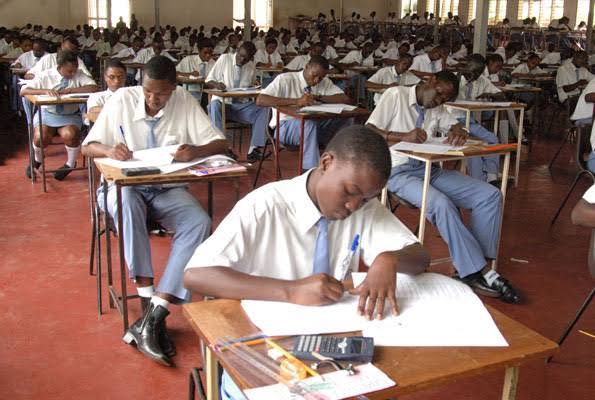
A total of 203,809 candidates on Monday, 9 began sitting the 2026 Uganda Advanced Certificate of Education (UACE) examinations, with the Uganda National Examinations Board (UNEB) deploying more than 1,000 scouts and security personnel to ensure the smooth and credible conduct of the examinations across the country.
According to UNEB, a total of 203,809 candidates registered for this year’s examinations, representing a 22.4 per cent increase from the 166,400 candidates who sat the examinations last year.

The candidates are sitting their examinations at 3,039 centres across the country, with 106,361 (52 per cent) being male and 97,448 (48 per cent) female.
The examinations commenced on Monday morning, with science students sitting Principal Mathematics Paper One, while Arts students started with History Paper One.
In a statement issued on November 9, 2026, UNEB Principal Public Relations Officer Jennifer Kalule-Musamba said the examinations are being conducted under the theme, “Advancing Excellence in Assessment and Certification through Secure, Credible, Inclusive, and Innovative Processes.”

Kalule-Musamba said the Board remains committed to ensuring that all candidates sit the same examinations under similar conditions, with results reflecting their individual academic performance.
“We commit to ensuring that all the candidates are given the same examination under similar conditions throughout the country, and that the final results reflect the actual performance for each of the individual candidates,” Kalule-Musamba said.
This year’s UACE candidates are also the first cohort to have progressed to the advanced level after studying under the Competency-Based Assessment (CBA) curriculum introduced at the Uganda Certificate of Education (UCE) level in 2024.
Although the UACE curriculum has not been completely overhauled, UNEB says the candidates have been studying under an aligned competency-based curriculum guided by the National Curriculum Development Centre (NCDC), prompting the Board to adjust its assessment to reflect the changes.
To ensure the security of the examinations, Kalule-Musamba said more than 1,000 scouts had been deployed countrywide to supervise the exercise, alongside security and surveillance personnel.
“Over one thousand (1,000) scouts have been deployed by the Board to oversee the safe conduct of the examination countrywide. We also have a number of security and surveillance operatives working along with the team to ensure the security of the examination,” she said.
The Board has also warned candidates, teachers, parents and members of the public against engaging in examination malpractice, particularly through social media platforms claiming to have access to UACE examination papers in exchange for money.
Kalule-Musamba described the platforms as fraudulent, warning candidates against paying individuals promising to supply examination papers before the scheduled time.
“Candidates and the public are further cautioned not to sign up or join social media platforms collecting money from them and claiming to have access to UNEB UACE examination papers. Please be advised that those are scammers, and that no one will access the legitimate examination paper before the candidates at the set time,” she said.
She warned that anyone found in possession of unauthorised examination papers or materials would face prosecution under the UNEB Act, Cap 259.
Under Section 25 of the Act, a person who, before or during an examination, unlawfully possesses or attempts to obtain an examination paper, examination material or information purporting to relate to the contents of an examination commits an offence punishable by a fine of up to 1,000 currency points, imprisonment of up to five years, or both.
The law provides for tougher penalties for people who assist candidates to obtain examination papers or other restricted examination materials.
Such individuals risk a fine of up to 2,000 currency points, equivalent to Shs40m, imprisonment of up to 10 years, or both.
Teachers convicted of such offences may also face additional disciplinary action under the laws governing the teaching profession.
UNEB has further cautioned invigilators and scouts against negligence, warning that those who knowingly or negligently allow examination malpractice to occur under their supervision will also be held accountable.
Section 26(1)(g) of the Act provides for a maximum prison sentence of five years, a fine of up to Shs20m, or both, for the relevant offences.
The Board has urged members of the public with information about suspected examination malpractice to report it through its toll-free telephone number, 0800-211-077.
Kalule-Musamba said informers would be protected under the Board’s Whistleblower Policy and compensated where the information provided is found to be useful.
Meanwhile, UNEB has reminded school directors and heads of examination centres not to block duly registered candidates from sitting their examinations because of outstanding school fees.
The Board said the guidance follows instructions from the Ministry of Education and Sports, advising schools to agree with parents and guardians on how outstanding fees will be cleared instead of denying candidates the opportunity to write their examinations.
“At the time of release of results, UNEB will assist the schools to recover their money by withholding the results of the candidates who will not have cleared their dues by then,” Kalule-Musamba said.
The Board also reported that the 2026 Primary Leaving Examinations (PLE) were successfully conducted across the country, although there were isolated attempts at examination malpractice.
According to UNEB, 74 suspects were apprehended in connection with the alleged malpractice, with some of the arrests being preventive.
Of those arrested, 11 have been taken to court, although no convictions had been secured by the time of the announcement. Investigations into the remaining cases are ongoing.
UNEB has also provided special support for 580 candidates with special needs who registered for the UACE examinations, comprising 291 females and 289 males.
The Board deployed 107 personnel to assist the candidates during the examination process. Candidates who do not require support personnel have been granted an additional 45 minutes to complete their papers.
Blind candidates have been provided with Braille machines, question papers and answer sheets, while others have been supplied with modified print question papers, transcribers or large-print materials, depending on their needs. Candidates with hearing impairments are being supported by sign language interpreters.
Kalule-Musamba wished all candidates success as they undertake their final examinations at the advanced level.
The 2026 UACE examinations come as the country continues implementing changes in its education assessment system, with UNEB emphasising examination security, fairness and the inclusion of learners with special needs.