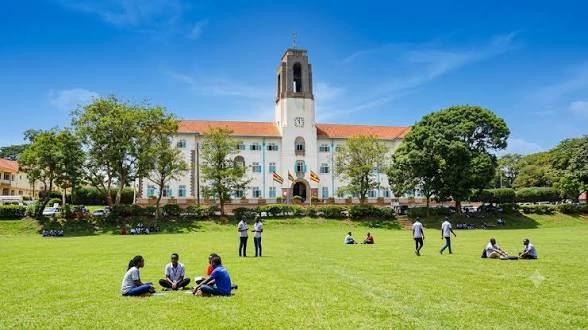
Makerere University is under pressure to account for Shs1.711 billion in application fees owed to other public universities, with Parliament questioning why the institution has failed to distribute the money despite collecting Shs3.03 billion through the joint admissions system.
The outstanding payments emerged during a meeting of Parliament’s Public Accounts Committee (Central Government) on Monday, October 26, 2026, where university officials led by Secretary Yusuf Kiranda appeared to respond to queries in the Auditor General’s report for the 2024/2025 financial year.

Committee chairperson Patrick Nsamba Oshabe directed Makerere to settle the debt, rejecting explanations over changes in the collection system and the handling of the funds through the Uganda Revenue Authority (URA).
“Please pay universities what is due to them,” Oshabe told the officials, insisting that Makerere could not continue holding money meant for other public institutions.
The Auditor General’s report found that Makerere collected Shs3.030 billion in application fees under the Public Universities Joint Admissions Board (PUJAB) arrangement but recorded the entire amount as its own revenue, although Shs1.711 billion belonged to other participating institutions.

The audit recommended that the university expedite the remittances, warning that treating the entire collection as Makerere’s income overstated its revenue and failed to account properly for the shares due to other universities.
Kyambogo University is owed the largest amount at Shs591 million, followed by Makerere University Business School (MUBS), which is due Shs294 million. Gulu University is owed Shs178 million, Mbarara University of Science and Technology Shs155 million and Busitema University Shs114 million.
Muni University, Kabale University, Lira University, Soroti University and Mountains of the Moon University are each owed Shs75 million.
The outstanding amounts relate to application fees paid by students seeking admission to public universities and other participating tertiary institutions. The standard fee has been Shs52,000 per applicant.
Makerere Academic Registrar Prof Mukadasi Buyinza told the committee that the university had previously received and distributed the money but that the arrangement changed in 2023 when applicants began paying through URA.
However, a representative of the Auditor General, identified as Wandera, told the committee that despite the change, the money was still channelled to Makerere’s account, raising questions about why the institution had not transferred the respective shares.
Makerere University Bursar Evarist Bainomugisha said the institution budgets for the payments annually and had made some remittances in July. He nevertheless argued that the process had become complicated because funds collected through URA were being deposited into the Consolidated Fund.
Oshabe rejected the explanation, maintaining that the audit had established that the money was ultimately channelled back to Makerere and that the university had an obligation to transfer the funds to the institutions entitled to them.
“You are sitting on their money,” he told the university officials, questioning why the payments had remained outstanding for so long.
The committee also heard that Makerere had remitted only about Shs130 million in the previous financial year, a figure that prompted further questions about the pace at which the debt was being cleared.
University Secretary Kiranda acknowledged the outstanding obligation and promised to reconcile the amounts due to each institution before completing the payments.
“We acknowledge the debt, and we are going to pay all of the money to those universities,” Kiranda told the committee.
He said Makerere had started making payments in line with available cash releases, although the amounts remitted so far were small. He added that the university was engaging URA to incorporate the revenue-sharing arrangement into its systems so that each institution’s share could be identified and distributed more efficiently.
The application-fee dispute was among several issues raised during the committee’s examination of Makerere’s financial management, academic administration and student welfare.
In a separate exchange during the same hearing, committee member Karim Masaba questioned why the university had reported no condoms delivered against a target of 100,000 despite indicating that the money had been spent.
Kiranda disputed the initial framing of the expenditure, explaining that the programme fell under the university’s infectious disease institute and was intended to serve surrounding communities rather than students alone. Committee chairperson Oshabe pressed the officials to clarify the intended beneficiaries and account for the reported expenditure.
The MPs also questioned the university over approximately Shs200 billion reportedly remaining unspent at the end of the financial year, asking why the money had not been returned to the Consolidated Fund as required under public finance rules. University officials reportedly said the funds were tied to ongoing commitments.
The committee further examined Makerere’s decision to withhold academic documents from students with outstanding fees, which the university said amounted to about Shs13 billion. MPs questioned whether withholding transcripts could prevent graduates from securing employment and earning money to clear their debts.
Other matters raised included seven accredited academic programmes that reportedly attracted no students during the review period, concerns over student admissions beyond approved programme limits and allegations of sexual harassment at the institution.
Kabarole District Woman MP Annet Kirungi asked how Makerere was protecting female students amid the allegations, saying parents expected the university to provide a safe environment for their children.
Kiranda said the university had zero tolerance for sexual harassment and maintained that complaints were handled through established procedures. He said a committee had been appointed to investigate recent allegations and that staff found guilty in previous investigations had been dismissed.
The committee also challenged restrictions on access to Makerere’s Freedom Square, a historic venue for student gatherings and political debate. Oshabe argued that requiring students to book the space in advance and disclose the content of their meetings risked undermining the development of future leaders.
Kiranda defended the arrangements, saying management had introduced advance booking to address clashes among political, cultural, religious and academic groups seeking to use university venues.
Meanwhile, Makerere’s Deputy Vice-Chancellor in charge of Finance, Henry Alinaitwe, appealed for increased government funding to improve students’ welfare, saying students received a daily allowance of Shs4,500.
The committee’s scrutiny places renewed attention on Makerere’s management of public resources, its obligations to other institutions and the delivery of services to students.
On the PUJAB debt, the committee directed the Auditor General to follow up on Makerere’s commitment and report back to Parliament on whether the outstanding money had been paid. The university’s proposed engagement with URA is expected to address the distribution process, but the immediate obligation remains to settle the amounts owed to the affected institutions.