The High Court in Kampala has authorised MUA Insurance Rwanda Ltd to enforce a Rwandan court judgment requiring Roko Construction Rwanda Ltd to pay about Shs14.9 billion, opening the way for the insurer to pursue the company’s eligible assets and project proceeds in Uganda.
In a ruling delivered by Commercial Court Judge Susan Odongo, the court registered a September 13, 2024, judgment issued by Rwanda’s High Commercial Court, giving it the same legal force as a Ugandan High Court judgment and paving the way for execution proceedings against the construction firm’s eligible assets within Uganda.

The dispute stems from construction and insurance obligations for several projects undertaken by Roko Construction Rwanda, including works involving Village Health Works, Betts & Townsend Project Management Ltd, and I&M Bank Rwanda.
The Rwandan court ordered the company to pay more than $3.28 million together with 1.302 billion Rwandan francs, in addition to legal and procedural costs.
The award includes about $2.93 million linked to construction works for Village Health Works, another $350,000 relating to insurance obligations involving Betts & Townsend Project Management Ltd, and more than 1.3 billion Rwandan francs connected to insurance liabilities for construction activities involving I&M Bank Rwanda.

Court records show MUA Insurance informed the Ugandan court that the judgment had never been settled and that Roko Construction Rwanda no longer had identifiable assets in Rwanda that could be attached to recover the debt.
In an affidavit, the insurer’s Head of Legal Services, Sylver Gatete, claimed the company’s directors had left Rwanda after the judgment while continuing to undertake construction projects in Uganda.
The insurer presented joint venture agreements indicating Roko Construction Rwanda’s participation in major projects in Uganda, including works on the new Parliament chamber and office facilities for the Uganda Electricity Transmission Company Ltd, arguing that proceeds from such projects could be used to satisfy the outstanding debt.
Justice Odongo ruled that the Rwandan judgment met all the legal requirements for registration and enforcement under Uganda’s reciprocal enforcement framework for foreign judgments.
“The legal obligation created by the Rwandan court is a debt that follows the debtor,” Justice Odongo said.
“It would be a travesty of justice to allow a company to evade its adjudicated liabilities by merely crossing a border while continuing to profit from large scale contracts in the neighbouring state,” she added.
The judge noted that Roko Construction Rwanda had participated in the proceedings before the Rwandan court and had unsuccessfully challenged the decision on appeal, making the judgment final and conclusive.
She further emphasised that the Ugandan court was not reconsidering the merits of the original dispute but was only determining whether the foreign judgment qualified for registration under Ugandan law.
The court found that the application had been filed within the six year statutory period, the judgment remained enforceable in Rwanda, and there was no evidence that it had been obtained through fraud or that enforcing it would offend Uganda’s public policy.
“In a globalised commercial world, where a debtor’s directors might flee one jurisdiction to seek refuge in another, the reciprocal enforcement mechanism is the primary shield against the frustration of legitimate legal obligations,” Justice Odongo observed.
The ruling does not automatically transfer money to MUA Insurance but gives the insurer legal authority to commence execution proceedings in Uganda against assets or income belonging to Roko Construction Rwanda that can lawfully be attached.
The court also awarded the insurer the costs of the Ugandan proceedings.
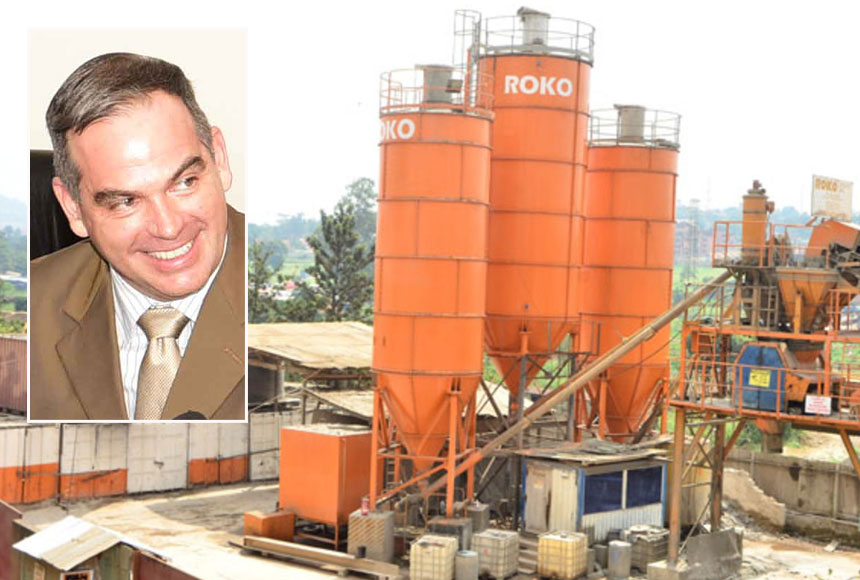
Roko Construction has been one of the region’s largest construction firms, delivering roads, commercial buildings, hospitals, and public infrastructure across Uganda and neighbouring countries.
In recent years, however, the company has faced mounting financial pressures, including legal disputes with creditors and restructuring efforts involving some of its regional operations.