The Parish Development Model (PDM) has reached 3,571,108 beneficiaries across Uganda, with the government investing Shs4.317 trillion in the Parish Revolving Fund to expand household enterprises and accelerate the country’s transition from subsistence farming to a money economy.
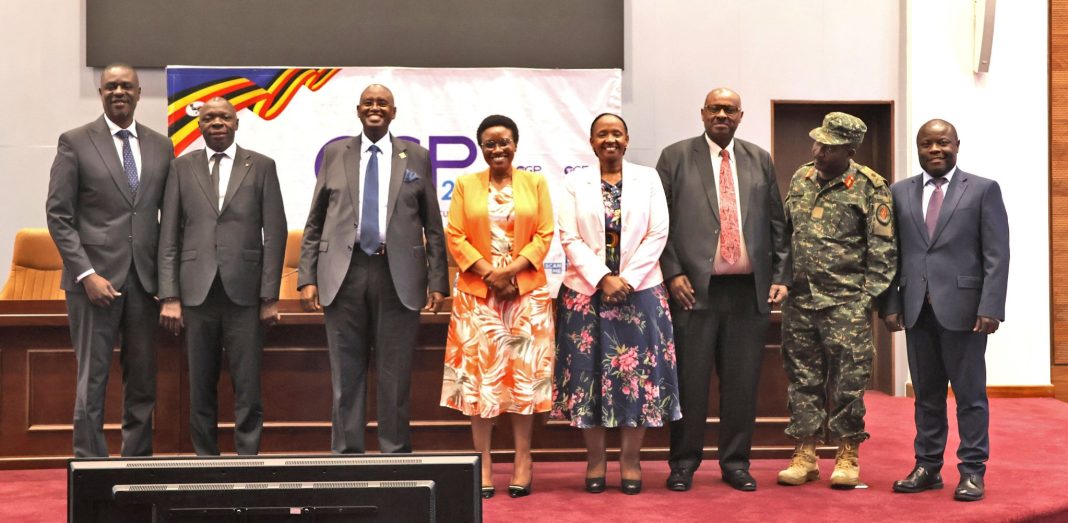
The latest progress was reviewed during an inter-ministerial meeting chaired by the Minister of State for Microfinance, Haruna Kasolo Kyeyune, at the Ministry of Finance, where ministers and technical officials assessed implementation of the programme’s seven pillars and agreed on measures to strengthen coordination, accountability and sustainability.

The Shs4.317 trillion has been channelled through 10,589 PDM Savings and Credit Cooperative Organisations (SACCOs), with each parish receiving at least Shs400 million over the programme’s four year implementation period.
Under the programme, eligible beneficiaries can access loans of up to Shs1 million at an annual interest rate of six percent, repayable within three years, including a two year grace period.
The government’s investment in PDM has continued to grow every financial year. The programme started with an allocation of about Shs200 million per parish before funding was increased to Shs300 million and later Shs400 million for each parish as the government expanded support to households.

In the current 2026/27 financial year, the government has allocated an additional Shs1.059 trillion to provide another Shs100 million to each of the country’s 10,589 parishes, raising cumulative funding to more than Shs4.3 trillion.
The latest Financial Inclusion Pillar report shows that adults aged between 31 and 59 years account for the largest share of beneficiaries at 1,946,086 people, representing 54.5 percent of all recipients. Youth aged between 18 and 30 years make up 1,086,998 beneficiaries, while 538,024 beneficiaries are aged 60 years and above.
Women continue to account for the majority of beneficiaries, with 1,924,188 women benefiting from the programme compared to 1,646,920 men.
Government said the Financial Inclusion Pillar has so far registered 222,389 enterprise groups, of which 183,430 have already been profiled on the PDM Information System to improve monitoring and accountability.
Digital platforms have become central to the programme’s implementation. Funds are transferred directly to parish SACCO accounts through the Integrated Financial Management System, while beneficiary registration is conducted through the PDM Information System.
Loan disbursements are made directly to beneficiaries’ mobile phones through Wendi, managed by Pearl Bank, while the Zaidi platform enables real time verification and tracking of transactions.
To support implementation, the government has recruited 14,133 Wendi agents across the country and distributed 27,100 tablets to facilitate beneficiary registration and monitoring.
The meeting also highlighted growing investment by beneficiaries in productive enterprises.
According to the Financial Inclusion Pillar report, PDM beneficiaries had invested Shs461.12 billion in piggery by June 2026, making it the largest investment area under the programme. Coffee attracted Shs453.52 billion, while poultry accounted for Shs425.27 billion.
Minister of State for National Guidance Alion Yorke Odria praised cooperation among government ministries and proposed greater use of government agencies and regional radio stations to increase public awareness about loan repayment, programme updates and policy changes.
Minister of State for Animal Industry Bright Rwamirama said efforts to protect agricultural production had also intensified.
He said 645 premises handling agricultural chemicals and seeds had been registered to reduce counterfeit inputs, while the government had procured and distributed 50.6 million Foot and Mouth Disease vaccine doses and established solar powered cold chain facilities in 53 districts.
Minister of Local Government Balaam Barugahara called for stricter accountability in implementing the programme.
He warned local government officials against extortion, illegal charges, favouritism, political interference, fraud and diversion of PDM funds, urging them to measure success through higher production, increased savings, value addition, improved market access and better household incomes.
Minister of State for Gender and Culture Mary Kamuli Kuteesa stressed the importance of preparing beneficiaries before receiving loans, strengthening training programmes and improving follow up after disbursement.
PDM National Coordinator Dennis Galabuzi said the programme was increasingly adopting a whole of government approach built around agricultural value chains, covering inputs, production, storage, electricity, processing, value addition and market access.
Introduced in 2022 as the government’s flagship poverty alleviation programme, the Parish Development Model seeks to transform Uganda’s rural economy by ensuring every parish has access to revolving funds that support income generating enterprises, while integrating financial inclusion, agricultural production and local government services to improve household incomes.