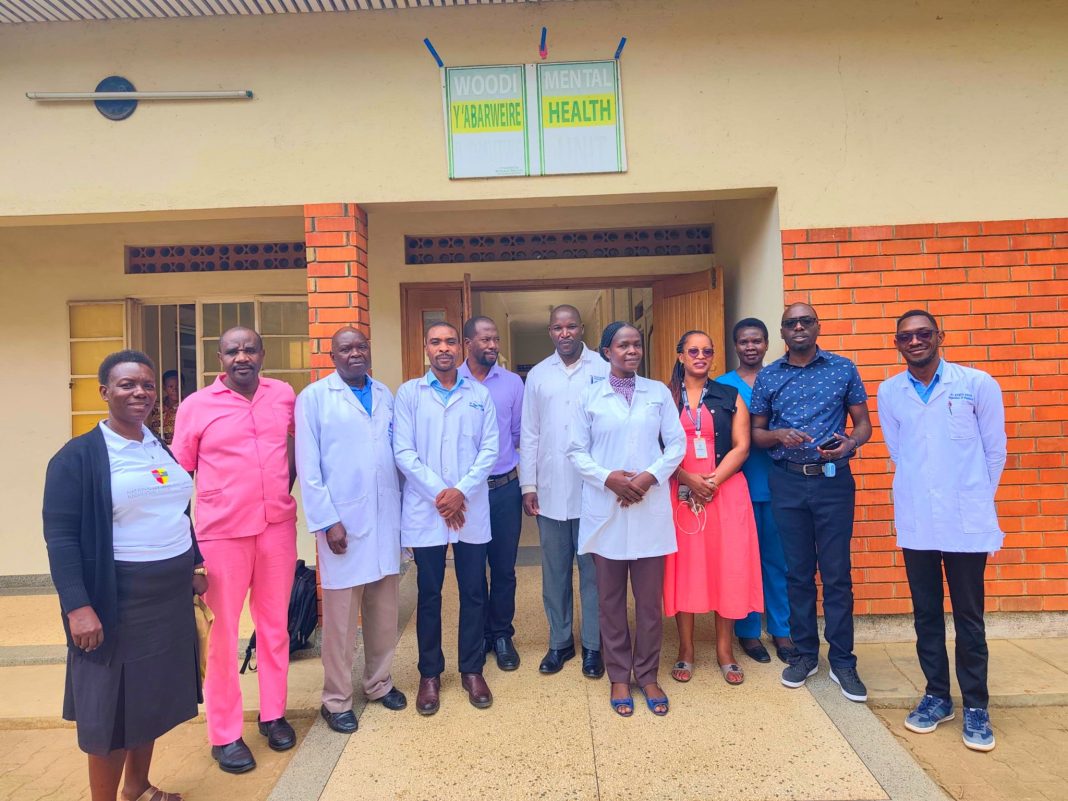
The National Lotteries and Gaming Regulatory Board (NLGRB) has partnered with mental health units at Mbarara Regional Referral Hospital and Itojo Hospital to strengthen early intervention and support for people experiencing harm linked to gaming.
The engagement brought together the gaming regulator and health professionals as part of efforts to develop a coordinated public health response to problem gambling, with the support of the Ministry of Health’s Mental Health and Control of Substance Abuse Division.

The collaboration places mental health professionals at the centre of efforts to identify people affected by harmful gaming behaviour, provide early support and connect those in need to appropriate counselling and treatment services.
The NLGRB said the engagement is intended to help communities better understand gaming related harm and ensure that people experiencing difficulties do not wait until the problem has become severe before seeking help.
The Board’s Responsible Gaming Programme includes public awareness, education, research, counselling and rehabilitation, with partnerships with health institutions forming an important part of its approach to reducing gaming related harm. The regulator says its mandate under the Lotteries and Gaming Act, 2016 includes protecting members of the public from the adverse effects of gaming and betting.

The Board has previously worked with mental health specialists from Butabika National Referral Hospital during community sensitisation activities, highlighting the connection between excessive gaming, addiction, financial difficulties and social problems.
The latest engagement in Mbarara and Itojo expands this approach to regional health facilities, allowing health workers to participate directly in efforts to recognise and respond to people affected by problem gambling.
The NLGRB has also intensified public education on responsible gaming, targeting communities, students, traders, boda boda riders and other groups. The campaigns encourage people to treat gaming as entertainment rather than a means of earning income and to set limits on the amount of money and time they spend gaming.
The Board advises players not to chase losses, borrow money to gamble or use money meant for essential household expenses. It also encourages people to seek help when gaming begins to cause stress, depression, financial problems or difficulties in their relationships and daily lives.
The regulator has established partnerships with the Ministry of Health and other institutions to support people affected by gambling related problems, while its Responsible Gaming Programme also provides access to confidential voluntary counselling and rehabilitation services.
The NLGRB has a toll free helpline, 0800285800, through which people affected by gaming related problems can seek assistance.
The partnership with Mbarara Regional Referral Hospital and Itojo Hospital comes as the Board continues to frame responsible gaming not only as a regulatory issue but also as a public health and community concern, requiring cooperation between regulators, health workers, families, communities and gaming operators.
The initiative also fits within the Board’s strategy of reducing gaming harm through public awareness, research and partnerships with hospitals and other service providers for counselling, mentoring and treatment.
The NLGRB has in recent months continued to place mental health and responsible gaming on its national agenda, including participation in the 2026 National Mental Health Awareness Camp, where it highlighted the effects of problem gambling on individuals, families and communities.