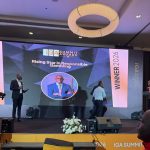

Uganda’s National Lotteries and Gaming Regulatory Board has joined gaming regulators from across Africa and other parts of the world in Rome, Italy, for an international summit aimed at strengthening responsible gambling, tackling illegal gaming operations and improving cooperation among countries regulating the rapidly expanding industry.
The engagement is taking place at SiGMA World Rome 2026, running from November 2 to 5 at Fiera Roma, where regulators, government representatives, gaming operators, investors and technology companies are discussing the future of the gaming industry, with particular emphasis on regulation, consumer protection and technological innovation.

Uganda’s participation comes as African countries push for stronger coordination to address illegal betting activities, cross-border gambling operations and enforcement challenges that increasingly extend beyond individual national jurisdictions.
In a statement marking the first day of its engagements, the Ugandan delegation said discussions were centred on responsible gaming, emerging regulatory challenges, technology and information sharing between regulatory authorities.
“Our engagements are focused on responsible gaming, emerging regulatory challenges, technology, cross-border collaboration and the importance of stronger information sharing in the sector,” the statement reads.

The delegation emphasised that countries must work together to protect consumers even where their gambling laws and regulatory systems differ.
“We believe that while jurisdictions operate under different laws and regulatory systems, we share a common responsibility which is protecting the public from gaming harm while promoting a safe, fair and regulated gaming industry,” the statement reads.
Uganda’s National Lotteries and Gaming Regulatory Board (NLGRB) Chief Executive Officer Denis Ngabirano is among the African regulatory leaders listed on the summit’s programme, with representatives from South Africa, Mauritius and Rwanda also expected to participate in discussions on continental regulatory cooperation.
One of the major developments surrounding the Rome summit is a November 5 workshop organised by the Gaming Regulators Africa Forum (GRAF) in partnership with SiGMA, where African regulators will begin drafting a regional cooperation framework intended to strengthen enforcement and information exchange across the continent.
The initiative will bring together regulatory representatives from Uganda, South Africa, Nigeria, Mauritius and Rwanda to develop what organisers have termed the Rome Working Draft, Version 0.1.
The proposed framework will address five key areas: information-sharing protocols, legal and institutional arrangements, operational enforcement cooperation, capacity building and knowledge exchange, and communication and stakeholder engagement.
The discussions will examine how regulators can share intelligence, coordinate investigations and respond more effectively to illegal gambling activities that operate across national borders.
Importantly, the initiative is not intended to force African countries to adopt identical gambling laws or surrender their individual regulatory authority. Instead, it seeks to establish practical mechanisms through which countries can cooperate while retaining control over their respective legal systems.
The Rome initiative builds on discussions held during the GRAF Regulatory Forum at SiGMA Africa 2026 in Cape Town, South Africa, in March, where regulators examined the possibility of harmonising licensing approaches, strengthening responsible gambling measures and using technology to improve oversight of the industry.
Uganda’s regulatory challenges provide an important context for the discussions.
In August 2026, the NLGRB told Parliament’s Committee on Commissions, Statutory Authorities and State Enterprises (COSASE) that it had confiscated 9,983 illegal gaming machines over the preceding six years and secured the blocking of 57 illegal online gaming websites.
Ngabirano also told legislators that online gaming accounted for more than 68 per cent of the country’s gaming tax collections, following improvements in electronic monitoring.
The board has also been pushing for tougher penalties against illegal gaming operators, arguing that the existing maximum fine of Shs900,000 is insufficient to deter offenders who return to the business after being convicted.
According to figures reported by the board in August, approximately 70 per cent of gaming operators conduct their businesses online, while about 93 per cent of gaming transactions take place through online platforms.
These developments underline the importance of technological monitoring and cooperation with other jurisdictions as Uganda seeks to strengthen oversight of an industry increasingly moving towards digital platforms.
In July 2026, the government also launched the NLGRB Strategic Plan for the 2025/26 to 2029/30 financial years, setting out priorities that include strengthening regulation, combating illegal gaming, promoting responsible gambling and increasing the sector’s contribution to domestic revenue.
The board reported that government revenue from the gaming sector had increased from Shs194 billion in the 2023/24 financial year to Shs323 billion in 2024/25 and Shs368.02 billion in 2025/26.
The strategy also places emphasis on digital monitoring, improved compliance, age verification and public awareness about the risks associated with excessive gambling.
Beyond the African regulatory discussions, SiGMA World Rome 2026 is bringing together four interconnected industries: gaming, artificial intelligence and emerging technology, financial markets and affiliate marketing.
The organisers have projected more than 30,000 delegates, 1,200 sponsors and exhibitors and over 550 speakers from different countries, with 65 regulatory authorities expected to be represented.
The four-day summit features five conference stages covering gaming regulation, artificial intelligence, blockchain, financial technology, digital payments, marketing and developments in international gaming markets.
Other discussions include the regulation of digital finance, artificial intelligence and cryptocurrency, sports integrity, compliance and the challenges facing emerging gaming markets.
The event also provides opportunities for businesses, investors, regulators and technology providers to establish partnerships and exchange experiences on how innovation can be balanced with effective regulation.
For Uganda, the engagement offers an opportunity to share its regulatory experience, learn from other jurisdictions and contribute to discussions on practical solutions to challenges affecting the gaming industry across Africa.
The November 5 workshop will be a particularly important part of the engagement, as regulators move from discussing common challenges to developing recommendations that could form the foundation of stronger cooperation among African gaming authorities.