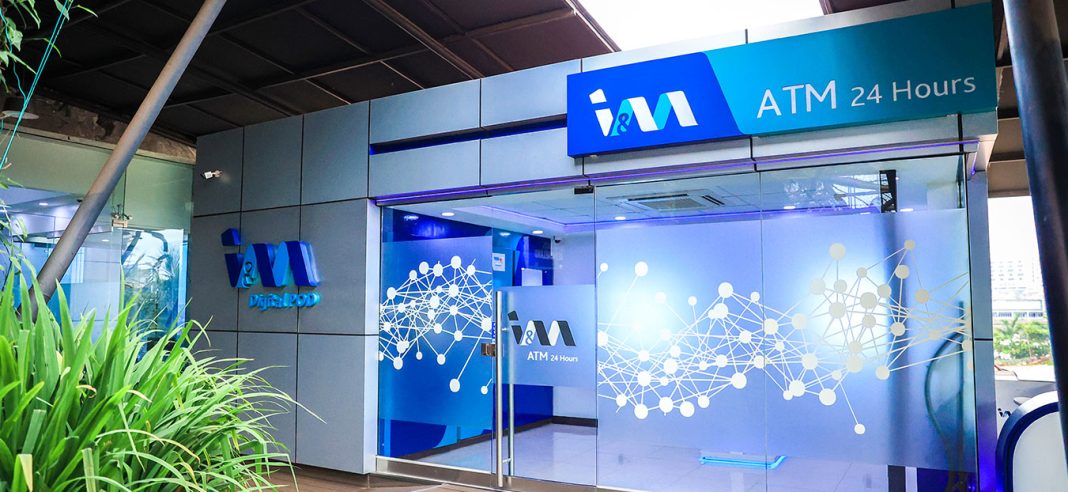
I&M Group has posted a strong first half performance for 2026, reporting a 22 percent rise in profit after tax to about Shs286 billion, with its operations in Uganda and other regional markets playing an increasingly important role in driving earnings.
The banking group said the results for the six months ended June 2026 reflected stronger operating income, a larger balance sheet and continued investment in digital banking, even as it increased provisions to cushion against credit risks across its markets.

Profit before tax rose 15 percent to about Shs378 billion, while total operating income climbed 23 percent to about Shs944 billion as both interest and non interest income improved.
Despite higher spending on expansion and staff, the group’s cost to income ratio remained steady at 44 percent, indicating that revenue growth kept pace with rising expenses.
The results also highlighted the growing importance of I&M’s regional operations, which contributed 33 percent of group profit before tax, up from 25 percent during the same period last year.

Kenya remained the group’s largest earnings market with a 67 percent contribution, followed by Rwanda at 19.7 percent, Uganda at 5.5 percent, Tanzania at 5.3 percent and Mauritius based Bank One at 2.7 percent.
The stronger regional contribution comes as the group deepens cross border banking services across East Africa.
I&M now operates in Kenya, Uganda, Tanzania, Rwanda and Mauritius, serving more than 1.1 million customers through 119 branches and 156 automated teller machines.
During the six month period, its cross border business generated about Shs171 billion.
Maina Kihara, the Group Chief Executive Officer, said the results demonstrate that the bank’s regional diversification and digital strategy continue to strengthen the business despite a challenging operating environment.
“Our regional businesses are becoming an increasingly important part of the Group’s earnings profile and our continued investment in digital banking is helping us create long term value for customers and shareholders,” Kihara said.
The bank’s balance sheet continued to expand, with total assets increasing by 27 percent to about Shs20.9 trillion.
Customer deposits rose 18 percent to about Shs14.1 trillion, strengthening liquidity and providing additional resources for lending and investment in government securities.
Net loans and advances grew 15 percent to about Shs9.4 trillion, while the group’s liquidity position improved significantly from 54 percent to 65 percent.
Asset quality also showed improvement as gross non performing loans declined from about Shs952 billion to about Shs840 billion, reducing the gross non performing loan ratio to 9 percent.
However, the group set aside about Shs157 billion in provisions, a 38 percent increase from the previous year, as it adopted a more cautious approach to managing credit risks across its markets.
Kihara said the higher provisioning reflects a prudent strategy to safeguard the business while supporting customers across the region.
“We remain focused on maintaining a resilient balance sheet as we continue supporting businesses and households across our markets,” he said.
Digital banking continued to reshape the group’s retail business, with 92 percent of customers now actively using digital channels, compared to 86 percent a year earlier.
Retail and Business Banking operating income increased 14 percent to about Shs392 billion, while revenue from the micro, small and medium enterprise segment surged 41 percent as the bank expanded its branch network alongside digital services.
Customers accessed about Shs440 billion in financing through digital platforms during the period, while ecosystem partnerships contributed about Shs137 billion in disbursements and helped lift digital businesses’ share of retail banking income to 21.7 percent.
The group said its investments in payments, lending, remittances, agricultural technology and e commerce services have now reached an estimated 16.8 million people across the region.
Looking ahead, I&M expects East African economies to remain resilient, with regional growth projected at between 5.8 percent and 5.9 percent in 2026.
The bank said easing inflation, improving monetary conditions, infrastructure investment and expanding regional trade are expected to support banking activity, although rising energy prices, public debt pressures, climate related risks and global trade uncertainties remain potential challenges.
As the group approaches the final phase of its iMara 3.0 strategy, management is targeting return on equity of between 18 percent and 21 percent, loan growth of 12 percent to 18 percent and deposit growth of 15 percent to 20 percent.
Investor confidence has also strengthened, with I&M’s share price closing at about Shs2,160 on August 25, representing an 81 percent gain since the beginning of 2026, while earnings per share rose from KES4.40 to KES5.30.