Uganda has received only about 12% of the Shs3.2 trillion required this year to support refugees and host communities, Deputy Speaker of Parliament Thomas Tayebwa has said, warning that the funding shortfall is putting additional pressure on essential public services.
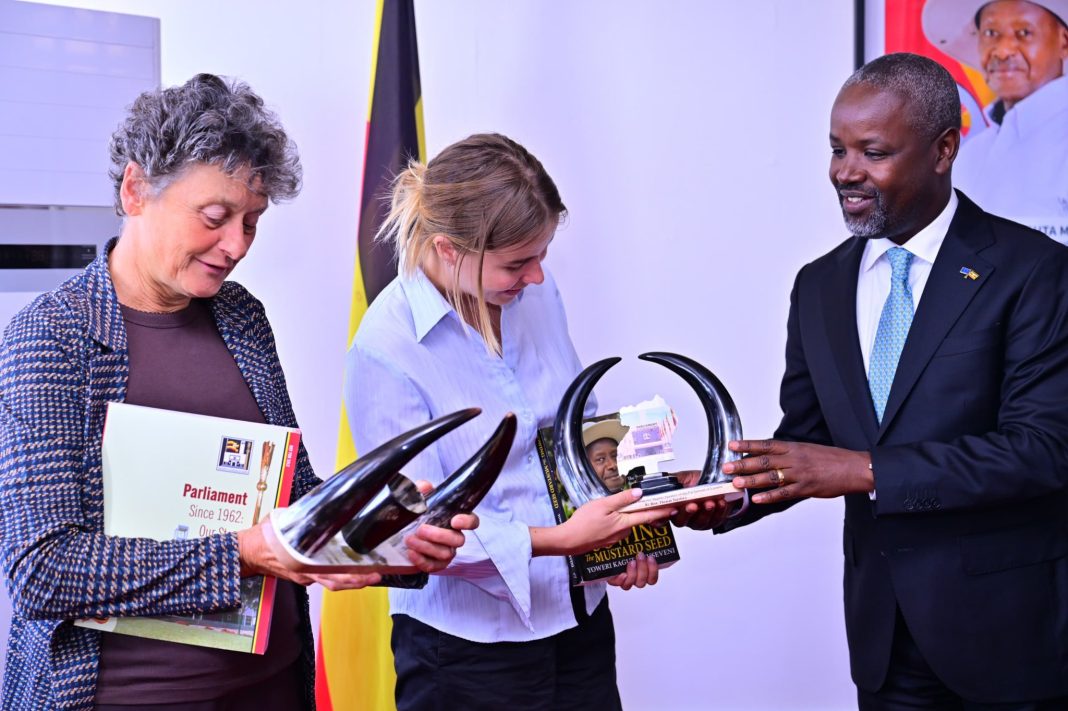
Tayebwa made the remarks on Monday after meeting members of the European Parliament, Anna Strolenberg and Tineke Strik, who are in Uganda to better understand the country’s refugee policies and explore areas for stronger cooperation between Uganda and the European Union on refugee and immigration management.

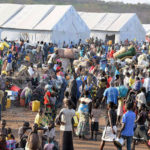
Uganda is currently hosting more than two million refugees and asylum seekers, making it one of the world’s major refugee-hosting countries. The Office of the Prime Minister recently estimated the refugee population at about 2.3 million, although a nationwide verification exercise that began this month is expected to establish the exact number.
The Uganda Country Refugee Response Plan for 2026 requires $850 million, equivalent to about Shs3.2 trillion, to respond to the needs of refugees and host communities. The plan covers critical areas including food security, healthcare, education, livelihoods, protection, water, and sanitation.
Tayebwa said the limited funding is making it increasingly difficult for Uganda and its humanitarian partners to provide refugees with food and other basic necessities, while communities hosting them are also facing increased pressure on public services.

“I explained to them that cuts in funding have made refugee management difficult for us. For instance, this year, Uganda received about 12% of the more than $850 million needed to support the welfare of refugees,” Tayebwa said.
He said the consequences of the funding gap go beyond humanitarian assistance, with shortages affecting services that refugees and host communities depend on, particularly healthcare and education.
“When there is less money to provide food and other essential support to refugees, there is increased pressure on social services such as health and education. I told them that this is the best time for Uganda and the EU to strengthen our cooperation on this issue,” he said.
The funding crisis has already affected the delivery of essential services in refugee settlements. Recent assessments have pointed to reductions in food assistance, healthcare support and humanitarian-funded education services as donor funding continues to fall short of the needs.
Uganda’s refugee response plan was designed around the needs of about 2.2 million refugees and 2.7 million members of host communities, underlining the scale of resources required to sustain services in areas receiving large numbers of displaced people.
Tayebwa said Uganda’s continued commitment to receiving refugees is rooted in its humanitarian principles and its longstanding policy of protecting people fleeing conflict and persecution.
“Uganda’s doors are always open to refugees because of our commitment to humanity and our culture of never turning anyone away. Uganda now hosts more than two million refugees, the majority of whom are women and children who are vulnerable,” he said.
The Deputy Speaker also urged the European Union and other international partners to look beyond humanitarian assistance and support efforts aimed at addressing the conflicts that continue to force people from their homes.
According to Tayebwa, many of the refugees arriving in Uganda are fleeing conflicts in neighbouring countries, meaning that the continued influx cannot be addressed through humanitarian assistance alone.
“The root causes of refugee movements are conflicts in neighbouring countries. The EU has an important role to play in supporting efforts to resolve the conflicts that continue to cause refugee influxes,” Tayebwa said.
Uganda has for years maintained an open-door refugee policy, allowing refugees to seek safety in the country and, under its legal framework, access services and economic opportunities. However, the increasing cost of maintaining the response has placed greater responsibility on international donors to share the burden.
The funding shortfall has become particularly pressing as Uganda continues to receive new arrivals even as humanitarian agencies struggle with reduced resources. The government began a nationwide refugee verification exercise on September 7 to establish an accurate refugee population figure and improve planning, resource allocation and service delivery.
Tayebwa said Uganda therefore needs stronger cooperation with the European Union, both to mobilise resources for refugees and host communities and to support efforts aimed at preventing conflicts that generate new displacement.
The meeting was attended by MPs Robina Rwakoojo and Beatrice Rwakimari, together with officials from the Refugees Department in the Office of the Prime Minister.
Strolenberg and Strik, according to Tayebwa, appreciated Uganda’s role in welcoming and hosting refugees and expressed interest in strengthening cooperation on refugee management.
Tayebwa said Parliament also values its relationship with the European Parliament, particularly through the EU-OACPS Joint Parliamentary Assembly, and that the engagement with the European delegation would help strengthen cooperation between Uganda and the European Union on refugee management and related regional challenges.