The Government of Iceland has approved a grant of USD8 million (Shs32.2 billion) to support infrastructure development in Namayingo, Kwania and Amolatar districts over the next three years.
The funding, covering the 2026 to 2028 period, will mainly support the construction and improvement of education facilities as well as water and sanitation infrastructure in the three districts.

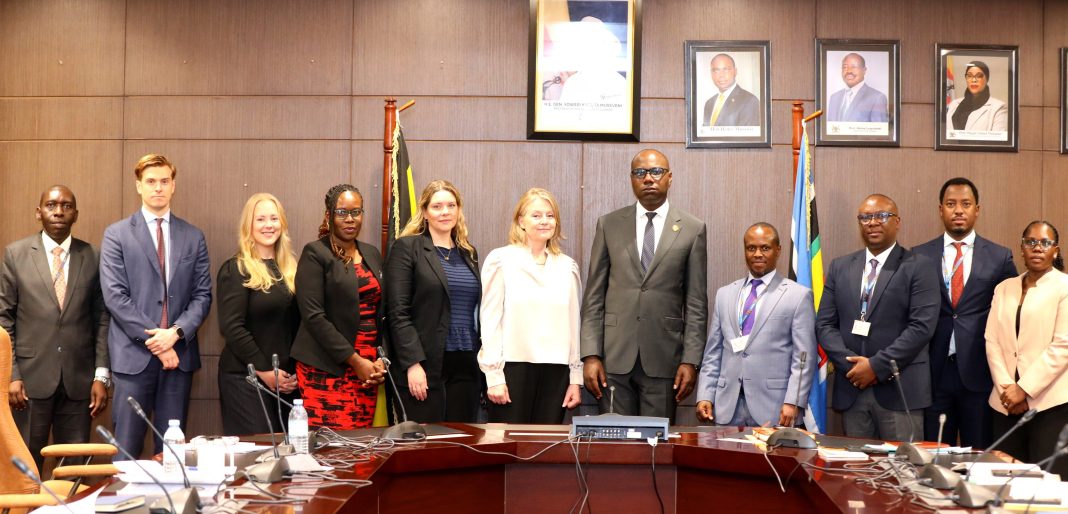
The commitment was announced by Iceland’s Head of Mission to Uganda, Katrín Einarsdóttir, during a meeting with Finance Minister Henry Musasizi at the Ministry of Finance, Planning and Economic Development in Kampala.
Einarsdóttir, who was accompanied by her deputy and other officials, said Iceland was resuming and expanding its cooperation with Uganda, with a focus on supporting communities and future generations through investments in education and other basic services.
She said proper financial oversight and the quality of programmes implemented under the partnership would remain important to ensure accountability to Icelandic taxpayers.

“The clarity of financial oversight and the quality of the programmes to be implemented are very key for purposes of being accountable to the taxpayers in Iceland,” she said.
Musasizi welcomed the renewed cooperation and thanked the Icelandic Government for its previous support to Uganda, particularly in Kalangala, Buikwe and Namayingo districts.
Iceland and Uganda have cooperated in development programmes since 2000, with the partnership initially focusing on fisheries before expanding into education, water and sanitation. Iceland’s previous work in Kalangala included construction and improvement of school infrastructure, teacher training, learning materials and sanitation facilities.
Namayingo has also been one of the main beneficiaries of Icelandic development assistance, with projects targeting fishing communities through improvements in education, clean water, sanitation and the capacity of local government authorities.
In Kwania and Amolatar, Iceland has already supported education programmes. In June, Amolatar received instructional materials under the Iceland-funded UCatchUp programme, while the programme has also been implemented in Kwania to improve literacy and numeracy among primary school learners.
The new funding is therefore expected to build on the existing interventions, particularly in districts where inadequate school infrastructure, water and sanitation facilities continue to affect access to quality public services.
Musasizi said Uganda had clearly defined its economic ambitions under the Tenfold Growth Strategy and urged Iceland to support sectors that government considers central to the country’s transformation.
“We want you to attract foreign direct investments and tourists, support value addition and innovations. Promote Uganda as the best investment destination,” Musasizi said.
Uganda’s Tenfold Growth Strategy seeks to expand the economy from about USD50 billion to USD500 billion by 2040 and is anchored on agro-industrialisation, tourism, mineral-based industrialisation and science, technology and innovation, collectively known as ATMS.
The Government has also identified foreign direct investment, value addition, technology, tourism and export growth as key areas for driving the transformation agenda under the Fourth National Development Plan.
Musasizi said Uganda was therefore open to partnerships that could contribute to investment, tourism, innovation and value addition while also improving the quality of life of citizens through targeted development programmes.
The Icelandic mission said the renewed partnership would continue to place emphasis on programmes that deliver measurable benefits to communities while ensuring that public funds are properly managed and projects meet the required standards.