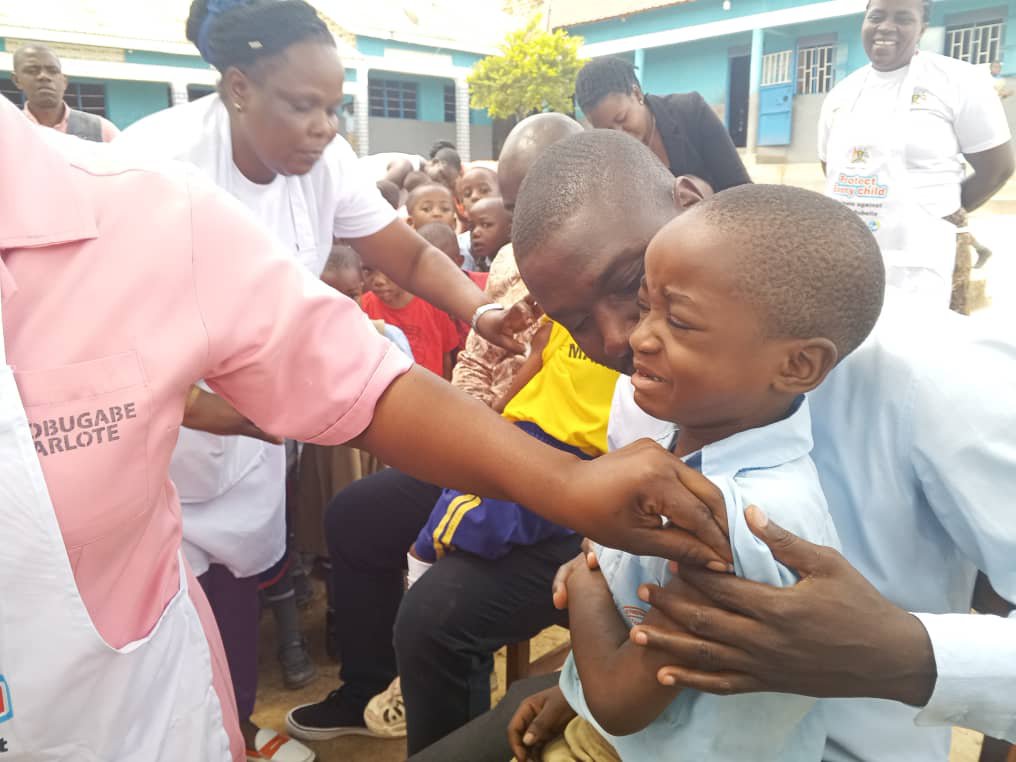
Uganda has vaccinated 8,285,835 children against measles and rubella in a nationwide five-day campaign aimed at closing immunity gaps and preventing further outbreaks of the highly infectious diseases.
The campaign, which ran from October 1 to 5, 2026, targeted children aged nine to 59 months across the country, regardless of whether they had previously received a measles-rubella vaccine.

The Ministry of Health conducted the exercise with support from health workers, community leaders, development and implementing partners as the country sought to reach children who had missed routine vaccination services.
The campaign came amid continued concern over recurring measles outbreaks in Uganda. The World Health Organisation (WHO) says Uganda recorded 66 separate measles outbreaks in 2025, with the disease affecting children who had never received a measles vaccine most severely.
Health authorities say the outbreaks exposed persistent gaps in routine immunisation coverage, particularly among children who were missed by health services during and after the Covid-19 pandemic.

Uganda introduced the combined measles-rubella vaccine into its routine immunisation programme in October 2019 and introduced a second dose in October 2022. However, WHO estimates that about three million children missed their second dose during and after the pandemic, leaving pockets of children without adequate protection.
WHO says Uganda has one of the stronger-performing immunisation programmes in the African region and protects children against 14 vaccine-preventable diseases. However, maintaining the approximately 95 per cent coverage required to prevent sustained measles transmission remains a challenge.
At the launch of the campaign, Health Minister Dr Chris Baryomunsi said the exercise was intended to ensure that children who had been missed by routine services were brought back into the vaccination system.
“This vaccination campaign is about ensuring that our children survive, grow into adulthood and live healthy lives. Together, we can protect Uganda’s children from measles and rubella,” Baryomunsi said.
The Ministry had also urged parents and caregivers to present all eligible children for vaccination even when they had previously received a measles-rubella dose, because the campaign was designed to close immunity gaps across the population.
The Director General Health Services, Prof Charles Olaro, earlier warned that measles can spread rapidly and cause serious complications, including pneumonia, blindness, brain damage and, in severe cases, death.
The need for the campaign was underscored by findings from Uganda’s recent measles response. In Karamoja, a WHO review of measles deaths in Moroto and Napak found that 92 per cent of the children who died had never received a measles vaccine.
Measles is among the world’s most contagious viral diseases and can cause severe complications, including pneumonia, encephalitis and death, particularly among children who are unvaccinated or inadequately protected.
Rubella is generally mild in children, but infection during pregnancy can have devastating consequences for unborn babies, including miscarriage, stillbirth and congenital rubella syndrome, which can cause serious birth defects.
The Ministry of Health has now reminded parents that the end of the five-day mass campaign does not mean vaccination services have stopped.
“Routine immunisation continues,” the Ministry said, urging parents and caregivers to take children to the nearest health facility whenever they are due for vaccines.
Health authorities say routine immunisation will remain critical to sustaining the gains made during the campaign and preventing the return and spread of measles and rubella.
The campaign also formed part of a wider effort by the Ministry of Health and its partners to identify children who have missed routine vaccination opportunities and strengthen community-level immunisation services.
With more than 8.2 million children reached in five days, health officials are now expected to focus on ensuring that children continue receiving their scheduled vaccine doses rather than relying solely on periodic mass campaigns.
WHO has stressed that reaching every child with routine vaccination is essential to closing immunity gaps and preventing measles outbreaks from recurring across Uganda.