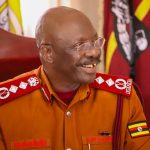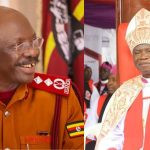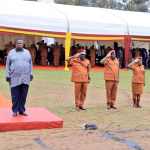
The Commissioner General of Prisons, Johnson Byabashaija has spent more than four decades (44 years) rising through the ranks of the Prisons Service, overseeing an institution whose work extends beyond keeping offenders behind bars to agriculture, manufacturing, skills training and rehabilitation. Away from his public office, he is mobilising Christians in North Kigezi Diocese to support the completion of Emmanuel Cathedral Kinyasano and other church development projects.
Byabashaija’s career, which began in 1982, has placed him at the centre of efforts to strengthen Uganda Prisons Service while expanding its contribution to local production and national development. His election as Head of Laity of North Kigezi Diocese in March 2026 added another responsibility to a career that has spanned public administration, institutional leadership and church service.

His story brings together two institutions with different mandates but a shared need for discipline, organisation, accountability and long-term planning.
Byabashaija joined Uganda Prisons Service as a Cadet Assistant Superintendent of Prisons after studying veterinary medicine at Makerere University. His first posting was Kigo Prison, where he became involved in managing the prison hatchery before rising to become officer in charge of the facility.
He subsequently served in several positions, including Assistant Commissioner, Senior Assistant Commissioner, and Deputy Commissioner General, before becoming Commissioner General of Prisons in 2005, succeeding Joseph A.A. Etima.

His appointment placed him in charge of an institution responsible for the safe custody of prisoners, the supervision of prison officers, the maintenance of security and the rehabilitation of offenders.,
Under his leadership, prison agriculture, manufacturing and vocational training have remained important components of the service’s work, linking correctional activities to government priorities on food security, industrialisation and the Buy Uganda Build Uganda policy.
President Yoweri Museveni has previously commended Byabashaija and the Prisons Service for their contribution to the country’s security and institutional development.
“I want to thank the Commissioner General and his staff for contributing to the peace of Uganda by building the prison service from the low level of where it was to what it is now,” Museveni said during remarks at a prison officers’ training graduation ceremony.
The President has also outlined four responsibilities for prisons: reforming offenders, equipping them with skills, administering lawful punishment and contributing to wealth creation.
The position reflects the government’s expectation that prisons should not only confine people convicted of offences but also prepare them for a more productive life after release.
Museveni’s emphasis on wealth creation has particular relevance to prison farms and industries, which provide food, raw materials, and manufactured goods while offering prisoners opportunities to acquire practical skills.
Agriculture is among the most visible productive activities undertaken by the Uganda Prisons Service. The institution operates farms that produce food for internal consumption and participate in wider agricultural programmes, including cotton, maize, sunflower, and seed production, alongside livestock management. Dr Byabashaija has further overseen the growth of coffee on 150 acres at Lututuru prison in Lamwo District.
The farms serve an institutional purpose by contributing to food supplies while providing opportunities for prisoners to gain practical experience in agriculture.
The service has also pursued measures to improve productivity through better farming practices, mechanisation and more effective management of agricultural land.
At a strategic and policy guidance workshop at Uganda Prison Farm Rwimi, prison farm managers and other officers discussed ways to increase agricultural output through improved farming practices, seed multiplication, cotton production, and livestock management.
Production targets discussed during the initiative included 700 kilogrammes of cotton per acre and 100 kilogrammes of maize grain per acre. These were targets rather than verified nationwide production results, but they illustrated the emphasis on measurable agricultural performance.
Mechanisation has also featured in efforts to improve production. The service has acquired agricultural equipment, including tractors, planters and sprayers, to improve efficiency and reduce reliance on rudimentary farming methods. Byabashaija has previously highlighted the need for more tractors to enable prison farms to cultivate larger areas.
One of the most ambitious agricultural initiatives associated with the service was the establishment of a large cotton farm at Orom-Tikao in Kitgum District in 2019.
The project covered approximately 7,200 acres and was intended to support cotton production and the revival of Uganda’s textile industry. At the time, Byabashaija said 430 male convicted prisoners formed a major part of the farm’s labour force.
The project demonstrated how prison land and agricultural activities could be linked to a national industrial strategy, particularly where locally grown cotton supplies domestic textile manufacturers.
Prison agriculture has also extended to sunflower production. During a working tour of Uganda Prison Farm Odina in Soroti District, Byabashaija inspected a sunflower plantation established under a government food security intervention associated with President Museveni’s directive through the Ministry of Agriculture, Animal Industry and Fisheries.
The service reported that Byabashaija commended officers for their work on the farm and emphasised discipline, hard work, and professionalism.
He also reminded officers of their responsibility to respect human rights and ensure the safe and humane treatment of prisoners, warning against torture and other misconduct.
These responsibilities remain central to the service’s mandate. Agricultural output and industrial production cannot be the only measures of performance; the institution must also protect prisoners’ rights, maintain lawful discipline, and provide conditions that support rehabilitation.
Byabashaija’s agricultural agenda is also connected to the government’s Buy Uganda Build Uganda policy, which promotes domestic production and the use of locally manufactured goods.
A major example is the relationship between the Uganda Prisons Service and Nyanza Textile Industries Limited (NYTIL).
In May 2024, Byabashaija visited a textile manufacturer in Jinja City to assess its production capacity and product quality.
The relationship links cotton production to local textile manufacturing, with the resulting materials used in making uniforms for prison officers and prisoners.
This arrangement offers a practical example of how public institutions can support domestic industry through procurement and supply relationships instead of relying entirely on imported products.
The partnership can create demand for locally grown cotton, support domestic manufacturing, and reduce dependence on imported textiles where local alternatives meet the required standards.
Byabashaija commended the quality of NYTIL’s materials and indicated that the service intended to procure more materials and leather products.
Furniture production is another area in which the Uganda Prisons Service contributes to domestic manufacturing.
The service has developed production activities that supply furniture and other goods, including items required by public institutions. Museveni has directed government ministries, departments, and agencies to procure furniture manufactured by the Uganda Prisons Service, according to an account published by the service.
The directive provides a potential market for prison industries while supporting the wider BUBU agenda.
For prisoners, participation in carpentry and other production activities can provide practical experience and skills that may be useful after release. For government institutions, purchasing locally manufactured goods offers an opportunity to support domestic production.
The long-term success of these initiatives, however, depends on competitive quality, reliable supply, transparent procurement and sound financial management. It also requires clear evidence of the economic value generated and the rehabilitation benefits delivered.
Beyond agriculture and manufacturing, rehabilitation remains a central responsibility of the Uganda Prisons Service.
The institution’s mandate includes safe custody, humane treatment, rehabilitation and reintegration. Education, vocational training, counselling, and productive activities can help prisoners prepare for life outside prison, although their effectiveness depends on the quality of training and the opportunities available after release.
Agriculture, carpentry and other trades can provide useful experience, but meaningful rehabilitation requires more than assigning prisoners productive work. It also requires skills that can be applied outside prison, support for reintegration and cooperation with families, employers and communities.
The service continues to face challenges associated with congestion, the cost of maintaining prisoners and the resources required to provide adequate facilities and rehabilitation programmes.
Dr Byabashaija has previously raised concerns about overcrowding and its implications for prison management, including the risk of disease transmission. He has also called for faster implementation of parole for qualifying convicts who meet the applicable legal requirements.
Parole can help eligible prisoners transition back into society under supervision, while contributing to efforts to manage congestion. Its effectiveness depends on appropriate assessments, legal safeguards and monitoring arrangements.
The service’s achievements must therefore be assessed against several responsibilities: security, humane custody, rehabilitation, reintegration, staff welfare and the effective use of public resources.
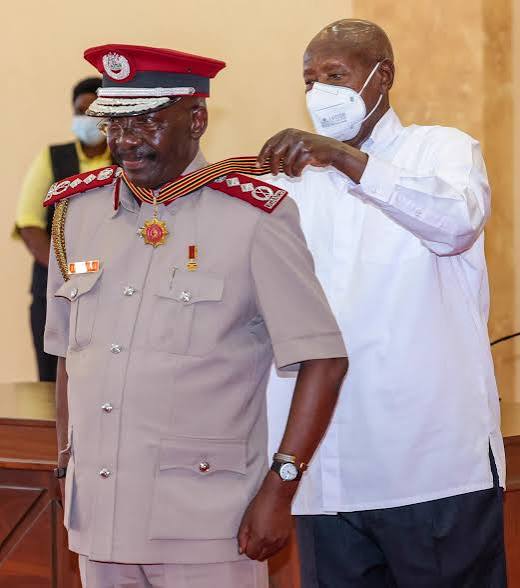
Byabashaija’s long service was recognised during Uganda’s 64th Independence Day celebrations in October 2026, when he received the Uganda Prisons Service Exemplary Service Medal, Class I.
The award recognised more than four decades of service and his contribution to the institution’s development.
His career has taken him from operational duties at Kigo Prison through successive administrative positions to the office of Commissioner General, where he has been responsible for the direction of a national correctional institution.
His leadership has coincided with efforts to strengthen prison administration, staff training, security, rehabilitation and productive activities.
The wider test of his legacy will depend on the institution’s lasting results, including improvements in prison conditions, the effectiveness of rehabilitation, the contribution of prison industries and the welfare of officers and prisoners.
Away from his public service responsibilities, Byabashaija has taken on a prominent leadership role in the Church of Uganda through North Kigezi Diocese.
On March 21, 2026, he was elected Head of Laity during the diocese’s 22nd Synod at Emmanuel Cathedral Kinyasano, succeeding Abel Turyabe Matiita.
He became the third person to occupy the position since Kinkiizi Diocese was carved out of North Kigezi in 1996.
His election placed him in a senior lay leadership role at a time when the diocese was pursuing major church construction, education and institutional development projects.
North Kigezi Diocese is led by Bishop Onesimus Asiimwe, who was elected in January 2023 and consecrated and enthroned on March 12 of that year.
The bishop’s priorities have included completing Emmanuel Cathedral Kinyasano, strengthening education, promoting reconciliation and building the diocese’s economic foundation.
Byabashaija’s role is to help mobilise lay Christians and connect members of the diocese, including those living in Kampala, to these priorities.
In January 2025, he was appointed chairman of the North Kigezi Diocese Kampala Fellowship, which brings together Christians from the diocese living in the capital and seeks to maintain their connection to development projects in their home communities.
His involvement in the fellowship provided a platform for mobilising support for the diocese before his election as Head of Laity.
The completion of Emmanuel Cathedral Kinyasano remains one of the diocese’s most prominent development priorities.
The project was initiated in 2019 under the late Bishop Benon Magezi, who envisioned a cathedral capable of serving the diocese’s spiritual and institutional growth.
The first fundraising campaign reportedly raised more than Shs400 million, while the overall project was estimated at Shs5 billion. By the time Magezi died in June 2021, approximately Shs2 billion had been invested in the project.
His death created uncertainty during an important stage of construction, but the cathedral remained a shared responsibility of the diocesan community.
When Asiimwe assumed leadership in 2023, he inherited the unfinished project alongside the challenge of sustaining the support needed to complete it.
The bishop continued to place the cathedral among his priorities, alongside evangelism, education, reconciliation and the strengthening of the diocese’s economic base.
During celebrations marking his third anniversary as bishop in March 2026, more than Shs200 million and 300 bags of cement were reportedly raised towards the cathedral.
The contributions demonstrated continued support for the project, although the latest construction cost and outstanding balance require confirmation from the diocese.
For Byabashaija, the task is to help sustain that momentum by mobilising Christians and encouraging continued participation in a project that has passed through different phases of diocesan leadership.
The cathedral is intended to serve as a central place of worship and a lasting institution for the diocese. Its completion would represent the combined efforts of successive bishops, clergy, lay leaders, and Christians who have contributed resources over several years.
North Kigezi Diocese’s responsibilities also extend to education and the development of its wider network of church institutions.
The diocese oversees 96 grant-aided primary schools, 17 secondary schools, and three tertiary institutions, according to previous reporting by Eagle Online.
Maintaining this network requires investment in facilities, teaching, administration and student welfare, as well as cooperation with parents, former students, communities and church members.
Kinyasano Girls High School illustrates the importance of these efforts. The school experienced periods of declining enrolment and academic performance that raised concerns among former students and church leaders.
In May 2026, the school finished second among 19 schools in the North Kigezi diocesan pre-mock examinations, offering an encouraging sign of academic progress.
The diocese has also continued youth conferences, Bible study programmes, discipleship activities and other initiatives intended to strengthen the relationship between education and Christian formation.
At its March 2026 synod, three churches were elevated to parish status, bringing the reported total to 87 parishes, 14 archdeaconries and 214 sub-parishes.
The expansion reflects the scale of the diocese’s responsibilities and the need for coordination between the bishop’s office, clergy, lay leaders and congregations.
Byabashaija’s position as Head of Laity places him within this wider effort to mobilise Christians around church development and strengthen participation in the life of the diocese.
His involvement has extended to church activities beyond North Kigezi. In July 2025, he served as Chief Runner during the Church of Uganda Provincial Do Good Run at Mengo Senior School, helping mobilise more than 400 Uganda Prisons officers to participate alongside other Christians.
The event raised more than Shs50 million in cash and pledges towards the construction of a Mothers’ Union hostel.
The initiative demonstrated how organised participation could bring together people from different institutions to support church development.
It also illustrated Byabashaija’s involvement in mobilisation efforts, although the projects themselves depend on collective contributions from church members, institutions and other supporters.
North Kigezi Diocese Kampala Fellowship has scheduled a thanksgiving and fundraising service for November 1, 2026, at Kololo Independence Grounds in Kampala.
The service is intended to celebrate Byabashaija’s years of public service while raising support for the completion of Emmanuel Cathedral Kinyasano.
President Museveni is expected to attend as guest of honour, according to earlier reporting by Eagle Online.
The event brings together the two principal dimensions of Byabashaija’s public life: his decades in Uganda Prisons Service and his leadership within North Kigezi Diocese.
It also provides the diocese with an opportunity to mobilise Christians and well-wishers behind the cathedral project.
The fundraising forms part of a longer process rather than a single event expected to resolve every construction requirement. The cathedral began under one bishop, continued through a leadership transition and now depends on the combined efforts of the current diocesan leadership and its supporters.
The amount raised at the event, any new pledges and the remaining cost of construction will be important measures of its practical outcome.
Byabashaija’s career presents two distinct forms of institutional responsibility. At Uganda Prisons Service, his work involves security, administration, rehabilitation, staff welfare and productive activities intended to support institutional operations and national development. At North Kigezi Diocese, he is helping mobilise lay Christians, support the bishop’s development agenda and encourage participation in projects intended to serve the church community.
Neither responsibility can be measured by titles alone. Prison production must deliver value while respecting prisoners’ rights and supporting rehabilitation. Church fundraising must translate contributions into completed projects, stronger schools and effective institutions.
After more than four decades in public service, Byabashaija’s continuing challenge is to ensure that the institutions he leads and supports produce lasting results beyond the tenure of any one individual.
For Uganda Prisons Service, that means combining security with humane custody, rehabilitation and productive work. For North Kigezi Diocese, it means sustaining the unity and resources needed to complete Emmanuel Cathedral Kinyasano and strengthen the wider church network.
Together, these responsibilities offer a picture of a public servant whose career has extended from prison administration into church leadership, with both institutions now looking to turn long-standing ambitions into tangible results.