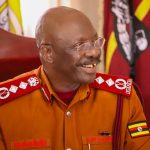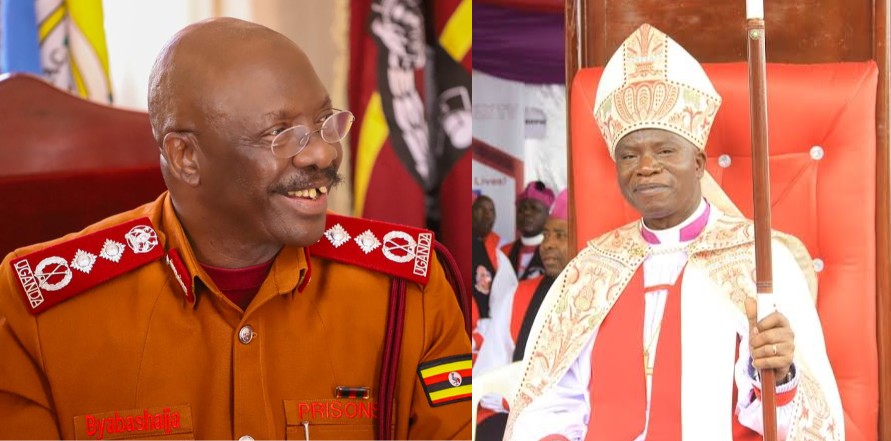
For many years Canon Dr Johnson Omuhunde Rwashote Byabashaija has been known principally for his long public service in the Uganda Prisons Service, where he rose from a cadet officer to become Commissioner General of Prisons.
However, his huge responsibilities in the Church of Uganda, particularly in North Kigezi Diocese, are giving another dimension to his public life as he increasingly becomes a key figure in mobilisation, fundraising and the organisation of the laity.

His election as Head of Laity in March 2026 came at a defining moment for the diocese. North Kigezi is pursuing an ambitious programme that includes completing Emmanuel Cathedral Kinyasano, strengthening its schools, expanding parish structures and restoring greater participation among Christians.
The story unfolding in North Kigezi is therefore not simply about one man. It is about how the leadership of Bishop Onesimus Asiimwe and Byabashaija has begun to complement each other, with one providing pastoral direction and the other strengthening lay mobilisation behind the diocese’s priorities.
Byabashaija was elected Head of Laity on March 21, 2026, during the 22nd Diocesan Synod at Emmanuel Cathedral Kinyasano. He became only the third person to hold the office since Kinkiizi Diocese was carved out of North Kigezi in 1996, succeeding Abel Turyabe Matiita.

The same synod reflected a diocese that continues to expand despite its challenges. Three churches were elevated to parish status, increasing North Kigezi to 87 parishes, 14 archdeaconries and 214 sub parishes.
His election did not come unexpectedly. In January 2025, Byabashaija had already been appointed chairman of the North Kigezi Diocese Kampala Fellowship, placing him at the centre of efforts to organise Christians from the diocese living in Kampala and reconnect them with development projects back home.
That responsibility has become increasingly important because many of the diocese’s major projects depend on support from Christians living beyond Rukungiri. The Kampala Fellowship has consequently become a bridge between North Kigezi’s growing urban community and the institutions they continue to support in their home area.
Dr Byabashaija’s church work has increasingly reflected the organisational discipline that characterised his public career. Rather than limiting himself to ceremonial appearances, he has embraced mobilisation as a practical responsibility that brings together people, institutions and resources.
That approach became evident during the Church of Uganda Provincial Do Good Run held at Mengo Senior School in July 2025. Serving as Chief Runner, Byabashaija helped mobilise more than 400 Uganda Prisons officers to participate alongside other Christians, and the event raised more than Shs50 million in cash and pledges towards constructing a Mothers’ Union hostel.
The significance of that event went beyond the money collected. It demonstrated the kind of role Byabashaija has increasingly played within church circles by creating confidence around projects that depend on collective participation rather than individual contributions.
His biggest responsibility within North Kigezi, however, now revolves around Emmanuel Cathedral Kinyasano.
The cathedral project predates both Byabashaija’s election as Head of Laity and Bishop Asiimwe’s episcopacy. It was initiated in 2019 under the late Bishop Benon Magezi, whose vision was to provide North Kigezi with a cathedral capable of serving both its spiritual and institutional growth.
The first fundraising campaign reportedly raised more than Shs400 million, while the overall project was estimated at Shs5 billion. By the time Magezi died in June 2021, approximately Shs2 billion had already been invested in the project.
Magezi’s death created uncertainty at a particularly important stage of construction. Yet the project survived because it had already become larger than the vision of one bishop and had evolved into a responsibility shared by the wider diocesan community.
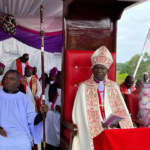
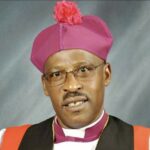
When Bishop Onesimus Asiimwe was elected in January 2023 and consecrated and enthroned at Emmanuel Cathedral Kinyasano on March 12 that year, he inherited not only an unfinished building but also the responsibility of maintaining confidence in one of the diocese’s defining development projects.
From the beginning of his episcopacy, Asiimwe made it clear that completing the cathedral would remain among his priorities. Alongside evangelism, education, reconciliation, and strengthening the diocese’s economic base, he consistently placed the cathedral at the heart of his development agenda.
His approach has been marked by continuity rather than replacement. Instead of abandoning projects associated with his predecessor, he has repeatedly challenged Christians to continue investing in them until they are completed.
The response has shown that the momentum has continued. During celebrations marking his third anniversary as bishop in March 2026, more than Shs200 million was raised for the cathedral, together with 300 bags of cement.
Archbishop Stephen Kaziimba, who presided over the celebrations, praised Asiimwe for maintaining continuity and urged church leaders to complete projects started by their predecessors rather than abandoning them midway.
The cathedral’s fundraising history therefore tells a broader story. It began with Magezi’s vision, continued through a difficult leadership transition and now rests on the combined efforts of clergy, lay leaders and thousands of ordinary Christians.
Publicly reported fundraising efforts since 2019 have generated hundreds of millions of shillings towards construction, although different campaigns have been organised by different groups over several years. The available evidence therefore points to a sustained diocesan effort rather than attributing every contribution to one individual.
For Byabashaija, his new role has become increasingly significant because he now carries formal responsibility for mobilising the laity behind that shared vision.
The North Kigezi Diocese Kampala Fellowship’s thanksgiving and fundraising service scheduled for November 1, 2026, at Kololo Independence Grounds will therefore serve two purposes. It will celebrate his long public service while rallying Christians behind another major push towards completing Emmanuel Cathedral Kinyasano, with President Yoweri Kaguta Museveni expected to attend as guest of honour.
If the cathedral represents North Kigezi’s most visible construction project, education represents one of its biggest institutional responsibilities.
The diocese oversees an extensive education network comprising 96 grant-aided primary schools, 17 secondary schools, and 3 tertiary institutions, including some of the Church of Uganda’s most recognisable schools in western Uganda.
Maintaining such a network requires far more than infrastructure. It demands leadership, parental confidence, student participation and a renewed sense of ownership among Christians.
Kinyasano Girls High School illustrates the challenge better than many other institutions. Once regarded as one of the region’s respected girls’ schools, it experienced periods of declining enrolment and academic performance that prompted concern among former students and church leaders alike.
Rather than treating those difficulties as permanent decline, the diocese under Asiimwe has increasingly placed education back at the centre of its priorities.
His involvement has gone beyond ceremonial visits. He has continued engaging students directly, encouraging academic excellence and ensuring that schools remain part of the church’s wider mission rather than existing as isolated institutions.
Signs of renewed progress have begun to emerge. In May 2026, Kinyasano Girls finished second among 19 schools in the North Kigezi diocesan pre-mock examinations, while the school has continued to host youth conferences, Bible study programmes, and discipleship activities that reconnect education with Christian formation.
Understanding Asiimwe’s leadership requires looking back at his years at Makerere University, where he served as Chaplain of St. Francis Chapel between 2017 and 2023. Before that, he had served as Provincial Youth and Students Coordinator within the Church of Uganda.
Those years shaped a ministry built around discipleship, prayer, youth engagement and active participation rather than passive attendance.
Many who encountered his ministry at Makerere recall a period in which student participation became increasingly vibrant through cell groups, Alpha courses and youth centred programmes that encouraged students to become active participants in church life.
His leadership echoed earlier periods when St Francis Chapel experienced similar renewal under respected chaplains such as Canon Benon Munanura, whose ministry likewise inspired strong student involvement.
That emphasis on participation would later become one of Asiimwe’s defining characteristics as bishop.
When he assumed leadership of North Kigezi, he carried that same philosophy with him. His ministry has continued investing in young people, women, students and parish life while simultaneously pursuing physical development projects.
In May 2026, he opened the third annual North Kigezi Diocese Women’s Conference at Kinyasano Girls High School, urging women to remain united in Christ and participate actively in the life of the church.
Youth conferences, prayer gatherings and discipleship programmes have similarly become regular features of the diocesan calendar, reflecting a leadership style that views spiritual renewal as inseparable from institutional renewal.
His ministry has also extended into broader community healing. North Kigezi has historically experienced political and social divisions that sometimes affected church life, yet many within the diocese credit Asiimwe with encouraging reconciliation across political and community lines.
Rather than allowing differences to define Christian fellowship, he has consistently challenged believers to place faith above political and personal divisions, an approach that has strengthened confidence in the church’s role as a unifying institution.
Smaller development projects also illustrate the wider philosophy guiding the diocese. In September 2026, Asiimwe commissioned a two stance lined VIP latrine with two urinals at the residence of the diocesan WATSAN coordinator at a cost of Shs16.97 million.
On its own, such a project may appear modest beside a multi-billion-shilling cathedral, but it demonstrates an important principle. Sustainable church development is built not only through landmark buildings but also through practical investments that improve everyday ministry.
This is ultimately where the partnership between Byabashaija and Asiimwe becomes most meaningful.
One provides episcopal leadership and pastoral direction. The other now carries the formal responsibility of mobilising the laity behind that vision, connecting Christians across North Kigezi and Kampala to the work required to strengthen their institutions.
Their partnership should therefore not be viewed as an arrangement built around personalities. It is a partnership between two complementary offices whose effectiveness will ultimately be measured by stronger institutions rather than louder celebrations.
North Kigezi does not lack churches, schools, vocational centres or a growing Christian population. The greater challenge has always been sustaining participation, rebuilding confidence and ensuring that every generation feels responsible for preserving what previous generations built.
That is why Byabashaija’s growing role within the Church of Uganda deserves attention. His decades of public service have equipped him with organisational experience that now finds expression in church mobilisation, while Asiimwe continues building on the foundations of discipleship, education and institutional renewal that defined both his Makerere years and his episcopacy.
The forthcoming Kololo fundraising will undoubtedly become another important milestone in the cathedral’s long journey. Yet the bigger story stretches beyond one event.
It is about whether North Kigezi can continue transforming years of fundraising, leadership transitions and community effort into a completed cathedral, revitalised schools and stronger church institutions that will serve generations yet to come.
If that continuity is maintained, the legacy of Bishop Benon Magezi’s cathedral vision, Bishop Onesimus Asiimwe’s emphasis on spiritual and institutional renewal, and Byabashaija’s mobilisation of the laity will ultimately become part of the same story.
It will be the story of a diocese choosing to strengthen its future by preserving and rebuilding the institutions that have long defined its identity.