
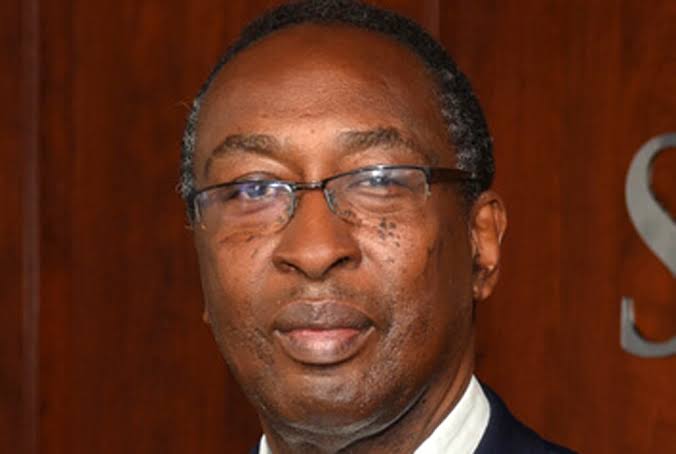
The High Court has dismissed an application by prominent lawyer Alan Shonubi seeking to overturn orders attaching a bank account belonging to his law firm, SM & Co Advocates, in a dispute over Shs100 million paid in a failed land transaction.
Justice Farouq Lubega rejected Shonubi’s application against Sal Oil Limited, ruling that he had failed to establish sufficient grounds to set aside the garnishee orders issued to facilitate recovery of the money.

The dispute stems from a land sale agreement signed on September 12, 2019, under which four sellers agreed to sell land along Pallisa Road in Mbale to Sal Oil for Shs350 million.
Shonubi represented the sellers in the transaction and held their powers of attorney. Sal Oil subsequently deposited Shs100 million into a Stanbic Bank account registered in the name of SM & Co Advocates.
Hassan Hashim, a director of Sal Oil, said the money was deposited under an escrow arrangement, meaning it was supposed to remain secured until the parties fulfilled their obligations under the agreement.

However, the transaction collapsed, prompting Sal Oil to sue the four sellers. On August 15, 2025, the court ordered the sellers to refund the money, but they failed to comply with the judgment.
Sal Oil subsequently returned to court in 2026 seeking to recover the money through garnishee proceedings against Shonubi and Stanbic Bank Uganda.
A garnishee order allows a judgment creditor to recover money owed to a judgment debtor by a third party, or funds held by that third party on the debtor’s behalf.
Sal Oil argued that although the account was registered in the law firm’s name, it held money connected to the disputed land transaction and should therefore be available for recovery.
The matter took another turn when Stanbic Bank informed the court that the account no longer held the original Shs100 million. According to Hashim, only about Shs5 million remained, raising questions about what had happened to the balance.
On July 7, 2026, the deputy registrar made the garnishee order absolute, directing the attachment of the account. The registrar also ordered Stanbic Bank to provide specimen signatures, signature cards and withdrawal records to help establish who had operated the account and withdrawn the money.
Shonubi challenged the orders before Justice Lubega, arguing that the deputy registrar had acted outside the law and that the proceedings had violated the mandatory seven day notice period under the Civil Procedure Rules.
His lawyers argued that money belonging to a law firm could not be attached to satisfy a judgment against other parties unless it was established that the firm owed those parties money.
They further contended that garnishee proceedings could not create a new debt or extend liability beyond what had been determined in the original judgment.
Shonubi also challenged the order requiring the bank to disclose signatures and withdrawal records, arguing that Sal Oil had not specifically sought those documents in its original application.
Sal Oil, represented by Palm Advocates, opposed the application, maintaining that Shonubi had held the money as an escrow agent and that the funds were not his personal property.
The company argued that the money had been deposited under the land sale agreement and was supposed to remain in the account until the agreed conditions were met.
Its lawyers also relied on an earlier decision involving Muwema & Co Advocates and Bank of Uganda, arguing that money held by an advocate on behalf of a client could be attached where it constituted a debt owed to a judgment debtor.
In his ruling, Justice Lubega rejected Shonubi’s objection concerning the seven day notice period, noting that the issue had already been raised before the deputy registrar.
The judge observed that the matter had initially been scheduled for hearing on June 26, when Shonubi’s lawyers objected that the required notice period had not expired. Sal Oil’s lawyers conceded the objection, and the hearing was adjourned.
However, the deputy registrar subsequently rejected the objection in the ruling delivered on July 7.
Justice Lubega held that bringing the same issue before the High Court again amounted to an abuse of court process.
The judge also noted that Shonubi had not disputed his liability as garnishee before the deputy registrar, with his earlier objection limited to the notice period.
Justice Lubega further confirmed that the Shs100 million had been deposited into an account held in the law firm’s name and that Shonubi had acted as an agent for the sellers in the transaction.
The judge upheld the attachment order, finding that the money had been deposited into the account as part of the transaction and was held in the applicant’s name.
He also upheld the order requiring Stanbic Bank to provide the signatures and withdrawal records, reasoning that the deputy registrar had the authority to issue orders necessary to enforce court judgments.
Shonubi had additionally sought a stay of execution to temporarily halt enforcement of the orders, but the judge rejected the request after finding that he had not demonstrated sufficient grounds.
In his final order, Justice Lubega dismissed the application and awarded costs to Sal Oil.
“[Dr Shonubi] has failed to establish any justifiable grounds to warrant the remedies sought; therefore, this application is dismissed with costs to [Sal Oil],” the judge ruled.
The decision leaves the garnishee orders in place as Sal Oil pursues recovery of the money arising from the failed land transaction.