
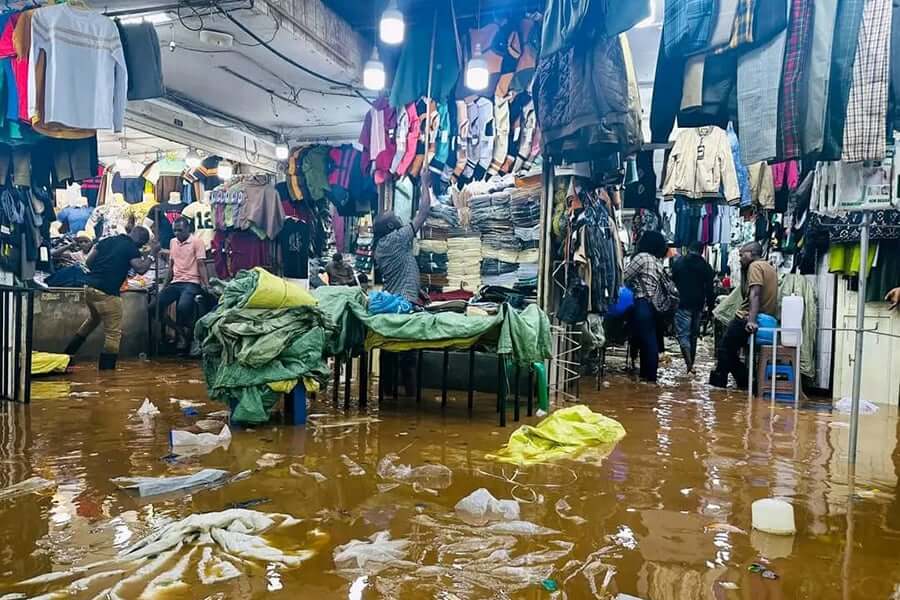
The government has approved Shs18.9995 billion in compassionate compensation for 1,841 traders whose businesses were affected by the devastating floods that hit Kampala on October 30 and 31, 2025, as the cabinet identified blocked drainage channels, interference by property developers, and poor waste disposal among the major causes of the disaster.
The compensation, approved during the 16th cabinet meeting held on Monday, November 9, 2026, is intended to provide financial relief to verified traders who lost merchandise and suffered business disruptions when heavy rainfall triggered flash floods in Kampala’s Central Business District.

The affected traders operated in 13 arcades and St Balikuddembe Market, commonly known as Owino Market, which were among the areas hit by the floods.
Justine Kasule Lumumba, the Minister of ICT and National Guidance, announced the decision in a statement issued on Tuesday, November 10, 2026, saying cabinet had approved the money as compassionate ex-gratia assistance.
“Cabinet approved Shs18,999,500,000/= in compassionate ex-gratia assistance for 1,841 verified traders affected by the Kampala floods on October 30-31, 2025,” Kasule Lumumba said.

She explained that ex gratia assistance is a payment made out of goodwill to support people affected by an incident without the government admitting a legal obligation to pay.
The affected business premises include Nana Arcade, Totala Building, Capital Centre, Pentagon Plaza, French Plaza, Premier Arcade, Qualicel Mall, Freedom Centre, Nabukeera Plaza, Ssekaziga Arcade, Jesco Centre, Jamboole Arcade and Tuba Plaza, alongside Owino Market.
The additional financial intervention will see the government provide Shs1.0005 billion to the Federation of Uganda Traders Associations (FUTA), bringing the total allocation for trader-related assistance to Shs20 billion.
Of the additional money, Shs682.5 million will cover FUTA’s operational expenses, while Shs318 million will be the government’s contribution to the association’s revolving fund.
However, beyond the compensation, the cabinet has identified several human activities and infrastructure weaknesses that contributed to the flooding, warning that the problem requires interventions targeting Kampala’s drainage system and the management of construction activities around Nakivubo Channel.
According to the findings presented by the cabinet, some property developers interfered with stormwater drainage along Ssebana and Allen roads, areas adjacent to Nakivubo Channel.
The properties specifically cited include Totala, Qualicel, French Plaza, Ssekaziga, City Baza, Pentagon and Shree Indian Temple.
Cabinet established that the interference with drainage infrastructure affected the movement of stormwater, contributing to flooding in surrounding business premises and low-lying areas.
Another major finding was the blockage of drainage outlets leading into Nakivubo Channel by silt, garbage, debris and illegally constructed pavements and plinth walls.
These obstructions prevented water from flowing freely into the channel, causing it to accumulate and flood surrounding areas.
“Blockage of drainage outlets into Nakivubo Channel by silt, garbage, debris, and illegally constructed pavements and plinth walls. These obstructions caused water to back up and flood the surrounding areas,” the Cabinet statement reads.
The investigations also identified inadequate underground drainage infrastructure, with undersized culverts and drainage channels along Nabugabo Road, Allen Road, Ben Kiwanuka Road, Luwum Street and Ssebana Kizito Road contributing to the problem.
Cabinet further found that there were too few weep holes to allow underground water to drain into Nakivubo Channel, worsening water accumulation during periods of heavy rainfall.
Poor disposal of solid waste and garbage was also identified as a contributing factor, alongside poor management of construction debris by developers operating along Nakivubo Channel.
Environmental degradation and the expansion of paved surfaces were additional factors, with Cabinet noting that the increased paved areas accelerated stormwater runoff into low-lying parts of the city.
The findings point to a combination of inadequate drainage infrastructure, poor urban waste management, and construction-related interference as factors that compounded the effects of the heavy rainfall.
To address the problem, the cabinet approved strategic interventions targeting the underlying causes of flooding in Kampala’s Central Business District, with the aim of preventing or reducing the impact of similar incidents in the future.
Under the implementation arrangements, the Office of the Prime Minister will take the lead in coordinating the interventions, working alongside the Ministry of Finance, Planning and Economic Development, Ministry of Kampala Metropolitan Affairs, Kampala Capital City Authority, Ministry of Water and Environment, National Environment Management Authority, National Water and Sewerage Corporation, Ministry of Works and Transport, Internal Security Organisation, FUTA and representatives of the affected arcades.
The involvement of the different institutions is intended to coordinate action on drainage infrastructure, environmental management, waste disposal and construction activities around the affected areas.
The intervention will therefore combine financial assistance to traders with efforts to address the infrastructure and human activities that contributed to the flooding.
For the affected traders, the Shs18.9995 billion approval offers a government-backed financial intervention more than a year after the disaster destroyed merchandise and disrupted businesses in some of Kampala’s busiest commercial buildings.
However, Cabinet’s findings also place responsibility on authorities and relevant stakeholders to address drainage weaknesses, enforce proper waste disposal and prevent developments from interfering with the city’s stormwater channels.