Stanbic Bank
Stanbic Bank
17.9 C
Kampala
Stanbic Bank
Stanbic Bank
Home Blog Page 1017

#COVID19:Ruparelia Foundation donates food worth Shs75M

Ruparelia Foundation has contributed food worth Shs75 million towards #Covid-19 taskforce.


This is the third time Ruparelia Foundation donating to words the #Covid-19. Earlier the food donated food items which included posho, beans, cooking oil and soap to the needy people in Kampala and across the country.


Last week the foundation donated two new single cubins to the taskforce. The Ruparelia foundation has been at the forefront of helping the needy in the country.

Stories Continues after ad

Tullow selling its stake in Uganda

Tullow Oil

Tullow and Total E&P Uganda B.V. (Total Uganda) have signed a Sale and Purchase Agreement (SPA), with an effective date of 1 January 2020 (the Effective Date), in which Tullow has agreed to transfer its entire interests in Blocks 1, 1A, 2 and 3A in Uganda and the proposed East African Crude Oil Pipeline (EACOP) System (the Uganda Interests) to Total Uganda for cash consideration of US$575 million (the Cash Consideration) plus potential contingent payments after first oil (the Transaction). Tullow is currently the operator of Block 2.  Total Uganda is currently operator of Block 1 and Block 1A and CNOOC Uganda Limited (CNOOC) is operator of Block 3A.

The Cash Consideration consists of US$500 million payable at completion and US$75 million payable following FID of the Lake Albert Development Project.  Additional cash consideration may be received by Tullow in the form of contingent payments which will be payable on upstream revenues from the Lake Albert Development Project, depending on the average annual Brent price once production commences.

Tullow and Total have had supportive discussions with the Government of Uganda and the URA in recent weeks, including to agree the principles of the tax treatment of the Transaction.  This includes the position on Ugandan tax on capital gains, which is to be remitted by Total Uganda on behalf of Tullow Uganda, and which is expected to be US$14.6 million in respect of the Cash Consideration.  Tullow Uganda and Total Uganda now intend to sign a binding tax agreement with the Government of Uganda and the URA that reflects these principles which will enable the Transaction to complete.

CNOOC has rights of pre-emption to acquire 50% of the Uganda Interests on the same terms and conditions as Total Uganda.

The Transaction will strengthen Tullow’s balance sheet as part of its financial strategy to move to a more conservative capital structure. Tullow’s capital expenditure in respect of the Uganda Interests between the Effective Date and completion of the Transaction will be recovered through the SPA completion adjustments. The Transaction will remove all future capital expenditure associated with the Lake Albert Development Project whilst retaining exposure via contingent consideration linked to production and the oil price through the contingent cash payments described above.

Under the UK Listing Rules, this is a Class 1 transaction and is therefore conditional on approval by Tullow’s shareholders, by a simple majority of voting rights in favour. Tullow has consulted with shareholders holding approximately 27.5 % in aggregate of Tullow’s issued share capital and is pleased to report that they have indicated their support for the Transaction.

Tullow will host a conference call at 9am UK time on 23 April 2020. The dial-in details can be found at the end of this release.

Dorothy Thompson, Executive Chair, commented today:
“Tullow has been a pioneering explorer in Uganda over many years and we are very proud of the role we have played in the founding and development of Uganda’s oil industry. We wish all Ugandans and our joint venture partners well as they take this important project forward. 

“This deal is important for Tullow and forms the first step of our programme of portfolio management. It represents an excellent start towards our previously announced target of raising in excess of US$1 billion to strengthen the balance sheet and secure a more conservative capital structure. 

We have already made good progress with the Government of Uganda and the Uganda Revenue Authority in moving this Transaction forward, including by agreeing the principles on tax treatment, and we will work closely with the Government, Total and CNOOC over the coming months to reach completion as quickly as possible. We have also received strong support from our leading shareholders and look forward to receiving formal approval of this deal.” 

Background to and reasons for the Transaction

Since Tullow’s 9 December 2019 announcement, Tullow has been focused on delivering reliable production, lowering its cost base and managing its portfolio to reduce net debt and strengthen its balance sheet. The Transaction represents the first significant step in portfolio management towards raising in excess of US$1 billion of proceeds.

Completion of the Transaction will enable Tullow to realise value from the Lake Albert Development Project in Uganda, following the expiry of its previous farm-down agreement with Total and CNOOC in August 2019. Having evaluated alternatives for the project and discussed the future of the project with both of Tullow’s Joint Venture Partners and the Government of Uganda, Tullow’s Board and senior management believe the Transaction represents an attractive outcome for the Tullow group (the Group).

Summary of the terms of the Transaction

A Sale and Purchase Agreement (the SPA) with an Effective Date of 1 January 2020 has been signed in which Tullow Uganda Limited and Tullow Uganda Operations Pty Ltd. (together, Tullow Uganda) have agreed to transfer to Total Uganda for cash consideration the entirety of Tullow’s 33.3334% interests in each of the assets comprising the Lake Albert Development Project, being (i) the production sharing agreements for each of Blocks 1, 1A, 2 and 3A and the licences in Uganda and certain other contracts related thereto (the Upstream Segment) and (ii) the proposed East African Crude Oil Pipeline System (the Midstream Segment).

The SPA is based on the transfer of interests from Tullow Uganda to Total Uganda in exchange for cash at completion, deferred consideration to be paid as and when the Upstream Segment and Midstream Segment of the Lake Albert Development Project reach FID and contingent payments determined on the basis of future oil prices. The total consideration for the Transaction is structured as follows:

  • US$575 million in cash, consisting of US$500 million on completion of the Transaction and US$75 million at FID of the Upstream and Midstream Segments.
  • Contingent annual payments to be paid on upstream revenues from the Uganda Interests (reduced to 28.3334% following exercise by Uganda National Oil Company (UNOC) of its back-in rights – see below) calculated as follows: (i) no payment if the average annual Brent price is less than or equal to US$62 per barrel, (ii) 1.25% (net of tax) if the average annual Brent price is greater than US$62 per barrel or (iii) 2.5% (net of tax) if the average annual Brent price is greater than US$70 per barrel.
  • The reimbursement of joint venture costs incurred and paid by Tullow Uganda from the Effective Date to completion of the Transaction in respect of the Uganda Interests.

Use of proceeds and financial effects of the Transaction; gross assets and profits attributable to Uganda Interests

Net proceeds from the Transaction will be used to reduce net debt, strengthening Tullow’s balance sheet, reducing ongoing financing costs and moving Tullow towards a more conservative capital structure.

As previously announced, the business is now targeting capital expenditure of approximately US$300 million in 2020 (down from approximately US$350 million) and decommissioning expenditure of approximately US$65 million (down from approximately US$100 million). Once the Transaction completes, capital expenditure will reduce by a further c.US$15 million for 2020 and the exit from the Lake Albert Development Project will remove all future capital expenditure associated with the Uganda Interests.

There will be no impact on the Group’s gross profit as a result of the Transaction, with there being no gross profits attributable to the Uganda Interests for the year ended 31 December 2019.  Following completion of the Transaction, the Group’s gross assets will, before receipt of cash proceeds, reduce by US$992.2 million, being the gross asset amount of the Uganda Interests as at 31 December 2019. The financial information set out in this paragraph has been extracted without material adjustment from the consolidated schedules that underlie Tullow’s audited consolidated financial statements as at and for the year ended 31 December 2019.

Going concern

Tullow announced its full year results for the year ended 31 December 2019 on 12 March 2020.  In these results the Directors assessed that the Group was a going concern for twelve months from approval of the Annual Report and Accounts. However, at the time of issuing the Annual Report and Accounts there were unprecedented market conditions relating to COVID-19 and the oil price. Therefore, this increased the risk that the Group may not be able to sufficiently progress any planned portfolio management activities, as a result of which its lenders may not approve the bi-annual RBL redetermination liquidity assessments or covenant amendment if subsequently required. Therefore, the Directors concluded that there is a material uncertainty, that may cast significant doubt, that the Group will be able to operate as a going concern. Although this material uncertainty remains in place, this Transaction represents part of the mitigating actions available to the Group and the Directors recognise that further portfolio management beyond this Transaction will be required to remove this material uncertainty.

Current trading and prospects

As announced on 3 April 2020, Tullow completed the bi-annual redetermination of its RBL credit facility with US$1.9 billion of debt capacity approved by the lending syndicate. As a result, Tullow had c.US$700 million liquidity headroom of undrawn facilities and free cash at the start of the second quarter of the year.

Tullow’s business remains solid, supported by material underlying reserves and resources and a strong production base in West Africa generating strong cash flow; an onshore development project in Kenya where Tullow is working with partners to progress field development, though a number of key workstreams have been suspended due to COVID-19 and Tullow continues to  monitor the impact these restrictions may have on the FID target; and a high-quality exploration portfolio with important near-term catalysts.

With Group production in the first quarter of 2020 averaging 75,800 bopd, Tullow continues to produce from its West African operations in line with its full year production forecasts which have not been affected by the COVID-19 pandemic so far. Tullow has a Business Continuity team in place with mitigation plans to deal with the consequences of the pandemic. In Ghana, Government exemptions have been made to allow charter flights for oil and gas workers into the country, enabling crew changes to occur.  Tullow is then requiring all personnel to self-isolate in Ghana for two weeks before transferring to its FPSOs, to minimise the risk of a COVID-19 outbreak offshore.

Tullow is also benefitting from its hedging programme which has 60% of its 2020 sales revenue hedged with a floor of c.US$57/barrel and 40% of 2021 sales revenue hedged with a floor of c.US$53/bbl. Tullow’s realised oil price in the first quarter 2020 was c.US$56/bbl including the benefit of c.US$27 million of net hedge receipts during the period.

As announced on 21 April 2020, Rahul Dhir has been appointed as Chief Executive Officer and an Executive Director of the Group from 1 July 2020.  Rahul joins Tullow from Delonex Energy, where he was CEO of the Africa-focused oil and gas company.  Prior to Delonex, Rahul served as Managing Director and CEO of Cairn India.

Approvals, consents and termination rights

The Transaction is classified as a Class 1 transaction as defined by Chapter 10 of the UK Listing Rules. As such, it is conditional upon approval by Tullow’s shareholders, by a simple majority of voting rights in favour.

Completion of the Transaction is also subject to a number of other conditions, including:

  • the Government of Uganda and the URA entering into a binding tax agreement with Total Uganda and Tullow Uganda that reflects the agreed principles on the tax treatment of the Transaction;
  • the approval of the Minister of Energy and Mineral Development of the Republic of Uganda in respect of the Transaction and the transfer of operatorship in Block 2 to Total Uganda; and
  • CNOOC having declined to exercise its pre-emption rights under the relevant joint operating agreements applicable to the Uganda Interests or, where CNOOC has exercised any pre-emption rights, the parties (each acting reasonably) having agreed amendments to the SPA and other arrangements to reflect such exercise, including, if relevant, in relation to the transfer of operatorship arrangements for Block 2.

Total will be entitled to terminate the SPA in certain circumstances, including if there is (a) a material adverse event (excluding certain macro-events, such as changes in hydrocarbon prices, market conditions and COVID-19) or breach of a fundamental warranty, in each case resulting in a reduction of value of the Uganda Interests in excess of US$86.25 million or (b) an insolvency event.

Total and Tullow have had supportive discussions with the Government of Uganda and the URA in recent weeks, including to agree the principles of the tax treatment of the Transaction.  This includes the position on Ugandan tax on capital gains, which is to be remitted by Total Uganda on behalf of Tullow Uganda, and which is expected to be US$14.6 million in respect of the Cash Consideration.  Tullow Uganda and Total Uganda now intend to sign a binding tax agreement with the Government of Uganda and the URA that reflects these principles to enable the Transaction to complete.  Total Uganda and Tullow Uganda have certain SPA termination rights in the event that the tax agreement, once entered into, is challenged or revoked or there is a threat to do so.

A circular setting out further details of the Transaction will be issued in due course. Shareholder approval for the Transaction is intended to be sought either via a General Meeting, to be convened via notice in the circular with proxy voting available or, in consultation with the Financial Conduct Authority (the FCA), via any alternative procedure that may be available in respect of the Transaction. On 8 April 2020, the FCA announced certain temporary modifications to the UK Listing Rules during the COVID-19 crisis that the FCA will apply on a case by case basis. These modifications permit companies requiring shareholder approval for a Class 1 transaction to apply for a conditional dispensation from the requirement to hold a general meeting. The dispensation may be granted by the FCA in circumstances where a company has or will obtain a sufficient number of written undertakings from shareholders that they approve a proposed transaction and would vote in favour of any resolution to that effect at a general meeting were it to be held, to meet the relevant threshold for obtaining shareholder approval.
Subject to the satisfaction of the conditions to the Transaction, the Transaction is expected to complete in the second half of 2020.

Information on the Uganda Interests

The Uganda Interests that Tullow Uganda has agreed to transfer to Total Uganda comprise Tullow Uganda’s entire interests in Blocks 1, 1A, 2 and 3A in Uganda and the proposed East African Crude Oil Pipeline System – the Upstream and Midstream Segments of the Lake Albert Development Project.

The Upstream Segment includes nine production and two exploration licences in Uganda: (i) three production licences covering the former Block 1 area (covering the Ngiri, Jobi Rii and Gunya Fields), one exploration licence covering the Jobi East and Mpyo discoveries in the former Block 1 area which are subject to production licence applications submitted to the Government of Uganda and one exploration licence covering the Lyec field in Block 1A which is also subject to a production licence application submitted to the Government of Uganda; (ii) five production licences in the former Block 2 area (covering the Mputa Nzizi Waraga, Kigogole Ngara, Nsoga, Ngege and Kasamene Wahrindi Fields); and (iii) one production licence covering the Kingfisher Discovery Area (which formed part of the former Block 3A). The oil fields are located along the Lake Albert Rift Basin in Uganda.

On 26 May 2017, the Governments of Uganda and Tanzania signed an inter-governmental agreement to route an oil export pipeline, called the EACOP System, through Tanzania to the port of Tanga. This has secured a harmonised framework for the EACOP System routing and allowed discussions to commence with the Governments of Uganda and Tanzania on the host government agreements and other key commercial agreements.  Financing for the Midstream Segment is also under discussion.

Tullow’s rights as described above are before any back-in by UNOC in the Upstream Segment. UNOC holds a back-in right of 15% in the production sharing agreements for Blocks 1, 1A, 2 and 3A.  Following the exercise by UNOC of its back-in rights, the Uganda Interests reduce to 28.3334% of the Upstream Segment.  UNOC and the Tanzania Petroleum Development Corporation are expected to participate for up to 15% and 5% respectively in the proposed EACOP System.  This would result in the Uganda Interests being 26.6667% of the Midstream Segment.

Tullow Uganda is currently the operator of Block 2.  Total Uganda is currently operator of Block 1 and Block 1A and CNOOC is operator of Block 3A.

CNOOC has rights of pre-emption to acquire 50% of the Uganda Interests on the same terms and conditions as Total Uganda.

The planned development of Uganda’s material oil resources remains at an advanced stage, with the project’s major technical aspects completed. All major pre-development technical work for the Upstream Segment and Midstream Segment has been completed. There is no further exploration and appraisal activity planned. The key legal and commercial prerequisites for a final investment decision for the Upstream Segment and the Midstream Segment have been outlined to the Government of Uganda by Tullow and its Joint Venture Partners.

Barclays, J.P. Morgan Cazenove and Robey Warshaw (together, the Financial Advisers) are each acting as joint financial adviser and Barclays and J.P. Morgan Cazenove are each acting as joint sponsor to Tullow on the Transaction.

Stories Continues after ad

Legal services are essential during the #COVID-19 lockdown

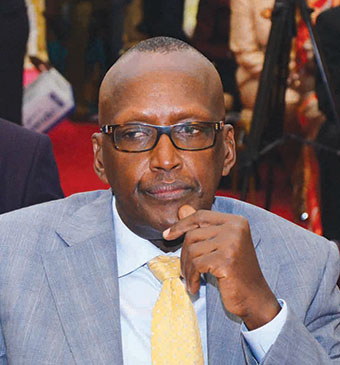
Mr. Muwema

By Fred Muwema

All interventions to fight the spread the #COVID-19 must have a legal framework to support them before they can have a basis. The World Health Organization which strives to attain the highest levels of health for the people of the world and which declared #COVID-19 a global health pandemic, owes its creation and mandate to a legal instrument in the name of a United Nations Declaration passed in 1945.

Even the social measures established to prevent the spread of #COVID-19 like social distancing, regular washing and sanitizing of hands find their legal force in laws like the Public Health (Control of #COVID-19) Regulations 2020 which are made under the Public Health Act 1935. Without this law, the Police and other Security organs would have no basis to enforce anything about #COVID-19.

So, if the law is fundamental to fight against #COVID-19 and indeed the law is fundamental to the organization of everything else in the society, why is it that legal services which enable the application of the law are not designated as essential services during the #COVID-19 lockdown.

Isn’t it odd that we should designate Security services like the Army, Police, Prisons and Private security firms which are all involved in the preservation and enforcement of the law and yet we declare legal services provided by the courts and legal practitioners to be non-essential? Aren’t the courts and legal practitioners actually at the apex of a legal system that validates and arbitrates the lawfulness or otherwise of the law enforcement actions taken at all times, with or without a pandemic.

If these legal services are not essential, why does the Police arrest violators of the #COVID-19 lockdown directives and then wait on Magistrates to open some of the closed courts only to remand the accused without an option of applying for bail, ironically because of the #COVID-19. I see that the law enforcement at this time without the availability of essential legal services to the public, will promote a lot of illegal detentions and create more legal disputes than it was set to resolve.

My suggestion therefore,is that legal services should be designated as essential services during the #COVID-19 lockdown. We can follow the example of South Africa where services related to the essential functions of the Courts, Judicial Officers, Sheriffs and Legal Practitioners required for these cases are now categorized as essential services under their Disaster Management Act 2002.

Next door in Kenya, Legal practitioners have been dropped off the list of the curfew order and are now listed as an essential service under the Public Order Act. This is thanks to the proactiveness and industry of the Kenya Law Society which petitioned the Constitutional Court for this relief. But here in Uganda, our Law Society can not even cause the Courts to open and at least hear one petition regarding the lockdown. Whereas the Uganda Law Society is still in the game, its relevance has been reduced to murmurs from the spectators stands.

Having said that, I still think that in designating legal services as an essential service during the #COVID-19 lockdown, priority should be given to all urgent cases which affect the overall public health, well being and safety of the citizens, irrespective of whether the cases are directly related to #COVID-19 or not. It is not only #COVID-19 that can cause morbidity, harm or death to Ugandans at this time. There are many people and businesses out there who/which are threatened with irreparable damage to their very survival but which cannot access legal services for urgent redress because of the #COVID-19 lockdown.

What is the point of people surviving #COVID-19 only to die from other preventable causes? The Uganda Police reported that by 16/4/2020, there were more than 102 cases of child neglect, abuse and abandonment reported in Kampala. But these children can not get remedies from the Family and Children’s Court because it is closed. In the end, such children will also become victims of #COVID-19, I mean the socio-economic side effects of #COVID-19, rather than the disease itself.

In conclusion, I wish to state that it may be profane and inaccurate to declare one service more essential than the other during this #COVID-19 lockdown. I think that in the real world, every service depends on the other to function properly. That interdependence cannot even be broken by the #COVID-19 pandemic. May be what we should be talking about are prioritized services needed in the moment. It is a misnomer to refer to them as essential services to the exclusion of others in my view.

To demonstrate this point, we can easily observe that whereas Ambulance services are designated as essential services during the #COVID-19 lockdown, they still need repair services at garages when they breakdown, but the garages are closed at the moment. The other non-essential service which is actually essential to the 4500 babies born in Uganda every day is baby clothing. However, all shops selling non-food items are closed at the moment. Wouldn’t you agree with the celebrated English judge, Lord Denning who once remarked that the law is an ass!

Mr. Fred Muwema

Managing Partner
Muwema & Co Advocates
21/4/2020

Stories Continues after ad

#COVID-19: Uganda registers two new cases

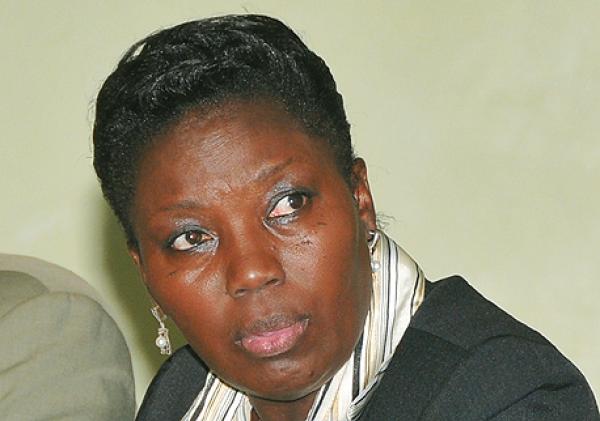
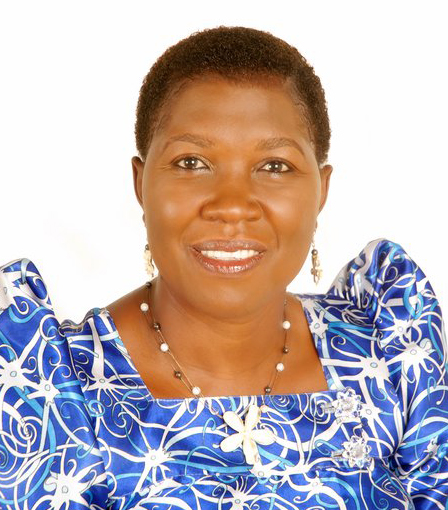
Uganda's Health Minister, Dr. Jane Ruth Aceng.

Two new cases have been confirmed for #COVID-19 in Uganda bringing the total to 58. the confirmed cases are of a truck driver and and a Burundian refugee picked from community.

According to Dr. Henry Mwebesa, Director General of Health Services at the Ministry of Health, the driver was confirmed from 929 samples tested from the border points of entry whereas the other case was from 248 samples picked from quarantine centers.

This brings a total of samples tested by Uganda Virus Research Institute to 1,177 samples as of end of day yesterday.

Dr. Mwebesa says that effective today, they have been directed by the World Health Organization to record all cases tested positive in the country irrespective of whether they are nationals from the neighboring countries.

“According to the international Health Regulations(IHR) requires that every case that is tested and confirmed for a particular disease should be registered as the host country’s case. It is therefore against this background that Uganda will capture all #COVID-19 positive foreigners including truck drivers as part of her confirmed cases and treated in Uganda”, he said in a statement.

However, two positive cases, one from Tanzania and another from Kenya all truck drivers  have been referred back to their countries after being tested positive here.

To date , five  truck drivers(one Ugandan,one Tanzanian and three Kenyans) have tested positive for #COVID-19.

Regarding the  46 year old Burundian refugee, resident of Nakivale Refugee camp who arrived from Tanzania on April 12 who tested positive yesterday, the statement notes, they are planning to evacuate him from quarantine in Rakai district to Masaka referral Hospital.


Stories Continues after ad

Uganda Editors’ Guild statement on arrest of Samson Kasumba

Samson Kasumba

The Uganda Editors’ Guild has noted with concern reports of the arrest of
Samson Kasumba, a news anchor at NBS Television. We are also aware of
comments by the police spokesperson that Mr Kasumba is being held in
connection with allegations unrelated to his work as a journalist.

The Uganda Editors’ Guild calls on the Uganda Police Force to conduct a
quick and transparent investigation into the matter while ensuring that Mr
Kasumba has access to legal counsel, and all his other rights are respected.
We shall remain appraised of the matter and take this opportunity to remind
all Ugandans, including those in positions of authority, that
#JournalismIsNotACrime.

Alex B. Atuhaire
For Interim Chairman
Uganda Editors’ Guild
Kampala, 21 April 2020

Stories Continues after ad

#COVID-19: NSSF donates tests kits worth Shs381M

Mr. Byarugaba and Minister Acen at the function were NSSF donated Shs381 million worth of #COVID-19 testing kits.


National social security fund (NSSF) has donated 5,000 Coronavirus testing kits reagents and accessories worth Shs381 million.

Health Minister, Dr. Jane Ruth Acen has applauded NSSF for supporting government efforts and responding to the call by President Yoweri Museveni to contribute towards government efforts to curtail #COVID-19.

“We are taking a comprehensive approach in the fight against #COVID-19. But we recognize that in order to stop transmission of the disease, we have to test and treat those infected. Testing allows us to quickly know who has contracted the disease” Minister Jane Ruth Acen said.

NSSF Managing Director, Richard Byarugaba said the fund was responding to a call by government and experts that testing for Coronavirus is one of the most important steps in combating the spread. Byarugaba further said the fund’s decision to donate testing kits was informed by fact that there were less #COVID-19 kits in hospitals.

“Our decision to donate testing kits is informed by the model government is employing in combating the #COVID-19, which is an emphasis on testing as many suspected cases as possible as well as their contacts” Byarugaba said.


.


Stories Continues after ad

#COVID 19: A Catastrophe that Africa Needs to Comprehend as a Disaster

Mr. Ismail Adan


#COVID-19 has already loomed into our continent and countries, thus we need to engage the appropriate Disaster Management steps considering our situations, and focus on the Mitigation and Preparedness, rather than waiting for the disaster to explode so that we respond or recover, which made the US and the other European rich countries grieve.


Ismail Adan
Disaster Management Department
University of Nairobi

Email: ismaelshirwac@students.uonbi.ac.ke


The world is wrestling against the Coronavirus Pandemic which affected around two million people and claimed more than 120 thousand of lives. Almost every country in the world has experienced cases of this deadly virus, including my own country; the Republic of Somaliland, that imposed preventive measures to curb and curtail the spread of this virus amongst the population. Lockdowns, flight restrictions, school shutdowns, halting border movements, event cancellations, mosque/church closures, social distancing and most importantly encouraging hand wash, were the main activities carried out by every government to ensure the safety of its people which resulted in both social and economic impacts.

Since the start of this outbreak in China, the virus is ravaging rich countries. The US and other five European countries with the most advanced health systems are now suffering the most with maximum deaths and multiples of that horror awaits in the developing world if they don’t take it seriously.

The top point of discussion of Africa, with my own country the Republic of Somaliland as its Eastern Horn, has been access to clean water and combatting cholera for many years. Poverty, malnutrition, higher maternal mortality rate, tuberculosis, malaria and the many unfortunate words which might not be available in the dictionaries of the developed world, are the top of the daily convo of African communities and their deprived health institutions. Thus, Africans need to understand this virus is NOT just a simple unfortunate incident among the many we were dealing with, but a DISASTER which could abolish the lives of all of us, leaving no one behind. The transmission is faster and easier, the risk is higher, and we can’t have the capacity to respond.


#COVID-19 as a disastrous hazard in Africa


A disaster is a consequence of a sudden disastrous event which seriously disrupts the normal function of the society or the community to the extent that it cannot subsist without outside help. A disaster is not just the occurrence of an event such as an earthquake, flood, conflict, health pandemic or an industrial accident; a disaster occurs if that event/process negatively impacts human populations.

Disasters combine two elements: hazard; a threatening event, and the vulnerability of affected people. The disaster occurs when a hazard exposes the vulnerability of individuals and communities in such a way that their lives are directly threatened or sufficient harm has been done to their community’s economic and social structure to undermine their ability to survive. No doubt, that Coronavirus threatened the lives of more than seven Billion lives on earth and has already killed many. Having said that, Disaster shatters when a threatening live event associates with the vulnerability of the subject community.

African health service has been rated among the poorest in the world. According to WHO (2018), the continent under-performs all six dimensions of health services namely; Service availability, Coverage of essential interventions, Financial risk protections, Service satisfaction, Health Security and Coverage of non-SDG health targets.

Access to essential services are low, and its quality remains a challenge. Lower respiratory conditions, HIV Aids and diarrheal diseases represent the top cause of both morbidity and mortality, as per the World Health Organization, and the situation seems to be even worst when you look at the situation of sub-Saharan countries.

Also, The African vulnerability to this deadly pandemic is not only limited to Healthcare circumstances, but extends to social, cultural, as well as financial aspects. Social distancing is a preventive measure and we live together in extended families. Lockdowns have been enforced, and we live with what we get from our daily insecure jobs which put as in the dilemma of dying hunger or falling ill. “Stay away” has been told and we meet at the worship places in masses as Africa is a religious continent. In my country, Somaliland, and in many other countries people eat together, sit together, invite one another to meals or events, and are always dense at houses, workplaces, mosques/churches which makes almost impossible for people to stay apart. Moreover, Africa’s financial crisis is another vulnerability which makes the continent to be susceptible to the disease and incapable of combatting if it metastasizes throughout the unfortunate communities of Africa

Modeling Disaster Management practice to Battle against COVID-19


Disaster Management is more than just a mere response and relief. It is a systematic process based on the key management principles of Planning, Organizing and leading which includes coordinating and controlling. It aims to reduce the negative consequence of an adverse event (Hazard), and has different phases at different levels; Mitigation, Preparedness, Response, and recovery. It is a cyclical process which means the end of one phase is the beginning of another, and timely decision making during each phase results in greater preparedness, better warnings, reduced vulnerability and/or the prevention of future disasters.

#-19 has already loomed into our continent and countries, thus we need to engage the appropriate Disaster Management steps considering our unique situations, and focus on the Mitigation and Preparedness, rather than waiting for the disaster to explode so that we respond or recover, which made the US and the other European rich countries grieve.

Having said that, Governments and health authorities across the continent must adhere to the Disaster Management steps to reduce risk and manage to mitigate the effect with maximum preparedness.

That is to say that there is something painfully predictable if we miss to put effort into mitigating this pandemic hazard through sticking to the Preventive measures told by WHO and medical professionals to reduce its spread and effect. Governments and Health Authorities should educate the public, encourage the ‘’ STAY AT HOME ‘’ and fight against the Fake news which could cost lives by misleading the people.

Preparedness is the key. Every country including mine, the Republic of Somaliland, should asses their risk precisely, engage stakeholders including, Health professionals, Community heads, religious leaders, Media outlets, Business communities, and Financial institutions to improve readiness, raise awareness, mobilize resources, plan for emergency and set up an Early warning system together.

The response is a critical stage for African countries to reach as they lack the basic facilities to manage incidents, However, we need to prepare for the worst, and arrange as much Logistics and Health facilities as we can for the response. Communication and coordination are also of paramount importance at this stage.

Finally, as we bring the Emergency under control and reduce impact which I am hopeful, we will be able to recover, reconstruct and above all learn from the incident.

Ismail Adan is a Sociologist and Social scientist based in Nairobi. He is specializing in Disaster Management at University of Nairobi


Email: ismaelshirwac@students.uonbi.ac.ke

Tell: +254740401951

Stories Continues after ad

#COVID-19: Minister Baryomunsi demands teachers be considered for relief food

Minister Chris Baryomunsi.

State Minister for Housing, Dr. Chris Baryomunsi  and a Member of Parliament representing Kinkizi County East who also on#Covid-19 taskforce has said, private teachers should be considered for food relief.

Baryomunsi said that most of the private schools may not pay their employees.

The minister said unlike other private companies who might be paying their employees regardless of the fact that they are not working, teachers from some of private schools were among the first people to sit home when president closed schools for 32 days.

He says they are not gathered in one place but they should link with the task-force, or else they can visit their chairpersons LC1 to capture their details so that they can become eligible.

Private universities have already informed their staffs that they will not pay them in this lock down because they always get money from students and now that students did not pay, there is no way they can get money to pay their employees. These include; Ndejje and Nkumba universities haved said so among others

Uganda on Saturday April 4, 2020 launched and started relief food distribution to about 1.5 million urban poor who are affected by the lockdown as a measure to contain the #COVID-19 outbreak in the country.

Prime minister said that security would stay at the distribution point from the beginning up to the end of the exercise.

On March 18, 2020, President Museveni ordered for the closure of schools and suspended religious gatherings across the country in attempt to prevent the spread of corona virus.

President Museveni said all primary and secondary schools, university and other institutions of learning would be closed starting Friday, March 20, 2020 for 32 days.


Stories Continues after ad

#Covid-19 and Employment: What employers & business owners should know 

Mr. Onyango


By Onyango Owor


It is no news that #COVID-19 has rapidly spread across the world with the World Health Organization reporting more than 130,885 deaths globally.   In these unprecedented times, how you protect yourself and your business from the legal implication of a virus with no vaccine should be a priority.

The total cost of the Pandemic on the global economy is currently estimated by the UN trade and development agency to be $1 trillion and this figure is likely to raise. The devastating effect of the corona virus can be seen on the global aviation industry where IATA  predicts that about 25 million jobs could be at risk.  Alexandre de Juniac in his remarks at the IATA media briefing on #Covid-19 on April 14, 2020, states that “If airlines lose one job another 24 disappear somewhere in the value chain”.

In Uganda, the Pandemic has caused the government to order a country wide lockdown and although no study has been done on the economic impact of this action, many businesses are set to shed off jobs as their incomes reduce. As businesses prepare for the post #Covid-19 era, CEOs and entrepreneurs must minimize exposure to litigation by observing and taking deliberate actions to comply with the law as they restructure their business and operations.

There is no doubt that #Covid-19 related litigation will soon be common place around the world. One of the first such  case on the African continent, is the south African case of exparte Van Heerden decided on 27th March 2020 where the applicant  approached the High court of South Africa on an urgent basis for an order that he be exempted from travelling restrictions to allow him bury his grandfather in another part of the country. The presiding judge dismissed the application stating that authorizing the applicant to travel would be to break the lockdown regulations which apply to everyone within the country and in addition that no matter how careful and diligent the applicant would conduct himself, he could expose others to unnecessary risk. Many #Covid-19 related cases could be filed both against governments and private businesses in the near future.

The Ministry of Gender, Labour and Social Development on the March 20, 2020, issued guidelines that are enlightening on employer/ employee relationships and how to keep work places safe in the context of #Covid-19.

The ministry encourages retention of employees who are on monthly pay, since termination at this stage may become costly in terms of payment of terminal benefits. However majority of employers in the private sector in Ugandan are in the informal and SME sectors which largely depend on daily incomes to sustain their operations. These businesses may find it very difficult to sustain  operations without income for over a month. Such companies will, be forced to cut costs in order to survive and laying off employees maybe one of the cost cutting measures to take. In the end, the decision on whether to retain employees or not is a business decision that individual CEOs and business owners will have to take.

Should a business decides to terminate their employee’s contracts, then it must do so within the confines of the law.  The employment Act and individual employment contracts will normally provide for how  employment contracts are to be terminated. Employers must adhere to these provisions in case of termination. Special attention must be given to payment of terminal benefits which may include payments in lieu of notice, severance packages, accrued leave,  gratuity, outstanding NSSF contributions and repatriation costs where applicable. In case the employer is laying off over 10 employees within a three months period, then they must do so while complying with the section 81 of the Employment Act which requires such an employer to notify the commissioner at the ministry of Labor in writing giving reasons for the termination, the number and categories of workers likely to be affected and the period over which the termination is likely to be carried out. In case of unionized workers, the employer should review the provisions of any existing collective bargaining agreements before terminating employment contracts.  Employers may also choose not to renew existing contracts that are coming to an end or cease non essential operations.

The ministry of labour further guided that employers should provide training of workers on preventive measures for #Covid-19, provide protective equipment and treatment of affected workers. Employers have a statutory obligation to ensure that their work places are safe and to take every precaution necessary for the protection of their employees at the work place and during the execution of their duties. In the context of #Covid-19, every employer must ensure that employees have protective gear, can travel safely to and from their places of employment and are given training and guidelines on how to execute their assignments safely.

There is a possibility that employees who contract #Covid-19 in the course of their employment  will sue their employers if such employers have not taken reasonable measures to maintain a safe and healthy workplace. Of course reasonable measures will vary depending the nature of exposure in different industries. It is important to note that information about transmission of #Covid-19 is evolving day by day and employers must ardently follow guidelines that are being issued by the ministry of health, WHO, Center for Disease Control and the Infectious Diseases institute of Makerere University among others. The websites of ministry of health, CDC and the World Health Organization are regularly updated and provide authoritative information on how the virus is transmitted and work place safety guidelines .

Employers in industries such as banking, hospitality, media and health sectors where employees are exposed to a higher risk of contracting of# Covid-19 should review their insurance covers to ensure that their employers are covered under the different policies or change to insurance companies that are willing to cover their employees against #Covid-19. Employers should also  seek clarity about the extent of their insurance covers where an employee is working from home.

Where an employer wishes to retain employees at work during the lockdown period, the employer should educate them about the dangers posed to their health by their continued presence at the workplace and how to prevent contraction of the virus. The employer must not assume that employees already have this information. In other words, the employer should obtain the informed consent of their employees in continuation of work especially for assignments with a high likelihood of contracting the virus . Should an employee contract #Covid-19 in the course of employment, it should be the responsibility of the employer to ensure that such an employee is treated. The employer also has the obligation to immediately notify the ministry of health about such occurrence.

Where an employee or independent contractor refuses to work because of fear of exposure to #Covid-19, the employer should immediately investigate this through an interview and find out details of the employee’s fears. They should ascertain  if the fears are realistic or even justified. The employee should then be notified, in writing, of measures that will be taken to mitigate chances of contracting the virus, if they choose to return to work. Such measures must be informed by the ministry of health, WHO and CDC best practices and guidelines.

If an employee falls under the category that is prone to contracting the virus, for example older adults, people who are immunocompromised, and persons with severe underlying medical conditions like diabetes, heart or lung disease , then the employer must not force them to work in an environment that can have them easily contract the virus neither should they unlawfully terminate their contracts as this could expose the employer to adverse litigation.

In the event that the employers would wish to retain all company employees while still in an uncertain financial situation, they could explore a number of options like negotiated suspensions of the contracts for a defined period, pay cuts and a taking of statutory leave during the lockdown period.

In all, both employers and employees must recognize that #Covid-19 has created a situation where contracts may be frustrated and therefore necessitating termination, however, such terminations must be done lawfully. Where an employer doubts the legality of their actions, they should consult a lawyer for guidance and professional advice.

The author is a partner at Onyango & Company Advocates.                                        Email:onyango@onyangoadvocates.com

Tel:  0787367458


Stories Continues after ad

Museveni extends Boda-boda operations to 5pm

President Yoweri Museveni

President Yoweri Museveni has extended time of operations for motorcycles commonly known as Boda-Boda from from 2pm to 5pm saying their services of food delivery and other deliveries are important.

Museveni made the changes while announcement while addressing the nation on the #COVID-19 update. The boda-Boda had been banned from operating after 2pm.

“There is still an issue with Boda-Bodas, we had said that they should stop at 2pm but now they can operate 5pm” Museveni said. In the same category, Museveni also allowed bicycles to operate up to 5pm.

Museveni also castigated the people whom he termed as crooks who he said had forged car stickers in order to manipulate the movement #COVID-19 guidelines.

“However, there are crooks in society who don’t want to corporate by trying to bribe for stickers. Those stickers will be confiscated”

Museveni also thanked the health workers and other scientists for the job well done in curtailing #Covid. He however, called fellow politicians to allow and speed up the process of allowing a salary increment for scientists.

The president further said for expectant mothers, they should not wait to seek permission from Resident District Commissioner if their situation is dire.

“For expectant mothers, I think I agree, the expectant mothers if you don’t get the RDC , private vehicles can be used and explain. Unless someone puts blankets”

On the issue of truck drivers, he said the initiative put in place of having them checked at a point of entry will remain since their movements are under monitoring.

Meanwhile Ministry of Health has today discharged six patients from Mulago National Specialised Hospital where they had undergone treatment.  The patients tested negative of #COVID-19.

Stories Continues after ad